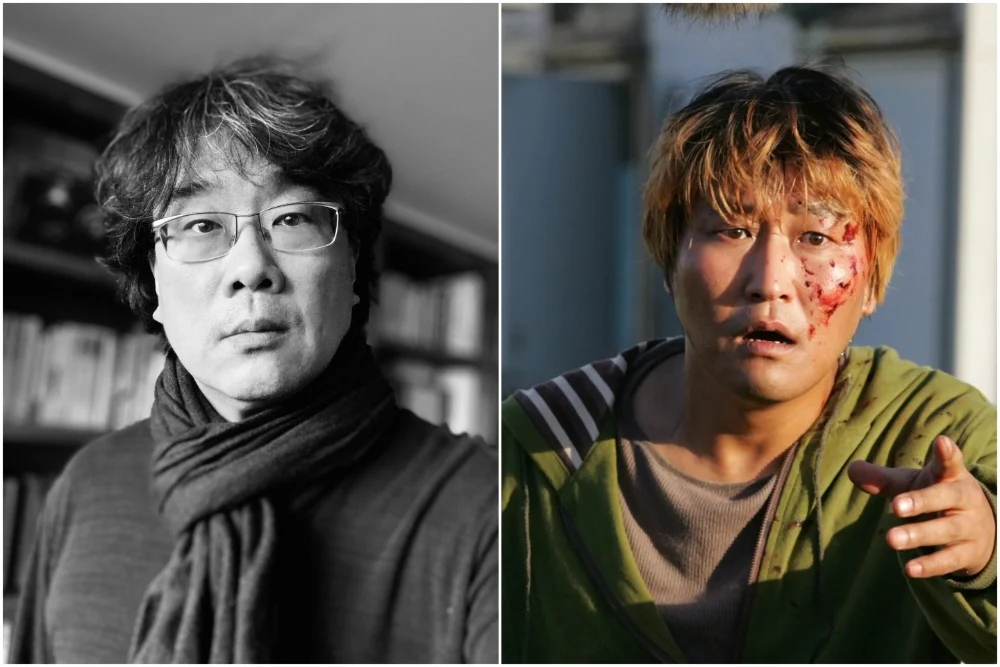
Twenty years after it first stunned audiences at the Cannes Film Festival, Bong Joon Ho’s monster masterpiece The Host is set to make a triumphant return to cinemas nationwide on November 20. Distributed by Magnolia Pictures, this 4K restoration project is more than a mere technical upgrade; it serves as a reflective mirror for a global audience that has experienced two decades of shifting geopolitical landscapes and public health crises. The re-release will be bolstered by an exclusive, post-screening conversation between director Bong Joon Ho and fellow auteur Edgar Wright on November 21 and 23, providing a deep dive into the craft of a filmmaker who has since ascended to the pinnacle of global cinema.
A Legacy of Innovation and Genre-Bending
Released in 2006, The Host defied the conventional limitations of the monster movie genre. At its heart is a deeply human story: Gang-du, a bumbling snack kiosk worker played by Song Kang-ho, watches in horror as a grotesque creature emerges from the Han River, wreaking havoc and kidnapping his daughter, Hyun-seo. When the state apparatus—characterized by bureaucratic ineptitude and the suppression of truth—labels the creature a biological threat, the family is forced to navigate a sealed-off, dystopian landscape to reclaim one of their own.
The production was a landmark for Korean cinema. By engaging New Zealand’s Weta Workshop for creature design and The Orphanage for visual effects, Bong ensured that the film stood on par with international blockbusters of the era. However, it was the film’s unique DNA—a fusion of black comedy, family drama, and sharp political satire—that solidified its status as a cornerstone of the Hallyu wave.
The Anatomy of a Restoration
The technical endeavor to bring a 2006 film into the 4K era presented unique challenges for Bong and his team. Because the original visual effects were rendered long before 4K standards were industry-wide, the production team had to meticulously upscale the footage while ensuring the creature’s integration with the live-action environment remained seamless.
Bong’s primary motivation for the restoration was archival fidelity. He aimed to replicate the specific aesthetic of the original 35mm prints screened at Cannes. Having shot the film on Fuji film stock rather than the industry-standard Kodak, Bong worked closely with cinematographer Kim Hyung-ku to recapture the nuanced color palette that defined the film’s gritty, river-side atmosphere.
“Ironically, we were using digital technology to enhance the film look of the movie,” Bong noted in a recent interview. While the director admits he can still identify minor CGI imperfections, he remains committed to the integrity of the original work. Drawing a comparison to journals, Bong emphasized that the film represents a specific period in his artistic evolution. He resisted the temptation to cut or alter scenes, a practice popularized by directors like Ridley Scott, choosing instead to present the film as a historical document of his early career.
Political Satire in the Age of Misinformation
While The Host functions as a creature feature, its script was deeply rooted in the sociopolitical climate of the early 2000s. Bong wrote the screenplay with the SARS outbreak in mind, and the central plot—a government fabricating a viral threat to justify state control—served as a pointed critique of the rhetoric surrounding the Iraq War and the search for weapons of mass destruction.
Two decades later, the film’s narrative has gained an eerie layer of pertinence. Following the global experience of the COVID-19 pandemic, the film’s themes regarding public health, misinformation, and the alienation of the working class have shifted from speculative fiction to reality. Bong reflects on this with a degree of weary realization: “Whether it’s good history or bad history, it seems like we as a community, as a whole, are repeating our mistakes. Although the film has stayed the same, the history is repeating itself and making the film relevant again.”
Chronology of a Master’s Rise
The trajectory of Bong Joon Ho’s career since 2006 is a testament to the consistency of his vision.
- 2006: The Host premieres at the Cannes Film Festival, becoming the highest-grossing Korean film of its time.
- 2009: Bong directs Mother, further cementing his ability to blend thriller elements with complex character studies.
- 2013: Snowpiercer marks his first foray into large-scale, English-language international co-productions.
- 2017: Okja challenges the ethics of the global food industry, further refining his technical collaboration with international VFX studios.
- 2019: Parasite makes history at the Academy Awards, becoming the first non-English language film to win Best Picture.
- 2024–2025: Bong shifts his focus toward a new slate of crime and horror projects, signaling a return to the genre roots that defined his early career.
Soundscapes and Artistic Evolution
The auditory experience of The Host remains one of its most defining features. Recorded at Seoul’s Livetone facility, the sound design relied on a unique blend of animalistic samples—specifically the sounds of a sea lion—layered with vocal performances by actor Oh Dal-su.
Bong has maintained a remarkably consistent creative core; the sound supervisor for The Host has remained with the director for 25 years, providing a continuity that is rare in the high-turnover world of film production. While the director has embraced modern formats like Dolby Atmos for his later works such as Parasite and Okja, he approaches the remastering of his earlier catalog with caution, preferring to keep the original sound design intact unless a significant enhancement can be achieved without compromising the filmmaker’s original intent.
Future Horizons: Returning Home
As Bong looks to the future, he is moving away from the sprawling, multi-genre spectacles that occupied his time following Parasite. In recent discussions with Variety, he confirmed his intention to return to the crime and horror genres, describing this shift as a desire to "return home."
The upcoming release of the 4K restoration is a bridge between these eras. It provides modern audiences with the opportunity to witness the foundation of Bong’s cinematic language while offering long-time fans a chance to engage with a film that has matured alongside the world. As the industry grapples with the ethics of digital restoration and the preservation of film history, Bong’s approach—prioritizing the "record of what I was as a filmmaker"—stands as a principled standard for the preservation of modern classics.
By returning to the Han River, audiences are not merely revisiting a monster movie; they are re-examining a piece of cultural commentary that, for better or worse, remains as prescient today as it was in 2006. The collaboration with Edgar Wright for the retrospective screenings promises to further contextualize the film’s importance, ensuring that the legacy of The Host continues to inform and unsettle viewers for years to come.