
The Canadian government has officially shuttered its independent human rights and environmental watchdog, the Office of the Canadian Ombudsman for Responsible Enterprise (CORE), drawing swift and sharp condemnation from international accountability advocates, civil society groups, and Indigenous leaders. CORE was originally established to evaluate and investigate allegations of human rights abuses and environmental degradation tied to Canadian corporations operating abroad—particularly within the lucrative garment, mining, and oil and gas sectors. However, following a protracted period of administrative stagnation under Prime Minister Mark Carney’s administration, the agency has been permanently eliminated.
In place of the independent ombudsman, the federal government has opted to route corporate accountability grievances through a pre-existing, lesser-known body: the National Contact Point (NCP). Managed directly under the umbrella of Global Affairs Canada, the country’s foreign ministry, the NCP is tasked with overseeing nonbinding corporate standards. Yet, a coalition of human rights defenders, legal experts, and non-governmental organizations argue that the NCP fundamentally lacks the statutory power, structural independence, and investigative rigor required to effectively police Canadian multinationals operating in developing nations and fragile states.
The closure of CORE leaves dozens of active, highly sensitive complaints in limbo. For frontline communities and human rights defenders who spent years navigating Canada’s complex legal landscape in search of justice, the transition to the NCP has been met with profound disillusionment, effectively stripping them of viable domestic avenues for corporate redress.
A Multi-Year Decline and the Final Demise of CORE

The unraveling of CORE was not an overnight development, but rather the culmination of prolonged political neglect and administrative paralysis. The office was originally designed to fill a glaring regulatory vacuum, acting as an investigative body capable of probing international corporate misconduct, demanding internal documents, and issuing formal findings of fact.
However, the agency’s trajectory shifted dramatically following a transition in federal leadership. Two months into Prime Minister Mark Carney’s tenure, the high-profile ombudsperson position became vacant. Despite mounting complaints regarding Canadian mining and energy operations overseas, Carney’s administration refrained from appointing a successor. For more than a year, CORE languished without formal leadership, rendering it entirely incapable of initiating new investigations or advancing pending cases.
Rather than revitalizing the agency by appointing a new leader, the federal government declared CORE ineffective. In June, the Carney administration officially dissolved the office. Global Affairs Canada defended the decision through an official statement, asserting that Ottawa had chosen to "permanently streamline the CORE Ombudsperson’s work into other functions with stronger track records of effectiveness, including the National Contact Point."
Accountability advocates, however, reject the government’s characterization of the NCP as an effective substitute, pointing to its historical failure to deliver meaningful resolutions for affected populations.
The Structural Shortcomings of the National Contact Point

Established under the framework of the Organisation for Economic Co-operation and Development (OECD), National Contact Points operate across 52 member countries as nonjudicial grievance mechanisms. Their mandate is to promote the OECD Guidelines for Multinational Enterprises on Responsible Business Conduct—a set of voluntary, nonbinding principles designed to encourage ethical corporate behavior.
While the concept sounds promising in theory, data surrounding the Canadian NCP’s operational history reveals a starkly different reality. According to historical tracking, out of 33 cases submitted to the Canadian NCP since the year 2000, only three have ever reached a formal joint agreement. Even in those rare instances of consensus, the outcomes rarely translated into substantive legal redress or compensation for victims, instead resulting in minor, agreed-upon operational tweaks by the corporations involved. Furthermore, in one of those three successful cases, the proceedings were actively spearheaded and led by the NCP of a foreign nation rather than Canada’s office.
Critics argue that the NCP’s structural positioning inside Global Affairs Canada—specifically within the Trade Strategy Bureau and the Trade Commissioner Service—creates an inherent and insurmountable conflict of interest. Because the primary objective of Canada’s trade ministry is to promote commercial interests and support domestic companies abroad, advocates argue that the ministry is ill-equipped to impartially investigate and penalize those same corporate entities when human rights violations or environmental catastrophes are reported.
Independent international evaluations have repeatedly flagged this structural vulnerability. A comprehensive 2019 peer review conducted by representatives from the NCPs of Belgium, Denmark, the United Kingdom, and the OECD Secretariat explicitly reported that the Canadian NCP’s physical and administrative location within the trade service generated a widespread perception of partiality among civil society organizations.
The Case of Barrick Mining and the Democratic Republic of Congo

The human cost of dismantling CORE in favor of the NCP is acutely felt by frontline defenders such as John Namegabe Bugabo, a human rights activist based in the Democratic Republic of Congo (DRC). When CORE was shuttered in June, it left behind 24 active complaints and three files awaiting intake. Complainants received an abrupt notification stating that all activities of the watchdog had ceased, leaving them with two unpalatable choices: transfer their complex files to the Canadian NCP or close their cases entirely.
Bugabo’s ordeal encapsulates the systemic barriers faced by marginalized populations. In 2022, Bugabo submitted a formal complaint to the Canadian NCP on behalf of 129 individuals from the villages of Mege and Bandayi. The complainants alleged that they were forcibly and violently evicted from their ancestral lands to clear the path for an expansion of the Kibali gold mine—a massive facility 45% owned by Canadian mining giant Barrick Mining Corp.
According to Bugabo, the displacement impacted more than 2,000 people, destroying homes, local schools, agricultural fields, fish ponds, and sacred places of worship without prior consultation or adequate compensation. Furthermore, the complaint alleged that state security forces collaborating with or emboldened by the industrial expansion opened fire on residents protesting the demolitions, resulting in fatalities and widespread homelessness.
Barrick Mining has consistently denied any direct role in the 2021 resettlement operations, maintaining that the relocation was executed independently by the government of the DRC.
Hoping for a transparent and rigorous fact-finding process, Bugabo brought the dispute to the Canadian NCP, drawing on his previous experience with the Netherlands NCP. In that prior 2015 case involving Dutch brewer Heineken’s Congolese subsidiary, the Dutch NCP successfully mediated a historic financial compensation agreement for laid-off workers—a case study later celebrated at the United Nations Forum on Business and Human Rights.

However, the Canadian NCP process yielded no such justice. Following a single day of mediation in 2023, the Canadian NCP unilaterally halted talks, determining that further dialogue was unlikely to yield a resolution. The office closed the file and issued final recommendations that merely urged Barrick Mining to enhance transparency, improve its dialogue with security forces, and document lessons learned. Five years after the initial displacements, Bugabo notes that the affected villagers remain homeless, impoverished, and entirely devoid of legal remedy. Refusing to place further faith in an institution he views as compromised, Bugabo is among several complainants who have rejected the transfer of their files to the NCP.
Corporate Interference and International Censure
Beyond individual displacement cases, civil society groups argue that the Canadian NCP is uniquely vulnerable to political and corporate lobbying, which compromises its ability to render objective decisions.
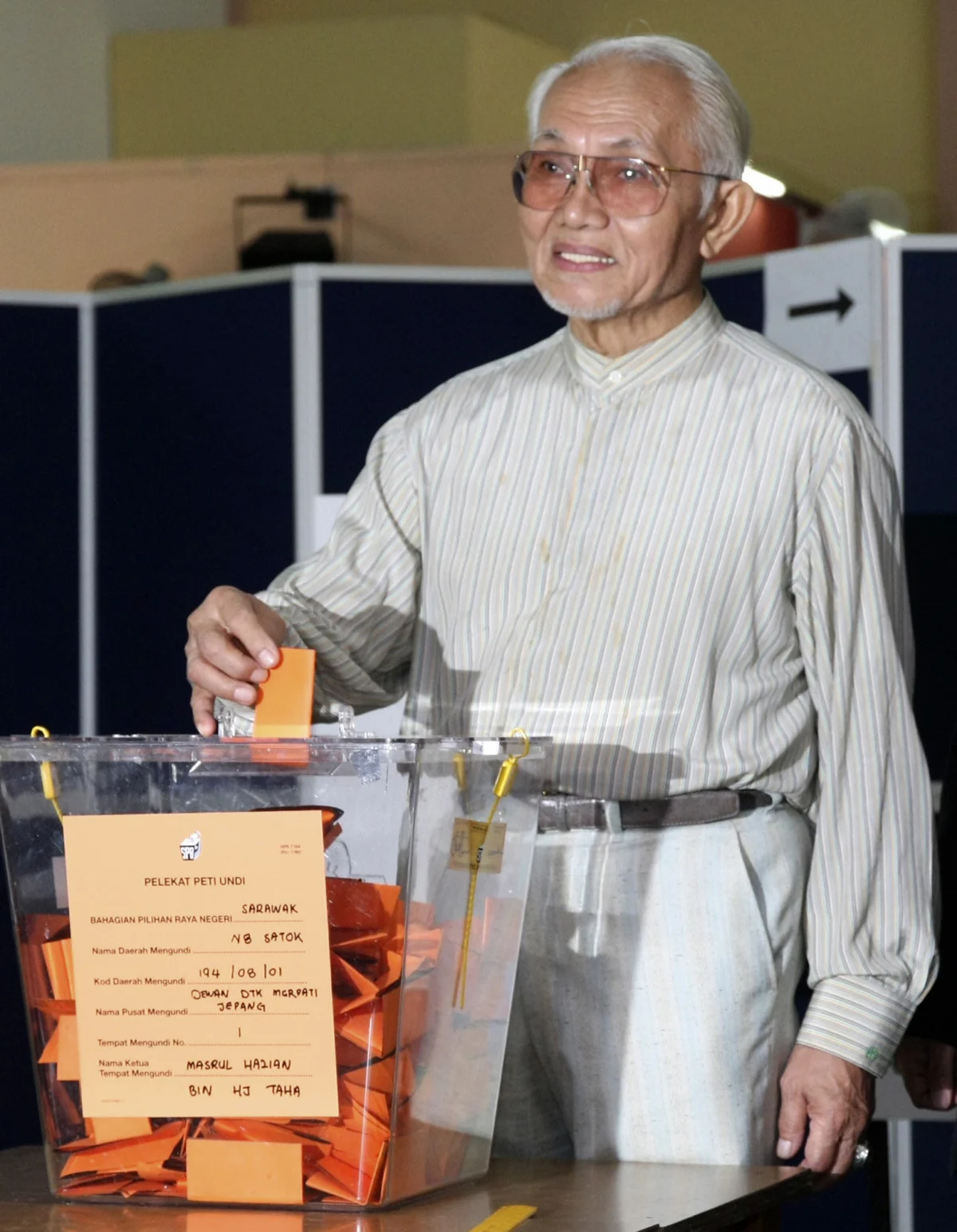
A prime example cited by critics is the 2016 case involving the Bruno Manser Fonds, a Swiss environmental non-governmental organization. The NGO filed a request for review against Sakto Corp., an Ottawa-based real estate investment firm. The organization alleged that Sakto was tied to millions of dollars in illicit logging kickbacks originating from massive deforestation in the Malaysian state of Sarawak under the tenure of its former chief minister, Abdul Taib Mahmud—whose daughter serves as a key figure in the Canadian firm. The deforestation had severely depleted the traditional lands of the nomadic Penan Indigenous peoples.
Sakto vigorously denied the allegations, maintaining that it is a purely domestic Canadian corporation with no international operations or structural ties to illicit foreign funds, and launched defamation proceedings in Switzerland.

Initially, the Canadian NCP’s preliminary assessment indicated that the OECD guidelines applied to the company and that the matter merited deep examination. However, the process derailed dramatically after the draft assessment was circulated. According to documents and stakeholder accounts, corporate representatives engaged in aggressive challenges to the NCP’s jurisdiction, bypassed administrative channels to lobby political figures directly, and enlisted a federal Member of Parliament to write critical letters to the Minister of International Trade accusing the NGO of harassment.
Under intense pressure, the Canadian NCP recalled its original final assessment and closed the file, blaming both parties for hostile communications. The handling of the case drew severe international backlash. OECD Watch, a network evaluating NCP performance, filed an official complaint against the Canadian NCP with the OECD Investment Committee. The committee subsequently issued a scathing rebuke, ruling that the Canadian NCP had failed to meet its baseline responsibilities, suffered from a profound lack of transparency, and created an environment that undermined procedural equity and impartiality.
Global Implications: Canada’s Unique Footprint
Experts emphasize that the structural weaknesses of Canada’s corporate accountability framework carry global consequences. Canada serves as the home jurisdiction for approximately half of the world’s publicly traded mining and mineral exploration companies, operating extensively across politically fragile and ecologically sensitive regions in Africa, Latin America, and Asia.
Joseph Wilde-Ramsing, advocacy director for the Netherlands-based Centre for Research on Multinational Corporations (SOMO) and co-founder of OECD Watch, notes that while nations like the Netherlands have fortified their NCPs by utilizing independent mediation experts entirely detached from government trade ministries, Canada’s model continues to slide backward.

"The Canadian NCP’s track record is extremely poor," Wilde-Ramsing stated, echoing concerns raised by domestic advocates like Catherine Coumans, research coordinator for MiningWatch Canada. Coumans warns that eliminating CORE while relying on an underpowered, trade-aligned NCP effectively signals to Canadian mining executives that overseas environmental and human rights abuses will continue to go unchecked without fear of domestic legal consequences.
As the Canadian NCP undergoes its second periodic peer review led by the OECD and foreign peer representatives, civil society groups are ramping up demands for sweeping legislative reform. Activists continue to call for either the full reinstatement of CORE or the establishment of a genuinely independent corporate accountability office endowed with statutory subpoena powers to compel evidence, interview witnesses under oath, and impose meaningful penalties for non-compliance.
Until such structural reforms are realized, frontline human rights defenders and displaced communities across the Global South warn that Canada’s corporate watchdog infrastructure remains little more than a paper tiger, leaving vulnerable populations without recourse against multinational misconduct.









Leave a Reply