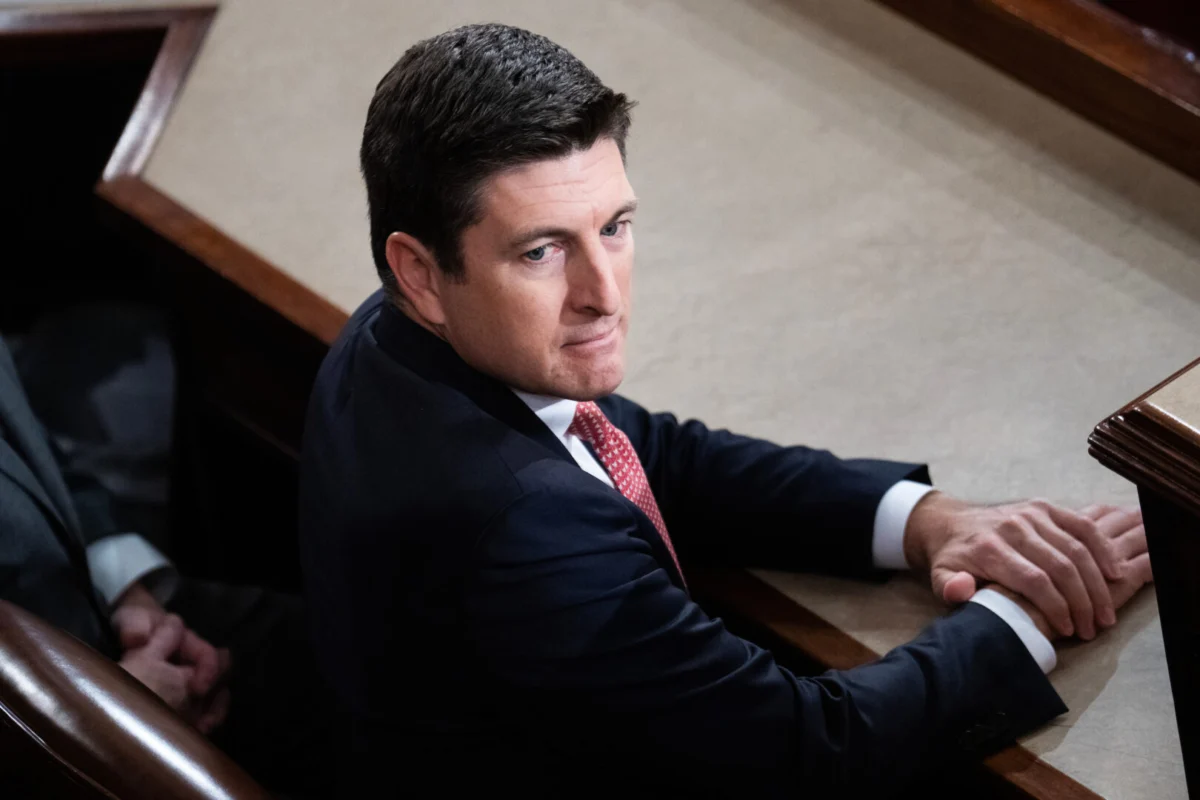
In a politically charged vote, the U.S. House of Representatives passed a Republican-led bill designed to restrict stock trading by members of Congress, their spouses, and dependent children. The measure, which saw a mostly party-line vote of 232-198, aims to address long-standing public concerns about potential conflicts of interest and insider trading among elected officials. The legislation, H.R. 7008, specifically prohibits new stock purchases by these individuals, though it allows them to retain existing holdings and sell them under certain conditions.
House Advances Bill Amidst Partisan Divide
The vote on Wednesday marked a significant legislative push by House Republicans, who championed the bill as a direct response to declining public trust in governmental institutions. House Administration Chair Bryan Steil, R-Wis., the bill’s lead sponsor, articulated the core principle during floor debate, stating, “If you want to day trade, there’s a place for that. It’s called Wall Street.” This sentiment underscores the perception that public service should not be intertwined with active financial market speculation.
However, the passage was far from unanimous, particularly along party lines. Only 13 Democrats crossed the aisle to vote in favor of the bill. Many Democratic lawmakers expressed reservations, arguing that the proposal did not go far enough to address the fundamental issues of ethical conduct and potential corruption. Rep. Seth Magaziner, D-R.I., was notably critical, asserting, “It’s a terrible bill. It doesn’t ban stock trading in Congress or anywhere else.” Critics on the Democratic side often advocated for a complete prohibition on stock ownership for lawmakers and, in some cases, an extension of such bans to include the President and Vice President, arguing that partial measures would be insufficient to restore public confidence.
Key Provisions and Perceived Loopholes
The proposed legislation introduces several key stipulations regarding financial activities. Under H.R. 7008, members of Congress, their spouses, and dependent children would be barred from acquiring new individual stocks. However, a significant provision allows them to retain any stocks owned prior to the bill’s enactment. Furthermore, the bill outlines a specific process for selling existing stock holdings: public notice must be given at least seven days but no more than 14 days in advance of any transaction. This disclosure requirement is intended to provide transparency, although its effectiveness in preventing front-running or exploiting privileged information remains a subject of debate. An explicit exception is made for widely held investment funds, such as mutual funds and exchange-traded funds (ETFs), which are generally considered less susceptible to insider information due to their diversified nature.
Violations of the proposed rules could lead to penalties imposed by the House and Senate Ethics panels. These penalties are set at either $2,000 or 10 percent of the value of the illicit transaction, whichever amount is greater, in addition to any net gain realized from the transaction. While these fines aim to deter illicit trading, some critics argue they may not be stringent enough to effectively curb potential financial misconduct, especially for high-value transactions.
Rep. Tim Burchett, R-Tenn., despite his reservations, ultimately backed the bill, stating he had "prayed on it." While expressing a desire for tighter restrictions, such as a complete ban on individual stock ownership for members of Congress, he voted in favor to support the overall effort. "I just don’t think we’re being genuine to the public about it, and we should ban stock trading by members of Congress. You should not own individual stocks. You ought to own a mutual fund like I do," Burchett stated, highlighting a common sentiment among those who believe in a more comprehensive approach.
The "Poison Pill" Controversy: Voter ID Amendment
Adding a layer of complexity and controversy to the legislative process, Republicans introduced an unrelated amendment to the stock trading bill earlier in the week. This amendment mandates that voters in federal elections present photo identification at the polls. This voter ID provision, a long-standing priority for segments of the Republican Party and a key issue for former President Donald Trump, significantly altered the bill’s trajectory and perceived intent.
Democrats swiftly condemned the inclusion of the voter ID language, labeling it a "poison pill" designed to undermine the bipartisan appeal and ultimate passage of the stock trading reforms. House Administration ranking member Joseph D. Morelle, D-N.Y., sharply criticized the move during floor debate, asserting that Republicans had "corrupted their so-called stock-trading bill with a decaying piece of the SAVE America Act corpse." This strategic addition is widely seen as a tactic that could jeopardize the bill’s prospects in the Senate, where such a provision is likely to face staunch Democratic opposition and potentially a filibuster. Rep. Chip Roy, R-Texas, a staunch supporter of voter ID, acknowledged the problematic nature of combining the issues, stating, "Obviously, voter ID is attached to it, so I’m not sure what that means for getting it through the Senate. I wish we hadn’t done that." He suggested that keeping the issues separate would have been a more pragmatic approach to gauge support for each measure independently.
Historical Context: A Decade of Debate Since the STOCK Act
The debate over congressional stock trading is not new; it represents a persistent ethical challenge that has plagued Capitol Hill for decades. Lawmakers, by virtue of their positions, often have access to non-public information that could significantly impact financial markets. This includes advance knowledge of legislative actions, regulatory changes, defense contracts, and economic policy shifts. The potential for profiting from such information raises serious questions about fairness, integrity, and the very foundation of public trust.
In response to growing public scrutiny and media reports highlighting instances of suspicious trading activity by members of Congress, the Stop Trading on Congressional Knowledge (STOCK) Act was signed into law in 2012. This bipartisan measure clarified that members of Congress and their staff are not exempt from insider trading prohibitions. Crucially, it also required them to promptly disclose their stock trades within 45 days of a transaction. The STOCK Act was hailed at the time as a significant step towards transparency and accountability.
However, the effectiveness of the STOCK Act has been widely questioned over the years. Critics argue that its enforcement has been lax, and the penalties for violations are often insufficient to deter misconduct. A 2021 investigation by Business Insider, for example, revealed that dozens of members of Congress and nearly 200 senior congressional staffers had violated the STOCK Act’s disclosure requirements, often facing minimal or no penalties. This lack of rigorous enforcement has contributed to a perception that the existing framework is inadequate, fueling calls for more stringent reforms, including outright bans on individual stock ownership. The current bill before the House is a direct outgrowth of this sustained frustration and the perceived shortcomings of the 2012 legislation.
Public Opinion and Ethical Imperatives
Public opinion polls consistently reveal widespread concern about potential conflicts of interest in Congress. Surveys have repeatedly shown strong bipartisan support for banning or severely restricting stock trading by members of Congress. For instance, a 2022 poll by the University of Maryland and The Washington Post found that 76% of Americans supported a ban on lawmakers trading individual stocks, with similar levels of support across partisan lines. This overwhelming public consensus underscores the political imperative for Congress to address the issue.
Ethics watchdogs and good government groups have long advocated for comprehensive bans, arguing that even the appearance of impropriety erodes public trust. They point to the inherent conflict between a legislator’s duty to serve the public interest and the personal financial incentive to maximize investment returns, especially when privy to market-moving information. The argument for an outright ban often posits that lawmakers should place their assets in blind trusts or broadly diversified funds to completely eliminate any potential for perceived or actual conflicts. This approach, they contend, would remove any doubt about the integrity of legislative decisions and bolster public confidence in the democratic process.
The Uncertain Path Through the Senate
Following its passage in the House, the bill now faces an uncertain and potentially arduous journey through the Senate. The upper chamber has also grappled with various proposals to address congressional stock trading, but none have yet managed to clear both chambers and become law.
Senator Pete Ricketts, R-Neb., the lead sponsor of the Senate’s version of the stock trading ban, urged his colleagues to take up the House-passed legislation, emphasizing that trust in Congress is “at an all-time low.” Indeed, numerous polls indicate that public confidence in the legislative branch hovers near historic lows, making such reform efforts politically salient. Last year, a stricter bill aimed at blocking member stock ownership made it through the Senate Homeland Security and Governmental Affairs Committee, but it ultimately stalled before reaching a full Senate vote.
The inclusion of the voter ID amendment is widely expected to be the primary obstacle to the bill’s passage in the Senate. Senate Democrats have historically opposed strict voter ID laws, viewing them as measures that disproportionately suppress minority and low-income voter turnout. This ideological divide makes it highly improbable that the current House bill, with its "poison pill," could garner the necessary bipartisan support to overcome a filibuster in the Senate, which typically requires 60 votes. The tactical decision to append the voter ID provision, while potentially a messaging victory for House Republicans, appears to have significantly complicated the legislative path for the stock trading reforms.
Political Motivations and Electoral Implications
The timing and nature of the House vote suggest strong political motivations, particularly with the upcoming midterm elections. House Republicans are keen to demonstrate their commitment to "cleaning up Congress" as they head back to their districts for the extended August break. Speaker Mike Johnson framed the bill as "a very logical thing to do," asserting, "Democrats only talk about corruption. Republicans are actually delivering real solutions to actually restore the public’s faith in our institutions because we believe in this country." This rhetoric positions the GOP as the party of accountability and integrity, a powerful message for voters disillusioned with the perceived ethical lapses in Washington.
The voting patterns of some Democrats also underscore the political pressures at play. Several of the 13 Democrats who voted in favor of the bill, including Reps. Marie Gluesenkamp Perez of Washington and Vicente Gonzalez of Texas, are engaged in tight reelection campaigns. Rep. Magaziner acknowledged this dynamic, stating he understood "that for members who are in tough races, it’s hard to vote against anything that says ‘stock trading ban,’ even if it’s not a real stock trading ban." This highlights the political vulnerability of opposing any measure perceived to address corruption, regardless of its actual scope or effectiveness.
The broader issue of congressional stock trading has already become a prominent talking point on the campaign trail. For instance, former Rep. Elaine Luria, D-Va., who is challenging Rep. Jen Kiggans, R-Va., has now called for a ban on congressional stock trading. This represents a shift from her earlier stance, where she had dismissed the idea, arguing that the existing STOCK Act was sufficient. Such reversals demonstrate the potent electoral appeal of advocating for stricter ethics rules, forcing candidates to align with public sentiment on the issue.
Broader Implications for Congressional Ethics and Future Reforms
While the immediate fate of H.R. 7008 in the Senate remains uncertain, its passage in the House nevertheless contributes to the ongoing national conversation about congressional ethics. The debate surrounding this bill underscores the persistent tension between the personal financial interests of lawmakers and their public duties.
Should the bill fail in the Senate due to the "poison pill" amendment, it would likely reinforce the public’s cynicism about legislative efforts to self-regulate. It would also highlight the challenges of passing meaningful ethics reform in a deeply polarized political environment where unrelated issues can derail even broadly popular measures. Conversely, if some version of a stock trading ban eventually passes, it could represent a modest but significant step towards restoring public confidence, provided the enforcement mechanisms are robust and the penalties are sufficiently deterrent.
The continuous calls for stricter rules suggest that this issue will not fade away. Future legislative efforts may need to consider more comprehensive approaches, such as mandatory blind trusts for members of Congress, or a complete prohibition on individual stock ownership, extending to the executive branch, as some Democrats have advocated. Ultimately, the effectiveness of any reform will hinge not just on the letter of the law, but on a genuine commitment to transparency, accountability, and rigorous enforcement, demonstrating to the American public that public service is indeed distinct from private financial gain. The current bill, despite its limitations and political maneuvering, serves as a stark reminder of the enduring demand for integrity in government.