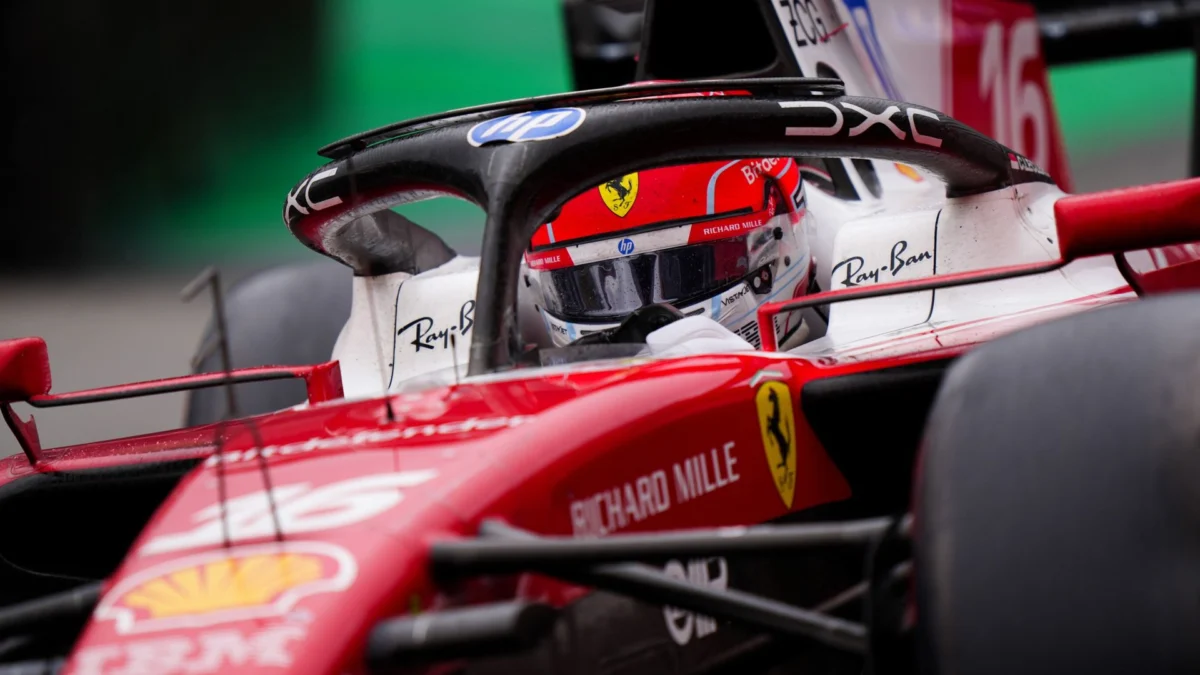
The Autódromo José Carlos Pace in Interlagos, Sao Paulo, served as the theater for a transformative afternoon in the 2026 Formula 1 World Championship, as a rain-drenched Grand Prix reshaped the standings and cemented a new era for Mercedes-AMG Petronas. In a race defined by fluctuating track conditions and tactical attrition, Lando Norris delivered a masterclass in wet-weather driving to secure a commanding victory, while the Silver Arrows finalized their pursuit of the Constructors’ Championship with a strategic masterstroke that effectively sealed the team title with rounds remaining in the season.
The event, held on Sunday, November 8, 2026, will be remembered not only for the tactical warfare on the track but for the sheer unpredictability of the São Paulo weather, which has historically turned the Interlagos circuit into a crucible for drivers. As the lights went out, the threat of heavy precipitation loomed over the grid, a promise that was realized within the opening ten laps, forcing teams to pivot from high-downforce dry strategies to the intricate complexities of intermediate and extreme wet tire management.
A Chronology of the São Paulo Showdown
The race began under overcast skies with tension palpable throughout the paddock. Lando Norris, starting from the front row, immediately signaled his intent by defending his line against the pole-sitter into the Senna S. The first fifteen laps were characterized by a frantic battle for position, but the complexion of the race shifted violently at lap 18 when the heavens opened.
By lap 22, the circuit was declared wet, triggering a flurry of pit activity. It was here that Mercedes demonstrated the tactical acumen that has defined their 2026 campaign. While their rivals struggled with tire temperature windows, the Mercedes engineers timed their pit stops with surgical precision, allowing their lead driver to maintain track position while others floundered on rapidly cooling slicks.
As the race entered its middle phase, the Safety Car was deployed on lap 35 following a collision in the middle sector that left debris scattered across the track. This intervention served to compress the field, but it also neutralized the gap Norris had painstakingly built. Upon the restart at lap 40, Norris displayed a superior ability to find grip on the challenging surface, pulling away from the chasing pack as visibility plummeted.
The final ten laps were a war of attrition. With standing water accumulating at Turn 4 and the Junção corner, drivers were forced to abandon the racing line to find cooler, grippier asphalt. Norris remained unshakeable, managing his pace to protect his intermediate tires, which were showing significant signs of wear. He crossed the finish line to take the checkered flag, marking a pivotal moment in his 2026 campaign, while the Mercedes duo secured the necessary points to mathematically put the Constructors’ Championship out of reach of their nearest competitors.
Data and Performance Metrics
The 2026 season has been characterized by a narrower performance gap between the top three teams—McLaren, Mercedes, and Red Bull—than in previous years. Data from the São Paulo weekend highlights the significance of the result. Norris’s average lap time during the wet-weather phase was 1.4 seconds faster than the field average, a statistic that underscores his evolution into a premier rain-master.
Furthermore, the championship-clinching performance by Mercedes is supported by their consistent point-scoring efficiency throughout the year. Heading into the Sao Paulo weekend, Mercedes held a 48-point lead in the Constructors’ standings. By securing a double-points finish in Brazil, they pushed that lead beyond the threshold of reclaimable points, confirming their return to the pinnacle of the sport’s engineering hierarchy after a period of intense development and restructuring.
The tire degradation rates at Interlagos were higher than projected, with most teams opting for a three-stop strategy. The winning strategy, however, relied on an extended second stint on intermediates, which required a delicate balance of pace and tire preservation. Norris’s ability to manage this balance without compromising his lead was the deciding factor in the outcome.
Official Reactions and Team Perspectives
In the post-race press conference, Lando Norris was visibly relieved, noting that the conditions were among the most difficult he had navigated in his career. "It wasn’t just about speed today; it was about survival and making the right call at the right time," Norris stated. "The car felt balanced even when the rain was at its heaviest, and the team provided perfect information over the radio, which allowed me to stay ahead of the chaos behind me."
From the Mercedes garage, the atmosphere was one of profound accomplishment. The team principal highlighted the collaborative effort between the factory in Brackley and the trackside crew. "This championship is the result of thousands of hours of work and a fundamental belief that we could regain our form," the spokesperson noted. "To secure the title here in Sao Paulo, a place with so much history, is particularly special. We had to be reactive today, and the team’s ability to adapt to the changing track conditions was the difference between a podium and a title-clinching result."
Competitors, while disappointed with the outcome, acknowledged the technical superiority demonstrated by the leaders. Red Bull and Ferrari representatives both noted that their respective cars struggled with rear-end stability in the transition to full wet conditions, a technical hurdle they intend to address ahead of the final flyaway races of the season.
Broader Implications for the 2026 Championship
The conclusion of the Constructors’ Championship does not signal the end of the competitive excitement for the 2026 season. With the team title decided, the focus of the paddock now shifts entirely to the individual Drivers’ Championship, which remains a tightly contested battle between Norris and the leading Mercedes and Red Bull contenders.
The implication of this result is that Mercedes can now redirect its engineering resources toward the 2027 regulations while their drivers race with the relative freedom that comes from having already secured the team trophy. For McLaren, Norris’s win reinforces their status as the team to beat in terms of pure chassis development, setting the stage for an intense off-season of development.
Furthermore, the São Paulo Grand Prix highlighted the increasing importance of tire manufacturer performance in 2026. As the cars become more sophisticated in their aerodynamic load, the interface between rubber and track has become the primary bottleneck for performance. The performance in Brazil serves as a case study for all teams on how to manage volatile track temperatures, a lesson that will be applied to future street circuits and high-degradation tracks.
As the F1 circus prepares to depart South America, the narrative of the 2026 season has been permanently altered. The São Paulo Grand Prix will be remembered as the afternoon the Silver Arrows returned to the summit of the sport, and the day Lando Norris proved he possesses the tactical maturity required to dominate even the most punishing weather conditions. With the championship hunt now focusing on the final showdowns, the momentum established in Brazil will likely prove to be the defining factor in the closing stages of this historic year.