
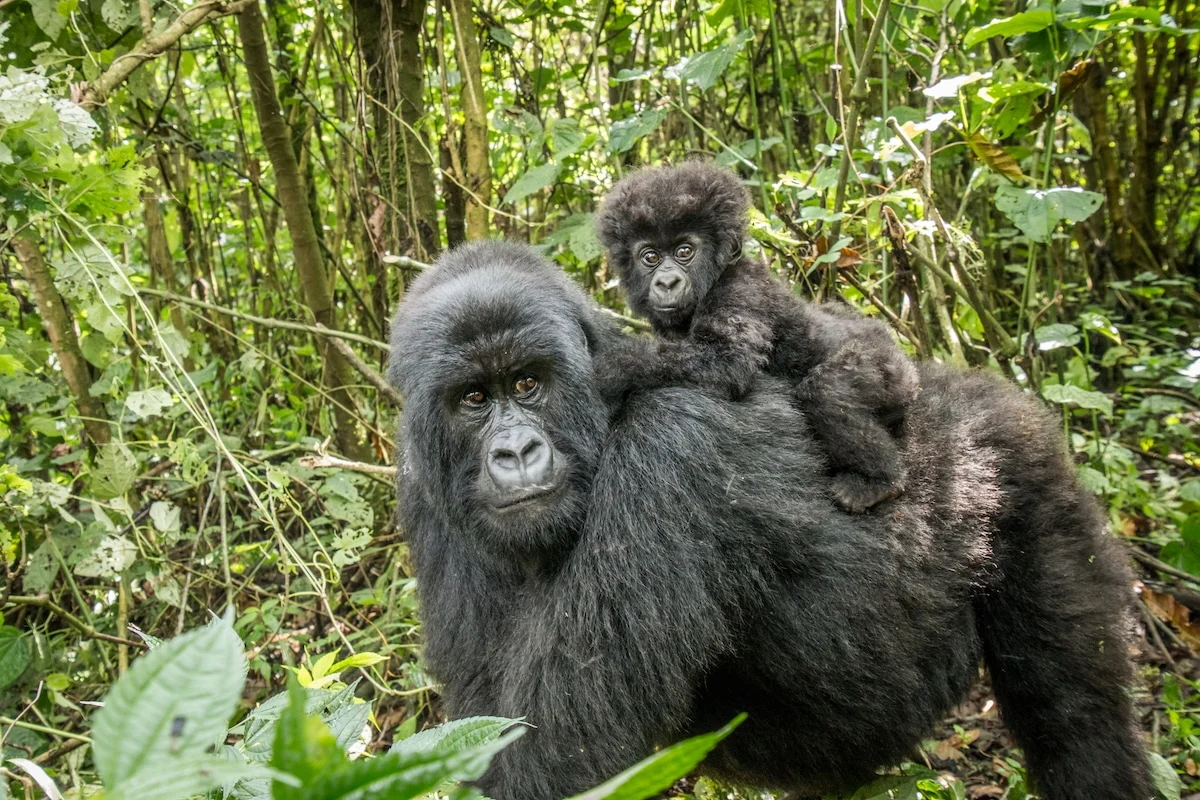
The Democratic Republic of the Congo (DRC) has moved to auction off more than half of its national territory to oil and gas interests, a move that environmentalists warn could lead to the catastrophic destruction of the world’s second-largest tropical rainforest and the extinction of several critically endangered species. According to a comprehensive new report titled "Forests to Frontlines: Oil Expansion Threats in the DRC" by the research organization Earth Insight, the government’s latest licensing round targets 306 million acres of land. This vast expanse includes 64 percent of the nation’s pristine forest cover and critical habitats for some of the planet’s most iconic wildlife, including mountain gorillas, eastern lowland gorillas, and bonobos.
The scale of the proposed expansion represents a significant escalation of the DRC’s fossil fuel ambitions. The government recently initiated an auctioning round for 52 oil blocks, adding to three previously awarded concessions. This initiative effectively places 53 percent of the country’s total landmass under potential hydrocarbon development. The move has triggered intense international scrutiny and domestic protest, as the affected areas overlap with millions of acres of protected lands, indigenous territories, and carbon-rich peatlands that are essential for global climate stability.
A Drastic Expansion of the Hydrocarbon Frontier
The current push for oil and gas development is a massive expansion of a controversial auction first launched in 2022. At that time, the DRC government offered 30 oil and gas blocks for bidding, claiming the need to generate revenue to combat poverty and fund national development. However, the 2025 licensing round has nearly doubled the number of blocks, pushing the boundaries of exploration into even more sensitive ecological zones.
The Earth Insight report reveals that the proposed oil blocks overlap with 20.5 million acres of officially protected areas. Furthermore, 21.3 million acres of designated Key Biodiversity Areas (KBAs)—regions identified as being of international importance for the conservation of the world’s biodiversity—are now within the sights of the fossil fuel industry. Perhaps most alarming is the intersection with 165.1 million acres of intact tropical forests, which serve as the primary defense against global warming by sequestering billions of tons of carbon dioxide.
This expansion is not merely a domestic economic policy; it is a global environmental concern. The Congo Basin is often referred to as the "second lung" of the Earth, following the Amazon. Unlike the Amazon, which has faced decades of heavy deforestation, the Congo Basin has remained relatively intact. Opening this region to heavy industry, road construction, and potential oil spills could trigger a tipping point for the regional and global climate.
The Threat to Critically Endangered Great Apes
The DRC is the only country in the world where three types of great apes coexist: the mountain gorilla, the eastern lowland (Grauer’s) gorilla, and the bonobo. These species are already under immense pressure from poaching, civil unrest, and habitat loss. The introduction of oil and gas infrastructure into their remaining strongholds could be the final blow to their survival in the wild.
The Virunga National Park, Africa’s oldest national park and a UNESCO World Heritage site, is particularly at risk. While the park has long been a flashpoint for conflict, it remains one of the last refuges for the mountain gorilla. Oil exploration typically involves seismic testing, which uses loud acoustic pulses to map underground formations. This process can disrupt the social structures and migratory patterns of gorillas. Furthermore, the construction of access roads into deep forest tracts facilitates illegal logging and commercial bushmeat hunting, which often follow industrial development into previously inaccessible areas.
Bonobos, which are found only in the DRC, inhabit the central rainforests that are now largely covered by oil blocks. Because bonobos are highly sensitive to human presence and habitat fragmentation, the industrialization of their home range could lead to rapid population declines.
The Peatland "Carbon Bomb"
One of the most critical areas identified in the Earth Insight report is the Cuvette Centrale, the largest tropical peatland complex in the world. This region stores an estimated 30 gigatons of carbon—an amount equivalent to roughly three years of global fossil fuel emissions. These peatlands are essentially "carbon bombs"; as long as they remain waterlogged and undisturbed, the carbon stays in the ground. However, if the area is drained for oil infrastructure or disrupted by drilling, the peat will dry out and decay, releasing massive amounts of methane and carbon dioxide into the atmosphere.
The majority of the Cuvette Centrale is now included in the government’s newly designated oil blocks. Environmental scientists warn that any industrial activity in this fragile ecosystem would undermine international climate goals. The degradation of these peatlands would not only accelerate global warming but also destroy the unique aquatic and terrestrial biodiversity that thrives in these wetlands.

Social Implications and Indigenous Rights
The human cost of this oil expansion is equally significant. Approximately 39 million Congolese people—nearly 40 percent of the national population—live within the areas designated for oil and gas blocks. Many of these individuals belong to forest-based and Indigenous communities who have lived in harmony with the ecosystem for generations. These communities rely on the rivers for drinking water and fishing, and the forests for food, medicine, and cultural identity.
Pascal Mirindi, a campaign coordinator for the grassroots organization Notre Terre Sans Pétrole (Our Land Without Oil), expressed the frustration of many citizens. "Imagine: 39 million Congolese people… and 64 percent of our forests could be directly affected," Mirindi stated. He highlighted the apparent contradiction in government policy, noting that the administration has simultaneously promoted the "Kivu-Kinshasa Green Corridor" as a sustainable development project. "Where is the logic? Where is the coherence?" Mirindi asked. "We will not remain silent while certain people organize themselves to sell off our future."
The Earth Insight report emphasizes that the rights of local communities to "Free, Prior, and Informed Consent" (FPIC) are being systematically ignored. The auctioning process has largely excluded the voices of those who will be most directly impacted by the environmental degradation that follows oil extraction.
Chronology of the DRC’s Oil Push
The DRC’s journey toward becoming a major oil producer has been marked by shifting political priorities and international friction:
- 2021: President Félix Tshisekedi’s administration begins signaling a move toward monetizing the country’s fossil fuel reserves, arguing that Western nations have failed to provide sufficient financial compensation for forest preservation.
- July 2022: The government officially launches an auction for 30 oil and gas blocks. This move is met with immediate condemnation from international environmental groups and some donor nations.
- 2023-2024: Exploration permits and preliminary agreements are discussed behind closed doors, while domestic civil society groups begin organizing protests under the "Our Land Without Oil" banner.
- 2025: The government drastically expands the auction to 52 oil blocks, covering over half the country. The "Forests to Frontlines" report is released, providing the first detailed mapping of how these blocks overlap with critical ecosystems.
International Reactions and Economic Realities
The DRC government has defended its right to exploit its natural resources, pointing to the economic prosperity that oil has brought to other nations. Government officials have frequently argued that it is hypocritical for industrialized nations, which built their economies on fossil fuels, to demand that the DRC remain a "carbon sink" for the world without significant financial transfers.
However, international experts warn of the "resource curse" and the risk of "stranded assets." As the world shifts toward renewable energy, the long-term viability of new oil projects is increasingly uncertain. Furthermore, the infrastructure required to extract oil from the deep interior of the Congo Basin would be prohibitively expensive and logistically challenging, potentially leaving the DRC with environmental devastation and little economic gain.
Donor nations and international organizations, including the Central African Forest Initiative (CAFI), have attempted to negotiate agreements to protect the Congo Basin. In 2021, a $500 million deal was signed at COP26 to protect the DRC’s forests. Critics now argue that the government’s oil push violates the spirit, if not the letter, of such agreements.
Analysis of Implications
The decision to open 53 percent of the DRC to oil and gas development represents a pivot point in the global fight against climate change. If these projects proceed, the ecological integrity of the Congo Basin will be compromised, and the world will lose one of its most effective natural tools for carbon sequestration.
The Earth Insight report, produced in partnership with DRC-based organizations like CORAP and international groups like Rainforest Foundation UK, calls for an immediate cancellation of the 2025 licensing round. The report suggests that instead of fossil fuel expansion, the international community must provide genuine, large-scale financial support for sustainable development models that empower local communities and protect biodiversity.
"Oil and gas development in these fragile ecosystems would have devastating impacts on biodiversity, communities, land rights, and the global fight against climate change," said Anna Bebbington, an Earth Insight research manager.
As the auction moves forward, the eyes of the world remain on Kinshasa. The outcome will determine whether the DRC becomes a major new frontier for the fossil fuel industry or if it can find a path toward development that preserves the "second lung" of the planet for future generations. The conflict between immediate economic pressure and long-term ecological survival has rarely been as stark as it is today in the heart of the African continent.








Leave a Reply