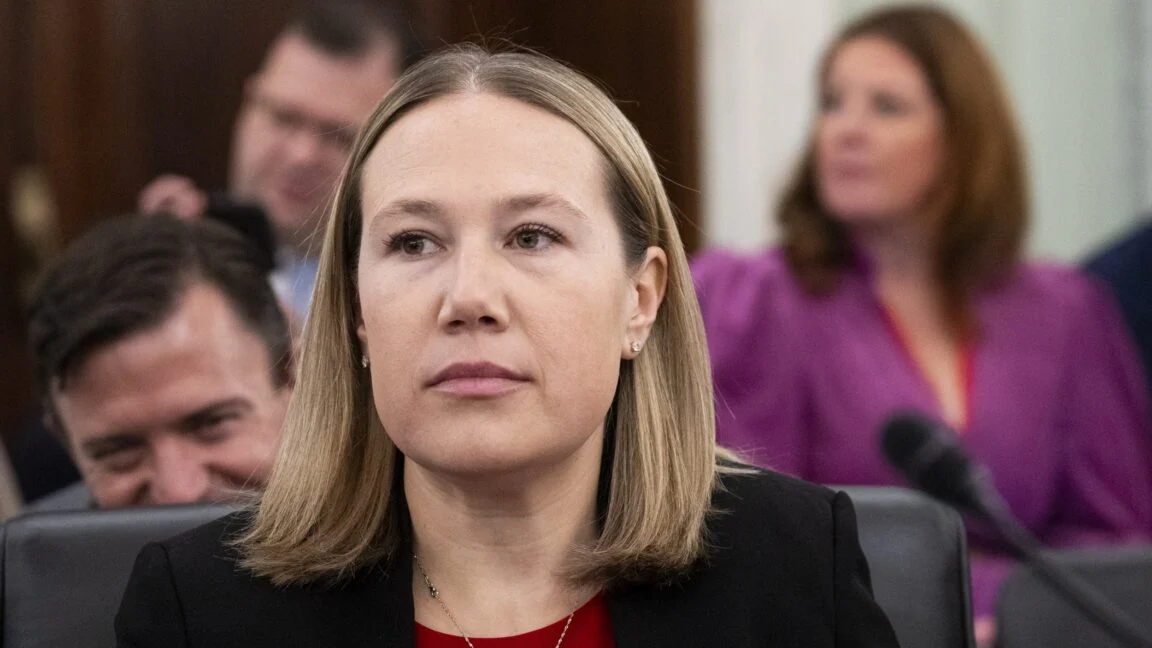
The confirmation hearing for Federal Communications Commission (FCC) nominee Danielle Thumann Severs before the Senate Commerce, Science, and Transportation Committee quickly escalated into a partisan clash on Tuesday, November 10, 2026. Senate Democrats aggressively questioned Thumann Severs regarding her close professional ties to current FCC Chairman Brendan Carr, probing her willingness to act as an independent regulator if confirmed. Opposing the confirmation push during the lame-duck legislative session, Democratic lawmakers signaled their intent to launch rigorous congressional oversight and investigations into Carr’s leadership once the new congressional term begins in January 2027.
The hearing highlighted deep political divisions over the direction of the nation’s primary telecommunications regulator. With Republicans eager to secure a solid majority on the commission before losing their legislative leverage, Democrats used the platform to challenge the integrity of the agency’s recent administrative actions, address the future of critical broadband initiatives, and warn of aggressive investigative oversight in the upcoming 119th Congress.
Background and Context of the Lame-Duck Nomination
The push to confirm Danielle Thumann Severs—an attorney and senior counsel to Chairman Carr—unfolded against the backdrop of a high-stakes transition period in Washington. Following the recent election cycle, Republicans have maintained a narrow window during the lame-duck session to advance executive and independent agency appointments before a newly elected Congress is sworn in.
Senate Commerce Committee Chairman Ted Cruz (R-Texas) spearheaded the confirmation proceedings, aiming to seat Thumann Severs to fill an ongoing vacancy on the five-member commission. Traditionally, the FCC operates under a bipartisan structure maintaining a 3-2 political split. However, confirming Thumann Severs would establish an unusual 3-1 Republican advantage.
Democratic senators expressed profound frustration over this imbalance, pointing out that the nomination was not paired with a Democratic candidate, defying long-standing bipartisan norms of the chamber. Senator Ed Markey (D-Mass.) opened the line of criticism by attacking the legitimacy of the process.
"After the American people last week overwhelmingly rejected the MAGA agenda, there is no justification for this committee to advance partisan nominees during the lame-duck period," Markey stated during the hearing. He further accused the nominee of attempting to bypass fundamental questions regarding executive overreach, regulatory independence, and the preservation of First Amendment protections.
Evasion on Chairman Carr and Broadcaster Retaliation
Throughout the hearing, Thumann Severs faced intense scrutiny regarding her professional history as a close advisor to Chairman Carr. Lawmakers questioned her stance on several controversial enforcement actions and public statements made by Carr, particularly those concerning broadcast media licensing and political speech.
Senator Ben Ray Luján (D-N.M.) directly pressed the nominee on whether she supported what he and other critics characterize as an aggressive campaign against television networks and broadcasters. Luján specifically questioned whether Thumann Severs endorsed Carr’s past warnings to ABC and its parent company, Disney, following controversial remarks made by late-night comedian Jimmy Kimmel.
Last year, Chairman Carr publicly suggested that Disney needed to take administrative action regarding Kimmel’s commentary, warning that failure to do so could result in "additional work for the FCC ahead" concerning the network’s broadcast licenses. This warning was followed by an official FCC order for an early review of ABC station licenses, ostensibly initiated under the guise of investigating diversity, equity, and inclusion (DEI) practices, though widely interpreted by media analysts and critics as political retaliation for unfavorable coverage and commentary.
When asked by Luján if she supported these actions or agreed with the pressure campaign, Thumann Severs distanced herself from the remarks, stating, "Those were his words. They were not my words, and I have not advised him or worked with the chairman on these particular issues." She maintained that any future decisions on her part as an independent commissioner would be strictly governed by the factual record and applicable telecommunications law.
However, her reticence to directly critique or disavow the chairman’s methods left multiple committee members dissatisfied. Senator Tammy Duckworth (D-Ill.) voiced sharp skepticism regarding the nominee’s ability to function as an impartial regulator.
"If you’re confirmed, you’re going to be one of the votes that decides whether the FCC stays an independent regulator or becomes an arm of the White House press office," Duckworth warned. "We deserve to know where you stand, and I am not comfortable with your answers today."
The Future of the E-Rate Program
In addition to media regulation, the hearing addressed the uncertain future of the E-Rate program—a critical, federally funded initiative established by Congress to provide affordable internet access to schools and libraries nationwide. Pumping approximately $2 billion annually into educational connectivity, the program has faced existential threats under the current FCC leadership.
Chairman Carr has previously proposed scaling back or completely eliminating the E-Rate program, prompting widespread concern from educational institutions, state officials, and advocacy groups. Senators questioned Thumann Severs regarding her direct involvement in drafting the E-Rate Notice of Proposed Rulemaking, which sought public commentary on whether the agency possesses the statutory authority to alter or terminate the long-standing program.
Thumann Severs declined to take a definitive stance on the matter during the hearing, citing open administrative proceedings. "I can’t prejudge the open proceeding at the FCC right now," she testified, explaining that her official duties involved working on the rulemaking notice to gather public feedback rather than pre-determining its outcome.
Lawmakers pushed back, arguing that the FCC lacks the unilateral statutory authority to dismantle a program explicitly mandated by Congress. Duckworth noted that eliminating or severely cutting the broadband subsidy during an era of high inflation and rising utility costs would directly harm students and communities relying on connected educational hubs.
Implications and the Threat of Subpoena Power
Perhaps the most potent warnings of the day came from Democratic senators outlining the legislative and investigative landscape awaiting the FCC in the upcoming congressional term. With control of both chambers shifting or intensifying in January 2027, Democrats made it clear that regulatory actions taken under Carr and any newly confirmed commissioners will face exhaustive congressional oversight.

Senator Luján delivered a blunt prediction regarding the lifespan of the current commission leadership under aggressive legislative scrutiny.
"I don’t think Chairman Carr is going to be around more than another three or four months because when we have the gavels in here, he will be here once a month," Luján declared. "And Mr. Carr, if you’re listening now, know you’re going to be in this body once a month, if not more, and in the House of Representatives as well, answering questions, and you don’t have the protection of the gavel any longer."
Luján emphasized that the incoming Democratic majorities intend to utilize full subpoena authorities to investigate administrative actions, communication logs, and internal decisions made during Carr’s tenure.
Furthermore, lawmakers raised concerns regarding the potential destabilization of the commission’s bipartisan quorum. Senator John Hickenlooper (D-Colo.) warned that confirming Thumann Severs could pave the way for the executive branch to remove the sole remaining Democratic commissioner, Anna Gomez, leaving the agency entirely devoid of bipartisan opposition. Hickenlooper stressed that an independent, bipartisan FCC is vital to preventing monopolistic media consolidation and safeguarding a free press.
Republican Support and Committee Next Steps
Despite concerted Democratic opposition, Republican leadership remained unified behind the nomination. Committee Chairman Ted Cruz defended the agency’s recent administrative actions, arguing that historical precedents under past Democratic administrations also utilized public interest standards to influence broadcast environments.
Cruz highlighted his collaborative legislative efforts to curb regulatory overreach, pointing to the bipartisan JAWBONE Act—legislation co-sponsored with Senator Ron Wyden (D-Ore.) designed to enable legal recourse against federal officials who coerce media platforms or broadcasters into restricting protected speech. When questioned by Cruz, Thumann Severs confirmed her support for the bill, affirming that federal regulators should never leverage their official positions to pressure entities regarding protected expression. Satisfied with these commitments, Cruz moved the confirmation process forward.
The Senate Commerce, Science, and Transportation Committee established a deadline for members to submit written questions for the record, with nominees required to file formal responses by November 16. While Republicans possess the numerical advantage required to advance Thumann Severs out of committee and onto the Senate floor, the bruising confirmation hearing foreshadows a deeply contentious regulatory battleground and an era of intensive congressional investigations when the new Congress convenes.