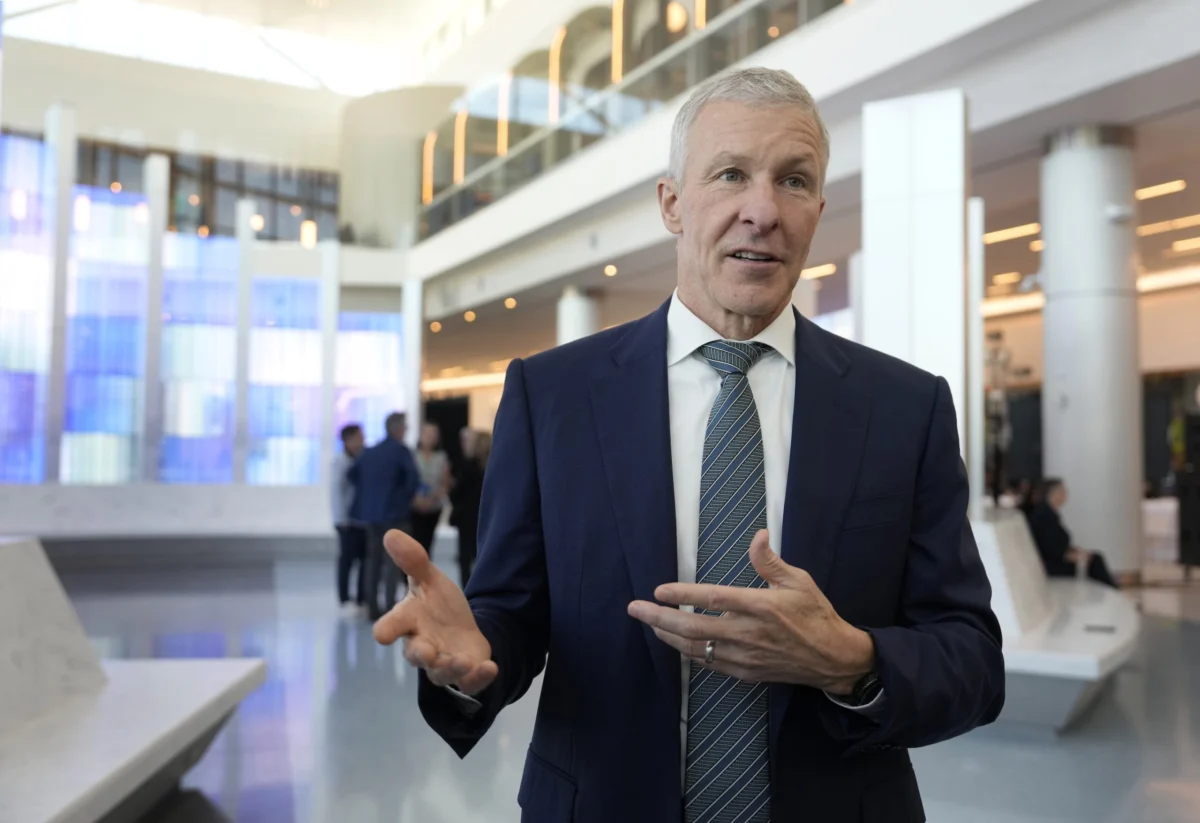
United Airlines Chief Executive Scott Kirby has ignited a fierce, nationwide economic and political debate following a series of public statements in which he called for a national wealth tax and aggressive inheritance levies, directly contradicting the traditional corporate defense of executive compensation and capital accumulation. Kirby, who collected approximately $32.3 million in total compensation last year for running a Fortune 500 carrier that pulled in $59.1 billion in annual revenue, argued that the widening wealth gap has evolved into a fundamental threat to the stability of modern society.
His remarks have divided economists, corporate leaders, and policymakers alike, putting a spotlight on the mechanics of modern American taxation, the philosophy of wealth generation, and the practical viability of taxing unrealized capital gains. While supporters view his perspective as a rare and refreshing admission from the upper echelons of corporate America, critics argue that a wealth tax would choke investment, trigger severe capital flight, and undermine the fundamental economic engines that drive global innovation.
The Chronology of a Corporate Controversy
The public discourse surrounding Kirby’s unconventional economic views unfolded rapidly across several high-profile media appearances during the autumn months. The sequence of events began to take shape with the release of United Airlines’ proxy statement, which detailed Kirby’s lucrative compensation package, including stock awards, options, and other forms of incentive pay. Shortly thereafter, in mid-October, Kirby sat down for a wide-ranging interview with The New York Times, where he did not shy away from addressing macroeconomic disparities. He explicitly stated that wealth inequality had become a profound danger to societal cohesion, proposing a national wealth tax paired with inheritance taxes that scale up to nearly 100% at the highest brackets. When pressed on whether he would be willing to subject himself to such measures, Kirby offered a direct affirmation: "I would pay them."
The fallout was immediate. Financial journalists and market analysts quickly pointed out the apparent dissonance between a corporate executive pulling in tens of millions of dollars annually and his vocal condemnation of extreme wealth concentration. Fox Business reached out to United Airlines to inquire how Kirby reconciled his massive compensation package with his warnings about systemic inequality, but the airline and its representatives declined to comment.
Undeterred by the initial pushback, Kirby doubled down on his assertions a few days later during an appearance on CNBC’s Squawk Box. Expanding on his rationale, he framed the proposal not as a punitive measure against success, but as a matter of basic economic fairness. He drew attention to a structural loophole in the federal tax architecture, noting that ultra-wealthy individuals can accumulate capital, shield it from immediate taxation, and allow it to compound indefinitely without ever realizing taxable income.
Mechanics of the Wealth Gap and the Current Tax Code
To understand the core of Kirby’s argument, financial analysts point to the fundamental design of the United States federal tax system, which relies primarily on taxes levied against realized income rather than accumulated net worth. Under the Internal Revenue Service guidelines for the 2025 tax year, the top federal income tax bracket of 37% applies to single filers with taxable incomes exceeding $626,350. However, this structure fundamentally bypasses vast fortunes held in non-liquid assets, corporate stock, real estate, and private equity investments that appreciate in value over time.
Under current tax laws, an investor or corporate executive can hold assets that grow by billions of dollars in value without incurring any tax liability, provided those assets are never sold. Furthermore, wealthy taxpayers can borrow against the value of these appreciating assets to fund their lifestyles, bypassing income taxes altogether. If these assets are held until death, beneficiaries often benefit from a provision known as the "stepped-up basis," which resets the asset’s value for tax purposes and can effectively shield decades of capital gains from ever being taxed.
Kirby’s proposed remedy targets this exact cycle. During his media appearances, he emphasized that these were strictly his personal views and that he harbored no political ambitions or desire to craft public policy. Nevertheless, he outlined a preferred fiscal model wherein traditional income taxes could be lowered while simultaneously introducing direct levies on the incremental growth of overall wealth.
The Libertarian Counter-Perspective: Risks of Capital Flight and Stagnation
The corporate executive’s populist policy prescriptions drew sharp rebukes from conservative and libertarian economic institutions, which argue that an annual wealth tax would produce disastrous economic consequences. Mariana Trujillo, managing director of government finance at the Reason Foundation, offered a robust critique of Kirby’s proposals in statements to financial press outlets. Trujillo contended that penalizing accumulated wealth directly undermines the very mechanisms responsible for historical improvements in human living standards.
According to Trujillo, economic progress is driven by private investment, risk-taking, and entrepreneurship—forces that would be severely disincentivized by an ongoing tax on net worth. She drew a careful analytical distinction between the two forms of taxation mentioned by Kirby: an inheritance tax, which extracts wealth a single time upon the transfer of assets between generations, and an annual wealth tax, which continually drains capital year after year regardless of whether the underlying assets are generating income.
Trujillo warned that an annual wealth tax would act as an aggressive catalyst for capital flight, pointing to historical precedents in Europe. Nations such as France, Sweden, and Germany implemented wealth taxes in the late 20th century, only to repeal them decades later following severe economic backlashes. These European trials were largely abandoned after governments observed massive waves of wealthy citizens and liquid capital migrating to more tax-friendly jurisdictions, alongside administrative enforcement nightmares and revenues that fell far short of official projections. Today, only a handful of European nations—most notably Norway, Spain, and Switzerland—maintain net wealth taxes, and their implementation details continue to be a subject of intense economic study and debate.
Addressing Kirby directly, Trujillo challenged the premise that private fortunes must be redistributed by the state to be socially beneficial. She argued that executive compensation reflects the market value of the individual’s contributions to their enterprise and, by extension, to society. In her view, wealth is not merely a static pile of hoarded money that requires state intervention, but rather the active byproduct of value creation for consumers, employees, and shareholders.
The California Ballot Battle: Proposition 40’s Defeat
While Kirby maintained that state-level tax initiatives are fundamentally flawed because wealthy individuals and corporations can easily relocate across state lines—arguing instead for a centralized national approach—recent political reality has tested the appetite for sub-national wealth taxes.
In the November 3 general election, California voters decisively rejected Proposition 40, a closely watched ballot measure colloquially known as the "billionaire tax." The proposal sought to impose a one-time 5% levy on the net worth of state residents possessing assets valued at more than $1 billion. The Associated Press officially called the race on November 9, with 52.8% of the electorate voting against the measure, according to data compiled by CalMatters.
The campaign surrounding Proposition 40 was one of the most contentious fiscal battles in the state’s recent history. The initiative enjoyed backing from prominent academic figures, including six Nobel Prize-winning economists who argued that California could serve as a pioneering testing ground for progressive tax reform that might eventually be replicated nationwide. However, the opposition mounted a formidable counter-offensive, outspending the proponents by a wide margin. Opponents of the measure poured approximately $378 million into campaigns warning of economic ruin, whereas the "yes" campaign raised roughly $33.5 million.
Geographic voting patterns within California revealed a deep socio-economic divide over the tax. Silicon Valley voters, representing the heart of the state’s technology and venture capital wealth, broke heavily against the proposal, whereas urban centers such as Los Angeles and San Francisco registered majority support for it. For critics like Trujillo, the defeat of Proposition 40 served as a clear democratic referendum on wealth taxation as a whole. She asserted that California voters rejected the measure because they recognized the severe risks of diminished state revenues resulting from taxpayer exodus, as well as the chilling effect such a tax would impose on local investment and technological innovation.
Broader Implications and the Future of Economic Policy
As the dust settles on the California ballot measure and the national dialogue sparked by the United Airlines CEO continues to reverberate, the debate highlights a deepening philosophical rift within the American business community. While executive compensation packages routinely face scrutiny from shareholders and labor advocates alike, it remains exceptionally rare for a sitting leader of a major multinational corporation to publicly validate the policy arguments traditionally championed by progressive activists and lawmakers.
Kirby noted that the personal correspondence he received in the wake of his interviews was split almost evenly between vehement support and sharp condemnation. This polarization mirrors the broader American electorate, where growing anxieties over income inequality frequently clash with deeply ingrained fears of overreaching government intervention and economic stagnation.
Whether Kirby’s unorthodox public stance signals the beginning of a genuine shift in corporate philosophy or remains merely an isolated anomaly from an outspoken chief executive, the underlying tensions of wealth concentration, capital mobility, and tax equity are certain to remain at the forefront of national economic policy discussions for years to come.