
The Democratic Republic of the Congo has embarked on an aggressive fossil fuel expansion strategy that places more than half of the nation’s territory under potential oil and gas concessions. According to a comprehensive new report titled Forests to Frontlines: Oil Expansion Threats in the DRC, published by Earth Insight in partnership with local and international environmental groups, the government has advanced an auctioning round for 52 new oil blocks. These parcels are in addition to three blocks previously awarded, bringing the total area designated for hydrocarbon development to an unprecedented scale.
This policy pivot directly threatens approximately 64 percent of the country’s pristine tropical forests, imperiling globally vital carbon sinks, irreplaceable biodiversity hotspots, and the traditional homelands of tens of millions of people. The development has ignited widespread alarm among conservationists, Indigenous leaders, and international scientists who warn that unlocking these reserves could severely undermine global climate targets and devastate fragile ecosystems that have taken millennia to form.
The Scope of the Crisis and Threatened Ecosystems
The geographical footprint of the newly opened oil blocks is vast, cutting directly through some of the most ecologically significant regions on Earth. The Democratic Republic of the Congo houses the second-largest tropical rainforest on the planet, a sweeping expanse of green canopy that acts as a fundamental buffer against global climate change. Within this complex landscape lie the Cuvette Centrale peatlands—the largest tropical peatland complex in the world. Spanning across vast swaths of the Congo Basin, these peatlands store an estimated 30 gigatons of carbon, making their preservation a non-negotiable priority for international climate stability.
Data compiled in the Forests to Frontlines report highlights the staggering overlap between the proposed oil blocks and areas of critical environmental protection:
- Protected Areas: The concessions overlap with roughly 20.5 million acres of officially designated protected lands, including iconic national parks that serve as the last remaining refuges for endangered wildlife.
- Key Biodiversity Areas: Approximately 21.3 million acres of designated Key Biodiversity Areas fall directly within the boundary of the oil blocks.
- Intact Tropical Forests: The initiative threatens 165.1 million acres of intact, primary tropical forest.
- The Kivu-Kinshasa Green Corridor: As much as 72 percent of this recently established ecological corridor intersects directly with the oil concessions, severely undermining its ecological integrity and its positioning as a sustainable development climate solution.
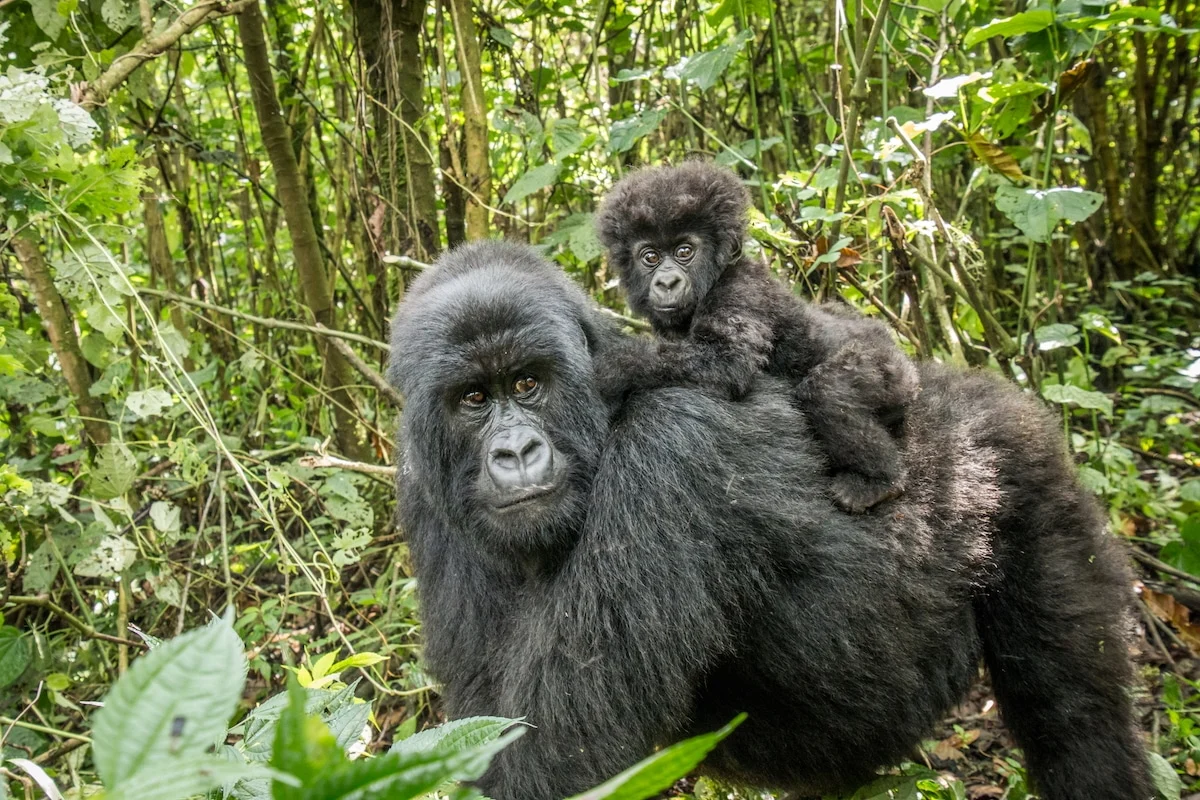
Among the species most immediately at risk are mountain gorillas (Gorilla beringei beringei), eastern lowland gorillas (Gorilla beringei graueri), bonobos (Pan paniscus), African forest elephants (Loxodonta cyclotis), and thousands of endemic plant and bird species. These animals depend entirely on unbroken forest networks for foraging, migration, and reproduction. Introducing industrial infrastructure—including seismic testing, exploratory drilling, road construction, and heavy machinery—into these pristine habitats threatens to fragment populations, introduce poachers via newly cut access roads, and cause irreversible environmental degradation.
Chronology of Fossil Fuel Expansion in the Congo
The current 2025 licensing round represents a dramatic escalation of a policy trajectory that has steadily accelerated over the past several years. Understanding the timeline of the DRC’s fossil fuel ambitions provides crucial context for the severity of the current crisis:
- May 2021: The DRC government lifts a decade-old moratorium on logging concessions, signaling a willingness to monetize the nation’s natural capital to generate state revenue.
- July 2022: The Ministry of Hydrocarbons launches a highly controversial auction round for 30 oil and gas blocks. Environmental watchdogs immediately flag that many of these blocks overlap with Virunga National Park, Salonga National Park, and vital peatland ecosystems.
- Late 2022 to 2023: Despite intense international pressure, bilateral negotiations, and warnings from climate scientists, the government moves forward with awarding initial contracts, claiming that the development of fossil fuels is necessary to lift its population out of poverty and fund public infrastructure.
- Mid-2024: Preparations begin behind the scenes for an expanded licensing round, despite the DRC’s stated commitments under international climate frameworks such as the Central African Forest Initiative (CAFI) and the Paris Agreement.
- July 2025: Earth Insight, alongside the Coalition des Organisations de la Société Civile pour le Suivi des Reformes et de Action Publique (CORAP), Our Land Without Oil, and Rainforest Foundation UK, releases the Forests to Frontlines report. The publication reveals that the auctioning round has expanded to 52 blocks, placing 53 percent of the entire country under potential oil and gas concessions.
Human Impact and the Threat to Indigenous Communities
While the environmental repercussions are global in scale, the immediate human toll will be borne by the estimated 39 million Congolese people who reside within or adjacent to the affected zones. This population includes numerous forest-based communities and Indigenous Peoples whose cultural identities, traditional knowledge, and daily survival are inextricably linked to the health of the tropical forests and river systems.
For these local populations, the intrusion of the oil and gas industry threatens not only their physical environment but also their land tenure and human rights. Local civil society leaders have expressed profound betrayal, noting that the government’s pursuit of short-term fossil fuel revenues directly contradicts its parallel promotion of conservation initiatives, such as the Kivu-Kinshasa ecological corridor.

Pascal Mirindi, campaign coordinator for Notre Terre Sans Pétrole, voiced the collective outrage of local communities during the release of the findings. "Imagine: 39 million Congolese people and 64 percent of our forests could be directly affected by the awarding of these oil blocks," Mirindi stated. "And all this while the government is promoting the Kivu-Kinshasa ecological corridor. Where is the logic? Where is the coherence? We are reminding our leaders that the Congolese people are the primary sovereign. We will not remain silent while certain people organise themselves to sell off our future."
Echoing these concerns, Anna Bebbington, an Earth Insight research manager, emphasized the systemic risks involved. "Oil and gas development in these fragile ecosystems would have devastating impacts on biodiversity, communities, land rights and the global fight against climate change," Bebbington noted.
Fact-Based Analysis of Implications
The DRC’s decision to open more than half of its landmass to hydrocarbon exploration presents profound geopolitical, economic, and environmental dilemmas.
1. The Global Climate Feedback Loop
The release of carbon from the Cuvette Centrale peatlands alone could release gigatons of greenhouse gases into the atmosphere, rendering global targets outlined in the Paris Agreement virtually unachievable. Tropical forests and peatlands act as natural carbon sinks; converting them into industrial zones transforms them from carbon absorbers into major net emitters.
2. The Economic Paradox
Proponents of the drilling initiatives argue that petroleum extraction will generate essential government revenues, create jobs, and fund national development. However, economists and environmental analysts frequently warn of the "resource curse," where resource-dependent nations experience macroeconomic volatility, institutional corruption, and localized poverty without broad-based prosperity. Furthermore, staking the nation’s long-term economic future on a declining global fossil fuel market—while renewable energy adoption accelerates worldwide—carries significant financial risk.
3. Credibility of International Climate Pledges
The DRC has historically positioned itself as a "solutions country" for the climate crisis, demanding international financial compensation—such as forest-protection partnerships—in exchange for keeping its forests standing. By dramatically expanding its fossil fuel frontier, the government risks alienating international donors, jeopardizing carbon credit frameworks, and eroding trust within the global climate community.
Recommendations from Civil Society and the Path Forward
The Forests to Frontlines report concludes with a clear series of demands formulated by Congolese civil society organizations and international conservation partners. Rather than pursuing hydrocarbon expansion, the report urges the DRC government and its international partners to take immediate corrective action:
- Cancellation of the Licensing Round: Immediately halt and cancel the 2025 oil and gas licensing round and institute a permanent moratorium on future hydrocarbon exploration in sensitive ecosystems.
- Upholding Human Rights: Guarantee and protect the rights of Indigenous Peoples and local communities, ensuring their land tenure is respected and legally secured.
- Alignment of International Finance: Ensure that foreign aid, donor support, and international financing mechanisms are strictly aligned with national and international commitments to biodiversity preservation and climate action.
- Inclusive Governance: Foster meaningful participation and transparency by involving local communities and civil society organizations directly in environmental governance, decision-making, and monitoring processes.
As the international community absorbs the findings of the latest report, the future of the Congo Basin hangs in the balance. The choices made in the coming months by Congolese authorities and global stakeholders will determine whether one of Earth’s greatest ecological treasures is preserved for future generations or sacrificed to the insatiable global demand for fossil fuels.









Leave a Reply