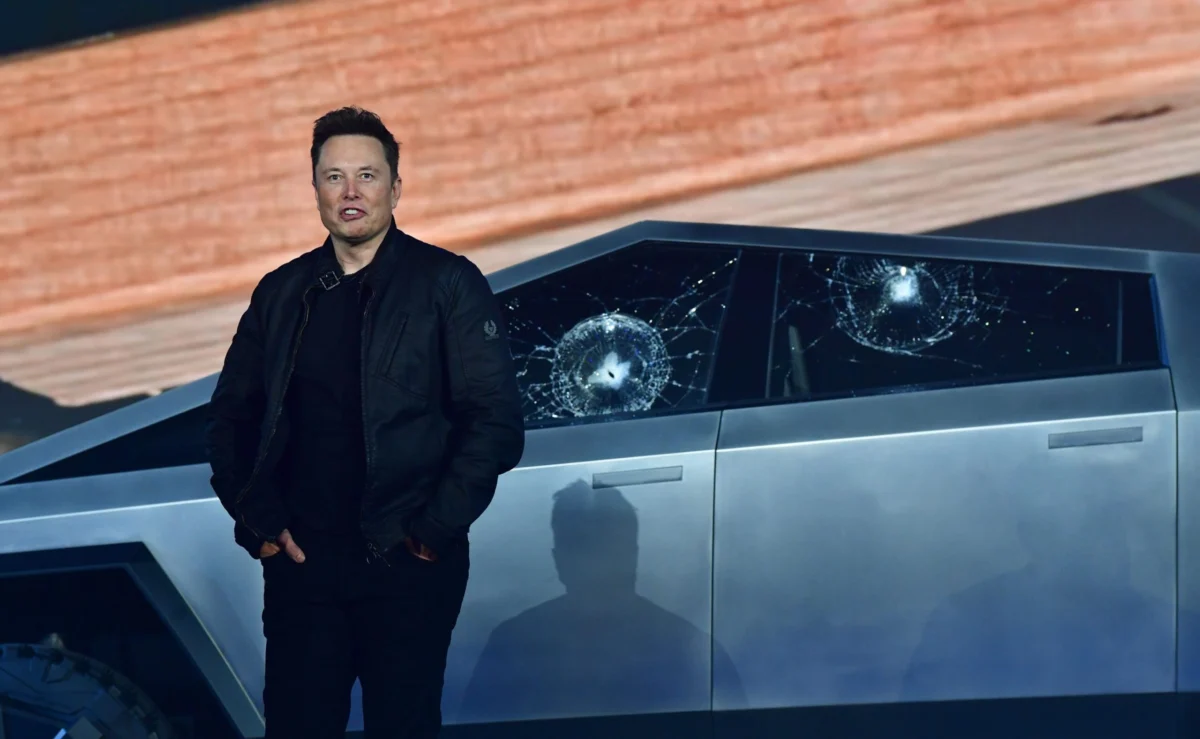
Tesla Inc. is preparing to phase out the production of its polarizing, futuristic electric pickup truck, the Cybertruck. Chief Executive Officer Elon Musk announced via a social media post on X that the company plans to wind down assembly operations at Gigafactory Texas around the middle of next year. The strategic shift is designed to clear manufacturing space and reallocate resources toward scaling up production of the autonomous Cybercab, marking a definitive pivot in Tesla’s long-term product roadmap away from niche consumer vehicles and toward autonomous transportation systems.
The decision arrives nearly seven years after the Cybertruck was first unveiled to the public in November 2019 at a sci-fi-themed event in Hawthorne, California. At the time, Musk touted the angular stainless-steel vehicle as a revolutionary leap forward for the automaker, famously calling it Tesla’s "best product ever" during a quarterly earnings call just weeks prior. However, the vehicle’s journey from concept to consumer driveway was plagued by repeated engineering delays, safety hurdles, skyrocketing price tags, and steep recalls.
As Tesla prepares to sunset the program, the move highlights a broader transformation within the company. Facing declining legacy EV sales following the expiration of federal tax incentives and fierce competition in both traditional electric vehicles and autonomous robotaxis, Tesla is doubling down on its vision of a driverless future.
A Timeline of Ambition, Delays, and Price Escalations
The biography of the Cybertruck is characterized by lofty promises followed by rolling deadlines. When Musk introduced the vehicle in late 2019, it captured global headlines not only for its brutalist, cyberpunk design but also for a heavily publicized mishap during a live demonstration. Tesla’s lead designer attempted to prove the durability of the vehicle’s "armor glass" by hurling a steel ball at the windows, which promptly shattered. Despite the blunder, hundreds of thousands of prospective buyers placed deposits, enticed by Musk’s promise of a rugged utility vehicle starting at an affordable baseline price of $39,900.
Originally slated to enter production in late 2021, the vehicle faced numerous setbacks driven by supply chain disruptions, battery technology shifts, and the complex manufacturing demands of working with ultra-hard stainless-steel exoskeletons. Customer deliveries did not officially commence until November 2023—two years behind schedule.
Furthermore, the final pricing structure bore little resemblance to the initial 2019 projections. By the time the vehicle hit the market, the entry-level price points had vanished. Over the ensuing years, Tesla instituted a series of price hikes. Earlier this month, following the announcement of the production wind-down, Tesla adjusted its lineup further by discontinuing the Dual Motor All-Wheel Drive variant and raising prices on remaining models. Consequently, the lowest-priced Cybertruck available climbed to $92,490, a dramatic departure from the sub-$40,000 promise that initially drew hundreds of thousands of reservation holders.
Sales Figures and Manufacturing Realities
While the Cybertruck achieved high visibility on American roadways, it struggled to capture the mass-market volume enjoyed by Tesla’s high-volume staples, the Model 3 sedan and Model Y crossover. During its initial rollout phase, Musk had routinely predicted that Tesla would eventually manufacture between 250,000 and 270,000 Cybertrucks annually.
Those production figures never materialized. According to industry estimates compiled by Kelley Blue Book and its parent company Cox Automotive, Tesla sold 38,965 Cybertrucks in the United States during its first full calendar year on the market in 2024. That momentum deteriorated rapidly in 2025, when sales dropped by 48% to just 20,237 units. Data from the first half of the year indicated that sales continued on a downward trajectory, putting the vehicle on pace for another steep year-over-year decline. Because Tesla groups its vehicle sales figures in public financial filings—often aggregating the Cybertruck under an "Other Models" category alongside the Model S and Model X—independent third-party automotive analytics have served as the primary gauge of the truck’s commercial performance.
Compounding the sales slowdown were recurring technical and regulatory hurdles. Since its launch, the Cybertruck has been subjected to 11 separate safety recalls, according to data from Reuters. These recalls addressed a variety of issues, ranging from accelerator pedal entrapment risks and exterior trim detachment to software glitches and wiper motor failures. These compounding challenges tested the patience of early adopters and cooled enthusiasm among prospective buyers who viewed the vehicle as an expensive, experimental novelty rather than a practical utility truck.
The Pivot to the Cybercab and Autonomous Operations
With traditional electric vehicle sales softening—particularly in the United States following the expiration of federal EV tax credits under the Trump administration—Tesla’s leadership has aggressively shifted its corporate narrative toward artificial intelligence, robotics, and autonomous mobility.
The centerpiece of this new strategic era is the Cybercab, a dedicated two-seater robotaxi stripped of traditional driving controls such as a steering wheel and pedals. Unveiled at a high-profile company event in 2024, the Cybercab is designed to operate entirely through Tesla’s Full Self-Driving (FSD) software stack. In September, Tesla launched its first commercial Cybercab operations in Austin, Texas. These initial deployments complement Tesla’s existing ride-hailing operations utilizing modified Model Y vehicles, which currently operate in several major metropolitan areas across Texas (including Houston, Dallas, and Fort Worth) and Florida (Miami, Orlando, and Tampa).
By phasing out Cybertruck assembly at Gigafactory Texas by the middle of next year, Tesla will repurpose that vital factory floor space to scale up Cybercab manufacturing. Company executives aim to prove to skeptical Wall Street analysts that autonomous ride-sharing networks can generate high-margin recurring revenue that offsets cooling demand in the traditional retail automotive sector.
Regulatory Headwinds and Competitive Pressures in Autonomous Transit
Despite Tesla’s enthusiasm for its autonomous roadmap, the company faces substantial regulatory and competitive obstacles as it attempts to establish dominance in the robotaxi market.
Federal oversight remains a pressing challenge. In September, the National Highway Traffic Safety Administration (NHTSA) opened an official investigation into the Cybercab to determine whether the steering-wheel-and-pedal-free vehicle was properly certified under federal motor vehicle safety standards. Although Tesla submitted sworn responses to the agency’s inquiries at the end of October, the company requested that its filings be kept sealed under the classification of "confidential business information." As of late autumn, the NHTSA had not yet issued a public ruling on Tesla’s confidentiality request, leaving the regulatory compliance timeline uncertain.
Simultaneously, Tesla is entering the commercial robotaxi space as a latecomer relative to established industry leaders. Alphabet Inc.’s autonomous vehicle subsidiary, Waymo, already operates commercial robotaxi services across 15 major U.S. metropolitan areas. Waymo reported via social media channels earlier this year that its fleet routinely surpasses 500,000 paid passenger trips per week, giving the competitor a massive head start in rider trust, real-world mapping data, safety validation, and municipal integration.
Implications for Existing Owners and the Broader Market
The impending conclusion of Cybertruck manufacturing leaves existing owners and automotive analysts evaluating the long-term legacy of the vehicle. When asked by an observer on social media whether the end of production signified the close of a distinct chapter for the brand, Musk responded affirmatively while offering reassurance to current drivers, writing: "True, but the Cybertruck fleet will be around for a long time."
Tesla has not yet detailed its long-term strategy regarding parts availability, collision repair infrastructure, or warranty support for the tens of thousands of Cybertrucks currently on the road. Typically, automotive manufacturers are legally and operationally obligated to supply replacement components for discontinued vehicle lines for a designated span of years, but the unique stainless-steel fabrication and proprietary electronic architecture of the Cybertruck could present unique supply chain management challenges for service centers.
For the wider electric vehicle market, the departure of the Cybertruck signals a sobering realization among legacy automakers and EV startups alike: niche, highly stylized vehicles with polarizing designs and premium price tags face severe ceilings on mass adoption, particularly as macroeconomic pressures and shifting government subsidies alter consumer purchasing behavior.
As Tesla transitions the industrial might of Gigafactory Texas away from the angular pickup and toward the streamlined, steering-wheel-free chassis of the Cybercab, the company is betting its future on a paradigm shift in how people move through cities. Whether the autonomous bet can successfully replace the revenue streams of traditional vehicle segments—and overcome both rigorous federal oversight and entrenched competitors like Waymo—will define Tesla’s corporate trajectory for the remainder of the decade.