
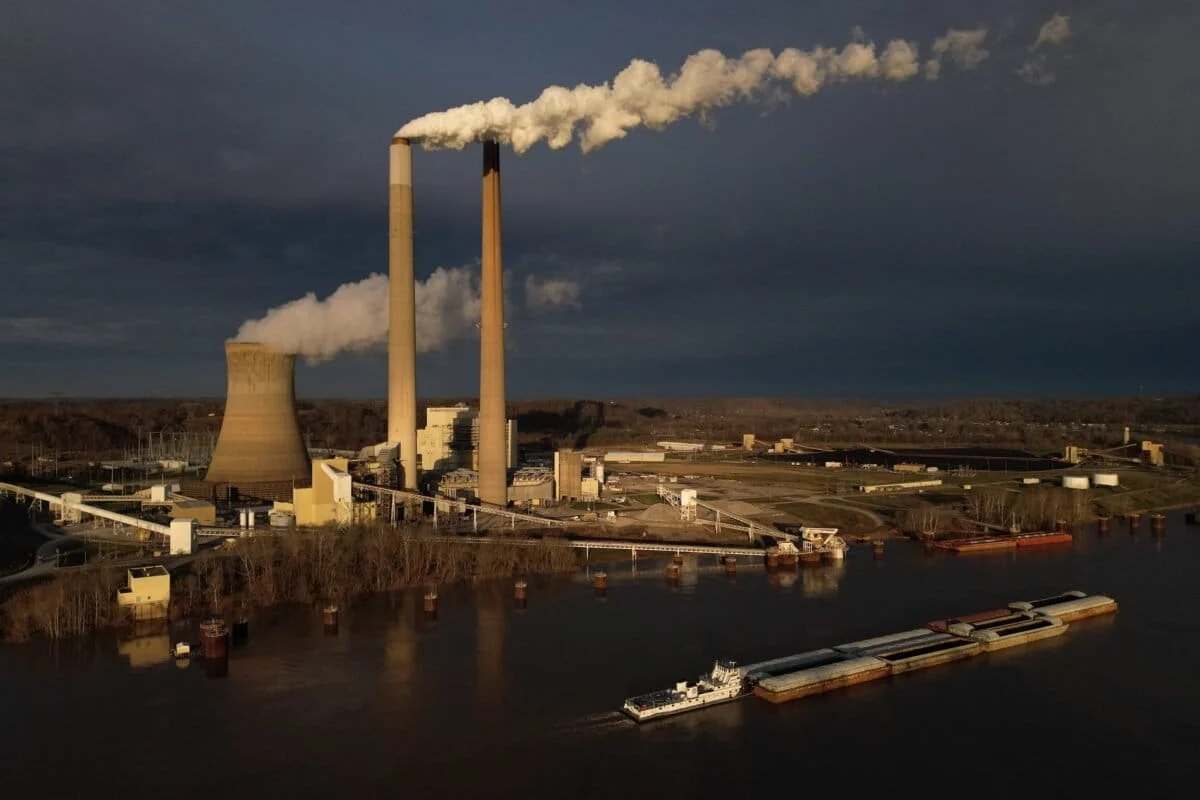
WASHINGTON — In a sweeping policy reversal that marks a dramatic departure from decades of federal climate regulation, the Environmental Protection Agency has officially repealed Obama- and Biden-era rules designed to curb greenhouse gas emissions from the nation’s fleet of coal- and natural gas-fired power plants.
The regulatory rollback, finalized following a proposal introduced last year, is projected by the agency to eliminate more than $300 billion in compliance and operational costs for the domestic energy sector. According to senior EPA officials, the decisive action is intended to “unleash” American energy production, enhance grid reliability, and restore operational flexibility to utility operators. By dismantling federal mandates that targeted planet-warming carbon dioxide emissions, the administration aims to prevent the premature retirement of fossil fuel infrastructure and hand decision-making power back to regional utility providers and state regulators.
This policy shift represents a profound ideological and regulatory pivot in Washington’s approach to environmental governance. For the past twenty years, federal climate policy has increasingly leveraged the Clean Air Act to force power generation companies toward cleaner, low-carbon alternatives. The latest EPA determination, however, asserts that previous administrations overstepped their statutory authority by effectively forcing utilities to shutter aging, carbon-intensive generation facilities in favor of renewable energy sources like wind and solar.
Background and Evolution of Power Plant Regulation
The regulatory architecture governing power plant emissions has long been a fiercely contested battleground in American politics, characterized by shifting legal interpretations, protracted court battles, and starkly divergent philosophies regarding energy security and environmental protection.
The foundation of federal oversight rests upon the Clean Air Act, a landmark piece of environmental legislation enacted in 1970 and significantly expanded in 1990. Under Section 111 of the statute, the EPA is authorized to establish New Source Performance Standards and guidelines for existing stationary sources of air pollution that endanger public health and welfare.
The contemporary debate over greenhouse gas limits gained significant momentum during the administration of President Barack Obama. In 2015, the EPA unveiled the Clean Power Plan, an ambitious regulatory framework that set strict, state-specific goals for reducing carbon dioxide emissions from existing power plants. The plan sought to accelerate the nation’s transition away from coal-fired electricity by encouraging a shift toward natural gas and renewable energy sources.
However, the Clean Power Plan immediately faced fierce pushback from a coalition of fossil fuel-dependent states, industry trade groups, and utility companies. Critics argued that the regulation constituted an unprecedented federal overreach that would devastate local economies and destabilize the electrical grid. In a historic move in February 2016, the U.S. Supreme Court took the extraordinary step of staying the implementation of the Clean Power Plan pending judicial review, preventing the rule from ever taking effect.
Following the change in administration in 2017, the EPA under President Donald Trump repealed the Clean Power Plan, replacing it in 2019 with the Affordable Clean Energy (ACE) rule. The ACE rule significantly narrowed the scope of federal oversight, limiting emissions reduction strategies primarily to efficiency improvements at individual power plants rather than broad, system-wide shifts in energy portfolios.
When President Joe Biden assumed office in 2021, the administration swiftly signaled its intent to reestablish aggressive federal climate regulations. In subsequent rulemakings, the Biden EPA implemented stringent standards designed to force fossil-fuel-fired power plants to either capture the vast majority of their carbon emissions using unproven or expensive carbon capture and storage (CCS) technology or face mandatory closure by the mid-2030s. These rules were framed by the administration as a critical pillar in fulfilling international climate commitments under the Paris Agreement and achieving a carbon-pollution-free power sector by 2035.
The latest action by the EPA sweeps away these stringent reduction targets, dismantling the regulatory scaffolding established by the previous Democratic administrations and returning federal policy to a posture that prioritizes traditional energy abundance and minimal regulatory burden.
Economic Rationale and Industry Response
At the core of the EPA’s justification for the repeal is a comprehensive reassessment of the economic costs imposed on the American energy sector. Agency administrators argue that prior greenhouse gas regulations placed an unsustainable financial burden on utility companies, which was ultimately passed down to everyday ratepayers in the form of higher electricity bills.

According to agency projections, removing the carbon limits will save the energy industry upwards of $300 billion over the coming decades. These savings are expected to stem from the avoidance of costly retrofits, delayed investments in unviable carbon capture technologies, and the continued operation of reliable baseload power plants that would otherwise have been forced into early retirement.
“For too long, federal mandates have dictated how electricity is generated, ignoring the fundamental realities of grid reliability and economic efficiency,” an EPA spokesperson stated following the announcement. “This rollback empowers utility operators to make the best, most practical decisions for their customers, ensuring that power remains affordable, abundant, and reliable across the nation.”
Reactions from the energy sector and related industrial associations have been largely positive, reflecting widespread relief among traditional fossil fuel producers and certain utility providers. Trade groups representing coal producers, natural gas suppliers, and heavy manufacturing interests lauded the administration’s decision, arguing that it restores regulatory certainty and prevents artificial constraints on domestic energy supply.
“Reliable and affordable electricity is the lifeblood of the American economy,” said a representative from a prominent national energy alliance. “Over the past several years, unrealistic regulatory timelines have threatened the stability of the electrical grid, forcing dispatchable power offline before adequate replacements were in place. Today’s action provides a much-needed course correction that recognizes the indispensable role of coal and natural gas in maintaining grid resilience.”
Conversely, the decision has drawn sharp condemnation from environmental organizations, clean energy advocates, and public health coalitions. Critics argue that rolling back carbon emission limits deals a severe blow to global efforts to mitigate the worst impacts of climate change, pointing to rising global temperatures, increasingly severe weather events, and mounting ecological degradation.
Environmental law experts have also raised concerns that abandoning federal carbon standards will exacerbate public health challenges, particularly in fence-line communities located near heavy industrial and power generation facilities. Furthermore, clean energy trade associations expressed disappointment, arguing that the rollback undermines long-term investments in renewable energy infrastructure and puts American leadership in the emerging clean tech economy at risk.
Broader Implications for Climate Policy and the Electrical Grid
The long-term implications of the EPA’s rule repeal extend far beyond the immediate economic calculations of the utility sector, touching upon national energy security, environmental justice, and the future trajectory of global climate diplomacy.
From a grid reliability perspective, the repeal addresses growing concerns voiced by grid operators and independent reliability councils regarding the rapid retirement of dispatchable thermal generation. Organizations such as the North American Electric Reliability Corporation (NERC) have repeatedly warned that the accelerating phase-out of coal and gas plants, combined with soaring electricity demand driven by data centers, artificial intelligence, and the electrification of transportation, could lead to capacity shortfalls and heightened risks of rolling blackouts during extreme weather events. By allowing aging fossil fuel plants to remain online without the immediate threat of federally mandated closure, the rule change is viewed by proponents as a crucial safeguard for grid stability.
However, energy analysts note that market forces may not entirely align with the regulatory rollback. While the federal government has removed emissions restrictions, economic realities—such as the steadily declining cost of utility-scale solar and wind power, cheap domestic natural gas supplies, and corporate sustainability commitments—will continue to influence utility planning. Many major utility companies have already integrated long-term decarbonization goals into their capital expenditure plans, driven by investor pressure and state-level renewable portfolio standards.
Moreover, the repeal is expected to trigger a fresh wave of litigation. Environmental coalitions and progressive state attorneys general have signaled their intention to challenge the EPA’s action in federal court, arguing that the agency’s rationale violates the Clean Air Act and ignores the mounting scientific consensus regarding the existential threat of climate change. These legal battles are widely expected to ascend to the federal appellate courts and potentially reach the U.S. Supreme Court, setting up another high-stakes showdown over the boundaries of federal environmental authority.
As the legal and political dust settles, the definitive impact of the EPA’s latest regulatory shift will depend heavily on how state regulators, regional grid operators, and market competitors navigate the evolving energy landscape. For now, the administration has delivered on a central promise to reshape American environmental policy, prioritizing immediate economic relief and traditional energy dominance over federally enforced climate mitigation.










Leave a Reply