The federal judiciary has drawn a definitive line regarding environmental rights and constitutional law, ruling that the United States Constitution does not guarantee citizens a fundamental right to clean and safe drinking water. Issued by the Fifth U.S. Circuit Court of Appeals, the September 4 decision directly confronts the generational water crisis in Jackson, Mississippi—a predominantly Black capital city where residents have wrestled with failing infrastructure, contamination, and periods of complete water loss for decades.
The appellate ruling stems from a lawsuit filed by local residents who accused municipal leaders of knowingly distributing lead-tainted water while publicly assuring the community it was safe for consumption. Furthermore, the court determined that the Constitution does not afford citizens a federal "right to truthful information from officials during a public health crisis." This judicial outcome leaves marginalized communities with limited pathways to seek systemic constitutional remedies when foundational public health protections fail. The decision arrives on the heels of previous federal determinations, including an Environmental Protection Agency finding that Jackson could not secure relief through certain avenues of the Civil Rights Act of 1965, compounding a landscape of institutional dead ends for the city’s residents.
Legal analysts and civil rights advocates point out that the implications of the ruling extend far beyond Mississippi. Federal data consistently demonstrates that Black communities nationwide face a disproportionate burden of health-based Safe Drinking Water Act violations. Compounding these disparities, academic research indicates that water infrastructure projects in majority-Black communities experience significantly longer delays in receiving necessary funding and operational repairs compared to their white counterparts.
Chronology of a Crisis: Decades of Infrastructure Failure
The timeline of Jackson’s water crisis is marked by chronic underfunding, deferred maintenance, and catastrophic system failures that predated national media attention by many years. Long before severe winter storms and failing treatment plants made headlines in the 2020s, generations of families lived with discolored, foul-smelling, and hazardous water coming from their taps.
The modern phase of acute crisis accelerated in March 2020, when the EPA issued an emergency order stating that conditions within Jackson’s water system presented an "imminent and substantial endangerment" to public health. The directive highlighted severe vulnerabilities in treatment facilities and distribution networks. Less than a year later, in February 2021, an unprecedented winter freeze swept across the region, rupturing aging water mains and freezing critical equipment. Tens of thousands of residents were left without running water, heat, or sanitation for weeks during freezing temperatures.
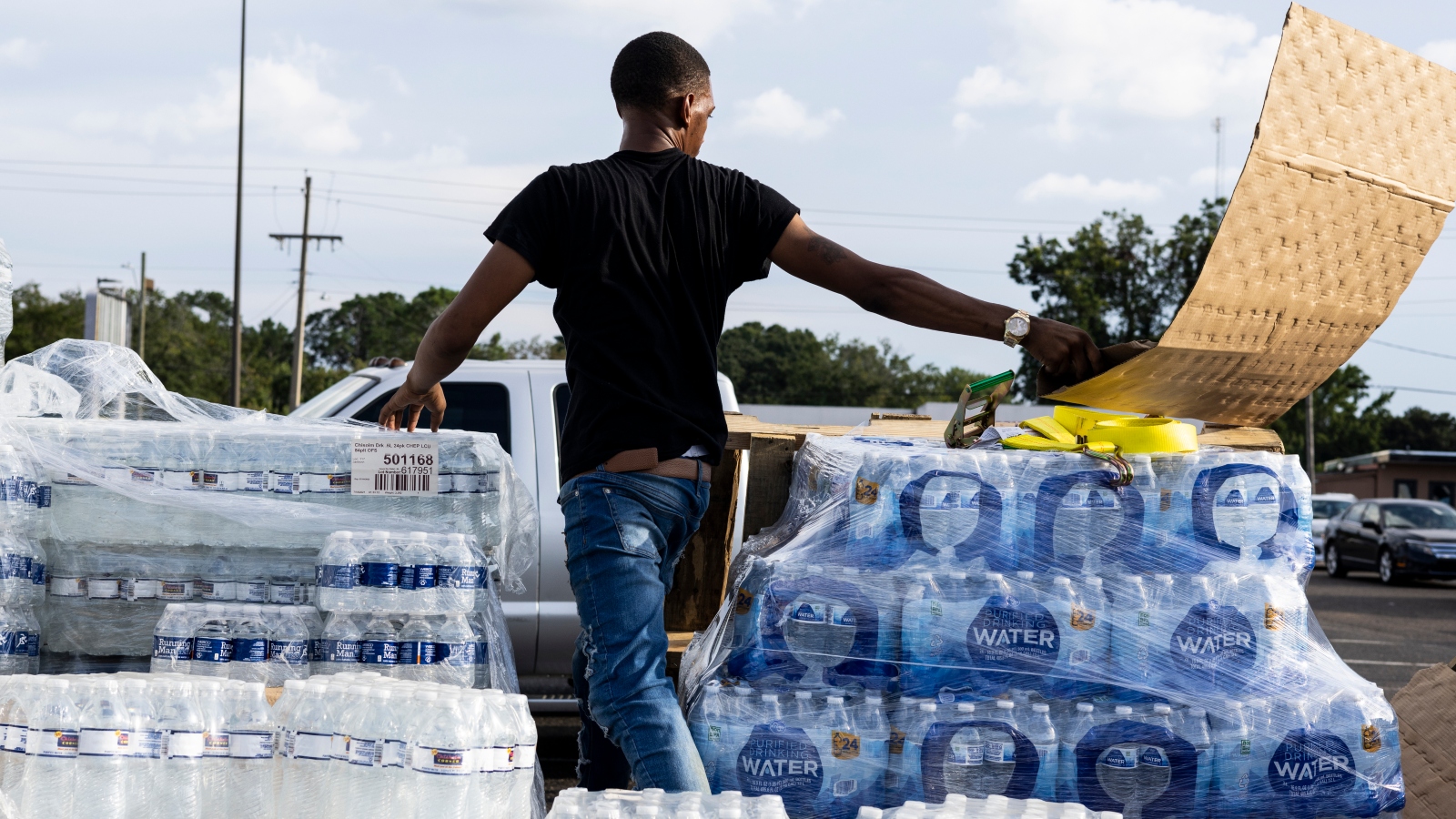
The crisis reached a tipping point in August 2022, when heavy rainfall and subsequent flooding overwhelmed the O.B. Curtis Water Treatment Plant—the primary facility serving the city. The failure caused widespread shutdowns, leaving the entire city under a boil-water notice and prompting emergency intervention from federal authorities, who eventually appointed a third-party manager to stabilize and rebuild the crumbling system.
Legal Battles and the Court’s Rationale
The legal challenge that led to the Fifth Circuit’s recent ruling was initiated in 2022 by Jackson residents and community activists. The plaintiffs sued the city and former Mayor Chokwe Antar Lumumba, arguing that municipal officials violated their 14th Amendment right to bodily integrity by consciously exposing them to lead-contaminated water and obscuring the risks. They also claimed that state authorities improperly diverted federal water infrastructure funds away from Jackson and toward predominantly white municipalities.
A lower federal court initially dismissed the lawsuit, prompting the plaintiffs to appeal to the Fifth Circuit. In the September 4 majority opinion, Judge Kurt Engelhardt affirmed the dismissal. While acknowledging the severity of the situation, the court applied the legal standard that a protected right must be "deeply rooted in our Nation’s history and tradition." The majority concluded that access to clean drinking water does not meet this constitutional threshold.
Addressing the plaintiffs’ claim that officials lied about water safety to deprive them of informed health choices, Judge Engelhardt drew a sharp distinction between public health communications and direct physical violations of the person. He wrote that "lying about the presence of lead in the water is a far cry from the state’s physically extracting evidence from a criminal suspect or conducting an invasive medical procedure without consent," concluding that the Constitution simply "does not provide redress for every governmental wrongdoing."
The decision was not unanimous. Judge Catharina Haynes issued a partial dissent, arguing that the plaintiffs had successfully presented plausible claims that city officials violated their right to bodily integrity by knowingly placing them in positions of extreme physical danger.
Socioeconomic Realities and Systemic Disparities

Jackson presents a stark demographic and economic profile. The city’s population is more than 80% Black, and its poverty rate stands at more than double the national average. Local residents and community organizers argue that these socioeconomic factors directly correlate with the neglect of municipal infrastructure.
Danyelle Holmes, a senior national organizer with Mississippi’s Poor People’s Campaign, criticized the court’s interpretation of the law. "Jackson residents did everything this country tells poor people to do. They organized, they testified, they boiled their water, they filed suit, they trusted the courts. And at every step the answer has been no," Holmes stated. She added that the ruling tells a majority-Black capital city that while its suffering is recognized, the legal system provides no remedy.
Residents have shared personal accounts of the toll exacted by the water system’s failures. Brooke Floyd, a lifelong Jackson resident, noted that her family has experienced water contamination issues across multiple generations. She suggested that a municipality with different demographic and economic characteristics would have received a vastly different response from state and federal institutions.
Other residents, such as Gwendolyn Reed-Davis, have detailed physical and developmental impacts on their families, attributing chronic health issues and cognitive struggles in school-age children to long-term exposure to substandard water. Extensive public health research underscores the lifelong cognitive impairments associated with childhood lead exposure, with demographic data indicating that race remains a more significant predictor of lead poisoning risk in the United States than poverty alone.
Official Responses and Ongoing Financial Burdens
In the wake of the Fifth Circuit ruling, municipal leadership emphasized a continued commitment to public safety. In an official statement, Jackson Mayor John Horhn expressed satisfaction with the court’s decision while reiterating the city’s dedication to improving the well-being of all residents.
Management of the water utility has shifted under federal oversight. JXN Water, the federally appointed third-party entity charged with overhauling the system, reports operational improvements and stabilization of revenue streams. However, these improvements have introduced new financial pressures for a population already grappling with high poverty rates.
In March, a court-approved 12% rate increase raised the average residential water and sewer bill by approximately $8.88 per month, bringing the baseline to roughly $88. Furthermore, JXN Water’s financial framework outlines additional projected rate hikes of 10% in the spring of 2027, followed by 9% in 2028 and 8% in 2029. For low-income households, these incremental cost increases represent a significant budgetary challenge as the city attempts to finance the extensive capital investments required to replace lead pipes and modernize water treatment plants.
Broader Implications for Public Health and Environmental Justice
The Fifth Circuit ruling solidifies a legal precedent that places the burden of environmental crises heavily on local populations, limiting their ability to seek judicial redress under the U.S. Constitution when local or state authorities fail to maintain safe public utilities.
Legal scholars note that the decision closes off federal constitutional litigation as a viable tool for communities facing infrastructure neglect, forcing activists and advocacy groups to rely instead on statutory regulations, administrative complaints through agencies like the EPA, and state-level legislative action.
Despite the legal setbacks, community organizations maintain that grassroots mobilization remains essential. Organizers with the Poor People’s Campaign and local advocacy networks emphasize that public pressure, voter engagement, and direct action will continue to drive the fight for infrastructure equity. As Jackson navigates its ongoing recovery under federal oversight, the city’s struggle remains a focal point in the broader national conversation surrounding environmental justice, racial disparities in public infrastructure, and the legal obligations of the state toward its most vulnerable citizens.