The safety of the American food supply has unexpectedly vaulted to the forefront of the national political discourse, transforming the run-up to the midterm elections into a fierce partisan debate over federal oversight, regulatory cuts, and public health infrastructure. What traditionally remains a pocketbook issue dominated primarily by grocery prices and inflation has this year shifted toward basic consumer survival. Historic outbreaks of foodborne illnesses, massive product recalls, and conflicting data from federal agencies have left voters deeply unnerved about the contents of their plates, giving both political parties a high-stakes arena to battle for public trust.
The intersection of food safety and politics is not entirely unprecedented. Historical precedents demonstrate how single contamination events can reshape federal policy. In 1993, a devastating E. coli outbreak traced to Jack in the Box fast-food restaurants forced newly inaugurated President Bill Clinton to elevate the issue to his very first Cabinet meeting. That crisis ultimately spurred a paradigm shift toward preventative federal oversight that dramatically curtailed E. coli infections for decades. Today, however, the political landscape is markedly more polarized, and the current food safety crisis spans multiple vectors, including an unprecedented parasitic outbreak and contentious rollbacks of federal regulatory rules.
A Timeline of Crisis: From Spring Outbreaks to Autumn Recalls
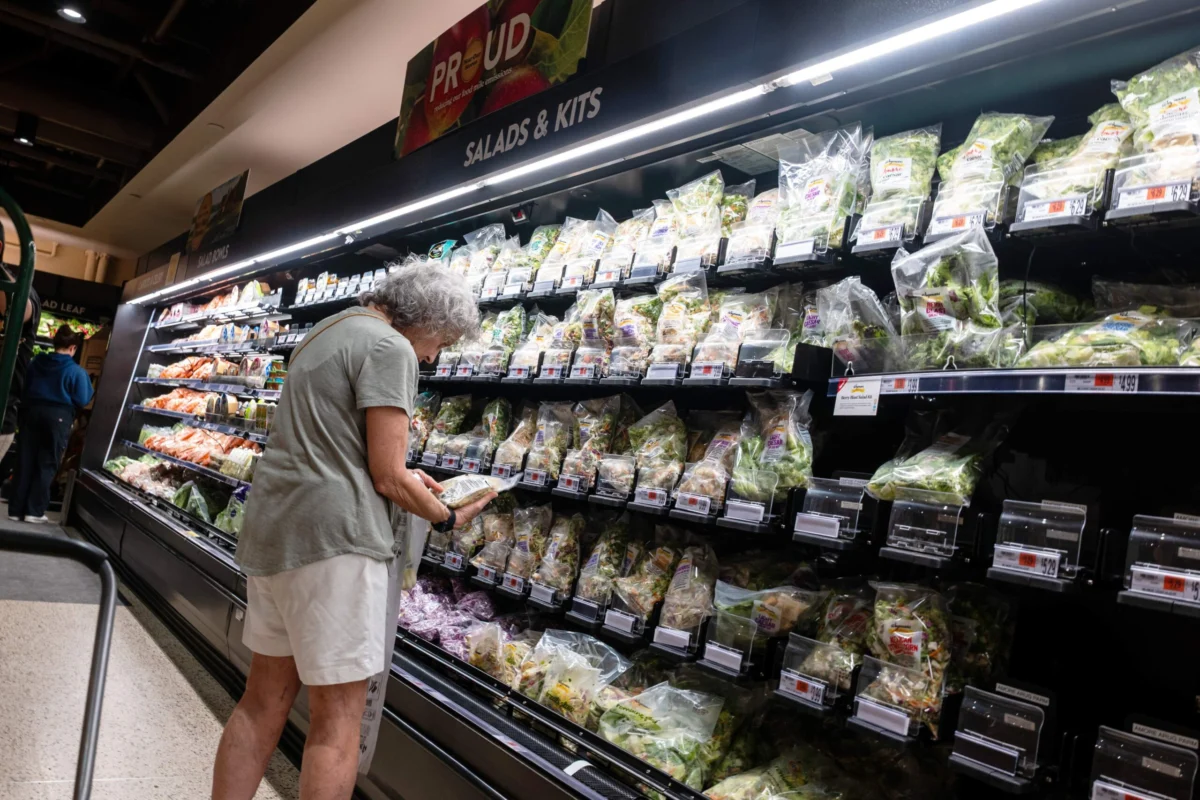
The foundation for the current political firestorm was laid during a spring and summer marred by severe contamination events that struck major commercial suppliers and national restaurant chains alike. Between May and August, the Centers for Disease Control and Prevention (CDC) recorded nearly 20,000 laboratory-confirmed cases of cyclosporiasis linked to contaminated lettuce, shattering historical benchmarks. For comparison, the same period in 2025 yielded just 1,180 cases, cementing the 2026 outbreak as the largest recorded incidence of the parasite in U.S. history.
The scope and visibility of the contamination forced rapid, precautionary reactions across the commercial food sector. Major national chains, including Chipotle and Taco Bell, voluntarily pulled lettuce, jalapeños, and other suspected ingredients from their menus to mitigate liability and protect consumers. Late-night television hosts capitalized on the national anxiety, joking about symptoms that included explosive diarrhea, while consumer confidence plummeted. Surveys conducted by the University of Illinois and Purdue University revealed that the share of consumers who strongly agreed that the U.S. food system produces safe food dropped from 40% in November to roughly 30% by August. Furthermore, polling data indicated that nearly half of all consumers modified their grocery purchasing habits, and 40% altered their restaurant dining behaviors due to heightened fears of foodborne illness.
Data Divergence: Interpreting the Numbers Behind the Recalls
At the center of the political battle is a contentious debate over what the raw data actually reveals about the stability of the nation’s food safety net. According to data compiled by the U.S. Public Interest Research Group (PIRG), approximately 200 food recalls occurred in the first eight months of the year, tracking roughly on par with figures from the previous year. However, broader longitudinal data reveals a more troubling upward trajectory. The total volume of food recalls by the Food and Drug Administration (FDA) and the U.S. Department of Agriculture (USDA) rose from 296 in 2024 to 320 in 2025. An analysis by regulatory compliance software provider Trace One noted a 21% growth in total recalls between 2021 and 2025, driven largely by an increase in Class I recalls—those involving products capable of causing serious adverse health consequences or death.
Despite these upward trends across multi-year spans, federal officials have pushed back aggressively against narratives suggesting a deteriorating food safety environment. The FDA utilized social media platform X to assert that recalls for fiscal year 2026 rank among the lowest levels recorded in over a decade, publishing a chart indicating a drop to 1,836 recalls from nearly 4,000 in fiscal year 2013. Health and Human Services (HHS) senior adviser Calley Means doubled down on these assertions, accusing political operatives of manufacturing "fake news" and unfairly criticizing the agency for executing its routine duties.
Independent public health experts and former regulatory officials, however, have challenged the validity of the administration’s datasets. Susan Mayne, who served as director of the FDA’s Center for Food Safety and Applied Nutrition from 2015 to 2023, pointed out that the administration’s aggregate figures conflate food recalls with those involving drugs and medical devices. Public health epidemiologists emphasize that raw recall counts can be inherently misleading, as a single contaminated ingredient incorporated into multiple processed foods can trigger a cascade of separate recall announcements. Instead, experts argue that the true measure of food system stability lies in the scale and containment of human illness—making the expansive, multi-state cyclospora outbreak a uniquely severe indicator of system strain.
Political Crossfire: Accusations of Dismantlement and Hypocrisy
The convergence of widespread consumer anxiety and contested data has provided opposition lawmakers with a potent weapon heading into the midterms. Democrats have launched coordinated attacks against the Trump administration, linking the recent outbreaks directly to budgetary constraints, workforce reductions, and policy rollbacks within key public health agencies.
The Democratic National Committee utilized social media to highlight lists of recalled items, explicitly labeling Health and Human Services Secretary Robert F. Kennedy Jr. a "complete disaster" and demanding his resignation. Prominent legislators have amplified these critiques. Senator Elizabeth Warren (D-Mass.) took to social media to accuse the administration of dismantling government oversight, writing: "Slashed food safety agencies ➔ cyclospora outbreak." Warren had previously penned an official inquiry to Secretary Kennedy demanding accountability for what she characterized as a failed administrative response influenced by political corruption and lobbying.
Additional federal lawmakers echoed these sentiments. Representative Gabe Amo (D-R.I.) publicly called on the executive branch to halt the reduction of FDA inspection personnel, while the campaign for Representative Judy Chu (D-Calif.) blamed workforce cuts for the summer’s elevated recall frequency.
Conversely, the administration has defended its record by pointing to the structural resilience of its investigative teams. HHS spokesperson Grace Davis Jamison stated that neither FDA inspection personnel nor CDC diagnostic laboratories supporting outbreak investigations were subjected to reductions in force. Furthermore, the administration maintained that federal agencies mounted a rapid, coordinated response across all 50 states to isolate contamination sources and keep the public informed.
Policy Rollbacks and Industry Implications
Beyond immediate outbreak management, food safety advocates and public health organizations have trained their criticism on a series of regulatory shifts and policy proposals enacted or advanced by the executive branch. Critics argue these changes systematically weaken the preventative framework designed to protect consumers before contaminated products reach the market.
Notably, the administration withdrew a proposed Biden-era rule intended to strictly limit the sale of raw poultry containing high levels of salmonella. Officials also delayed compliance deadlines for a Food Safety Modernization Act (FSMA) rule requiring comprehensive supply chain traceability records, pushing implementation from January of this year to July 2028. HHS officials defended the delay by citing extensive feedback from industry stakeholders requesting additional time to adapt complex logistical frameworks.
Further complicating the regulatory environment, President Trump announced initiatives in late August aimed at streamlining the slaughter and processing of meat for small livestock operations, alongside plans to increase beef imports from Argentina and Brazil. These actions immediately triggered alarm bells among food safety leaders. Critics noted that the European Union maintains an active ban on Brazilian beef imports due to persistent noncompliance with antibiotic and safety standards, raising questions about whether foreign imports and relaxed domestic oversight could introduce new vulnerabilities into the food chain.
Sarah Sorscher, regulatory affairs director at the Center for Science in the Public Interest, highlighted what she termed a fundamental hypocrisy within the administration’s platform. "When they promise to make our food safer and then eviscerate the agencies and programs that detect and prevent outbreaks, there is a clear level of disconnect," Sorscher noted.
Economic and Broader Societal Ramifications
The ultimate fallout of the food safety debate extends far beyond Washington policy circles, inflicting tangible economic damage on agricultural producers and reshaping consumer behavior. When high-profile outbreaks hit staple items like fresh produce, the economic shockwaves ripple directly down to growers. Sandra Eskin, chief executive of the public health advocacy group Stop Foodborne Illness, pointed out the stark economic reality facing farmers during the height of the summer crisis. "If you want people to eat real food, fresh fruits and vegetables, they have to be safe," Eskin stated. "Instead, we have had farmers plowing under fields because consumers simply stopped buying lettuce."
As the midterm elections approach, the convergence of public health anxieties and partisan posturing ensures that food safety will remain a potent ballot-box issue. Whether voters prioritize pocketbook inflation metrics or the biological security of their groceries, the debate has permanently altered the political calculus surrounding federal health agencies, proving that confidence in the American food supply is as fragile as the supply chain itself.