The Senate Commerce Committee’s scheduled markup session on Wednesday, November 18, 2026, descended into a high-stakes legislative confrontation as Republican members pushed through the nomination of Danielle Thumann Severs to the Federal Communications Commission (FCC) despite a concerted boycott by committee Democrats. The maneuver, designed to circumvent an apparent lack of a quorum, highlights the deepening polarization surrounding the telecommunications regulatory body as the current administration nears the end of its term.
The dispute centers on the delicate partisan balance of the five-member commission. Currently, the FCC operates with a Republican-led agenda under Chairman Brendan Carr. The nomination of Thumann Severs, who serves as a senior counsel to Carr, is viewed by Democratic leadership as a strategic move to cement a 3-1 Republican majority. This composition would grant the commission the legal authority to maintain a quorum even if the seat held by Democratic Commissioner Anna Gomez were to become vacant—a scenario that Democrats fear could be exploited by the White House to effectively neutralize the minority voice on the commission.
A Procedural Quagmire: The Question of Quorums
The Wednesday morning session was defined by a legal disagreement over what constitutes a valid quorum. According to Democratic staff members, the committee has been operating under the procedural rules established during the 118th Congress because no formal rules were adopted for the 119th. Under those specific 118th Congress rules, the presence of at least one member of the minority party is a mandatory requirement to legally report bills or confirm nominations out of committee.
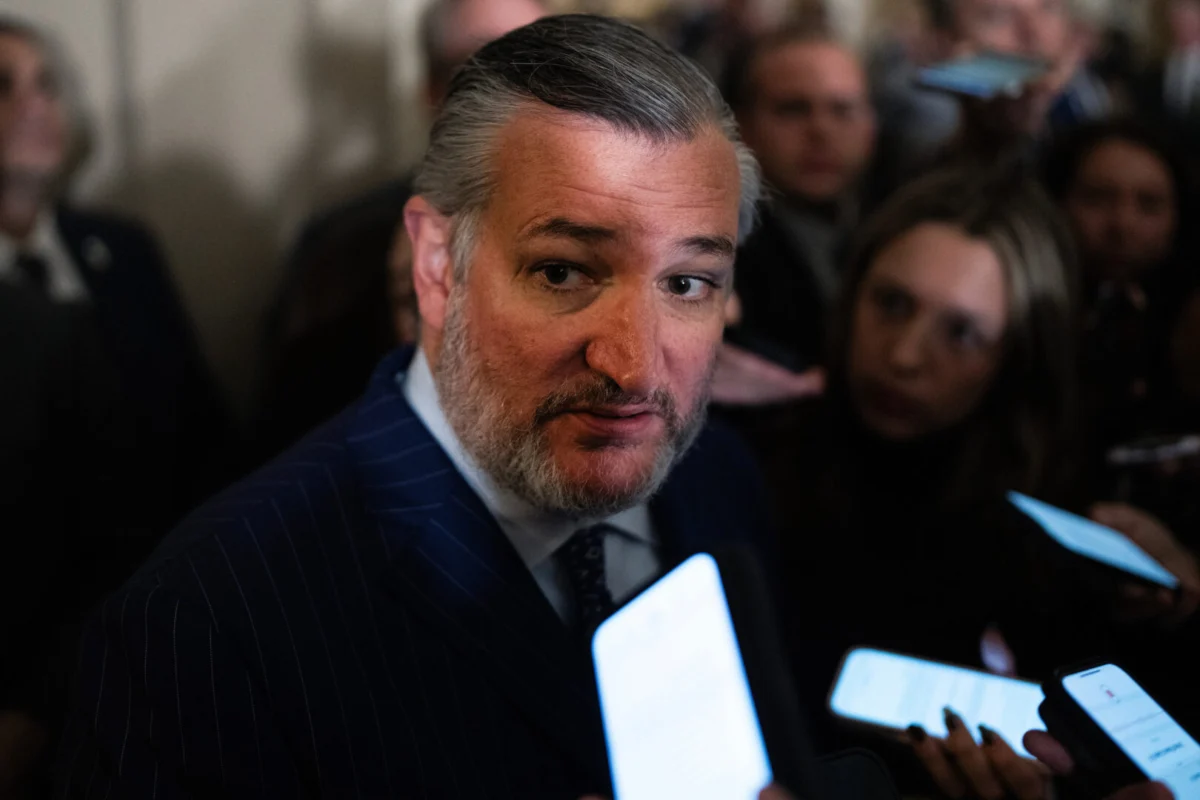
By boycotting the session, committee Democrats, led by Ranking Member Maria Cantwell of Washington, intended to deny the committee the legal standing to advance Thumann Severs’ nomination. However, Chairman Ted Cruz of Texas moved forward regardless, asserting that the legislative duty of the committee to provide "advice and consent" on presidential appointments remains paramount, regardless of minority participation.
"Democrats will control the Senate, unfortunately, in January," Cruz stated during the session, acknowledging the looming shift in power following the most recent election cycle. "But today is November 18th. The American people elected each of us to fulfill our duties, including advice and consent, for our full terms."
The legal legitimacy of the markup is now expected to face a formal challenge on the Senate floor. A Democratic committee staffer indicated that the path forward involves a formal inquiry into the proceedings, which would necessitate a ruling by the chair. The outcome will likely hinge on the interpretation of whether the committee is bound by the specific quorum requirements of the 118th Congress or if the broader, more permissive Senate rules supersede them in the absence of a new committee-specific agreement.
Historical Context and the Lame Duck Dilemma
The tension surrounding this markup is not unprecedented. In March of this year, Democrats staged a similar boycott over an aviation safety bill that had been omitted from the agenda. That incident resulted in a temporary stalemate, which was only resolved through negotiations and a rescheduled session.
In an effort to pressure Chairman Cruz, committee Democrats invoked his own rhetoric from 2014. During the nomination process of Loretta Lynch for attorney general, Cruz famously argued that controversial nominees should not be confirmed during a "lame duck" session by senators who had already lost their seats or were nearing the end of their terms. By echoing this sentiment in a letter sent to Cruz on Monday, Democrats signaled their belief that the current administration is overstepping its constitutional bounds by forcing through a commission appointment during the final weeks of the term.
The core of the Democratic demand is a "pair" nomination—a traditional, though not legally required, courtesy where a Republican nominee is paired with a Democratic one to preserve the FCC’s bipartisan 3-2 structure. Democrats have explicitly called for the re-nomination of Commissioner Anna Gomez to ensure that the political balance of the commission remains intact as the transition of power approaches.
Disputed Testimony and Allegations of Misrepresentation
Beyond the procedural fight, the nomination of Thumann Severs has been marred by allegations regarding the accuracy of her testimony. Senator Ben Ray Luján of New Mexico has spearheaded an effort to block the nomination, arguing that Thumann Severs provided misleading information to the committee.
In a letter addressed to Chairman Cruz on Tuesday, Luján noted that during her nomination hearing, Thumann Severs testified that she had not worked on "any media-related issues." However, Luján cited documents obtained via Freedom of Information Act (FOIA) requests which appear to contradict this statement. The documents allegedly show that Thumann Severs was involved in critical media-related matters, specifically the commitments required from Skydance Media to facilitate the FCC’s approval of its merger with Paramount Global.
This development has amplified broader Democratic criticism of the current FCC leadership. Under Chairman Carr, the commission has faced bipartisan scrutiny for its approach to media consolidation and its aggressive stance toward broadcasters. Luján has suggested that if the current actions are not corrected, a Democratic-controlled committee next year will likely pursue oversight hearings, potentially compelling testimony from both Chairman Carr and the nominee herself.
"I have questions," Luján told reporters prior to the markup. "I certainly hope that Brendan Carr will voluntarily show up to this committee when invited, and that other rules and tools do not need to be used." When asked about the potential for subpoenas, Luján noted that "everything should be on the table."
Broadcaster Concerns and the Future of the FCC
The implications of Thumann Severs’ confirmation extend beyond simple partisan math. The FCC’s recent actions regarding the regulation of political speech and the oversight of broadcasters have created a climate of uncertainty for media companies.
Senator Jerry Moran, a Republican from Kansas, offered a different perspective during the markup. He noted that he had engaged in direct discussions with Thumann Severs regarding her past work and her philosophy on the regulation of broadcasters. Moran characterized his takeaways as "comforting," stating that her responses helped alleviate his concerns regarding the commission’s potential overreach into political speech.
Despite this, the broader industry remains on edge. The FCC has become a central battleground in the national debate over the role of government in regulating media and telecommunications infrastructure. The agency’s influence over spectrum allocation, net neutrality, and media ownership caps means that even a single change in the commission’s composition can have significant long-term economic consequences for the telecommunications and entertainment sectors.
Implications and Next Steps
As the Senate enters the final weeks of the legislative calendar, the battle over the FCC nomination serves as a microcosm of the current state of Congressional dysfunction. With the committee operating under a murky set of procedural rules and both parties signaling an unwillingness to compromise, the path for Thumann Severs’ confirmation remains volatile.
If the nomination reaches the Senate floor, it will face a high-pressure environment where every vote will be scrutinized for its impact on the incoming administration’s ability to influence telecommunications policy. Furthermore, the debate over the legality of the committee’s markup sets a dangerous precedent for future sessions. Should the interpretation of quorum requirements become a tool of partisan obstruction, the efficacy of Senate committees to conduct routine oversight and confirm non-controversial nominees may be significantly diminished.
For now, the standoff remains unresolved. As of Wednesday evening, committee leadership had not announced a resolution to the quorum dispute, and the future of both the FCC’s composition and the integrity of the committee’s internal processes remain in a state of suspended animation. With the transition to a new Congress only weeks away, the pressure to reach an agreement is mounting, yet the political incentives for both parties to maintain their current positions appear to outweigh the desire for a return to traditional, collegial legislative practices.