
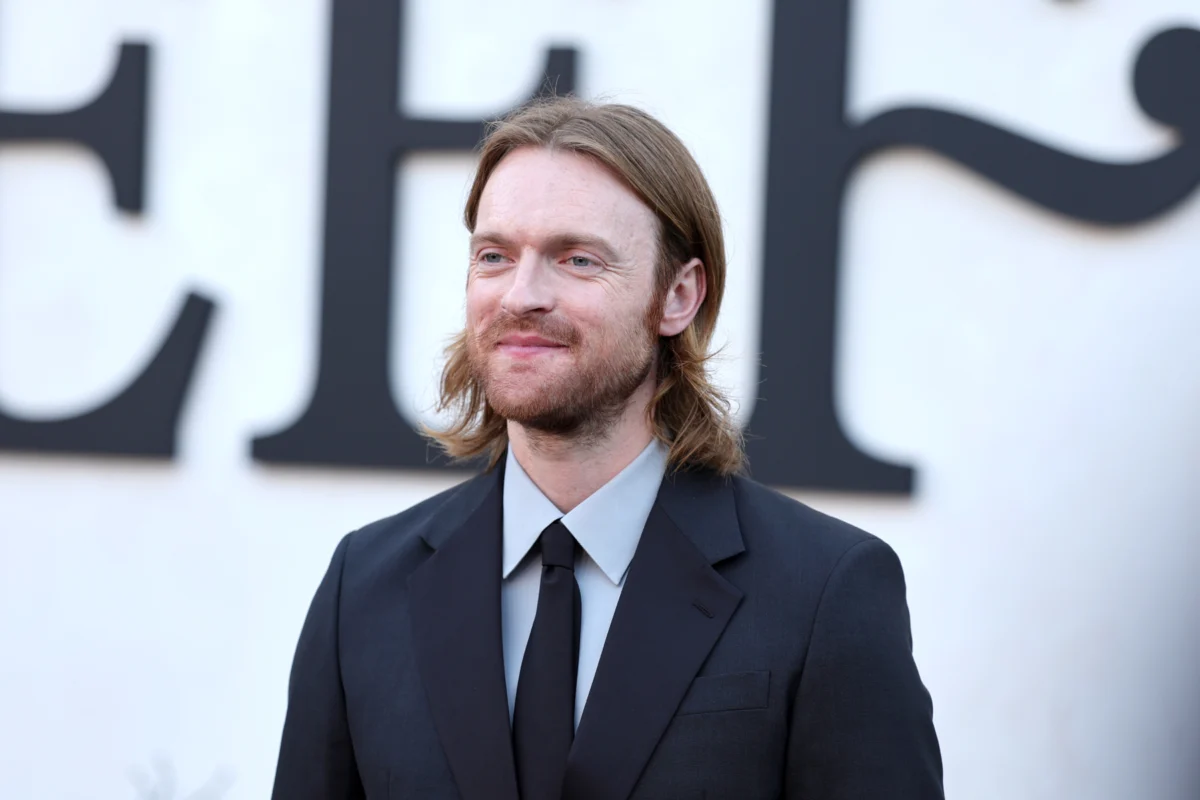
The global music community is reeling from a massive fracturing of Ed Sheeran’s high-profile Loop Tour, as a growing coalition of supporting artists, musicians, and traditional folk bands withdraw from the lineup in solidarity with rapper Macklemore. The sweeping boycott was triggered by Macklemore’s controversial removal from the tour following intense pressure from prominent stadium owners and pro-Israel organizations over the Seattle artist’s onstage remarks regarding the ongoing Israel-Hamas war in Gaza. What began as a dispute over a single performer’s political expression has rapidly escalated into a wider crisis concerning free speech, corporate influence in live entertainment, and the deep polarization surrounding the humanitarian crisis in the Middle East.
The exodus from the Loop Tour now includes Grammy-winning singer-songwriter Finneas, Danish pop artist Lukas Graham, Irish singer-songwriter Aaron Rowe, and the traditional Irish folk band Beoga. These departures have left massive gaps in the upcoming legs of Sheeran’s tour across North and South America, casting a shadow over one of the most lucrative live music productions of the year. Industry analysts note that such a coordinated multi-artist walkout is virtually unprecedented in contemporary touring history, signaling a profound shift in how artists are willing to align their commercial interests with their personal and political convictions.
The Catalyst: Macklemore’s MetLife Stadium Performances
The controversy traces back to a series of high-profile concerts at MetLife Stadium in East Rutherford, New Jersey, where Macklemore served as a supporting act for Ed Sheeran. During his performances, the rapper utilized his platform to voice vocal solidarity with Palestinians in Gaza and the occupied West Bank. He chanted "Free Palestine," displayed vivid imagery documenting the devastation wrought by the conflict, and performed his recent protest track, "Hind’s Hall." The song, named in honor of Hind Rajab—a six-year-old Palestinian girl killed in Gaza—and dedicated to student activists protesting at Columbia University, quickly became an anthem for the anti-war movement.
While audience members at MetLife Stadium largely received the performance with approval, the political fallout was immediate and severe. Pro-Israel lobbying groups and community organizations launched an aggressive pressure campaign, arguing that Macklemore’s rhetoric crossed the line into antisemitic tropes and incited division. The backlash soon reached venue executives and stadium stakeholders, creating an untenable operational environment for tour promoters.
By Monday, the pressure culminated in Macklemore being formally dropped from the Loop Tour. According to statements released by the rapper, the decision was forced by stadium owners who issued an ultimatum to tour organizers. Macklemore specifically identified Robert Kraft, owner of the New England Patriots and Gillette Stadium, as a central figure in the orchestration.
"Ed told me that Kraft said I would not be allowed to perform in his stadium," Macklemore stated on social media. "Ed also told me that Kraft had rallied some of the other stadium owners and collectively they gave him an ultimatum: if Macklemore stays on the tour, you will not be allowed to play in our venues."
Kraft subsequently confirmed his decision to ban Macklemore from Gillette Stadium, releasing a statement that defended the move based on the rapper’s "recent actions, material shared from the stage during Ed Sheeran’s shows in New Jersey, and a broader history of antisemitic rhetoric and imagery that we believe has been deeply offensive and hurtful to the Jewish community." Kraft’s statement, however, did not address claims regarding his coordination of a broader venue coalition against the rapper.
Tour Promoters and Ed Sheeran Respond
As the controversy escalated, Ed Sheeran took to social media to clarify his position, emphasizing that the decision to drop Macklemore was not his own, but rather a mandate executed by the Messina Touring Group, the tour’s promoter, following ultimatums issued by venue operators.
"I have spent this week trying to build bridges, to find a solution and unfortunately, was unable to do so," Sheeran wrote. "I know who I am, both as a person and as an artist, and those who know my heart know my values too."
Despite Sheeran’s appeals for understanding, the fallout proved irreversible for the supporting acts, who viewed Macklemore’s dismissal as a dangerous precedent of corporate censorship and the stifling of political dissent in mainstream spaces.
The Domino Effect: Artists Walk Out in Solidarity
The first major blow to the tour’s remaining schedule came from Finneas, best known for his prolific work as a songwriter and producer alongside his sister, Billie Eilish. Finneas had been slated to open for Sheeran on the upcoming South American leg of the Loop Tour, which was scheduled to commence in November.
"Artists must not be silenced when they speak up for the oppressed," Finneas wrote in an Instagram announcement. "I have decided to withdraw from my upcoming tour dates with Ed Sheeran. I stand with Palestine and its people."
Shortly thereafter, the artists slated for the U.S. leg followed suit. Danish pop artist Lukas Graham released a searing critique of the financial pressures driving decisions in the live entertainment industry.
"Money doesn’t give you the right to own the conversation. Nobody’s bank balance should decide who gets to speak or which suffering we’re allowed to acknowledge," Graham wrote. Expressing his affection and gratitude for Sheeran, Graham nonetheless maintained that he could not reconcile continuing the tour with his moral stance on the global loss of civilian life. "I can’t put these words out into the world and carry on with this tour as things stand. We’re withdrawing from the remaining dates."
Aaron Rowe, an Irish singer-songwriter who was also positioned on the U.S. bill, echoed these sentiments while drawing explicit parallels to Irish history. Rowe condemned what he described as the suppression of voices highlighting the humanitarian catastrophe in Gaza.
"I cannot stand by and allow billionaires to use their position of power to silence the rightful voices of those who speak up against Israeli genocide and who highlight the savage," Rowe wrote. Referencing his heritage, he added, "As Irish people, we know all too well about genocide, forced famine, and violent occupation… I need to be true to myself and my ancestors who resisted colonization, and fought for a freedom that I enjoy today in Ireland."
(Note: While international humanitarian organizations and a United Nations commission have characterized Israel’s military campaign in Gaza as meeting the threshold of genocide, Israel and its international allies, including the United States, categorically reject these allegations.)
The traditional Irish folk band Beoga, which frequently joins Sheeran onstage for an energetic collaborative set during his performances, also announced their immediate departure. In a strongly worded statement, the band accused "zionist lobbies" of orchestrating Macklemore’s silencing and expressed solidarity with the Palestinian people.
"We were there for Macklemore’s performance and speech. We fully supported his message, so did most of the audience in MetLife Stadium, which terrifies the lobbies," Beoga stated. As founding members of the Irish Artists for Palestine movement, the band members emphasized that playing in venues that censor advocacy for Palestinian human rights was fundamentally incompatible with their artistic ethos.
Broader Implications for the Live Music Industry
The mass withdrawal from Ed Sheeran’s Loop Tour marks a watershed moment at the intersection of popular music, geopolitical activism, and corporate venue management. For decades, major concert tours have operated as carefully curated commercial enterprises designed to minimize controversy and maximize profitability. However, the intensity of global polarization surrounding the war in Gaza has made neutrality increasingly difficult to maintain for touring artists.
Industry observers note that this incident highlights a growing tension between major venue owners—often tied to sports franchises, massive entertainment conglomerates, and wealthy corporate stakeholders—and recording artists who increasingly view global human rights issues as matters of personal conscience. When venue owners exercise their authority to bar artists over political speech, it triggers a chain reaction that challenges the very structure of package tours, where multiple acts rely on shared infrastructure.
Furthermore, the involvement of prominent Irish artists and groups underscores a distinct cultural alignment. Historical parallels drawn by performers like Aaron Rowe and Beoga reflect a deeply rooted tradition of Irish solidarity with anti-colonial struggles worldwide, framing their opposition to censorship within a broader historical context of resistance.
As representatives for Ed Sheeran have thus far declined to comment on the cascading departures of Finneas, Rowe, and Beoga, tour organizers face significant logistical challenges in restructuring the remainder of the Loop Tour. More broadly, the controversy serves as a stark indicator that the global fallout from the conflict in Gaza will continue to reverberate deeply within cultural institutions, forcing artists, promoters, and venue operators to navigate an increasingly contentious and fractured landscape.





Leave a Reply