
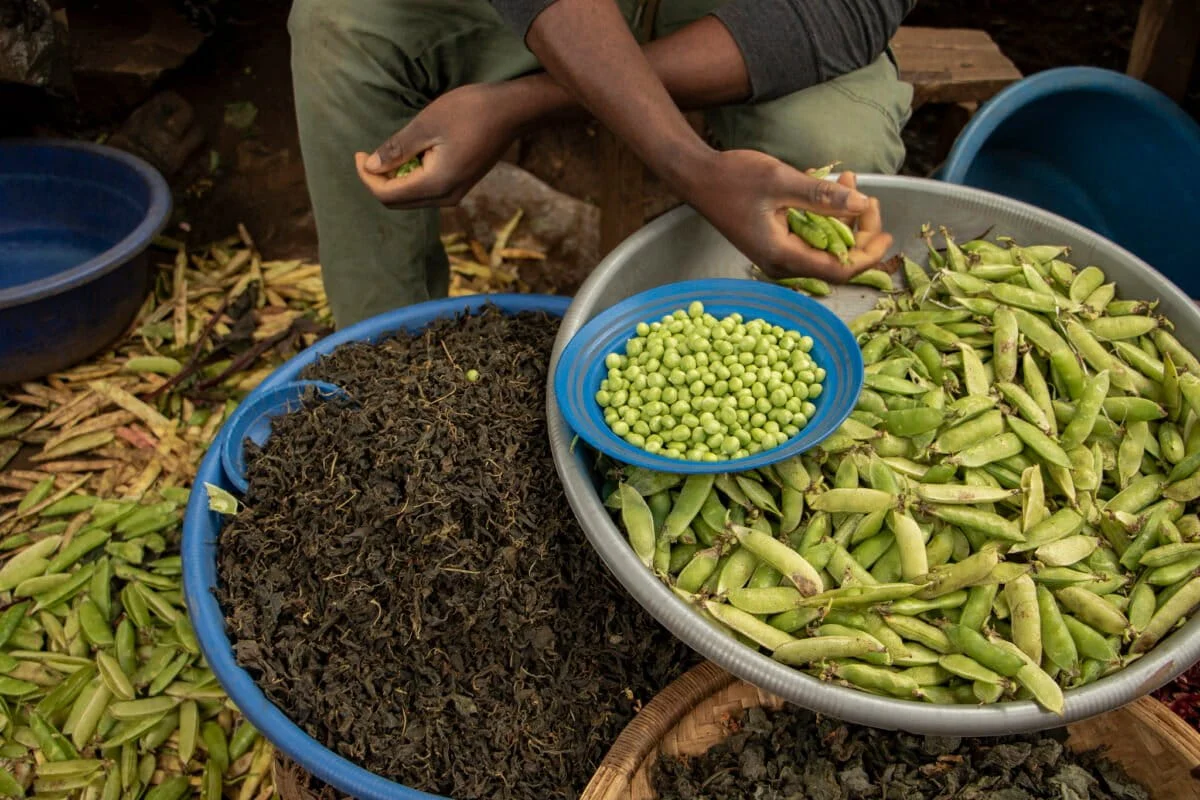
In the quiet, pre-dawn hours across rural Kenya, the air is thick with the scent of damp earth and the anticipation of the long rains. For millions of smallholder farmers, this is the most critical juncture of the year—a time for clearing fields, sorting seeds, and finalizing planting schedules. However, the rhythmic preparation is increasingly overshadowed by a shadow of economic anxiety. The primary concern is no longer just the unpredictability of the weather or the persistence of local pests, but rather a complex geopolitical puzzle thousands of miles away. As farmers tune into their transistor radios, reports from the Middle East bring news of escalating tensions in the Strait of Hormuz, a maritime artery through which much of Africa’s agricultural lifeline flows.
The vulnerability of the African food system has been laid bare by a series of global shocks. From the supply chain paralyses of the COVID-19 pandemic to the dramatic spike in natural gas and potash prices following the Russian invasion of Ukraine, the continent’s reliance on imported synthetic inputs has become a significant national security risk. Today, as tensions in the Persian Gulf threaten to disrupt the flow of fuel and fertilizer, African nations find themselves at a crossroads. For many countries on the continent, between 20% and 50% of their total fertilizer supply originates from the Middle East. This dependence creates a precarious situation where a regional conflict in one part of the world can lead to a hunger crisis in another.
The Geopolitical Stranglehold on African Agriculture
The modern agricultural model in Africa is heavily tethered to global fossil fuel markets. Synthetic fertilizers, particularly nitrogen-based urea, are produced using natural gas in energy-intensive processes. Furthermore, the machinery of modern farming—tractors for tilling, pumps for irrigation, and trucks for transporting produce to urban centers—remains almost entirely dependent on imported petroleum. When the Strait of Hormuz is threatened, the cost of these inputs skyrockets, forcing smallholder farmers to make impossible choices: plant less, use less fertilizer, or go into debilitating debt.
Data from the African Development Bank (AfDB) suggests that the continent faces a fertilizer deficit of approximately 2 million metric tons annually. This gap was exacerbated by the Ukraine crisis, which saw fertilizer prices triple in some regions of East and West Africa within a single growing season. While prices have stabilized somewhat since the 2022 peak, they remain significantly higher than pre-pandemic levels, placing them out of reach for the 70% of Africans who rely on small-scale farming for their livelihoods.
A Strategic Shift: The Industrialization of Local Production
Recognizing this fragility, African leaders and private sector giants are moving toward self-reliance. The Africa Fertilizer and Soil Health Action Plan 2024-2034, adopted by the African Union, provides a comprehensive framework to triple the use of both organic and inorganic fertilizers while fostering local manufacturing hubs.

Leading the charge is the Dangote Group in Nigeria. Currently operating the largest chemical fertilizer manufacturing complex in Africa, the group has announced ambitious plans to triple its production capacity to 9 million metric tons per annum. This expansion is not limited to West Africa; Aliko Dangote has signaled the commencement of a $2 billion fertilizer plant in Ethiopia. Scheduled for completion by 2029, the Ethiopian facility is expected to produce 3 million tons annually, leveraging local resources to serve the Horn of Africa.
These industrial investments are more than just business ventures; they are pillars of economic sovereignty. By producing fertilizers on-continent, African nations can bypass the volatility of international shipping lanes and currency fluctuations. Moreover, these mega-projects are expected to generate tens of thousands of jobs for Africa’s surging youth population, providing a domestic alternative to the "brain drain" and irregular migration.
The Soil Health Crisis: Beyond Chemical Solutions
While industrial scale-up is necessary, scientists and environmentalists warn that chemical fertilizers alone are not a silver bullet. Decades of intensive use of synthetic inputs have led to a silent crisis of soil degradation. Many African soils are naturally fragile; the continuous application of ammonium-based fertilizers without organic supplementation has increased soil acidity, effectively "locking" nutrients in the ground and killing the microbial life essential for long-term fertility.
Dr. Susan Chomba, Director of the Vital Landscapes program at the World Resources Institute (WRI), emphasizes that the goal should not be to replace one dependency with another. Instead, Africa must pursue an integrated soil fertility management (ISFM) approach. This involves a calculated balance: using chemical fertilizers to provide immediate nutrient boosts while simultaneously rebuilding the soil’s "biological engine" through nitrogen-fixing leguminous crops, compost, and biochar.
The scientific consensus is shifting toward the "balanced microbiome" of the farm. Healthy soil acts as a carbon sink, holds more water during droughts, and is more resilient to the flash floods that are becoming more common due to climate change. For the African farmer, "sustainable" is not just an environmental buzzword—it is a survival strategy.
The Rise of the Bio-Entrepreneurs
In the gap between distant industrial plants and immediate farm needs, a new generation of African "agri-preneurs" is emerging. These innovators are utilizing "circular economy" principles to turn waste into wealth, often with breathtaking speed and efficiency.

One of the most promising technologies involves the Black Soldier Fly (BSF). Companies like Insectipro in Kenya and Chanzi in Tanzania are deploying these flies to process organic market waste. In a matter of days, the larvae consume the waste, leaving behind a nutrient-rich frass that serves as a potent biofertilizer. Simultaneously, the protein-rich larvae are harvested and processed into high-quality animal feed for poultry and fish, solving two problems—waste management and feed costs—at once.
Another frontier is the production of biochar. Enterprises such as Safi Organics and Regenorganics are working with smallholders to convert agricultural residues, like rice husks and maize cobs, into biochar through a process called pyrolysis. Biochar acts as a permanent soil conditioner, reducing acidity and increasing the soil’s ability to retain moisture. This is particularly vital in semi-arid regions where every drop of rain counts.
Innovation is also being driven by Artificial Intelligence and renewable energy. EcoRich, a Kenyan startup, has developed a waste-to-fertilizer converter powered by solar energy and optimized by AI. Their technology can transform organic waste into organic fertilizer in just 24 hours, a process that traditionally takes months. By decentralizing production, these technologies allow fertilizers to be made in the very villages where they are used, eliminating the high costs of logistics and transportation.
Economic Implications and the Role of Global Aid
The transition to a more localized and biological fertilizer system comes at a time when global development priorities are shifting. As Western nations and international organizations repurpose aid budgets toward defense and geopolitical stabilization, the traditional "subsidy model" for African agriculture is under threat.
Economic analysts suggest that investing in small and medium enterprises (SMEs) focused on bio-fertilizers offers a higher return on investment than large-scale import subsidies. By supporting local SMEs, governments can create a "multiplier effect": reducing methane emissions from landfills, improving national food security, and stimulating local economies.
However, this transition requires more than just innovation; it requires a radical shift in policy. Current regulatory frameworks in many African countries are still geared toward industrial chemicals, making it difficult for organic and bio-based products to get the necessary certifications and market access. Harmonizing these regulations across regional blocs like the EAC (East African Community) and ECOWAS (Economic Community of West African States) is a critical next step.

Conclusion: A Future Rooted in African Soil
The farmer standing in her field at dawn in rural Kenya represents the frontline of a global struggle for stability. Her ability to feed her family and her community should not depend on the stability of a shipping lane in the Middle East or a natural gas pipeline in Eurasia.
The path forward for Africa lies in a dual strategy. On one hand, the continent must continue to scale up its industrial capacity through projects like the Dangote plants to ensure a baseline of nutrient availability. On the other hand, it must empower its youth and its entrepreneurs to lead a "Brown Revolution"—a movement focused on restoring the health and vitality of African soil through biological innovation and circular systems.
As the long rains begin to fall, the urgency of this mission is clear. By linking fertilizer production with bioenergy systems and local waste management, Africa has the opportunity to build a food system that is not only productive but also resilient, sovereign, and sustainable. The answers to Africa’s food security challenges are increasingly being found not in foreign capitals, but in the very soil and ingenuity of the continent itself. The shift from imported dependence to local resilience is no longer just a policy goal; it is an existential necessity for a continent that aims to feed itself and, eventually, the world.










Leave a Reply