The intersection of artificial intelligence and molecular biology has crossed a significant threshold with the development of systems capable of interpreting natural language to design functional proteins and DNA sequences. Traditionally, protein engineering has required exhaustive technical expertise, demanding precise knowledge of amino acid configurations, enzyme mechanisms, and spatial geometry down to individual water molecules. However, recent breakthroughs spearheaded by multi-institutional research collaborations are shifting this paradigm. By integrating large language models with structural biology databases containing hundreds of millions of entries, scientists have introduced tools like Pinal and open-weight models like Carbon X. These advancements allow researchers to bypass hyper-specific geometric constraints and instead prompt software using plain-language descriptions of desired biological functions. While this democratization of genetic design introduces unprecedented accessibility to biotechnology, it also highlights the critical ongoing role of laboratory validation and specialized biochemical screening.
The Evolution of Computational Protein Design
To understand the magnitude of recent developments, it is essential to examine the historical trajectory of computational biology. For decades, designing synthetic proteins meant navigating a notoriously complex two-step workflow. First, bioinformaticians defined structural constraints—such as binding affinities or target backbones—which algorithms translated into three-dimensional shapes. Second, specialized software populated these geometric templates with precise sequences of amino acids to ensure proper folding.
This methodology necessitated deep fluency in structural chemistry. For instance, designing a functioning catalyst like a serine protease required not only identifying which specific amino acids were critical for driving a chemical reaction, but also precisely mapping their coordinates in three-dimensional space. Human experts communicating with one another could rely on shorthand jargon—referencing a specific enzyme class implied an entire suite of reaction mechanisms and structural imperatives. AI tools, conversely, operated as literal-minded engines that understood spatial geometry quite well while remaining completely oblivious to the biochemical functions those shapes enabled.
Bridging the gap between human intent and machine execution required a new architectural approach. A research consortium based in China recently addressed this limitation by developing Pinal, a system designed to bridge the chasm between natural language and molecular architecture. Instead of demanding hyper-technical coordinate specifications, Pinal leverages massive training datasets composed of millions of protein sequences cross-referenced with functional keyword tags and structural predictions generated by AlphaFold.
Inside Pinal: The Mechanics of Text-to-Protein Translation
Pinal utilizes a multi-layered architecture to translate conversational prompts into functional biological molecules. The initial stage of the process relies on a dedicated module known as T2struct. Rather than forcing an immediate leap into a complex three-dimensional rendering, T2struct ingests a natural language prompt—such as a request for a specific fluorescent property or enzymatic activity—and converts it into a linear array of structural tokens. These tokens map out the spatial relationships and probabilities between adjacent amino acids.
Once this structural blueprint is established, it is handed off to a secondary system designated as SAProt-T. This module synthesizes the original text prompt with the output generated by T2struct to construct the definitive amino acid sequence. Crucially, SAProt-T performs a global re-evaluation of the earlier probability distributions, mitigating the risk of discarding slightly less probable structural frameworks that might otherwise accommodate superior, highly functional sequences.
To train this sophisticated pipeline, the research team harvested data from multiple biological databases, incorporating structural predictions for hundreds of millions of protein-keyword pairs. While reliance on predictive models like AlphaFold introduces potential vulnerabilities when dealing with obscure or poorly characterized proteins, the abundance of high-quality structural data for common protein families proved sufficient to anchor the training process successfully.
Empirical Testing and Experimental Realities
The practical efficacy of natural language protein design was formally evaluated when researchers tasked Pinal with generating four distinct biological targets: a fluorescent protein, two unique enzymes, and a structural component integral to a multi-protein complex.
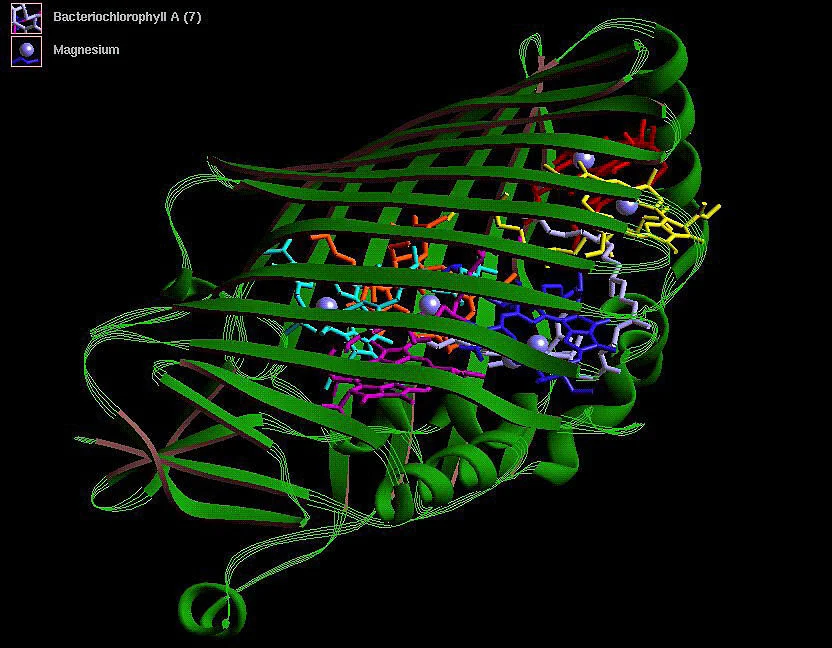
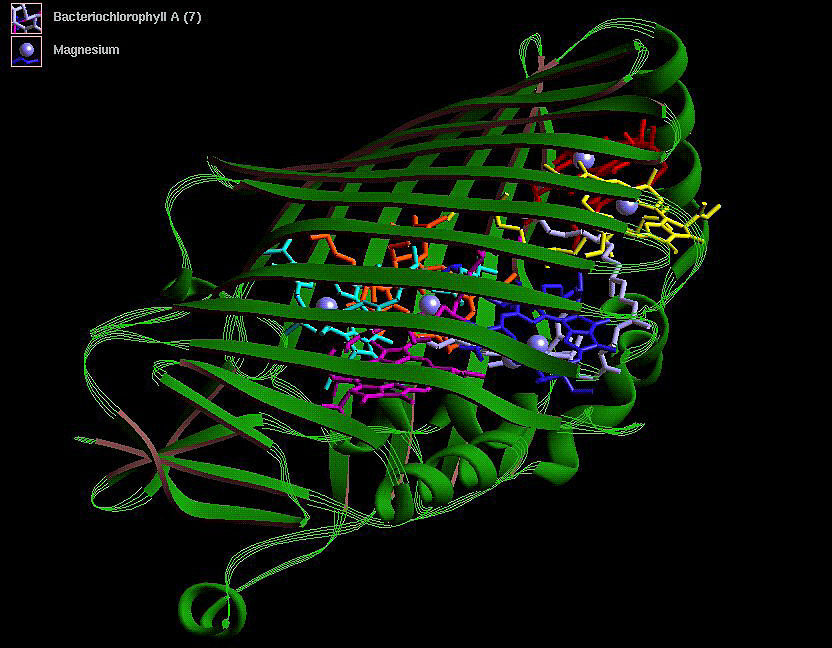
Using the fluorescent protein objective as a benchmark, the system was instructed to generate 50,000 candidate sequences modeled after the general properties of Green Fluorescent Protein (GFP)—the discovery of which fundamentally altered cellular imaging and earned a Nobel Prize. To avoid simply regurgitating known solutions, the research team implemented stringent filtering criteria. They systematically discarded sequences that closely mirrored established fluorescent proteins while selecting for structural hallmarks such as barrel-like folding configurations and the presence of specific modifiable amino acids capable of driving fluorescence.
This computational bottleneck winnowed the initial pool of 50,000 candidates down to a high-priority shortlist of just 29 candidate proteins. These sequences were subsequently synthesized within Escherichia coli cultures for physical screening. Out of the 29 candidates tested, exactly one demonstrated successful fluorescence.
While a single positive result out of tens of thousands of generated variations might initially appear to reflect a low success rate, experimental biologists emphasize the context of this achievement. The filtering parameters deliberately excluded sequences closely related to natural proteins to foster genuine innovation, and untested structural variants were set aside rather than exhaustively explored. Consequently, the experiment proved that text-to-structure pipelines can successfully invent entirely novel functional biomolecules from scratch, even if the empirical success rate underscores the indispensable necessity of physical laboratory testing.
Expanding Horizons: DNA-Level Language Models
While protein design software makes strides in structural generation, parallel advancements are occurring at the genetic level. A collaborative initiative involving the AI firm Hugging Face, the Zhongguancun Academy, and the University of Naples Federico II recently introduced Carbon X. Operating as an open-weight model capable of running on local consumer hardware—such as a standard MacBook—Carbon X represents a significant leap forward in genomic language processing.
Constructed upon a foundational human-language model known as Qwen3-14B, Carbon X underwent rigorous mid-training using extensive DNA datasets, supplemented by reinforcement learning and supervised fine-tuning. Balancing this training regimen required navigating a delicate technical equilibrium: an overly cautious learning rate preserved English proficiency while leaving DNA comprehension at random chance levels, whereas an excessively aggressive rate effectively wiped out linguistic capabilities in favor of genomic syntax.

The resulting hybrid model is capable of fluently communicating in both natural language and genomic code, translating bidirectionally between the two. Researchers can prompt the system with a DNA sequence to predict subsequent base pairs within a genome, or query it using conversational phrasing to evaluate the functional consequences of specific single-nucleotide polymorphisms, such as the phenotypic impact of substituting a guanine for an adenine.
Internal benchmark evaluations suggest that Carbon X performs competitively with massive, specialized commercial genomics models while offering distinct structural advantages. Because the model operates locally, institutions can maintain strict data privacy and avoid transmitting proprietary genetic sequences to third-party cloud servers. Furthermore, it eliminates the computational overhead and financial costs associated with proprietary API queries, lowering the barrier to entry for academic laboratories and independent researchers.
Implications for the Broader Scientific Community
The advent of natural-language-driven biology tools has ignited discussions regarding accessibility, safety, and research acceleration. Critics might express concern that abstracting molecular biology into plain-text prompts effectively dumbs down the discipline, potentially allowing untrained individuals to synthesize custom proteins or genetic constructs.
In practice, however, the biosecurity landscape remains heavily bottlenecked by physical reality. While an automated tool can rapidly output thousands of raw amino acid or nucleotide sequences, extracting functional utility from that output demands significant technical infrastructure. Researchers must employ specialized screening tools to filter viable candidates, followed by empirical validation within a fully equipped, high-containment biological laboratory managed by trained specialists. Automated software platforms expand the toolkit available to scientists, but they do not replace the fundamental requirement for wet-lab execution.
For experimental biologists working in the post-genomic era, these technologies offer a powerful solution to persistent workflow friction. Although bioinformatics has generated vast repositories of genetic data, the software tools designed to interrogate these databases have historically been constructed by computational specialists without an emphasis on user-friendly interfaces. A molecular biologist might readily conceptualize a research query in plain English—such as identifying every enhancer region controlling the expression of a specific target gene—yet remain unfamiliar with the precise combination of command-line tools and configuration parameters required to extract the answer.
By bridging the gap between natural language and complex computational pipelines, text-to-molecule models hold the potential to streamline research methodologies and accelerate discovery across academic and industrial laboratories. As these systems mature and integrate further into daily scientific workflows, they promise to transform how researchers interact with genomic and proteomic data, shifting the primary focus from software navigation back to biological discovery.