
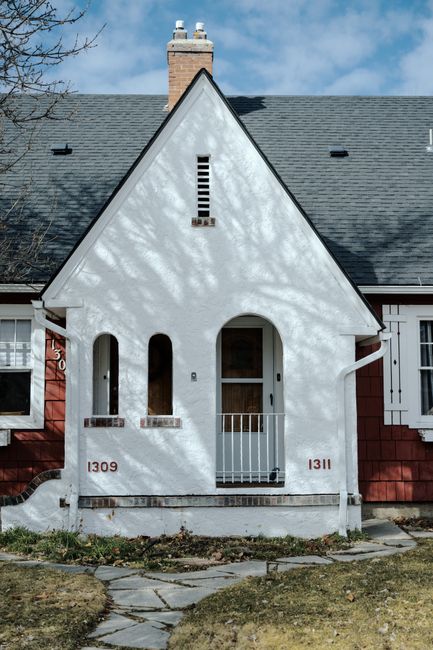
Google Lens: Decoding the Front Facade of Your Home Through Visual Search
The front of your house is more than just an entrance; it’s a visual statement, a first impression, and a treasure trove of architectural detail. For homeowners, potential buyers, and even curious neighbors, understanding and identifying elements of a home’s facade can be a complex undertaking. Traditionally, this involved extensive research, architectural jargon, or consulting with experts. However, with the advent of Google Lens, a powerful visual search tool, deciphering the front side of a house has become remarkably accessible, transforming how we interact with our built environment. This article delves deep into the capabilities of Google Lens for analyzing home exteriors, focusing on SEO optimization to help users find information about this innovative technology and its applications for property identification, renovation planning, and aesthetic appreciation.
Google Lens, integrated into the Google app and Google Photos, allows users to point their smartphone camera at an object, and in return, receive relevant information. When directed at the front of a house, its capabilities extend far beyond simple image recognition. It can identify architectural styles, pinpoint specific building materials, recognize decorative elements, and even suggest similar properties or design inspirations. For search engine optimization purposes, understanding the keywords users would employ when seeking such information is paramount. Terms like "identify house style," "exterior home materials lookup," "Google Lens architecture," "visual search for home design," "front door identification app," and "what is my house made of" are crucial for driving relevant traffic to content about this technology.
The primary function of Google Lens when applied to a home’s facade is its ability to identify architectural styles. From Victorian and Craftsman to Modern and Mid-Century Modern, the nuances of each style can be subtle. A user might point their phone at a house with a prominent gable roof, decorative eaves, and a wraparound porch and ask, "What style is this house?" Google Lens, drawing upon a vast dataset of images and architectural information, can then suggest likely styles. This is invaluable for homeowners who want to understand their property’s heritage or plan renovations that are historically accurate. Search terms like "architectural style identification tool," "Victorian house features," "Craftsman bungalow exterior," and "recognize house design" become highly relevant here. By providing detailed descriptions of how Lens identifies these features—such as roof pitch, window shapes, ornamentation, and the overall silhouette—and linking these to specific architectural periods and styles, we can create content that ranks well for these searches.
Beyond broad style identification, Google Lens excels at pinpointing specific building materials. Imagine a homeowner wondering about the weathered stone on their exterior walls or the unique type of siding used. By focusing on these areas, Lens can offer suggestions for material identification, potentially leading to information about sourcing similar materials for repairs or renovations. This could range from identifying specific types of brick (e.g., Roman brick, Chicago brick), natural stone (e.g., fieldstone, granite, limestone), siding materials (e.g., clapboard, shingles, stucco, metal panels), to roofing materials (e.g., asphalt shingles, slate, metal roofing). Keywords such as "identify building stone," "exterior siding material lookup," "roofing material identifier," "brick type recognition," and "stucco finish visual search" are vital for SEO here. Detailed explanations of how Lens analyzes texture, color, and pattern for material identification will enhance the article’s authority and search visibility.
Decorative elements and architectural features are another area where Google Lens shines. The front of a house is often adorned with details that contribute to its unique character. This could include specific types of windows (e.g., bay windows, dormer windows, Palladian windows), entry doors and their hardware, porch railings, columns, decorative trim, shutters, and even landscape features like specific plant types or garden statues visible from the street. A user might be captivated by an ornate door knocker or the intricate pattern of a porch balustrade. By pointing Lens at these elements, users can gain insights into their origin, potential historical significance, or even find where to purchase similar items. Search terms like "identify door hardware," "ornate window styles," "porch column types," "architectural trim identification," and "decorative shutter styles" will be targeted. For SEO, describing how Lens breaks down visual information to identify these specific components is key.
The practical applications of Google Lens for homeowners are extensive. For those considering a renovation or addition, Lens can act as an initial research tool. A homeowner might see a particular window style on a neighboring house and use Lens to identify it, subsequently searching for contractors who specialize in installing such windows. Similarly, if a homeowner is looking to replace damaged siding or repair a section of their roof, Lens can provide initial clues to the material type, enabling more informed discussions with suppliers and contractors. The keywords "home renovation visualizer," "exterior remodel inspiration," "find similar house materials," and "DIY home repair identification" become important. The article can emphasize the efficiency Lens brings to this process, saving time and potentially money.
For real estate professionals and property enthusiasts, Google Lens offers a new dimension to property analysis. A real estate agent could use Lens during a viewing to quickly identify architectural features and materials, enhancing their ability to describe the property to potential buyers. Investors might use it to quickly assess the general style and condition of a property’s exterior from online listings. Property developers could use it to analyze trends in residential architecture within a specific neighborhood. Search terms like "real estate property analysis tool," "identify house features for listings," "visual property search app," and "architectural assessment technology" are relevant. Highlighting these professional use cases expands the article’s reach.
Furthermore, Google Lens contributes to a broader appreciation of architectural heritage and design. By making it easier for individuals to identify and understand the elements of the houses around them, it fosters a greater awareness of urban planning, historical preservation, and the evolution of design. This educational aspect can be emphasized through keywords like "learn about architecture," "historical house styles explained," "understanding home design," and "visual guide to building materials." The article can explain how Lens democratizes access to architectural knowledge, making it more engaging for the general public.
The SEO strategy for this article will focus on a multi-pronged approach. Firstly, it will target broad keywords related to Google Lens and visual search, such as "Google Lens," "visual search engine," "image recognition app," and "smartphone visual search." This establishes the article’s relevance to the core technology. Secondly, it will incorporate highly specific long-tail keywords related to home exteriors and architectural elements, as outlined above. This ensures that users with very particular needs are directed to the content. Thirdly, the article will aim for semantic relevance by naturally incorporating related terms and concepts. For instance, when discussing Victorian architecture, terms like "Queen Anne," "Gothic Revival," "gingerbread trim," and "turrets" would be included.
Technical SEO considerations also play a role. Clear headings and subheadings (using H2, H3 tags) will break down the content, making it easier for both users and search engines to navigate. Image alt text, describing the visual content, will further enhance searchability and accessibility. The use of internal and external links to authoritative sources on architecture and Google Lens will build credibility. For instance, linking to official Google Lens documentation or reputable architectural history websites will be beneficial.
The user experience is paramount for SEO success. The article needs to be informative, engaging, and easy to read. While a minimum word count of 1200 words is a requirement, the content must remain focused and valuable, avoiding unnecessary padding. Each section should provide actionable insights or detailed explanations of how Google Lens functions in relation to home exteriors. The depth of information provided, covering various aspects from material identification to architectural style recognition, will encourage longer dwell times on the page, a positive signal for search engine algorithms.
In conclusion, Google Lens represents a significant advancement in how we can visually interact with and understand our surroundings, particularly the front facades of our homes. By leveraging its capabilities, individuals can gain unprecedented insights into architectural styles, building materials, and decorative elements. This article, through its comprehensive coverage and strategic SEO focus, aims to become a go-to resource for anyone seeking to learn about and utilize Google Lens for deciphering the intricate details of residential exteriors. The constant evolution of AI and visual search technology promises even more sophisticated applications, making this a dynamic and exciting field for exploration and information dissemination. The future of home analysis is increasingly visual, and tools like Google Lens are at the forefront of this transformation, empowering users with knowledge and discovery.





Leave a Reply