
At a recent Senate Appropriations Legislative Branch subcommittee hearing on Wednesday, April 15, 2026, the principal leaders of three foundational legislative branch agencies — the Government Publishing Office (GPO), the Government Accountability Office (GAO), and the Congressional Budget Office (CBO) — presented and staunchly defended their fiscal year 2027 budget requests. The proceedings, which saw the agencies collectively seeking hundreds of millions of dollars to sustain critical operations, notably sidestepped any direct discussion of contentious legislative disputes that had flared up just the previous year, particularly concerning the GAO’s funding and its statutory authority.
A New Gavel for the Legislative Branch Subcommittee
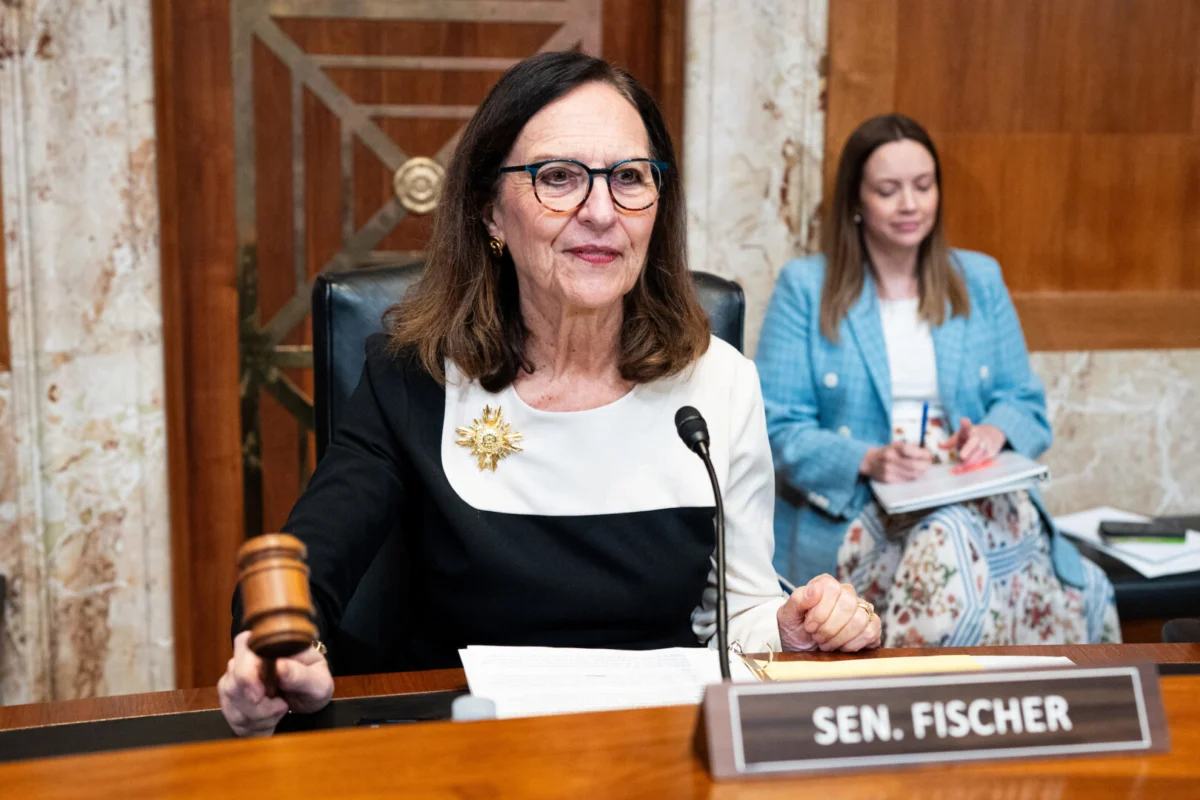
The hearing marked the inaugural session of the year for the influential Senate Legislative Branch Appropriations Subcommittee and a significant milestone for its new chair, Senator Deb Fischer, a Republican from Nebraska. Senator Fischer assumed the gavel following the departure of former chair Markwayne Mullin, R-Okla., who transitioned to the role of Secretary of the Department of Homeland Security last month. Her leadership signals a fresh chapter for the subcommittee responsible for overseeing the financial health and operational capabilities of the very institutions that enable Congress to function effectively. These agencies are not merely bureaucratic entities; they are pillars of transparency, oversight, and informed decision-making, indispensable to the legislative process and the broader framework of American governance.
The Congressional Budget Office: A Modest Ask for Critical Analysis
Phillip Swagel, the Director of the Congressional Budget Office, presented a fiscal year 2027 budget request totaling $76.3 million, representing a modest 2 percent increase, or an additional $1.5 million, from its fiscal year 2026 allocation. Swagel articulated that the bulk of this request, an estimated 85 percent, is earmarked for essential pay and benefits for the CBO’s highly skilled workforce. Another significant portion, 11.7 percent, is dedicated to bolstering the agency’s crucial information technology infrastructure and fortifying its cybersecurity defenses. The remaining 3.3 percent is allocated for training initiatives, expert consultant services, office supplies, and other miscellaneous operational expenses.
Swagel emphasized that the requested increase is vital for several strategic objectives. Primarily, it addresses the rising costs associated with employee compensation and benefits, ensuring the CBO can retain and attract top talent in a competitive environment. Furthermore, the investment in IT and cybersecurity is paramount, given the sensitive nature of the economic data and complex analytical models the CBO handles daily. In an era of escalating cyber threats, protecting this infrastructure is not just an operational necessity but a national security imperative. Director Swagel also highlighted that the additional funding would enable strategic hiring in areas of "intense legislative interest," allowing the CBO to expand its capacity to provide timely and comprehensive cost estimates and economic analyses for a growing number of complex legislative proposals. This capability is crucial for lawmakers who rely on the CBO’s non-partisan assessments to understand the fiscal implications of their policy decisions, from healthcare reform to climate initiatives and national defense spending. The CBO, established by the Congressional Budget and Impoundment Control Act of 1974, serves as an independent arbiter of fiscal data, providing objective analyses that are fundamental to legislative debate and budgetary transparency.
The Government Publishing Office: Battling Obsolescence with Flat Funding
Hugh Halpern, the Director of the Government Publishing Office, requested $132 million for fiscal year 2027, maintaining the same funding level as fiscal year 2026. Despite the flat budget, Halpern underscored the GPO’s critical mission: ensuring public access to government information. He pointed out the significant challenges faced by the agency, particularly its reliance on increasingly antiquated technology. Halpern colorfully illustrated this point by stating that some current software used to print government documents "came out when I was 12, and I’m a long way from being 12." This anecdote succinctly conveyed the urgency of modernization efforts within the GPO.
The GPO’s mission has expanded significantly beyond traditional printing. In the digital age, it is the custodian of govinfo.gov, the official platform for digital government information, making vast repositories of legislative, executive, and judicial documents accessible to the public. Maintaining and upgrading this digital infrastructure, alongside its traditional printing operations for congressional documents like the Congressional Record and federal regulations, requires substantial investment. A flat budget in the face of rising operational costs and the rapid evolution of technology presents a formidable challenge for an agency whose core function is to ensure the integrity and accessibility of government information. Director Halpern’s implied message was clear: without sustained investment, the GPO risks falling further behind, jeopardizing its ability to fulfill its mandate in an increasingly digital and interconnected world.
The Government Accountability Office: The Watchdog’s Persistent Funding Battle
Acting Comptroller General Orice Williams Brown presented the Government Accountability Office’s request for $860 million for fiscal year 2027, a 5.9 percent increase from fiscal year 2026. Despite this proposed increase, Williams Brown conveyed a sobering reality: even with the additional funds, the GAO would still be compelled to continue with workforce reduction efforts. This highlights the severe impact of inflationary pressures and the cumulative effect of past funding shortfalls on an agency tasked with auditing and investigating federal spending, programs, and policies.
The GAO, often dubbed "Congress’s watchdog," plays a critical role in ensuring government accountability and efficiency. Its investigations uncover waste, fraud, and abuse across federal agencies, providing Congress with invaluable insights for oversight and legislative action. However, the GAO’s vital function has not always shielded it from budgetary challenges.
A Conspicuous Silence: Recalling Last Year’s Legislative Dustups
Perhaps the most striking aspect of the hearing was the collective decision by all parties to skirt any mention of the intense "legislative dustups" that engulfed the GAO just the previous year. In fiscal year 2026, lawmakers on the House side had launched an aggressive, albeit ultimately unsuccessful, attempt to slash the GAO’s funding by nearly half. More controversially, these efforts included proposals to add specific legislative language that would have severely curtailed the GAO’s statutory authority, specifically barring it from suing the Executive Branch for the release of impounded funds without explicit congressional approval.
This proposed restriction touched upon a fundamental constitutional principle: Congress’s "power of the purse" and the Executive Branch’s obligation to spend funds as appropriated. The concept of "impoundment" refers to the Executive Branch’s refusal to spend funds that Congress has appropriated. Historically, this has been a source of tension between the branches. The 1974 Congressional Budget and Impoundment Control Act, enacted in the wake of President Nixon’s widespread impoundments, specifically empowered the GAO to act as a crucial check, allowing it to bring civil actions against the Executive Branch to compel the release of appropriated funds if it determined that an impoundment was illegal. The proposed language last year, had it passed, would have significantly weakened the GAO’s ability to enforce this critical check on executive power, potentially setting a dangerous precedent for future administrations to disregard congressional spending directives.
The House’s efforts in 2025 were met with strong opposition from many members of Congress, who viewed the move as a direct attack on the GAO’s independence and a threat to the delicate balance of power. The legislative proposals ultimately failed to advance, but the underlying tensions and philosophical disagreements about the scope of GAO’s authority remained. Given this contentious backdrop, the complete absence of any discussion regarding impounded funds, or the broader implications of last year’s attempted funding cuts, was a notable omission at the April 2026 Senate hearing. Neither party raised questions about the ongoing search for a permanent Comptroller General for the GAO, a position that has been filled by an acting head for some time, further emphasizing the focus on the immediate fiscal year request rather than past controversies or long-term leadership. This strategic silence likely aimed to ensure a smoother path for the agencies’ current budget requests, avoiding a reopening of politically charged debates.
Cybersecurity: A Unifying Concern
Despite the absence of past controversies, Senator Fischer, in her capacity as the new subcommittee chair, immediately honed in on a pressing and universally acknowledged threat: cybersecurity. She specifically questioned GPO Director Halpern about the agency’s plans to strengthen its cybersecurity systems following a significant cyber attack that occurred in 2025. The GPO’s budget request includes a dedicated allocation of $2.75 million specifically for cybersecurity expenses, underscoring the severity of the threat and the agency’s commitment to remediation and prevention.
Halpern detailed the GPO’s ongoing efforts to enhance its digital defenses, which include installing new hardware and software, upgrading existing systems, and fortifying its monitoring and detection capabilities. The 2025 attack, while not fully detailed in the public record, served as a stark reminder that even agencies seemingly focused on traditional publishing are critical targets in the evolving landscape of cyber warfare. For an agency like the GPO, which manages the official record of U.S. government information, a successful cyber intrusion could have profound implications for government operations, data integrity, and public trust. This focus on cybersecurity resonated across all agencies, recognizing that the integrity of legislative branch functions hinges on secure digital operations.
The Promise of Artificial Intelligence: Enhancing Efficiency and Service
Senator Jon Husted, a Republican from Ohio and the newest member of the Senate Appropriations Legislative Branch subcommittee, shifted the discussion towards the future, inquiring about how the legislative branch agencies could leverage artificial intelligence (AI) to enhance their operations and increase efficiency. All three agency heads acknowledged the transformative potential of AI.
CBO Director Phillip Swagel articulated a particularly compelling application for AI within his agency. He noted that "the reality is that there’s way more requests for cost estimates than we can provide, and I’m hoping that the AI tools will basically let us get deeper into the backlog and satisfy more members." This statement highlights a perennial challenge for the CBO: the immense demand for its expert analyses often outstrips its capacity, leading to backlogs that can delay legislative processes. AI, with its ability to rapidly process vast datasets and perform complex calculations, could significantly augment the CBO’s analytical capabilities, allowing it to produce more timely and comprehensive scores, thereby better serving Congress.
For the GAO, AI holds the promise of revolutionizing auditing and oversight functions. AI-powered tools could analyze massive financial datasets to detect patterns indicative of fraud, waste, or abuse with greater speed and accuracy than human auditors alone. This could enable the GAO to conduct more targeted and effective investigations, maximizing the impact of its oversight efforts. Similarly, the GPO could utilize AI for tasks such as document classification, enhancing searchability on govinfo.gov, automating certain publishing workflows, and improving accessibility features for government documents, making information more readily available to all citizens. While the adoption of AI presents opportunities, it also raises important considerations regarding data accuracy, algorithmic bias, ethical deployment, and the need for robust human oversight to ensure accountability and maintain public trust. The discussion underscored Congress’s growing interest in harnessing advanced technologies to modernize its own operations and those of its support agencies.
Implications and the Road Ahead
The April 15, 2026, hearing before the Senate Legislative Branch Appropriations Subcommittee served as a critical juncture in the fiscal year 2027 budget cycle. While the proceedings unfolded with a deliberate avoidance of past controversies, they nevertheless illuminated the enduring importance of the GPO, GAO, and CBO to the effective functioning of Congress and the vitality of American democracy.
The budget requests from these agencies, ranging from flat funding for the GPO to modest increases for the CBO and GAO, reflect a complex balancing act between fiscal conservatism and the undeniable need for modernization and robust operational capacity. The emphasis on cybersecurity, driven by recent events like the 2025 GPO cyber attack, signals a clear priority for the legislative branch in protecting its critical information infrastructure. Similarly, the nascent but enthusiastic discussion surrounding artificial intelligence indicates a forward-looking approach to enhancing efficiency and responsiveness within Congress’s support agencies.
The deliberate omission of last year’s contentious debates surrounding GAO funding and its impoundment authority suggests a desire to de-escalate tensions and perhaps secure smoother passage for the current appropriations bill. However, the underlying issues regarding the independence and funding of the "congressional watchdog" remain a critical point of concern for many who champion the separation of powers and robust executive oversight. As the appropriations process moves forward, these agencies will continue to advocate for the resources necessary to fulfill their mandates, ensuring that Congress has the non-partisan analysis, official records, and accountability mechanisms essential for governing in a complex and rapidly evolving world. The outcome of these budget deliberations will not only shape the operational capabilities of these vital institutions but also reflect Congress’s commitment to its own foundational support structures.









Leave a Reply