As the crisp autumn air settles over southeastern Massachusetts, cranberry harvest season reaches its annual peak. Across the region, vibrant red berries float to the surface of flooded bogs, ready to be collected and transformed into holiday juices, sauces, and baked goods. Yet, at two distinct agricultural sites in the towns of Kingston and Plymouth, the picturesque harvest presents an entirely unprecedented visual: farmworkers and heavy machinery operating in the cool shade of elevated photovoltaic solar panels.
These two pioneering bogs represent a monumental milestone in renewable energy and agricultural engineering. They are the first operational cranberry farms in the United States—and potentially the world—to successfully cultivate crops directly beneath an active, large-scale solar installation. Marking their second full harvest season, these dual-use farms are transforming theoretical environmental strategies into tangible economic and ecological realities, offering a potential lifeline to an evolving agricultural industry.
Overcoming Engineering Hurdles in Wetland Terrain
Constructing a solar array over a saturated, highly regulated wetland ecosystem is vastly different from installing panels on open farmland or desert terrain. The engineering feat was spearheaded by Distributed Energy Infrastructure, a firm that constructed a 4.4-megawatt solar array paired with a 13.5-megawatt-hour battery storage system in Kingston, alongside a 1-megawatt solar array in neighboring Plymouth.
Prateek Tare, co-founder and executive vice president of Distributed Energy Infrastructure, noted the immense technical challenges involved in the development process. Traditional solar installations rely on foundations driven roughly 8 to 10 feet into the earth. However, cranberry bogs consist of organic, unstable peat and muck that require foundations driven significantly deeper to secure structural integrity against heavy winds and shifting soils.
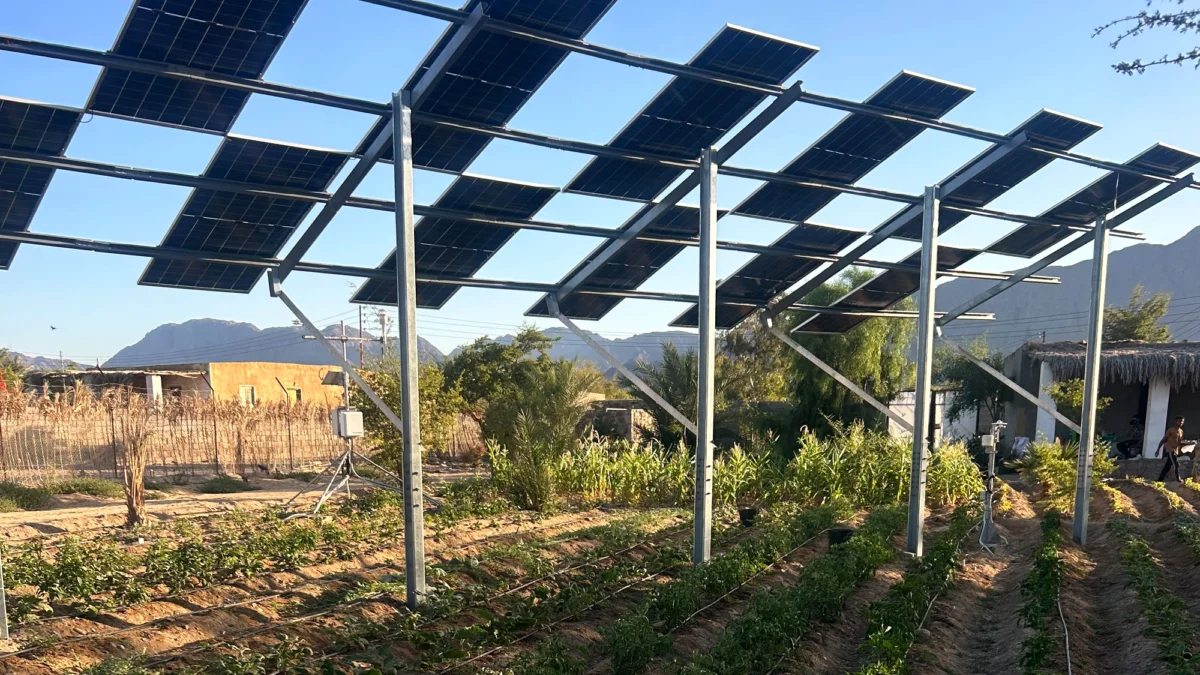
Finding the appropriate machinery to sink structural pilings deep into the water-logged earth required extensive trial and error. Furthermore, because standard underground electrical cabling could disrupt the fragile wetland hydrology, engineers had to design innovative overhead wiring systems. The resulting infrastructure features photovoltaic panels mounted 10 feet above the ground on tracking axes that actively tilt to follow the sun’s path throughout the day. To ensure farmers could navigate harvesting equipment seamlessly, the support pilings were spaced much farther apart than standard commercial solar arrays dictate.
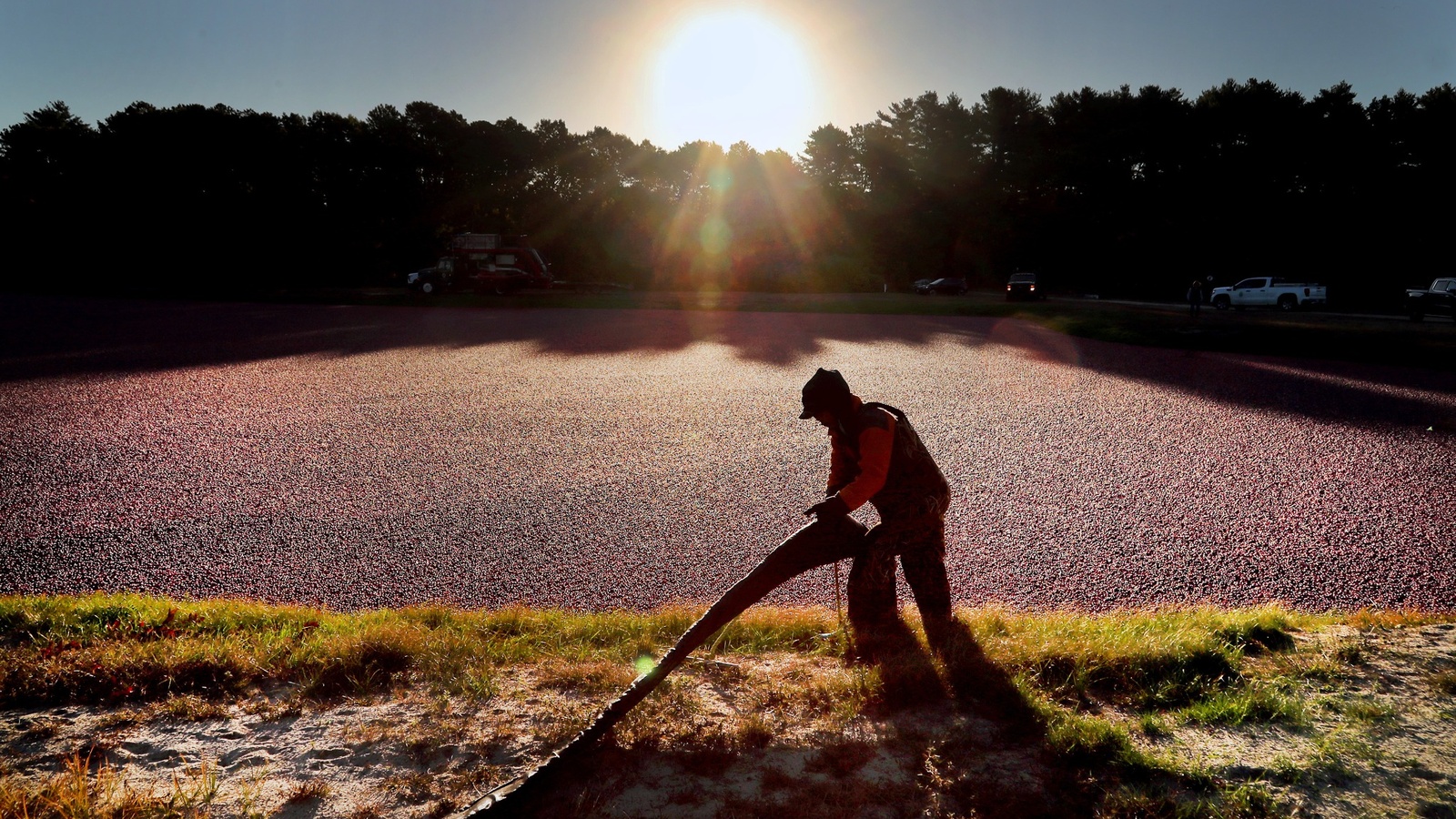
The land itself was acquired by clean energy developer Greenbacker Renewables from multi-generation cranberry farmers who were preparing to exit the industry. To maintain agricultural authenticity and operational success, Greenbacker partnered with Distributed Energy Infrastructure and hired Iain Ward, a seasoned local cranberry farmer and solar consultant, to manage the day-to-day cultivation beneath the panels. The resulting energy generated by these arrays is distributed through a community solar model, allowing local residents and businesses to access cleaner power and lower utility bills.
The Economic Realities of Cranberry Farming
Massachusetts holds a prominent place in the global agricultural market, ranking as the second-largest cranberry-producing state in the nation, trailing only Wisconsin. However, regional growers face mounting economic pressures, including fluctuating global fruit prices, rising operational costs, and stringent environmental regulations.
Unlike cornfields, orchards, or livestock pastures—which can frequently be sold off to commercial or residential real estate developers when farming becomes economically unviable—cranberry bogs enjoy strict state protections as vital wetlands. Even if a grower ceases agricultural production, the land cannot legally be rezoned for housing or commercial construction. Consequently, retired bogs often sit idle and unproductive. For growers looking for an exit strategy or a way to keep their historic lands economically viable, solar integration offers an attractive alternative.
"This is a farm viability opportunity," said Iain Ward, highlighting how clean energy development can prevent historic agricultural lands from falling into permanent disuse. Under this model, landowners or agricultural operators who lease their land for solar development often secure stable, long-term lease payments while continuing to earn revenue from the land’s agricultural output.
Massachusetts and the Rise of Agrivoltaics
The integration of solar energy and agriculture—officially termed agrivoltaics or dual-use solar—has emerged as a central pillar in Massachusetts’ aggressive climate strategy. The state has codified a statutory mandate to achieve net-zero carbon emissions by the year 2050, requiring a massive expansion of renewable energy generation capacity across the commonwealth.
However, locating suitable sites for utility-scale solar has generated intense public debate in Massachusetts, a densely populated and heavily wooded state. Constructing large arrays on rooftops and parking lots within developed municipal centers often introduces prohibitive structural costs and limits generation potential. Conversely, proposing ground-mounted solar farms on undeveloped open land frequently triggers rigorous opposition from local residents concerned about suburban sprawl, forest loss, and ecosystem disruption.
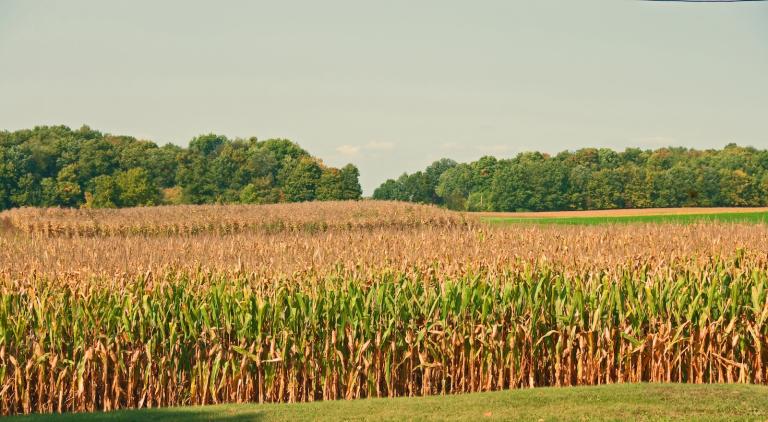
Utilizing pre-cleared agricultural land offers a practical compromise, though it historically raised concerns about removing valuable acreage from food production. Agrivoltaics directly resolves this dilemma by allowing land to simultaneously produce renewable electricity and agricultural commodities.
Recognizing this potential, Massachusetts established itself as a national policy leader in 2018 by becoming the first state to introduce specialized financial incentives for dual-use solar projects. Under the state’s SMART (Solar Massachusetts Renewable Target) incentive program, participants receive a guaranteed base rate for every kilowatt-hour of electricity fed into the grid. Mid-sized solar arrays ranging from 1 megawatt to 5 megawatts receive a base rate of approximately 23.17 cents per kilowatt-hour. Crucially, certified agrivoltaic projects qualify for an additional financial incentive of 9 cents per kilowatt-hour, dramatically improving the project’s return on investment for developers and landowners alike.
A Chronology of Innovation and Expansion
The path toward cranberry agrivoltaics has been characterized by careful experimentation, regulatory navigation, and occasional setbacks:
- 2001: Massachusetts initiates its early framework of state solar incentives, establishing a long-term foundation for renewable energy growth.
- 2018: Massachusetts pioneers the nation’s first dedicated financial incentive structure for agrivoltaic projects, adding a financial bonus per kilowatt-hour for dual-use farms.
- Circa 2019–2020: Early attempts to launch cranberry agrivoltaic projects begin in the town of Carver. While the physical solar arrays are constructed and crops planted beneath them, the development company faces financial insolvency, leaving the projects stalled and incomplete.
- 2021–2023: Developers Greenbacker Renewables and Distributed Energy Infrastructure begin planning and executing advanced engineering models for bog-compatible solar in Kingston and Plymouth, overcoming complex piling and wiring challenges.
- Fall 2023–2024: The Kingston and Plymouth projects complete their inaugural harvests, officially cementing themselves as the first operational cranberry agrivoltaic systems in the United States.
- Present Day: Industry stakeholders report renewed interest in reviving stalled projects, such as the Carver initiative under new ownership, while developers expand agrivoltaic frameworks into apple orchards, cattle pastures, and Christmas tree farms.
Broader Implications and Future Outlook
The success of the Kingston and Plymouth projects has catalyzed wider industry interest throughout New England and the broader United States. Prateek Tare reports that the engineering lessons learned from navigating the water-logged peat of cranberry bogs have directly informed subsequent agrivoltaic designs across diverse agricultural sectors, including apple orchards, cattle pastures, and Christmas tree farms. Preliminary assessments are also underway to introduce solar infrastructure to additional cranberry acreage in the region.
Furthermore, the stalled cranberry solar installation in the nearby town of Carver is poised for a dramatic revival. Although the original developer went bankrupt years ago after erecting the initial frames, the current property owner has expressed an absolute commitment to bringing the project to fruition. Iain Ward noted that the Carver installation should not be viewed as a failure, but rather as an unfinished stepping stone in a broader technological evolution.
As climate change accelerates and competition for land intensifies across the United States, the dual-use model demonstrated in the cranberry bogs of southeastern Massachusetts offers a compelling blueprint for other agricultural regions. By harmonizing renewable energy generation with traditional farming, agrivoltaics mitigates land-use conflicts, secures supplemental income for rural communities, and proves that modern industry and historic agriculture can successfully share the same soil under the same sun.