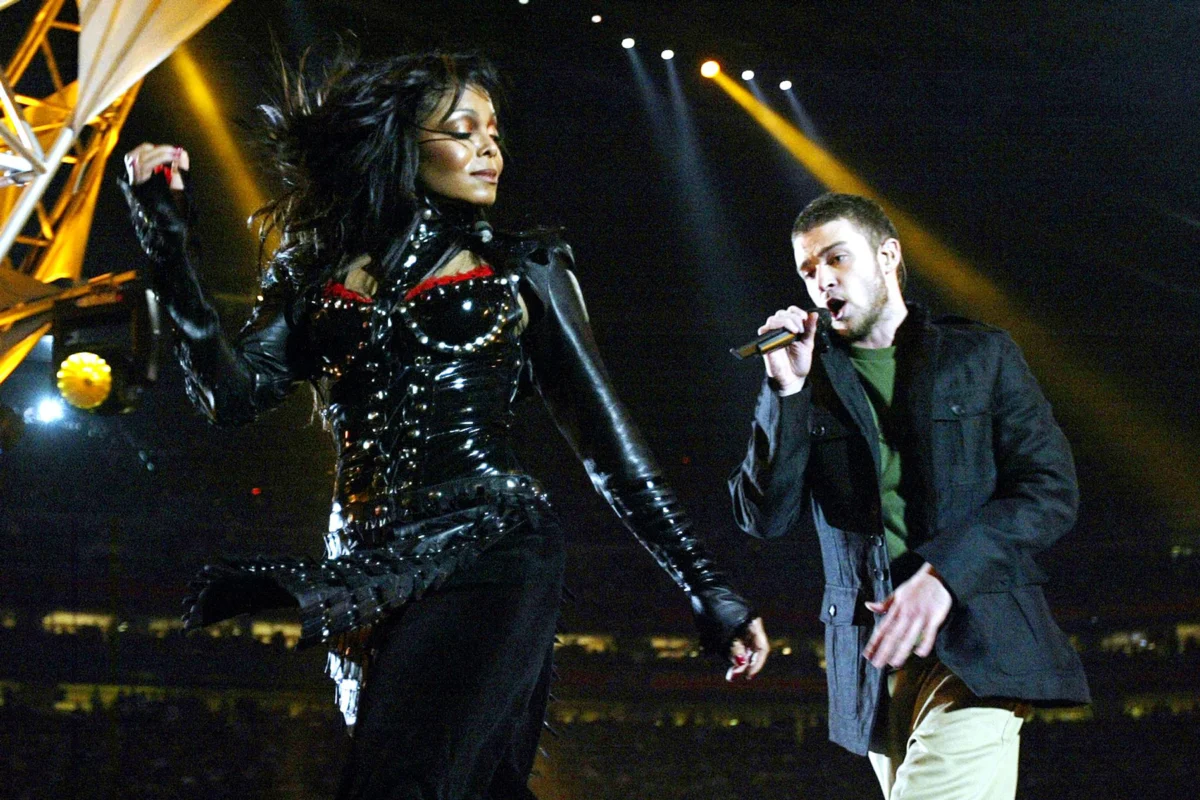
Over two decades after one of the most polarizing and scrutinized moments in live television history, pop icons Justin Timberlake and Janet Jackson are reportedly set to revisit the infamous 2004 Super Bowl halftime show in an upcoming four-part docuseries on Apple TV. Industry sources indicate that the high-profile project is scheduled for release next month, promising a comprehensive, tell-all examination of the event commonly referred to as "Nipplegate" and its enduring cultural fallout.
The multi-part documentary is expected to feature direct participation and commentary from Jackson, offering a firsthand account of the cascading professional and personal consequences that followed the broadcast of Super Bowl XXXVIII. While representatives for Timberlake, Jackson, and Apple have thus far declined to comment on the reports, anticipation surrounding the project highlights how deeply the incident remains embedded in contemporary pop culture discussions regarding gender, accountability, and the evolution of media scrutiny.
Anatomy of a Broadcast Milestone: The 2004 Halftime Show
Super Bowl XXXVIII, held on February 1, 2004, at Reliant Stadium in Houston, Texas, drew a television audience exceeding 140 million viewers. Janet Jackson served as the marquee halftime performer, delivering an energetic medley of her signature hits before being joined on stage by Justin Timberlake for a collaborative rendition of his track "Rock Your Body."
Toward the conclusion of the performance, Timberlake sang the lyric "Gonna have you naked by the end of this song," punctuated by a synchronized choreography move in which he reached out and tore a portion of Jackson’s leather costume. The maneuver exposed Jackson’s right breast, adorned with a sun-burst pierced nipple shield, for approximately 0.5 seconds before the broadcast feed cut to a wide shot of the stadium.
The immediate reaction from the viewing public, regulatory bodies, and network executives was swift and severe. The Federal Communications Commission (FCC) was inundated with hundreds of thousands of complaints, prompting a massive investigation into broadcast indecency that ultimately reshaped live television protocols, leading to the widespread implementation of broadcast delay systems for major public events.
Divergent Paths: The Immediate Aftermath and Career Disparities
In the wake of the broadcast, the professional trajectories of the two performers diverged sharply, illustrating systemic double standards within the entertainment industry. Timberlake quickly issued public apologies, distancing himself from the incident by characterizing it as an unintended "wardrobe malfunction." Despite his central role in the physical exposure of Jackson, Timberlake faced virtually no lasting professional penalties. His sophomore solo album, Justified, continued to chart successfully, he secured high-profile television and film roles, and he was eventually invited back to headline the Super Bowl halftime show as a solo artist in 2018.
Conversely, Janet Jackson bore the overwhelming brunt of the cultural backlash and institutional censorship. In the weeks following the event, Jackson was uninvited from presenting at the Grammy Awards, blacklisted from major radio conglomerates, and effectively dropped by MTV—then a vital promotional outlet for pop artists. Her subsequent studio albums faced steep uphill battles for radio airplay and commercial visibility, and industry analysts widely regard the incident as a pivotal turning point that artificially suppressed her sustained chart dominance in the United States.
Cultural Reckoning and the Shift in Public Perception
For nearly two decades, the narrative surrounding the incident largely favored Timberlake’s framing of an accidental malfunction, while placing the onus of responsibility on Jackson. However, the cultural reckoning of the late 2010s and early 2020s prompted a significant reassessment of historical media events, catalyzed in part by documentaries such as Framing Britney Spears. Public discourse began to scrutinize how female pop stars of the 1990s and 2000s were subjected to predatory media framing, misogyny, and disproportionate professional ruin for controversies in which male counterparts shared equal or greater culpability.
In February 2021, amidst mounting public pressure and social media scrutiny, Justin Timberlake issued a public statement via social media addressing his historical treatment of both Janet Jackson and former partner Britney Spears.
"I specifically want to apologize to Britney Spears and Janet Jackson both individually, because I care for and respect these women and I know I failed," Timberlake wrote at the time. "The industry is flawed. It sets men, especially white men, up for success. It’s designed this way. As a man in a privileged position, I have to be vocal about this. Because of my ignorance, I didn’t recognize it for all that it was while it was happening in my own life, but I do not want to ever benefit from others being pulled down again."
While the statement was acknowledged by many as a necessary step toward accountability, critics and fans argued that a formal apology did not fully undo seventeen years of disparate career impacts.
Production Details and Strategic Implications for Apple TV
The upcoming four-part Apple TV docuseries represents the most thorough institutional exploration of the incident to date. By providing a dedicated platform for Jackson to share her perspective, the project shifts the narrative authority away from external commentators and places it directly with the artist most affected by the fallout.
Apple TV has cultivated a strong reputation for prestige non-fiction programming, frequently backing deep-dive music documentaries and investigative docuseries that explore complex cultural histories. Securing Jackson’s participation for a comprehensive, multi-part retrospective signals an effort to deliver an authoritative, definitive account of the events of February 2004.
Media analysts note that the release of the docuseries could reignite vital conversations regarding corporate responsibility, gender equity in the music industry, and the long-term psychological and professional impacts of manufactured media scandals. As streaming platforms continue to compete for subscriber engagement through high-impact cultural retrospectives, the project is expected to draw substantial viewership and generate renewed critical discourse across the entertainment landscape.
Broader Industry Impact and Legacy
The legacy of the 2004 Super Bowl halftime show extends far beyond the individual careers of Jackson and Timberlake. It fundamentally altered the risk-management strategies of television networks, sports leagues, and artist management firms. Live broadcasts across the globe instituted mandatory safety buffers, and the regulatory environment surrounding public indecency underwent rigorous tightening by federal authorities.
Furthermore, the incident serves as a primary case study in modern media ethics, illustrating how rapid, unexamined sensationalism can derail a legendary artist’s career while insulating others from accountability. As the upcoming Apple TV docuseries prepares to roll out its four-part narrative next month, it offers both an autopsy of a historic television misstep and a timely meditation on how the entertainment industry evaluates fault, forgiveness, and historical correction in the digital age.