
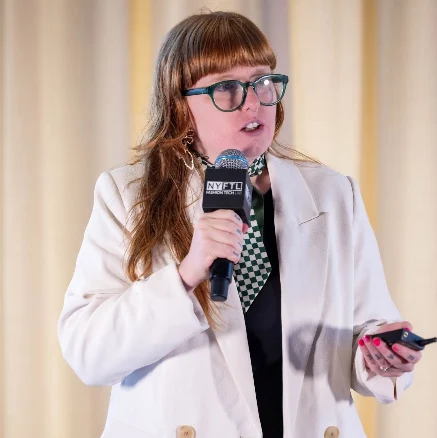
The global retail industry is currently grappling with a logistical and environmental nightmare of unprecedented proportions: a $890 billion returns crisis that threatens both corporate bottom lines and global climate goals. As e-commerce continues to dominate the consumer landscape, the volume of returned goods has surged, leading to a systemic failure in traditional reverse logistics. However, Disney Petit, the founder and CEO of Liquidonate, is proposing a paradigm shift that moves away from traditional warehouse processing and toward a model of localized community distribution. By integrating sophisticated technology with social impact, Liquidonate is transforming what was once considered "waste" into a vital resource for nonprofits and schools across the United States.
The Scale of the Returns Crisis: A Statistical Overview
To understand the necessity of Liquidonate’s mission, one must first examine the sheer scale of the retail returns problem. According to data from the National Retail Federation (NRF), American consumers returned approximately 16.5% of all retail purchases in recent years, a figure that spikes significantly in the e-commerce sector. This behavior has created a "reverse logistics" bottleneck that most retailers are ill-equipped to handle.
The environmental consequences are staggering. Each year, the process of returning goods generates an estimated 16 million tons of carbon dioxide emissions and results in approximately 2.6 million tons of consumer goods ending up in landfills. The reason for this waste is often economic; for many retailers, the cost of inspecting, cleaning, and restocking an "open-box" or slightly damaged item exceeds the potential resale value. Processing a single return can cost a retailer between $25 and $35, covering everything from shipping and labor to warehouse space and liquidated markdowns.
Furthermore, the industry is plagued by "return fraud," a phenomenon where consumers exploit lenient return policies. Approximately 52% of consumers have admitted to participating in some form of return fraud, such as "wardrobing" (buying an item to use once and then returning it) or claiming an item never arrived. To mitigate these costs, many retailers have historically utilized "keep it" policies—refunding the customer but telling them to keep the item—which inadvertently encourages fraudulent behavior and devalues the product.
The Genesis of Liquidonate: From Postmates to Social Innovation
Disney Petit’s journey to solving the returns crisis began in the fast-paced world of Silicon Valley tech startups. As the 15th employee at Postmates, Petit was instrumental in building the company’s customer service infrastructure from the ground up. Her experience at the intersection of logistics and consumer behavior provided her with a front-row seat to the inefficiencies of modern delivery systems.
During her tenure at Postmates, Petit founded Civic Labs, the company’s social responsibility arm. It was here that she developed "Bento," a food security platform that utilized SMS technology to allow individuals without smartphones to access free, nutritious meals. Bento was a resounding success, earning the distinction of Time Magazine’s Invention of the Year in 2021. This experience solidified Petit’s belief that technology could be leveraged to solve complex social problems through efficient resource allocation.
Following the success of Bento, Petit turned her attention to the massive waste generated by the retail sector. Recognizing that the "reverse logistics" workflow was fundamentally broken, she founded Liquidonate to create a circular economy where returned goods are diverted from landfills and redirected to those who need them most. In recognition of its impact, Liquidonate was recently named one of Time’s Best Inventions of 2025.

How Liquidonate Works: Integrating Logic into Logistics
Liquidonate operates by integrating directly with a retailer’s existing Warehouse Management Systems (WMS) and Return Management Systems (RMS). This technological integration allows the platform to intercept items at the moment they are designated as "unsellable" through traditional channels.
When a product—whether it is an open-box electronic device, a slightly scuffed piece of furniture, or an unwanted piece of apparel—is returned, Liquidonate’s algorithm automatically matches the item with a local nonprofit or school within its network of over 4,000 organizations. The platform handles the entire administrative and logistical burden, including the generation of shipping labels, coordination of pickups, and the provision of necessary tax documentation.
"It’s the same reverse logistics workflow they already use," Petit explained in a recent industry interview. "It’s just redirected toward community good instead of going to the landfill."
By automating the donation process, Liquidonate allows retailers to recover a portion of their losses through tax benefits associated with charitable contributions. This financial incentive, combined with the reduction in warehouse storage fees and landfill disposal costs, makes the platform a commercially viable alternative to traditional liquidation or destruction.
Combating Return Fraud and Enhancing Corporate Responsibility
One of the most significant advantages of the Liquidonate model is its ability to curb return fraud. In the traditional "keep it" return model, retailers often lose both the product and the revenue, while potentially encouraging customers to make false claims to get free items.
Liquidonate eliminates this loophole by ensuring that every return results in a physical transfer of goods. "One hundred percent of the time we’re producing a shipping label for a nonprofit who wants that product," Petit says. "We completely eliminate that keep-it return option, so we eliminate the returns fraud option."
This approach forces accountability back into the consumer-retailer relationship. If a customer wishes to return an item, they must send it to a verified nonprofit. This ensures the item serves a social purpose while preventing the customer from retaining the item for personal use after receiving a refund.
For retailers, this system provides a dual benefit: it protects the brand’s integrity and demonstrates a tangible commitment to Environmental, Social, and Governance (ESG) goals. In an era where consumers are increasingly prioritizing sustainability, the ability to report that millions of items have been diverted from landfills into the hands of local communities is a powerful marketing and reputational asset.

The Environmental Justice Perspective
Beyond the logistics and the bottom line, Disney Petit views Liquidonate through the lens of environmental justice. The traditional waste stream disproportionately affects marginalized communities, as landfills and waste processing centers are frequently located near low-income neighborhoods. By reducing the volume of waste sent to these facilities and instead providing high-quality goods to local schools and charities, Liquidonate addresses both environmental and social inequities.
The platform has already diverted over 12 million items from landfills, ranging from essential school supplies and office furniture to home appliances and clothing. These items provide critical support to nonprofits that would otherwise have to spend their limited budgets on purchasing these goods at retail prices.
Industry Implications and the Future of Circularity
The success of Liquidonate signals a broader shift in the retail industry toward circularity. As regulatory pressure increases—particularly in regions like the European Union, which has begun implementing stricter "Right to Repair" and anti-waste legislation—American retailers are looking for proactive ways to manage their surplus inventory.
Industry analysts suggest that the "donation-as-a-service" model could eventually become a standard component of the retail lifecycle. With approximately $900 billion worth of inventory potentially available for redirection, the market for platforms like Liquidonate is vast. The challenge for the industry will be scaling these solutions to match the speed of global e-commerce.
Petit remains focused on proving that "doing good and doing well" are not mutually exclusive. Liquidonate is a for-profit company, a deliberate choice intended to show that sustainability can be a profitable business model. By creating a system where every stakeholder—the retailer, the nonprofit, the environment, and the taxpayer—wins, Liquidonate is setting a new standard for the future of commerce.
Conclusion: A Call to Action for the Retail Ecosystem
As Liquidonate continues to expand its reach, the company is actively seeking new partnerships with both retailers and charitable organizations. Nonprofits and schools can register for the platform at no cost, gaining access to a steady stream of donated goods that can enhance their operational capacity. Retailers, meanwhile, are encouraged to view their returns not as a liability, but as an opportunity for community reinvestment.
The retail returns crisis is a complex problem with no single solution, but Disney Petit’s approach offers a compelling path forward. By replacing the "logic" of disposal with the logic of donation, Liquidonate is proving that the most sustainable return is the one that never reaches the landfill, but instead finds a second life in the service of others. In doing so, the company is not just solving a logistics problem; it is helping to build a more resilient and equitable circular economy.










Leave a Reply