
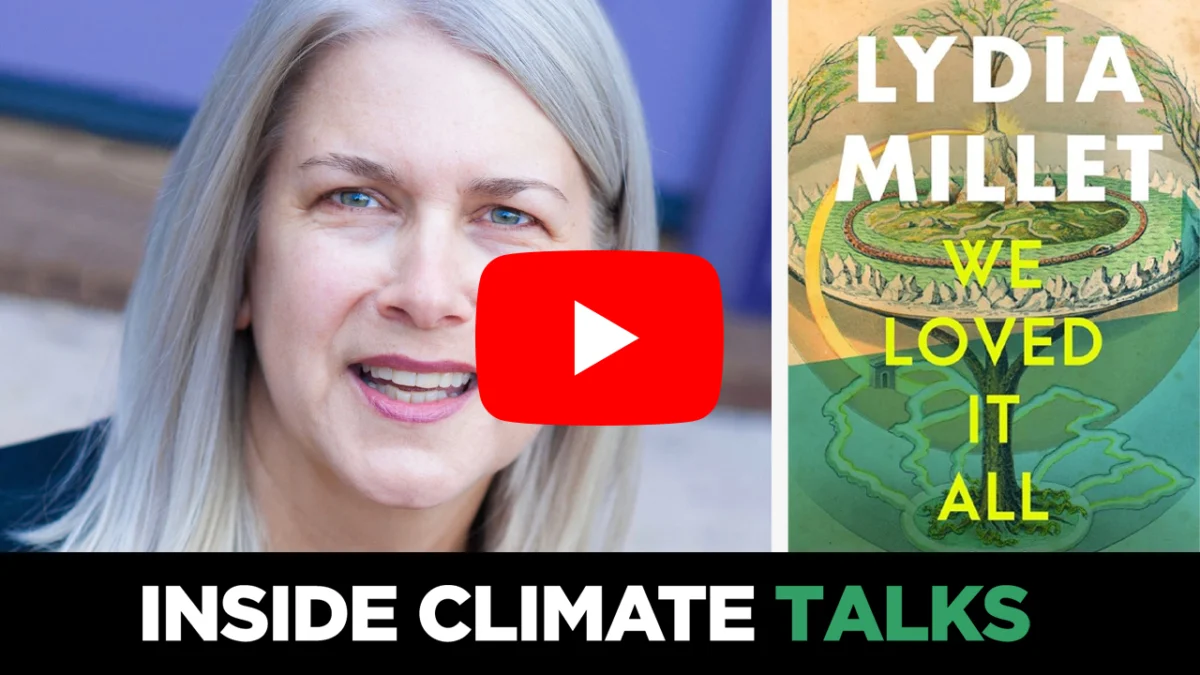
The third installment of a special Earth Day series hosted by Inside Climate News features a profound exploration of the human condition in an era of ecological transition. Acclaimed novelist Lydia Millet, known for her sharp and often haunting depictions of the climate crisis in fiction, has transitioned into the realm of nonfiction with her latest memoir, We Loved It All. In a comprehensive conversation with reporter Kiley Bense, Millet delves into the emotional and philosophical complexities of living through a period where the richness of the planet’s biodiversity is under existential threat. This dialogue serves as a focal point for understanding how human identity is intrinsically tied to the animal kingdom and how the looming shadow of extinction reshapes our cultural and personal narratives.
The Evolution of Lydia Millet’s Literary Contribution to Climate Discourse
Lydia Millet has long been recognized as a leading voice in "cli-fi" (climate fiction), a genre that uses narrative to grapple with the multifaceted realities of global warming and habitat destruction. Her previous works, such as the Pulitzer Prize finalist A Children’s Bible, utilized allegory and stark realism to depict a world where the older generation’s negligence leaves the youth to navigate a collapsing environment. However, We Loved It All marks a significant departure from her established body of fiction.
As Millet’s first nonfiction work, the memoir functions as both a personal reflection and a broader philosophical inquiry. It examines the "pain and joy of being human" at a moment when the biological diversity that has defined the human experience for millennia is rapidly vanishing. By moving away from the constraints of plot and character, Millet allows herself to engage directly with the reader about the psychological toll of the Anthropocene—the current geological age during which human activity has been the dominant influence on climate and the environment.
The Crisis of Disconnection: Human Identity and the Animal World
A central theme of Millet’s discussion with Bense is the increasing separation between modern human society and the animal world. Millet argues that as humans retreat into digitized, urbanized environments, our understanding of ourselves as biological entities begins to erode. This separation is not merely physical but ontological; when we lose our connection to other species, we lose a mirror through which we understand our own existence.
Millet posits that the animal world provides a necessary "otherness" that defines the boundaries of human identity. In the interview, she explores the haunting possibility of what happens to the human psyche when the creatures that have populated our myths, our art, and our literal landscapes for centuries are no longer present. This is not just a loss of biomass, but a loss of meaning. The memoir suggests that the extinction crisis is, in many ways, an identity crisis for humanity.
One of the more poignant observations discussed is the future of children’s toys. Millet reflects on the irony of a world where children are surrounded by stuffed animals, plastic figurines, and animated characters based on species—such as elephants, tigers, and polar bears—that may soon cease to exist in the wild. These toys may eventually become "relics of a lost world," symbols of a biodiversity that future generations will only know through artificial representation.
Chronology of the Climate Crisis and the Rise of Environmental Literature
The emergence of works like We Loved It All follows a specific timeline of increasing environmental awareness and escalating ecological data. To understand the context of Millet’s work, one must look at the trajectory of the climate movement over the past several decades:
- 1970: The first Earth Day is established, marking the beginning of the modern environmental movement.
- 1988: The Intergovernmental Panel on Climate Change (IPCC) is formed, providing the first major scientific framework for global warming.
- 2000s: The term "Anthropocene" gains scientific and popular traction, emphasizing human impact on the planet’s geology and ecosystems.
- 2010-2020: A surge in "Cli-Fi" literature occurs as authors like Amitav Ghosh, Richard Powers, and Lydia Millet begin to fill the gap left by traditional news and scientific reports, focusing on the emotional and social impacts of climate change.
- 2024: The release of We Loved It All coincides with record-breaking global temperatures and a renewed urgency in the discourse surrounding the "Sixth Mass Extinction."
Supporting Data: The Reality of Biodiversity Loss
The themes explored in Millet’s memoir are supported by increasingly dire data from the scientific community. According to the World Wildlife Fund’s (WWF) Living Planet Report 2022, there has been an average 69% decline in monitored wildlife populations—including mammals, birds, amphibians, reptiles, and fish—since 1970. This staggering loss of life provides the factual foundation for Millet’s literary concerns.
Furthermore, the International Union for Conservation of Nature (IUCN) Red List currently classifies more than 44,000 species as threatened with extinction. This includes 41% of amphibians, 26% of mammals, and 12% of birds. For writers like Millet, these numbers are not just statistics; they represent a fundamental thinning of the "fabric of life" that sustains human culture and spirit.
In the United States, the legal and political response to these findings has been a point of contention. While the Endangered Species Act (ESA) has been credited with saving 99% of listed species from total extinction, it remains underfunded and subject to political fluctuations. The gap between scientific necessity and political will is often where literature steps in, providing the narrative empathy required to spur public action.
The Role of Nonprofit Journalism in Documenting the Crisis
The interview between Millet and Bense was produced by Inside Climate News (ICN), a nonprofit newsroom that has become a cornerstone of environmental reporting. Founded in 2007 by two journalists, ICN was established to address the dwindling resources allocated to environmental beats in traditional corporate media.
In 2013, ICN gained national prominence when it was awarded the Pulitzer Prize for National Reporting for its investigation into the Enbridge oil spill in Michigan’s Kalamazoo River. This accolade validated the nonprofit model of journalism, which relies on reader donations rather than advertising revenue. ICN’s commitment to providing free, high-quality information is particularly relevant in the context of climate disinformation. By making their reporting available without a paywall, they ensure that critical facts about the planet’s health remain accessible to the public, regardless of economic status.
Statements and Reactions: The Literary and Scientific Community
While the interview focuses on Millet’s personal insights, it echoes a broader sentiment within the scientific and artistic communities. Dr. Elizabeth Kolbert, author of The Sixth Extinction, has frequently noted that the challenge of the climate crisis is its "invisibility" in daily life—a theme Millet counters by making the loss visible through narrative.
Environmental psychologists have also reacted to the themes in Millet’s work, noting that "eco-anxiety" and "solastalgia" (the distress caused by environmental change in one’s home environment) are becoming prevalent in the general population. Millet’s memoir is seen as a therapeutic and intellectual tool to help readers process these feelings, moving from a state of paralysis toward one of engaged awareness.
Analysis of Implications: Beyond Facts to Narrative Action
The significance of We Loved It All lies in its ability to bridge the gap between data and emotion. While scientific reports can tell us how the planet is changing, literature tells us what it feels like to live through that change. Millet’s exploration suggests that facts alone are insufficient to trigger the massive societal shifts required to mitigate climate change. Instead, a fundamental re-evaluation of the human-animal relationship is necessary.
If humans continue to view themselves as separate from or superior to the natural world, the drive to protect that world remains transactional. Millet’s work argues for a return to a "kinship" model, where the protection of other species is seen as an act of self-preservation—not just physically, but spiritually.
The broader implication for the publishing industry and journalism is a move toward more integrated storytelling. As the climate crisis permeates every aspect of human life—from the economy to mental health—the distinction between "environmental writing" and "general literature" is likely to disappear. Every story will eventually become a climate story.
Conclusion: A Call for Cultural Resilience
As Earth Day serves as a yearly reminder of the planet’s fragility, the conversation between Lydia Millet and Kiley Bense highlights the role of the creator in a time of crisis. Through We Loved It All, Millet asks her audience to confront the grief of what has been lost while simultaneously celebrating the "richness of life" that remains.
The survival of biodiversity depends on political and scientific intervention, but it also depends on a cultural shift. By documenting the "pain and joy" of the current moment, Millet provides a roadmap for cultural resilience. The memoir serves as a testament to the idea that to save the world, we must first remember how to love it—not as a resource to be managed, but as a community to which we belong. Through the support of nonprofit newsrooms like Inside Climate News, these essential dialogues continue to reach the public, ensuring that even in an age of extinction, the story of the natural world is not forgotten.









Leave a Reply