
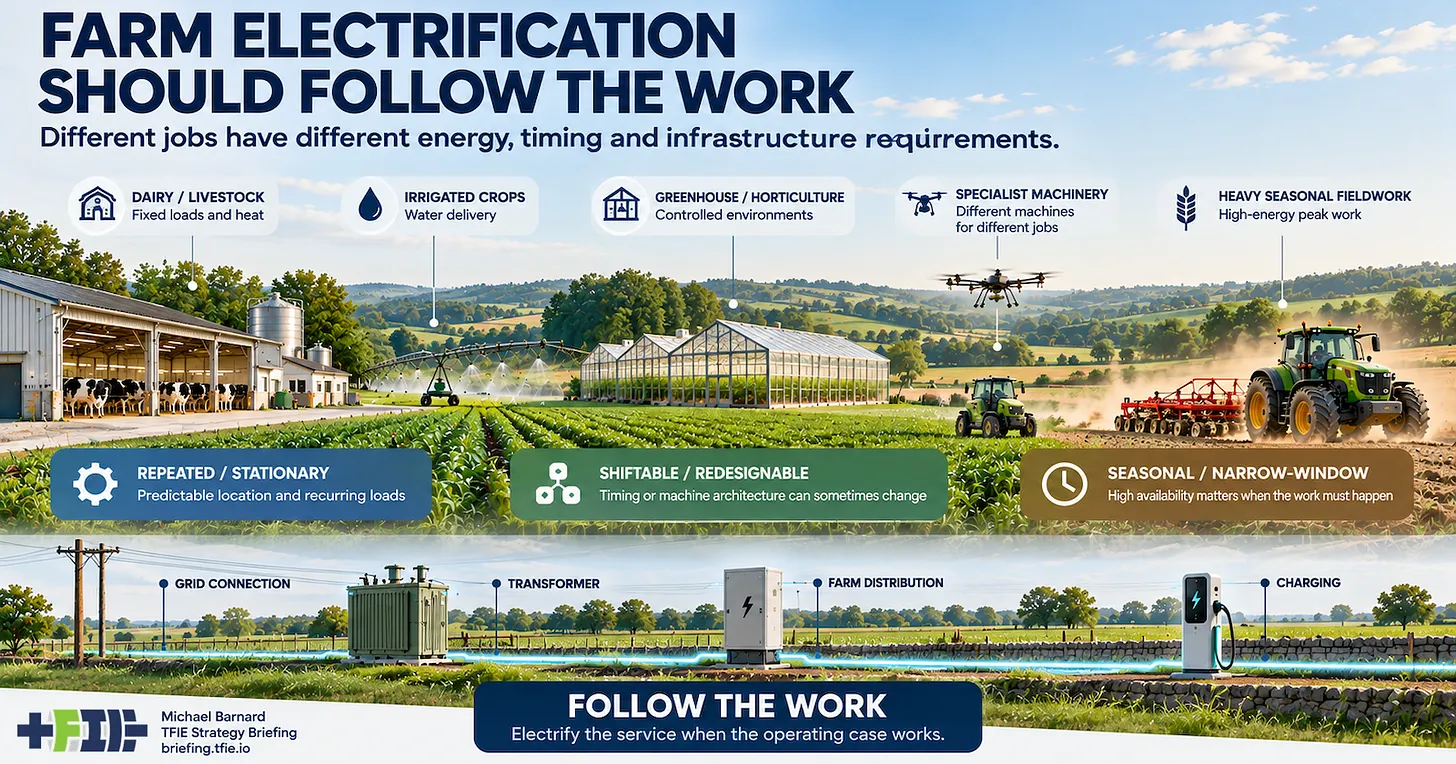
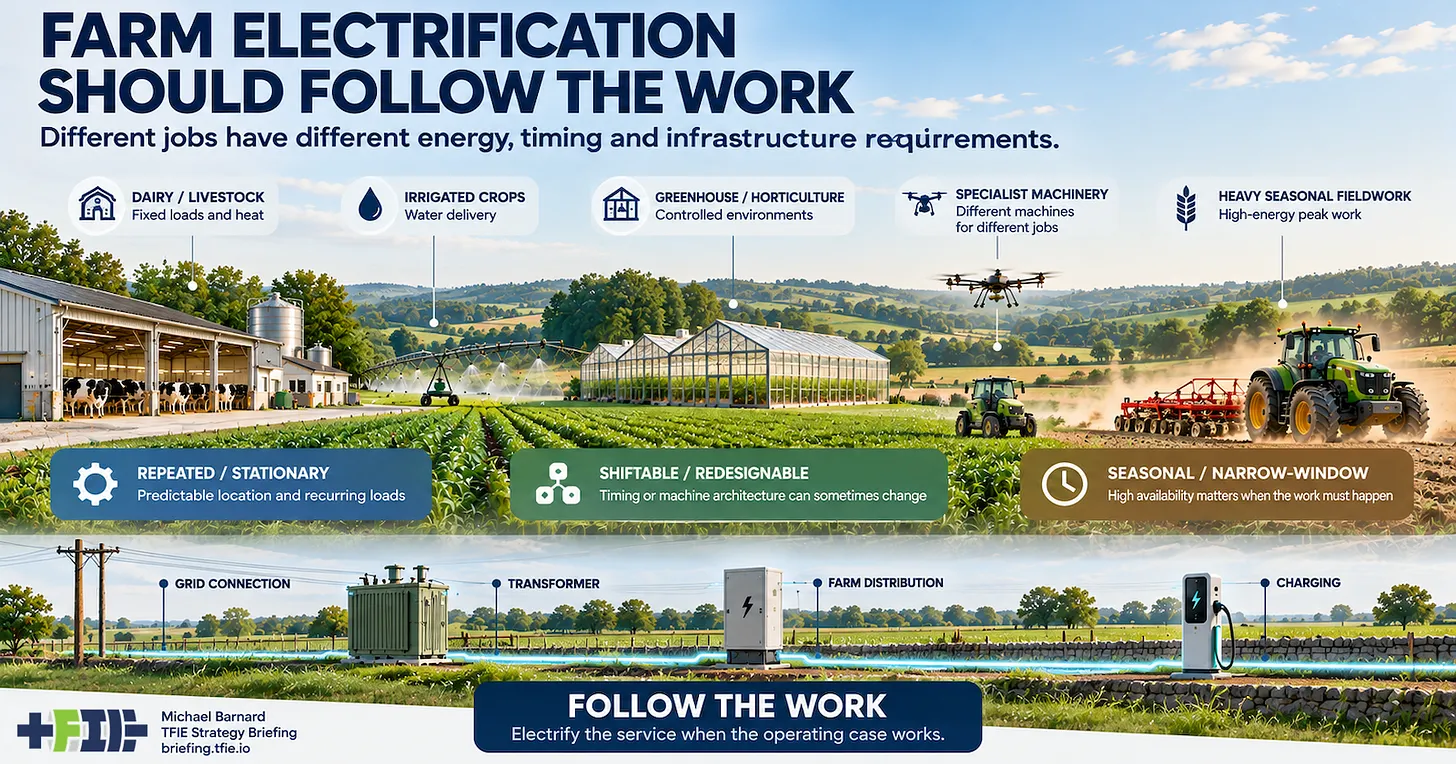
The conversation surrounding the transition of the agricultural sector to renewable energy is frequently narrowed to a single, high-profile technology: the electric tractor. While the development of battery-powered machinery capable of handling heavy-duty, seasonal field work remains a significant engineering hurdle, focusing exclusively on the tractor creates a flawed roadmap for farm electrification. Agriculture is not a monolithic industry; it is a complex ecosystem of stationary loads, irrigation systems, thermal management, and varying seasonal demands. A comprehensive strategy for decarbonizing the farm must prioritize the specific work being performed rather than the procurement of specific electric equipment.
The Problem with the Tractor-Centric Narrative
For decades, the image of the diesel tractor has defined agricultural energy consumption. However, the reliance on high-horsepower diesel engines during narrow planting and harvest windows represents only a fraction of a farm’s total energy profile. Farms operate cooling systems for dairy, ventilation and heating for livestock, irrigation pumps, greenhouses, and processing facilities. Each of these services requires different energy quantities, infrastructure capacities, and operational timelines.
Treating the electric tractor as the "litmus test" for farm electrification is a strategic error. The fact that a current 200-horsepower diesel tractor cannot yet be fully replaced by a battery-electric equivalent does not provide any logical basis for delaying the transition of stationary fossil-fuel-dependent services. Heating systems, water pumps, and refrigeration units are mature technologies that have utilized electric alternatives for years, often with superior performance and reduced operating costs.
A Chronology of Agricultural Energy Shifts
The impetus for a more rigorous, work-first approach to electrification has gained momentum following global fuel price volatility. In Ireland, for instance, widespread protests over rising diesel costs in recent years highlighted the inherent vulnerability of farms that are entirely dependent on liquid fossil fuels. These events served as a catalyst for a deeper analysis of the agricultural supply chain, forcing stakeholders to distinguish between "energy for movement" and "energy for production."
By 2025, agricultural bodies—most notably the Irish research organization Teagasc—began publishing detailed modeling on solar energy adoption. These studies shifted the focus from broad energy independence to practical, ROI-driven deployment. The research demonstrated that simply matching annual solar generation with annual energy consumption is insufficient; without battery storage or demand-side management, the utilization of on-site renewable energy often falls below 30-40%.
As of July 2026, international efforts to standardize solar infrastructure have accelerated. The Indian government’s PM-KUSUM initiative, which has deployed over 1.5 million solar-powered irrigation units, serves as the global benchmark for large-scale rural electrification. However, the data from these programs reveals a critical lesson: installing a solar pump is not merely an equipment upgrade; it is a shift in water governance. Without proper management, the reduced marginal cost of solar-powered water extraction can lead to the depletion of groundwater resources, proving that technical solutions must be paired with policy governance.
Strategic Infrastructure and Capital Utilization
A primary risk in current electrification strategies is the "infrastructure trap." Many farms are attempting to procure machinery before ensuring the grid can support the increased load. Rural grid connections, transformer upgrades, and charging infrastructure often require longer lead times than the purchase and delivery of the machines themselves.
A forward-thinking strategy requires prioritizing grid-side improvements, particularly at central hubs. Contractor depots, which serve multiple farms, offer a high-utilization model that is better suited for the high capital costs of electric equipment. By concentrating charging infrastructure and grid capacity at these service points, the cost of downtime and high-voltage connections can be amortized across a larger pool of productive hours.
The Case for Stationary Thermal Efficiency
The transition to electricity is most immediate and economically beneficial when applied to stationary thermal loads. Data from pig-farming operations demonstrates that replacing kerosene-based heating systems with heat pumps can reduce annual energy expenditures by as much as 70%. In one notable case study involving an 800-sow operation, an initial investment of approximately €58,000 yielded a simple payback of less than two years due to the dramatic reduction in heating costs.
These figures, while based on historical data, remain a testament to the fact that fossil fuel reliance in agriculture is often a legacy of design rather than a necessity of the task. Transitioning to heat pumps is not dependent on battery density or range anxiety; it is purely a matter of capital allocation and system design.
Redefining the Role of Mobile Machinery
While stationary loads are straightforward, mobile machinery—such as tractors and sprayers—requires a nuanced assessment of the "duty cycle." The Fendt e107 Vario, with its 100 kWh battery and 55 kW continuous output, provides a realistic view of current technological capabilities. It is not intended to replace the entire fleet, but rather to excel in partial-load applications like mechanical weed control or light planting, where it can operate for four to seven hours on a single charge.

The future of agricultural machinery may not involve direct replacements of diesel engines with electric ones, but rather a fundamental redesign of farm operations. Autonomous drones, smaller distributed robotics, and specialized equipment can perform tasks more efficiently than the heavy, multipurpose machines that have dominated the last century. By moving away from the "one-size-fits-all" tractor model, farmers can reduce the total tonnage of equipment moving across their fields, which in turn reduces energy requirements and soil compaction.
Broader Economic and Environmental Implications
The ultimate measure of success for farm electrification is not the date the last diesel engine is retired, but the degree to which a farm reduces its exposure to volatile fossil fuel markets while maintaining or increasing productivity.
Policy frameworks must evolve to support this reality. Governments should shift focus from broad subsidies for "electric machines" toward:
- Grid Reinforcement: Prioritizing the electrical backbone of rural communities to accommodate future electrification.
- Contractor Support: Providing incentives for shared-service businesses that can manage the high capital costs of electric machinery.
- Integrated Resource Management: Linking energy policy with water and land-use governance to prevent unintended consequences like groundwater depletion.
- Economic Logic: Allowing for the retention of existing diesel assets for high-intensity, low-frequency seasonal work until the economics of the electric alternative are fully matured.
Conclusion
Agriculture stands at a pivotal junction. The temptation to focus solely on the high-visibility challenge of the electric tractor risks obscuring the significant, immediate gains available through the electrification of stationary and support services. By adopting a "work-first" framework, farmers and policymakers can build a more resilient, cost-effective, and sustainable food production system.
The tractor will undoubtedly electrify as battery and infrastructure economics align. However, that transition is only one chapter in a much larger, multi-faceted process of industrial modernization. The rest of the farm—from the dairy parlor to the irrigation system—need not wait for the breakthrough in heavy-duty propulsion. By addressing the most efficient opportunities first, the agricultural sector can secure its energy future, reduce its carbon footprint, and maintain the critical reliability required to feed a growing population.










Leave a Reply