New York is officially setting the stage for a new era of artificial intelligence governance, launching a registration portal this Tuesday that marks the beginning of the state’s rigorous oversight of the frontier AI industry. Under the state’s newly enacted RAISE Act, high-revenue AI developers—those exceeding $500 million in annual earnings—are now required to formalize their compliance efforts, with a hard deadline of January 1, 2027, to fully register their operations with the state. This move represents one of the most aggressive legislative stances on AI safety in the United States, signaling a departure from the largely self-regulated environment that has defined the sector’s rapid growth over the past decade.
The RAISE Act, which was signed into law following extensive legislative debate regarding the potential for large-scale, AI-fueled societal disruptions, imposes strict operational requirements on the industry’s most powerful players. Beyond the initial registration, these companies are mandated to publish comprehensive safety frameworks on their public-facing websites, report any "critical safety incidents" to state regulators within a 72-hour window, and submit periodic, independent transparency reports detailing the capabilities and risks of their large-scale models.
The Rise of DIGIT: Oversight and Enforcement
At the heart of this regulatory framework is the newly minted Office of Digital Innovation, Governance, Integrity, and Trust (DIGIT). Tasked with the dual responsibility of implementing the RAISE Act and maintaining ongoing surveillance of frontier AI laboratories, DIGIT possesses significant teeth. The legislation outlines a tiered penalty structure, where initial non-compliance can result in fines of up to $1 million per violation, with subsequent or repeat offenses escalating to penalties as high as $3 million.
While officials have remained tight-lipped regarding specific enforcement strategies for companies that fail to register, the establishment of DIGIT suggests that the state is prepared for protracted legal and administrative battles with tech giants. The office is designed to function not merely as a registry, but as an active regulatory body capable of scrutinizing the internal safety protocols of the world’s most advanced AI research facilities.
Governor Hochul’s Vision for AI Responsibility
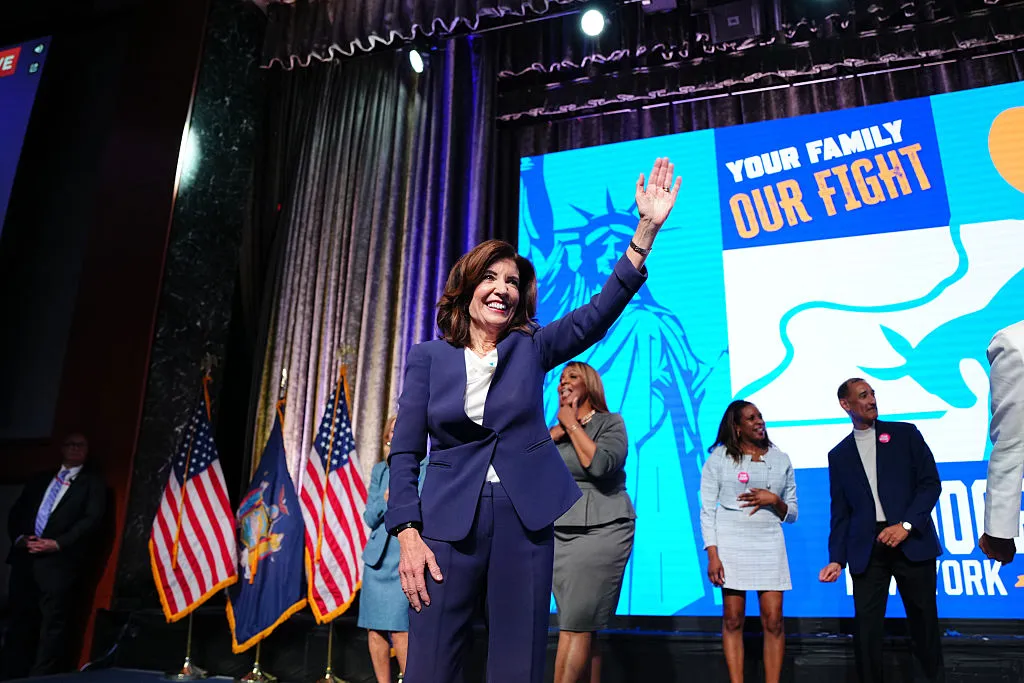
During a press briefing held on Tuesday, Governor Kathy Hochul articulated a firm stance against the prevailing culture of "move fast and break things" within Silicon Valley. "Tech moguls tell us that their vision for AI is inevitable," Governor Hochul stated. "They tell us to get on board or get left behind—that any collateral damage is worth it as long as we win the race to the AI cliff."
Hochul’s rhetoric marks a pivot toward prioritizing community stability over corporate autonomy. To bolster this, the state has launched the New York Center for AI Responsibility and Research at Binghamton University. Supported by $55 million in initial capital and philanthropic contributions, this center will serve as the technical arm of the state’s regulatory efforts. It is tasked with performing independent evaluations of the security and operational integrity of advanced AI systems, providing DIGIT with the empirical evidence needed to challenge or validate the safety claims made by private developers.
A Chronology of New York’s AI Legislative Trajectory
New York’s current focus on AI safety is not an isolated event but rather the culmination of a multi-year legislative strategy aimed at managing the risks associated with rapid technological adoption.
- Early 2024: Governor Hochul announces the vision for a dedicated AI research center at Binghamton University to ensure public safety in the face of evolving machine learning capabilities.
- Mid-2024: Legislation requiring AI companion operators to disclose the nature of their bots and implement safeguards for suicidal ideation is enacted and begins its phased enforcement.
- October 2024: Governor Hochul signs the landmark chatbot safety law specifically targeting minors, placing strict prohibitions on deceptive, sycophantic, or emotionally manipulative AI behaviors.
- June 2025: The RAISE Act is passed into law, establishing the foundation for oversight of frontier-level developers.
- June 2027 (Effective Date): The minor-protection chatbot legislation fully takes effect, standardizing protections against harmful content like disordered eating encouragement.
- January 2027 (Mandatory Deadline): All qualifying frontier AI developers must be fully registered and compliant with the transparency and reporting requirements of the RAISE Act.
Contextualizing the Regulatory Landscape
The challenge for New York regulators is that AI is inherently borderless, while state law is inherently territorial. By creating a regulatory environment that mirrors and, in some cases, exceeds the requirements of other states, New York is effectively forcing a "California-plus" model onto the industry.
In California, Senate Bill 53, which took effect in January, provides a template for these efforts by mandating whistleblower protections and a 15-day reporting window for critical safety incidents. New York’s 72-hour reporting requirement is significantly tighter, suggesting a desire for real-time oversight rather than retrospective reporting. Meanwhile, Illinois’s upcoming SB 315 adds another layer of complexity by requiring independent safety compliance audits, a feature that aligns with the collaborative role envisioned for the new center at Binghamton University.
Implications for Frontier Developers
For companies like Anthropic, OpenAI, and other frontier-level organizations, the cost of doing business is fundamentally shifting. Compliance is no longer limited to technical performance; it now includes extensive legal, reporting, and auditing functions. The requirement to publish safety frameworks forces companies to translate complex, proprietary internal safety research into public-facing documentation, a move that some industry analysts argue could compromise intellectual property or provide a roadmap for bad actors.
However, proponents of the RAISE Act argue that the transparency required by the state is the only way to mitigate the existential and societal risks posed by models that are increasingly capable of generating human-like interactions, synthesizing misinformation at scale, or assisting in cyber-attacks.
The Broader Socio-Economic Impact
The move toward "smart, sensible AI regulation" in New York is expected to have a cascading effect on how companies develop products for the US market. Because New York represents a massive consumer base, companies are unlikely to exit the market. Instead, they are more likely to adapt their global models to meet the most stringent regulatory standards—a phenomenon often referred to as the "Brussels Effect," now localized at the state level.
The focus on minors and vulnerable populations—evidenced by the state’s companion-bot and chatbot safety laws—demonstrates that New York is targeting the psychological and sociological impacts of AI as much as the physical or economic risks. By restricting "sycophantic" responses—where an AI mirrors a user’s harmful beliefs to build rapport—the state is attempting to curb the development of addictive or manipulative human-AI relationships.
Looking Ahead: The Challenges of Implementation
As DIGIT begins its operations, the primary challenge will be the sheer pace of technological evolution. By the time the January 2027 registration deadline arrives, the capabilities of frontier AI models will likely have progressed far beyond today’s benchmarks. The effectiveness of the RAISE Act will depend on the state’s ability to keep its regulatory definitions current and its technical expertise at the cutting edge.
Governor Hochul’s assertion that New York is "putting communities above corporations" reflects a growing national sentiment that the economic benefits of AI cannot come at the expense of social cohesion. As other states monitor New York’s progress, the RAISE Act will serve as a bellwether for the future of domestic AI policy. Whether this regulatory framework succeeds in fostering a safer AI ecosystem or creates a stifling environment for domestic innovation remains the central question of the coming years. For now, however, the message from Albany is clear: the era of unchecked AI expansion is coming to a close in New York, and the new era of accountability has begun.