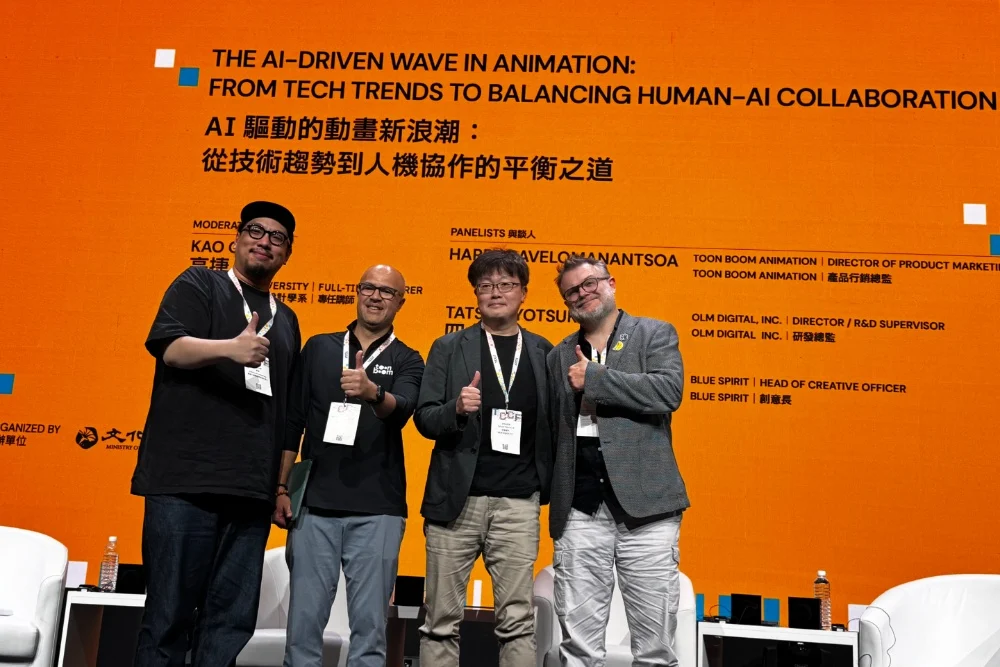
The Japanese animation industry, long celebrated for its meticulous hand-drawn aesthetic and labor-intensive production cycles, is currently navigating a pivotal technological transition. OLM, the powerhouse studio behind the iconic Pokemon franchise, has unveiled a specialized AI coloring tool designed to streamline the animation workflow without compromising artistic integrity. The announcement, made by OLM Digital board director Yotsukura Tatsuo at the Taiwan Creative Content Fest (TCCF) in Taipei, highlights a shift in how major production houses are approaching generative technology: focusing on efficiency in mechanical tasks while preserving the core creative vision of human artists.
Origins and Development of the ANIMINS Project
The development of this tool is the primary outcome of ANIMINS, a dedicated 15-month research initiative conducted under the GENIAC program. Overseen by Japan’s Ministry of Economy, Trade and Industry (METI), GENIAC was established to explore the potential for generative AI to bolster the country’s creative sectors. The project, which concluded in February, was specifically tasked with addressing the "bottleneck" of coloring—a stage of animation that requires immense manpower and time.
Unlike many large-scale generative AI models that rely on massive, often controversial datasets scraped from the internet, OLM’s approach is localized and proprietary. The system operates on a per-production basis. By manually painting just three frames of a sequence, an artist provides the system with a template of the specific show’s line art and color palette. Once the AI is calibrated, it can color subsequent frames in approximately 15 seconds each, representing a significant reduction in time compared to traditional methods.
Addressing the Production Bottleneck
In traditional anime production, coloring is a repetitive, time-consuming process. OLM’s proof-of-concept data suggests that the integration of this AI tool can reduce the painting workload by roughly 30%. While this introduces a new step—the "checker" role, which involves human staff reviewing every frame to ensure color accuracy and stylistic consistency—the overall net gain in productivity is substantial.
The industry is not alone in this pursuit. Toon Boom Animation, a Canadian software developer known for industry-standard tools like Harmony and Storyboard Pro, is currently beta-testing its own AI suite, Ember. Recent tests at a studio in Manila demonstrated the impact of such technology: a scene that traditionally required 15 hours of manual painting was completed in just two to three hours using AI assistance. These developments indicate that the automation of "in-betweening" and coloring is no longer a theoretical goal, but a functional reality entering the pipeline of major animation houses.
The Philosophical Divide: East vs. West
The integration of AI into animation is not without controversy, particularly regarding the tension between Western and Eastern production philosophies. During a panel at TCCF, Charles Beirnaert, Chief Creative Officer of Blue Spirit—the studio behind Netflix’s Blue Eye Samurai—provided a starkly different perspective.
Beirnaert noted that for Netflix-backed projects, the use of AI is strictly prohibited or heavily restricted. His studio, which prides itself on traditional artistic craftsmanship, operates under a mandate where AI cannot reach the final image. While Blue Spirit has experimented with AI for pre-visualization, such as modeling robots or laying out scenes, these assets are replaced by manual work in the final output. The studio’s experience highlights the growing regulatory landscape; as of August 2025, Netflix’s guidelines require production partners to formally disclose any use of generative AI and obtain written approval for its application.
This contrast sparked a debate regarding the economic incentives of AI. Beirnaert estimated that AI could save a production millions of euros on an eight-million-euro budget, potentially helping projects that are 80-90% financed reach completion. In contrast, OLM’s Yotsukura emphasized that his studio operates differently. For OLM, budgets are generally fixed before production begins. Consequently, the studio views AI not as a cost-cutting mechanism to reduce staff, but as a creative tool that allows artists more freedom within their existing constraints. The goal is to allocate the time saved on "mechanical" tasks toward more complex artistic direction.
Broader Implications for the Anime Industry
The long-term impact of these tools extends beyond simple coloring. OLM is currently exploring the use of "anime-specific AI agents." These digital assistants could serve as institutional memory for long-running series, such as Pokemon or Beyblade, which have aired for years or even decades. By recalling a director’s original intent for a specific character or scene, these agents could help new production staff maintain stylistic consistency, effectively acting as an archive that bridges the gap between generations of creators.
Furthermore, these agents could simplify the complex world of licensing and secondary rights management. Given that merchandising and international distribution are the most revenue-critical aspects of the modern anime business, automating the administrative hurdles of these processes could significantly bolster the financial stability of studios.
Managing Expectations: The "Gacha" Problem of AI
Despite the excitement surrounding these tools, Yotsukura offered a cautionary note regarding the limitations of current technology. He compared the experience of using AI to "gacha"—the popular Japanese capsule-toy machines where success is not guaranteed.
"AI gets close enough to 80% to raise expectations," Yotsukura explained. "Raising it from there to 90% or 100% turns into work so hard it can make you heartsick."
For professional animation, 80% is insufficient. The medium is highly sensitive to color theory and lighting, and even minor shifts in RGB values—often invisible to a casual observer—can ruin the visual cohesion of an entire series. Therefore, human intervention remains the ultimate arbiter of quality. The consensus among industry leaders appears to be that while AI can replicate the mechanics of animation, the creative spark—the "never-before-seen ideas"—must originate from human imagination.
A Historical Perspective on Technical Evolution
To understand the current adoption of AI, it is useful to look at the history of 3DCG (three-dimensional computer graphics) in anime. Twenty years ago, the inclusion of 3D elements in traditional 2D animation was met with intense skepticism and resistance from purists. Today, 3DCG is an inextricable part of the production landscape, seamlessly integrated into everything from action sequences to background environments.
Yotsukura posits that AI will undergo a similar adoption curve, but at a much higher velocity. Because the quality of AI output is already at a professional threshold, the "barrier to entry" for adoption is lower than it was for 3D modeling in the early 2000s. He maintains that "not using AI" is likely no longer a viable long-term strategy for studios aiming to remain competitive in a global market.
Conclusion: The Future of the Creative Workflow
As the industry moves forward, the focus is shifting from "AI as a replacement" to "AI as a collaborator." For companies like OLM, the objective is to ensure that the mechanical burden of production is minimized, allowing studios to pivot their focus toward the next generation of storytelling. The future of anime, as envisioned by those at the forefront of the TCCF discussions, will likely be a hybrid one: an ecosystem where human directors and animators utilize AI to handle the repetitive labor of frame-by-frame production, while simultaneously leveraging new technology to explore creative possibilities that were previously impossible to achieve within the constraints of traditional time and labor budgets.
Ultimately, the goal for these studios is not to replace the animator, but to protect the profession by ensuring that the time spent in the studio is focused on the artistry that makes anime a global phenomenon. Whether this technological shift will result in higher quality narratives or simply faster production cycles remains a subject of ongoing debate, but the trajectory is clear: the integration of AI into the anime pipeline is no longer a distant possibility—it is the new standard of the industry.