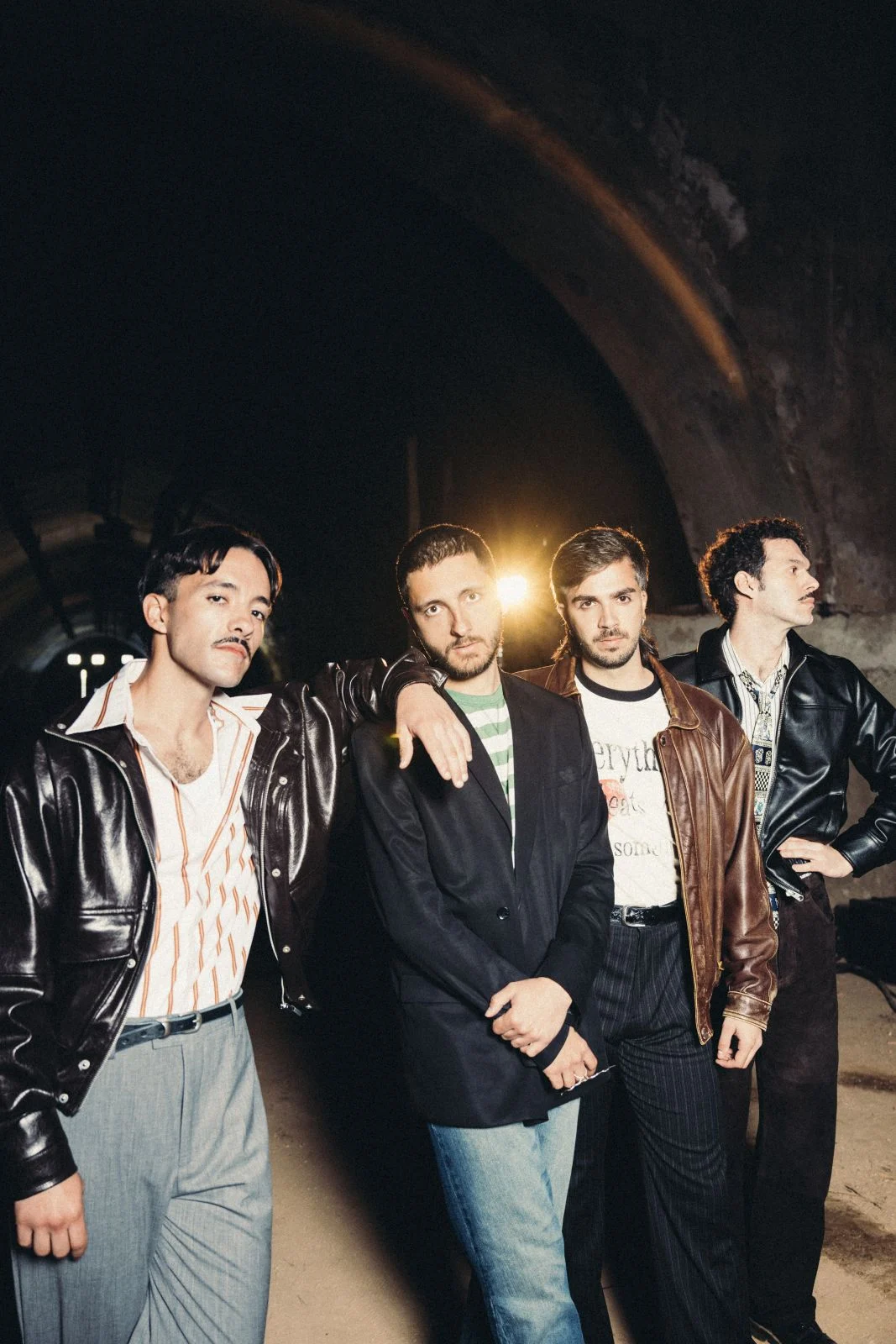
For many international artists, the path to global recognition is often paved with a transition toward English-language lyrics and a standardized, Western-produced sound. However, the Spanish rock quartet Arde Bogotá has opted for a counterintuitive trajectory. Following the overwhelming success of their 2023 breakthrough album, Cowboys de la A3, which solidified their status as a cultural phenomenon in Spain, the band traveled to Los Angeles to record their third studio effort, Manufacturas del Club de la Gente Sola. Instead of attempting to dilute their cultural identity to appeal to a broader demographic, the band collaborated with renowned producer Joe Chiccarelli—whose resume includes work with The Strokes and My Morning Jacket—with the specific intent of distilling their Spanish essence to its purest form.
The decision to work with an American producer who lacked familiarity with the nuances of the Spanish music industry served as a strategic filter. By removing the band from their home environment, they were able to evaluate their own creative output from an objective, international perspective. The resulting record is, by the band’s own account, their most distinctly Spanish work to date, characterized by deep-seated musical signatures that even their American collaborator found uniquely compelling.
A Strategic Pivot Toward Authenticity
The creative process for Manufacturas del Club de la Gente Sola was rooted in the desire for discovery rather than adaptation. Frontman Antonio García has noted that the band’s primary objective was to work with an outsider who could judge their compositions solely on their sonic merits, stripped of local preconceptions or genre-based biases common in the Iberian rock scene.
This approach led to the integration of unexpected sonic textures, including subtle nods to flamenco and the traditional pasodoble. While these genres are historically disparate from the band’s core rock sound, Chiccarelli’s production helped the band identify these elements as intrinsic components of their collective identity. According to García, the goal was never to manufacture an "international" sound but rather to reach a point of artistic clarity where the band’s authentic background could be articulated with greater confidence. This synthesis suggests that, in an era of globalized pop, the most effective way to reach an international audience is to deepen one’s own cultural specificity.
The Trajectory of a Modern Rock Success Story
Arde Bogotá’s ascent to the forefront of the Spanish music industry has been rapid and statistically significant. Their sophomore album, Cowboys de la A3, served as the catalyst for this growth, earning the band double-platinum certification and multiple Latin Grammy nominations. The record acted as a cultural touchstone in Spain, facilitating sold-out performances at venues as prestigious as Madrid’s Movistar Arena.
The band’s current transition into the North American market represents a calculated move to establish a sustainable touring footprint outside of Europe. However, this shift comes with a significant change in scale. In the United States, the band is navigating a landscape where they are once again building their audience from the ground up. The upcoming U.S. tour, which includes stops at The Hall at Elsewhere in Brooklyn, Pacific Electric in Los Angeles, and ZeyZey in Miami, marks a return to intimate, club-level venues.
This "reset" is viewed by the members of the band as a tactical advantage. Drummer José Ángel Mercader, known as Jota, has highlighted that the smaller venue sizes allow for a more direct connection with the audience—a luxury that is often lost when playing stadium-sized festivals. Despite the professional success they have enjoyed in their home country, the band members appear eager to embrace the challenges of the "beginning" phase of their international expansion.
Operational Realities and Financial Implications
Transitioning between the massive production requirements of their Spanish arena tours and the more modest, logistical constraints of a developing international act presents a series of practical challenges. Bassist Pepe Martínez Esteban has noted that the band must adapt to smaller technical crews and more rigorous travel schedules as they penetrate markets like Mexico and the United States.

However, the feedback from these international ventures has been encouraging. In Mexico, the band has observed a consistent growth pattern, with each successive tour cycle yielding larger, more engaged crowds who are increasingly familiar with the band’s catalog. Data from their live performances indicates that while newer tracks from the latest album are resonating, older hits like "Big Bang" remain cornerstones of their setlist, acting as bridges that connect domestic success with international growth.
The financial reality of this expansion is that it requires a long-term investment. The band is effectively trading the higher profitability of their domestic shows for the opportunity to capture new market share. This investment in "adventures," as García describes them, is a strategy intended to avoid the stagnation that can often plague artists who remain tethered solely to the seasonal festival circuits of their home countries.
Language and the Future of Spanish Rock
The question of whether to transition to English is a recurring theme for non-English-speaking acts, yet Arde Bogotá remains firm in their commitment to Spanish. García argues that the act of singing is inherently vulnerable, serving as a form of "nudity" where the performer exposes their inner reality. To perform in a language that is not their own, he contends, would introduce an artificial barrier—a "magic trick" that obscures the emotional intent of the music.
Market trends appear to support this stance. There is a growing appetite among English-speaking audiences for non-English content, a trend driven by the global consumption habits of a younger, digitally native demographic. As audiences become more accustomed to consuming music across linguistic boundaries, the necessity for artists to anglicize their output to achieve international success has diminished. For Arde Bogotá, the focus remains on the music’s emotional resonance, with the assumption that the listener can connect with the sentiment of the lyrics even if they do not comprehend the specific language.
A Chronology of Recent and Upcoming Appearances
The band’s 2026/2027 schedule reflects a balanced approach, alternating between established markets in Spain and the development of new audiences in North America.
2026 North American and International Tour Dates:
- November 8: Brooklyn, NY – The Hall at Elsewhere
- November 15: Los Angeles, CA – Pacific Electric
- November 19: Mexico City, Mexico – Teatro Metropólitan
- November 22: Miami, FL – ZeyZey
2026/2027 Domestic Highlights (Spain):
- November 26-27, 2026: Madrid – La Riviera
- December 2026: Murcia, Valencia, and Alicante residencies
- May 2027: Multi-night engagements in Cartagena and Barcelona
- June-September 2027: A series of major festival and stadium appearances throughout Bilbao, Valencia, Zaragoza, and Seville.
Strategic Implications
The trajectory of Arde Bogotá provides a case study in modern artist development. By refusing to conform to the traditional "crossover" template, they have maintained the creative integrity that drove their initial success. Their move to Los Angeles for recording was not a concession to American standards, but a deliberate effort to leverage international resources to heighten their unique, culturally-rooted identity.
The implications for the industry are clear: the barriers to entry for non-English artists are lowering, provided the artist has a strong, identifiable, and authentic core. As Arde Bogotá continues to navigate the complexities of the U.S. and Latin American markets, their progress will likely serve as a blueprint for other Spanish-language rock acts looking to expand their reach without sacrificing their linguistic or cultural roots. Through a combination of rigorous touring, high-level production, and a refusal to compromise on their artistic vision, Arde Bogotá is positioning itself not just as a regional success, but as a contender on the global stage.