
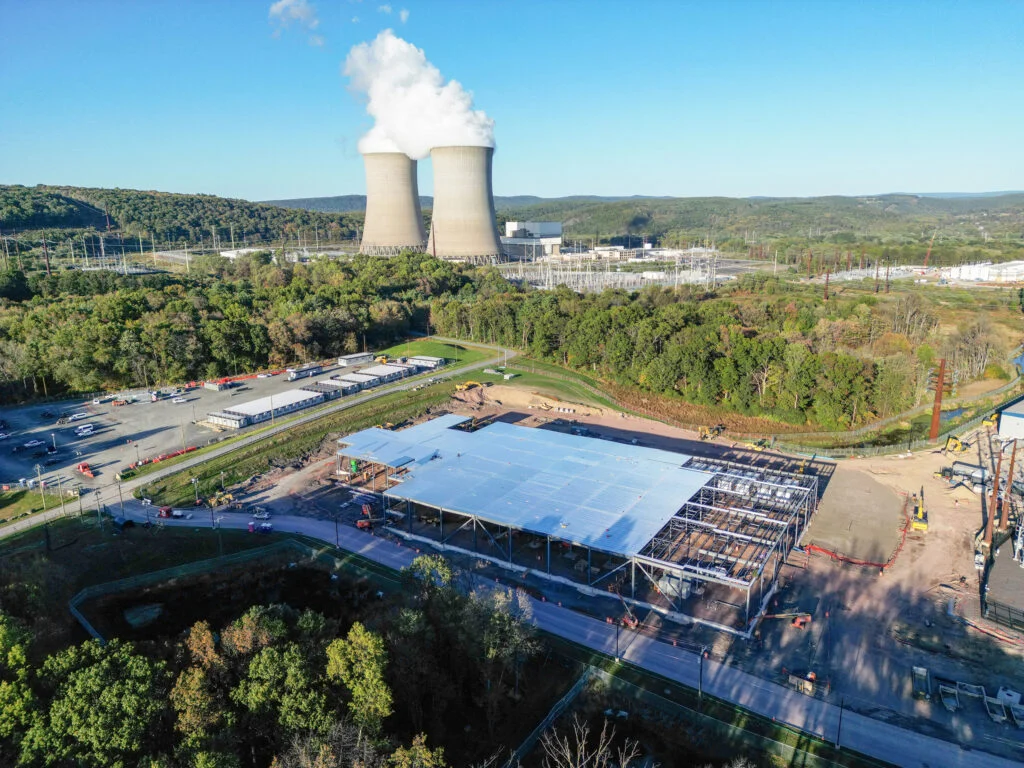
Pennsylvania stands at a critical crossroads as it prepares for a monumental expansion of its data center industry, a shift that promises significant economic investment but also threatens to strip local municipalities of their traditional zoning powers. While industry forecasts suggest the Commonwealth will soon become a regional leader in the digital infrastructure sector, a growing chorus of policy analysts, environmental advocates, and state legislators are sounding the alarm over the potential loss of community autonomy and the long-term impact on the state’s power grid and natural resources.
At the heart of the debate is a series of legislative proposals currently moving through the Pennsylvania General Assembly. These bills aim to streamline the development of large-scale industrial facilities, specifically those required to power the burgeoning artificial intelligence (AI) and cloud computing sectors. However, critics argue that these measures would effectively centralize decision-making in Harrisburg, leaving local residents with little recourse when massive, energy-hungry complexes are slated for their neighborhoods.
The Projected 4,000 Percent Surge
The scale of the anticipated growth is staggering. According to a comprehensive industry report released in late March by the Pittsburgh Technology Council and the Philadelphia Alliance for Capital and Technologies, Pennsylvania is projected to see its data center capacity grow by more than 4,000 percent over the next decade. The study, conducted by Mangum Economics, indicates that Pennsylvania’s growth will likely outpace every other state within the PJM Interconnection, the regional electric grid that serves 65 million people across 13 states and the District of Columbia.
Currently, Pennsylvania’s data center capacity sits at approximately 186 megawatts. By 2036, that figure is expected to skyrocket to over 7,196 megawatts. This massive influx of infrastructure is driven by the state’s unique trifecta of industrial advantages: it is the nation’s largest exporter of electricity, the second-largest producer of natural gas, and home to a robust manufacturing sector capable of producing the specialized components required for high-density computing.
The economic projections associated with this boom are equally significant. Industry advocates suggest that by 2036, the data center sector could support up to 19,400 jobs across the manufacturing, energy, and technology sectors. More than 50 data centers are already in various stages of planning or construction across the state, according to the Data Center Proposal Tracker.
Legislative Push for Centralization
To facilitate this rapid expansion, Governor Josh Shapiro and several state legislators have proposed a suite of bills designed to accelerate the permitting process. Foremost among these is House Bill 502 (HB 502), a central component of the Governor’s "Lightning Plan." The bill seeks to establish a statewide board tasked with approving large-scale energy and infrastructure projects. By creating a centralized authority, the administration hopes to bypass the often-lengthy local approval processes that can stall major developments.
The Republican-led Senate has introduced complementary measures. Senate Bill 939 (SB 939) proposes a regulatory "sandbox"—a framework that would allow for statewide standardized regulations for the data center industry, potentially overriding local ordinances. Meanwhile, Senate Bill 991 (SB 991) offers expedited permitting for developers who commit to meeting or exceeding federal environmental standards, a move intended to incentivize "green" development while still removing local hurdles.
The nonprofit organization Data & Society, which examines the social implications of automation and AI, recently issued a policy brief warning against these measures. The group argues that local authority is one of the few remaining tools communities have to manage the noise, traffic, and resource consumption associated with "hyperscale" data centers. "State government should support, not override, local decision-making, especially with infrastructural decisions as consequential as this," the organization stated, noting that the diverse needs of Pennsylvania’s 2,500-plus municipalities cannot be met with a one-size-fits-all state mandate.
The Environmental and Resource Toll
While the economic allure of data centers is clear, the environmental costs are becoming a focal point for opposition. Data centers are notoriously resource-intensive, requiring vast amounts of electricity for processing and millions of gallons of water for cooling.
Environmental groups, including PennEnvironment and the Frontier Group, point out that the surge in data center demand will likely lead to increased reliance on natural gas. Many developers are looking toward "behind-the-meter" solutions—building dedicated natural gas power plants directly on-site to ensure a constant power supply without straining the public grid. While this allows data centers to operate independently, it results in significant methane emissions and carbon output, complicating Pennsylvania’s efforts to meet climate goals.
Furthermore, the strain on the electric grid is already manifesting in the form of rising utility costs. Recent reports from Duquesne Light and other utility providers suggest that Pennsylvania energy consumers could face an estimated $21.8 billion increase in electric bills as the grid is upgraded to accommodate the massive load required by the AI industry.
Water usage is another primary concern. A single large data center can consume as much water as a small city. In regions already facing drought conditions or aging infrastructure, the introduction of a facility that requires constant, high-volume water cooling can threaten local aquifers and municipal supplies.
A Timeline of Local Resistance
The tension between state-level industrial goals and local community interests is not theoretical; it has already led to high-profile confrontations.
- February 2024: In a landmark decision, the commissioners of Montour County in central Pennsylvania rejected a rezoning request from Talen Energy and Amazon. The tech giant had sought to build a massive data center complex near the Susquehanna Steam Electric Station. Local residents and officials cited concerns over land use, noise, and the long-term impact on the rural character of the region.
- March 2024: The Pittsburgh Technology Council releases its growth report, signaling to the legislature that Pennsylvania is "on track" to become a global data hub, further fueling the push for the "Lightning Plan."
- Early 2025: Several bills, including HB 502 and SB 939, are formally introduced and moved into committee, sparking a wave of lobbying from both tech coalitions and environmental advocates.
- Spring 2025: State Senator Katie Muth announces a proposal for a three-year moratorium on data center development, gaining unexpected bipartisan support.
The Moratorium and Public Outrage
Senator Katie Muth, a Democrat representing parts of Chester and Montgomery counties, has become a leading voice for caution. Her proposed three-year moratorium is intended to provide a "cooling-off period," giving the state and local governments time to study the cumulative impacts of data centers on the power grid, water supplies, and residential electricity rates.
"People are rightfully upset about the impact on their electric bills," Muth said, noting that she has received support from Republican colleagues whose constituents are concerned about the industrialization of suburban and rural landscapes. The moratorium would halt new approvals until a comprehensive state impact study is completed and local zoning boards are given clearer guidelines on how to regulate these facilities.
Quentin Good, an analyst at Frontier Group, supports a more cautious approach, questioning whether the projected demand for AI infrastructure is being overstated. "The industry hasn’t yet provided evidence that there will be enough demand to justify all the data centers in the works," Good noted. He warned that over-investing in energy infrastructure for projects that might not reach full capacity could leave Pennsylvania taxpayers and ratepayers footing the bill for "stranded assets."
Broader Implications and Future Outlook
The outcome of the legislative session in Harrisburg will likely set a precedent for how other states in the PJM region handle the data center gold rush. If Pennsylvania chooses to centralize authority and fast-track permits, it may see a short-term economic windfall, but it risks alienating local governments and exacerbating environmental degradation.
Conversely, if the state maintains or strengthens local authority, it could lead to more sustainable, community-aligned development, albeit at a slower pace. The challenge for policymakers lies in balancing the undeniable need for modern digital infrastructure with the fundamental right of communities to determine their own futures.
As the bills remain in committee, the debate in Pennsylvania serves as a microcosm of a national struggle. From Virginia’s "Data Center Alley" to the emerging hubs in the Midwest, the rapid ascent of AI is forcing a reckoning over land use, energy equity, and the limits of state power. For Pennsylvania, the stakes include not just the future of its economy, but the stability of its environment and the integrity of its local democratic processes.









Leave a Reply