
Environmental and public health advocacy organizations have formally initiated legal action against the Trump administration’s controversial proposal to rescind federal greenhouse gas standards for power plants. The proposed regulatory rollback, spearheaded by the Environmental Protection Agency (EPA), is projected by independent analysts and clean energy advocates to significantly increase carbon emissions across multiple states, with a particularly pronounced impact on Georgia’s energy landscape and air quality.
The lawsuit, filed by a coalition comprising prominent entities such as the Natural Resources Defense Council (NRDC) and the American Public Health Association (APHA), contends that the administration’s move to dismantle the Biden-era carbon pollution limits poses an immediate and severe threat to both ecological stability and human health. The coalition argues that discarding these federal guardrails disregards established climate science and ignores the compounding health crises associated with rising global temperatures and deteriorating air quality.
The Core of the Regulatory Battle
At the heart of the litigation is a foundational disagreement over federal authority, environmental protection, and the transition of the American power grid. The regulation currently slated for repeal by the EPA was originally enacted under the Biden administration. It established stringent limits on carbon dioxide emissions from fossil fuel-fired power plants, targeting both aging coal-fired facilities and newly constructed natural gas infrastructure.
For existing coal plants, the Biden-era rule provided a strict compliance pathway: facilities were required to either install advanced carbon capture and sequestration (CCS) technology or commit to complete operational retirement by the year 2032. For newly constructed natural gas-fired combined-cycle plants, the regulation mandated the integration of carbon capture systems or, alternatively, strict limitations on their operational capacity—effectively restricting how often utilities could run them to keep overall emissions capped.
Public health advocates maintain that weakening these standards directly undermines national climate commitments while inflicting direct harm on vulnerable populations.
"Clean air is a basic human right. Power plant pollution threatens the health of millions of Americans and fuels climate change, worsening extreme heat, poor air quality, and other serious health risks," said Dr. Georges C. Benjamin, executive director of the American Public Health Association, in a public statement detailing the organization’s opposition to the EPA’s rollback.
A Paradigm Shift in Georgia’s Energy Planning
The regulatory rollback arrives at a critical juncture for the energy sector in the American Southeast. Prior to the change in presidential administrations, the Biden-era EPA framework was functioning as intended, acting as a powerful economic and regulatory catalyst designed to phase out coal dependence across the region.
In 2022, Georgia Power—the largest electricity provider in the state and a subsidiary of Southern Company—released a long-term resource plan that accounted for the strict federal carbon caps. At the time, utility executives and independent financial analysts determined that retrofitting aging coal plants with expensive carbon capture technology was cost-prohibitive. Consequently, the utility charted a course toward the orderly retirement of several major coal units.
However, the political landscape shifted dramatically following the election of Donald Trump to a second term. According to Maggie Shober, research director at the Southern Alliance for Clean Energy, regional utilities began adjusting their long-term operational calculus well in advance of the official EPA repeal proceedings. Anticipating a loosening of federal oversight, utility planners began positioning themselves to keep polluting assets online.
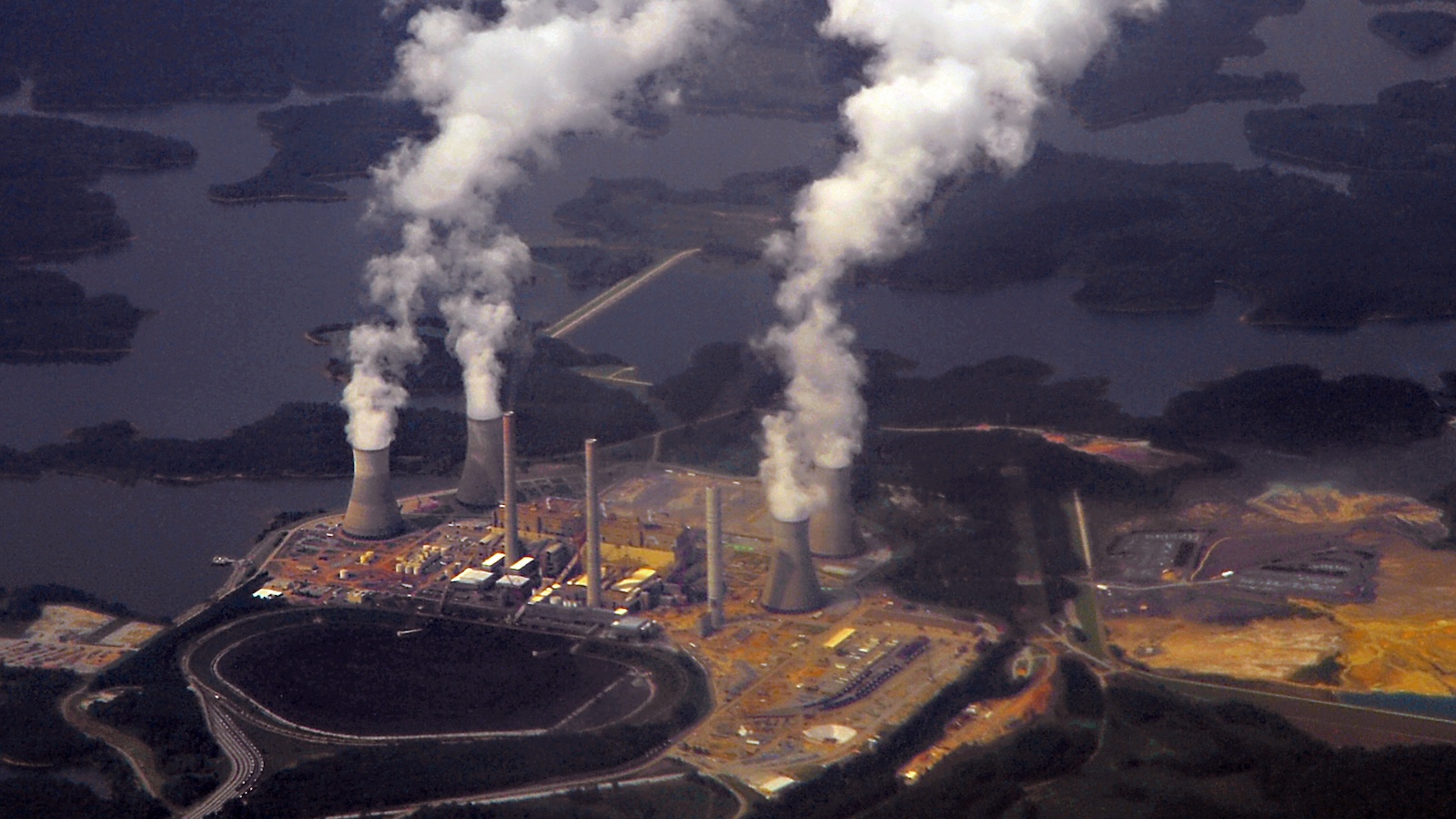
More than a year prior to the formal legal challenges, Georgia Power sought and received approval from the Georgia Public Service Commission (PSC)—the state regulatory body overseeing utility operations—to reverse course on previously scheduled coal plant retirements. The utility delayed the planned closures of multiple units, including one unit at Plant Scherer, located near Macon, Georgia, and three units at Plant Gaston, situated just across the state line in Alabama.
The scale of emissions tied to these facilities is substantial. According to the most recent data published by the U.S. Energy Information Administration (EIA) for the year 2024, Plant Scherer emitted more than 8 million metric tons of carbon dioxide, while Plant Gaston accounted for over 2 million metric tons during the same annual reporting period.
"Technically the regulation would have been still in effect, but everybody understood it was not going to stay in effect," Shober explained, describing how regional utilities capitalized on the anticipated policy shift. "So they could roll back those coal retirements without planning to put carbon capture on them."
Navigating Regulatory Uncertainty
During resource planning hearings held in 2025—proceedings that ultimately resulted in the controversial delay of the coal plant retirements—officials from Georgia Power defended their strategy by pointing to extreme regulatory volatility. To account for shifting federal policies, the utility revealed that it had modeled nine distinct planning scenarios: three that assumed compliance with the Biden-era carbon rules and six that assumed their repeal or invalidation.
"These scenarios provide a flexible framework for the company to evaluate its options among differing plausible future scenarios, positioning it to make informed resource planning decisions," said Jeff Grubb, Georgia Power’s director of resource policy and planning, during the proceedings.
Despite the adoption of these flexible models, the resource planning agreement approved by the Georgia PSC in 2025 explicitly instructed the utility to pursue compliance with the EPA’s carbon rules for specific major facilities, notably Plant Bowen and Plant Scherer. Furthermore, the commission mandated that Georgia Power provide regular status updates, including ongoing formal assessments of the evolving legal status of the federal regulations.
The Surge in Methane Gas and Data Center Demand
Beyond the reprieve granted to aging coal facilities, the potential repeal of the EPA standards carries profound implications for the expansion of fossil gas infrastructure in the region. Georgia is currently experiencing a historic surge in electricity demand, driven in large part by the rapid proliferation of energy-intensive data centers establishing operations across the state.
To meet this soaring demand, Georgia Power and other regional utilities have accelerated the construction and permitting of new generation facilities powered by methane gas, commonly referred to as natural gas. Clean energy analysts warn that without federal emissions restrictions, the operational profiles of these new gas turbines will expand dramatically, locking in long-term carbon pollution.
Under the enforceable parameters of the Biden-era EPA rules, utilities would have been legally restricted from running new gas turbines beyond approximately 40 percent of a given calendar year, capping their carbon output at roughly 4 million tons annually, according to estimates provided by Shober. However, under the loosened parameters proposed by the Trump administration’s EPA, those same facilities could be permitted to operate at up to 85 percent capacity annually. That operational expansion is projected to more than double annual emissions from these sources, driving output to an estimated 8.5 million tons of carbon dioxide per year.
Corporate Posture and Broad Implications
The EPA’s proposed rule change is not yet finalized. The administrative process requires a mandatory public comment period, and the multi-state coalition of environmental and public health groups has made clear that every available judicial avenue will be pursued to block the rollback. Nevertheless, the unfolding situation in Georgia highlights a persistent friction in modern energy governance: the disconnect between federal regulatory text and the practical, forward-looking operational strategies adopted by private utility companies reacting to shifting political tides.
Southern Company, the parent corporation of Georgia Power, declined requests for an interview and did not respond to detailed inquiries regarding its carbon management strategy. Instead, a corporate spokesperson issued a brief written statement emphasizing regulatory predictability.
"We support regulatory certainty with a durable framework that leads to reliable and affordable electricity for our customers," the statement read.
Notably, the corporate communication made no explicit reference to Southern Company’s broader enterprise-wide climate target: a stated corporate goal of achieving net-zero greenhouse gas emissions by the year 2050. As legal battles mount in federal courts and public hearings continue, the trajectory of regional emissions in the Southeast will depend heavily on whether federal environmental mandates can withstand administrative rewrites, or if market forces and state-level regulatory decisions will ultimately dictate the pace of the nation’s clean energy transition.










Leave a Reply