
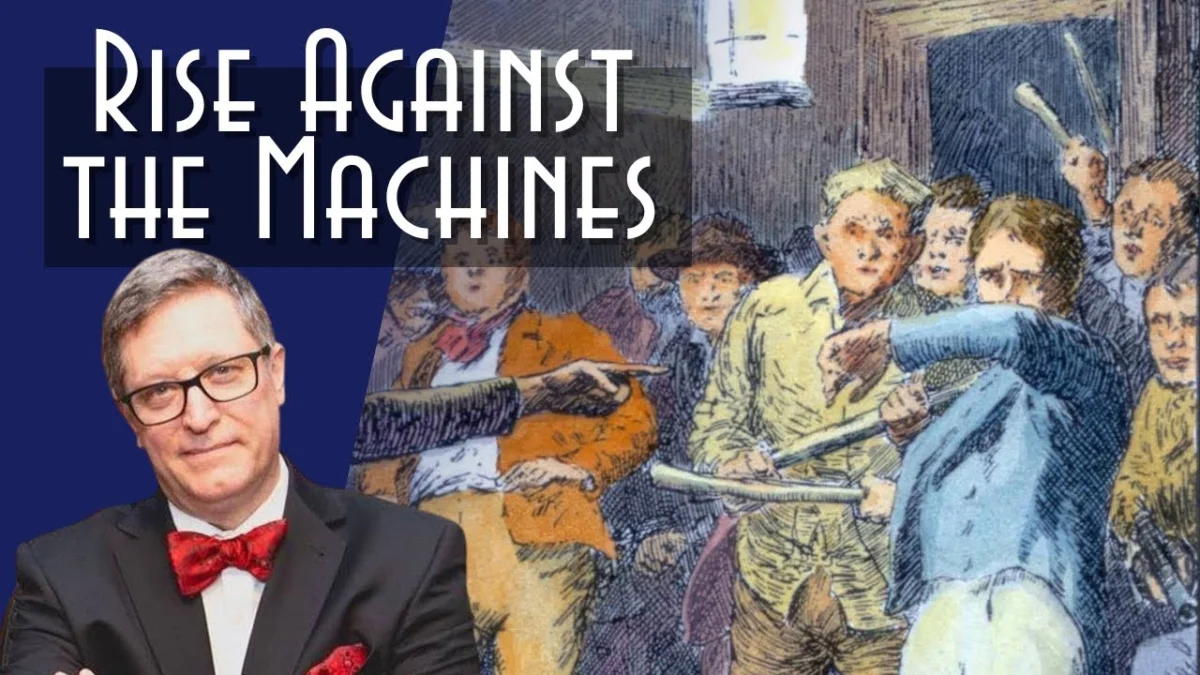
The friction between human labor and technological advancement is as old as industry itself, echoing through centuries of economic restructuring. An enduring, if apocryphal, anecdote involving the prominent economist Milton Friedman illustrates this perpetual tension. During a visit to a canal construction site in 1960s China, Friedman reportedly observed hundreds of laborers digging manually with shovels. When he asked the site supervisor why mechanical excavators were not being used to accelerate the project, the official explained that manual labor preserved jobs. Friedman famously retorted, “If it’s jobs you want, you should give those men spoons instead.”
Whether apocryphal or historical fact, the exchange captures a fundamental dilemma of modernization: the displacement of human hands by automated systems. While economists have long argued that technology destroys specific jobs while creating entirely new industries over the long term, the transitional pain for displaced workers has repeatedly sparked fierce resistance. Today, as generative artificial intelligence (AI) and massive data centers reshape the global economy, this historical resistance has experienced a profound contemporary revival, moving the debate from factory floors to corporate boardrooms, college campuses, and suburban neighborhoods.
The Historical Roots of Technological Resistance
To understand the current backlash against artificial intelligence and its physical infrastructure, historians frequently look back to the early 19th century. According to research from the University of Cambridge, the high-water mark of early anti-technology resistance occurred in 1812. That year culminated in a violent assault by approximately 150 armed laborers on a mill in Huddersfield, England. British soldiers opened fire on the crowd to prevent them from breaching the premises, fatally wounding two of the attackers.
This violent confrontation was not an isolated incident, but rather the climax of a coordinated wave of protests across northern England. The movement was galvanized by intense anger toward new technologies—specifically automated stocking frames and power looms—being adopted by the textile industry. These machines threatened to replace the highly skilled craftsmanship of traditional artisans, effectively dismantling their livelihoods and depressing wages.
The desperate and infuriated protesters operated under the banner of Ned Ludd, a mythical weaver rumored to have boldly smashed two stocking frames decades earlier in the late 18th century. While the actual existence of Ned Ludd remains shrouded in folklore, the movement he inspired was entirely real and fiercely organized. Documented Luddite actions included nocturnal raids, the destruction of industrial machinery, and even the assassination of a Yorkshire mill owner.
However, historical analysis reveals that the original Luddites were not anti-technology zealots acting out of blind ignorance. Rather, they were a relatively elite faction of legally protected workers who had undergone rigorous multi-year apprenticeships. Having invested significant time in mastering their trades, these artisans felt a societal and economic contract had been broken when factory owners introduced low-wage, unskilled labor coupled with automated machinery. Furthermore, the working conditions, long hours, and meager compensation in the newly emerging factories compared unfavorably to the traditional independence enjoyed by cottage-industry artisans.
The Modern Revival: From Campus Clubs to Data Center Protests
Two centuries after the Yorkshire mill riots, the ghost of Ned Ludd has found new life in the twenty-first century. The current artificial intelligence boom has expanded the theater of technological anxiety from blue-collar manufacturing to white-collar knowledge work. Professionals in fields ranging from graphic design and translation to coding and legal analysis now face the unsettling prospect of their skills being commodified and superseded by machine learning models trained on vast corpuses of human output.
This widespread apprehension has manifested in diverse cultural and social movements. On college campuses across the United States, students have formed contemporary "Luddite clubs," advocating for intentional disengagement from smartphones and algorithms. Media outlets like NPR and The New York Times have documented a growing youth-led counterculture rejecting hyper-connectivity. Similarly, academic institutions have hosted events such as the "Summer of Ludd" conference at The New School, providing a forum to critique the unchecked expansion of digital platforms.
Beyond cultural pushback, physical resistance to the infrastructure of modern computing has also escalated. Communities near planned AI data centers have organized vocal opposition campaigns. Residents frequently cite concerns over massive energy consumption, depletion of local water supplies required for cooling server farms, and the industrial transformation of rural or suburban landscapes. These localized disputes mirror the 19th-century destruction of physical machinery, substituting zoning boards and environmental protests for sledgehammers and mills.
Economic Implications and the Future of Labor
As society navigates the current technological inflection point, economists and policymakers grapple with the same core questions that confronted Milton Friedman and the 19th-century British Parliament. The debate broadly divides into two camps: techno-optimists who argue that AI will automate mundane tasks and unlock unprecedented global productivity, and labor advocates who warn of structural unemployment and deepening wealth inequality.
Historical precedent suggests that technological revolutions ultimately generate net economic growth and new categories of employment. The mass production of textiles ultimately lowered the cost of clothing, making garments universally accessible while creating new administrative, logistical, and retail sectors. Yet, this macro-level view offers little solace to workers whose specific, highly specialized skills are rendered obsolete overnight.
Faced with these realities, contemporary thinkers have revisited radical economic proposals from decades past. In the 1960s, cultural philosopher Alan Watts famously predicted that automation would eventually advance to a degree that would necessitate a Universal Basic Income (UBI) to decouple human survival from traditional wage labor. Similar discussions are currently underway among technology leaders and policymakers, who recognize that the rapid deployment of artificial intelligence may outpace the labor market’s ability to naturally reabsorb displaced workers.
Ultimately, the ongoing backlash against AI and its physical data centers is less about a generalized hatred of progress and more about a persistent human demand for agency, economic security, and dignity in labor. Whether modern society can successfully integrate these powerful new tools without repeating the violent upheavals of the industrial past remains one of the defining challenges of the twenty-first century.










Leave a Reply