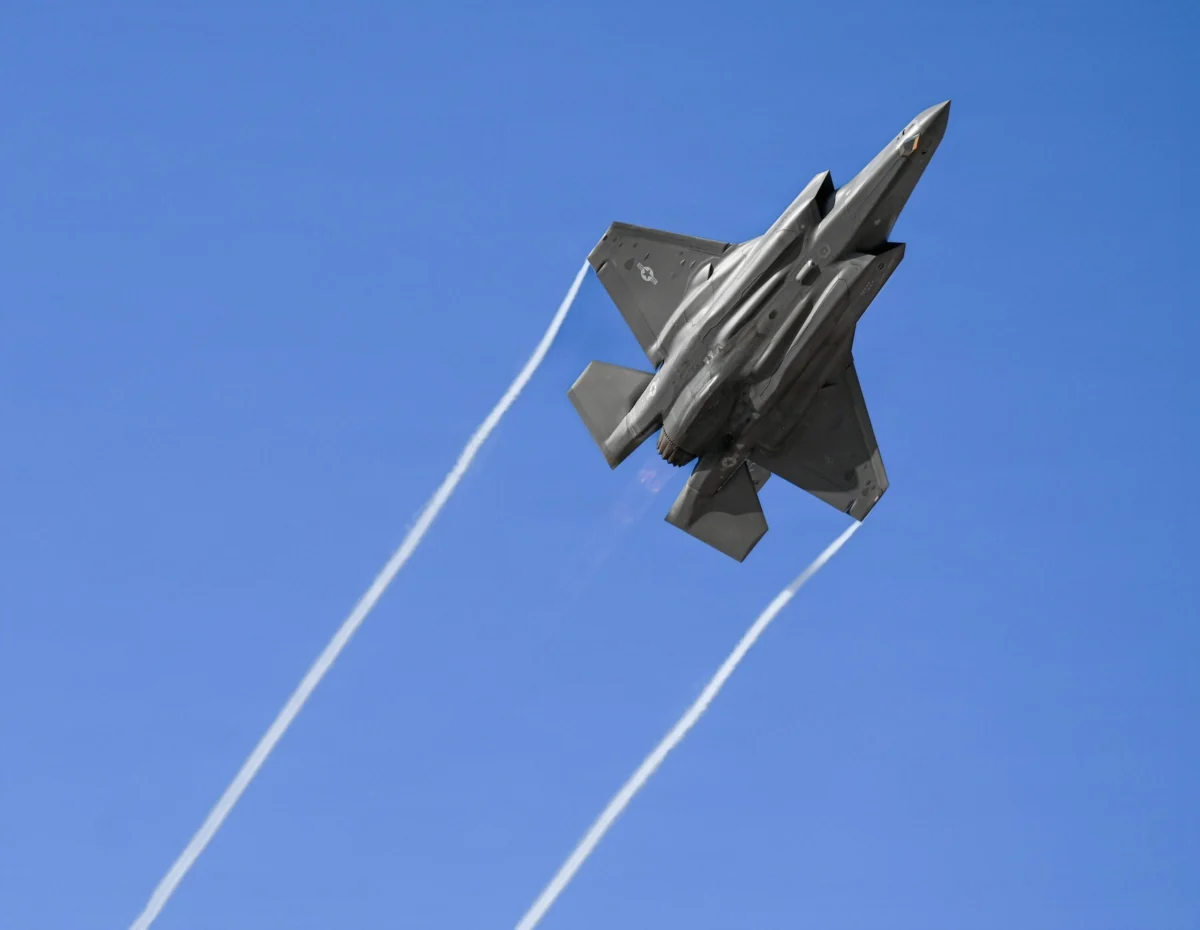
The countdown to a potential escalation in the long-simmering conflict between the United States and Iran has reached a critical juncture. Following weeks of intensifying rhetoric and massive military repositioning, defense analysts, regional diplomats, and intelligence officials warn that a new round of fighting could break out imminently, potentially arriving in the immediate wake of the upcoming U.S. midterm elections. Unlike earlier phases of the confrontation, which were largely contained to traditional military targets and regional theaters in the Middle East, strategic planners caution that a renewed military campaign could feature widespread, asymmetrical warfare targeting global critical infrastructure, financial networks, and non-traditional assets spanning multiple continents.
President Donald Trump recently acknowledged that his administration is contemplating what he termed "another little Epic Fury" following the conclusion of Tuesday’s midterm elections. In response to these signals, the Pentagon has significantly bolstered its force posture in the region, deploying a third aircraft carrier strike group alongside a specialized Marine expeditionary unit to the Middle East. Simultaneously, Washington has issued urgent advisories to regional allies across the Gulf, warning them to prepare for a brief but extraordinarily intense renewal of hostilities should diplomatic channels fail to yield a breakthrough.
Background Context and Escalating Tensions
The current crisis represents a dangerous evolution of a decades-long rivalry that has repeatedly spilled over into open conflict. Over the past several months, hostilities have strained the security architecture of the Persian Gulf, devastating energy infrastructure, inflicting structural damage on several U.S. military installations, and draining regional air-defense stockpiles.
Diplomatic efforts, mediated by international intermediaries, have thus far failed to bridge the gap between Washington and Tehran. Both sides remain firmly anchored to their initial negotiating positions, dampening any realistic expectations of a last-minute diplomatic resolution. According to regional analysts, previous rounds of talks have repeatedly broken down or been interrupted by sudden military flare-ups, leaving the Iranian leadership deeply skeptical of renewed diplomatic overtures.
From Tehran’s perspective, the objective of signaling a total, unrestricted response is to fundamentally alter the calculus of Washington policymakers. By making any future U.S. military action catastrophically expensive and unpredictable, the Iranian regime hopes to deter a strike altogether.
A Shift in Iranian Military Doctrine: Unrestricted Retaliation
The rhetoric emanating from Tehran has taken a notably aggressive turn, signaling a profound shift in Iran’s strategic posture. Historically, the Islamic Republic’s military doctrine relied heavily on measured, proportionate responses to foreign aggression, largely channeled through regional proxy networks. However, recent statements from high-ranking Iranian officials indicate a transition toward an offensive doctrine aimed at imposing maximum, unconstrained costs on adversaries.
On Saturday, Ayatollah Mojtaba Khamenei delivered a stark warning regarding Iran’s anticipated reaction to any new U.S. military campaign. Khamenei declared that the country’s response would proceed "without any geographical limitations," emphasizing that Iran’s military data banks had been extensively updated. He stressed that the armed forces are now prepared to strike a comprehensive array of financial and non-financial assets globally.
Hamidreza Azizi, a senior Iran analyst at the Middle East Council on Global Affairs (formerly the Atlantic Council/Crisis Group), highlighted the significance of Khamenei’s declaration. In social media and policy commentary, Azizi noted that this uncompromising language underscores a fundamental evolution in Tehran’s military calculus.
"Since the beginning of the war, Tehran has increasingly moved away from its traditional emphasis on proportionate response and retaliation toward a more offensive approach aimed at imposing costs on adversaries," Azizi observed. "The latest statements appear to take this logic a step further."
Furthermore, Iranian officials have indicated that the armed forces reserve the right to execute preemptive strikes if credible intelligence confirms preparations for hostile foreign action. Khamenei has also insisted that Iran—and not Washington or its allies—will dictate the timing and conditions under which any renewed conflict ultimately concludes.
Asymmetric Threats and Global Vulnerability
What distinguishes the current threat environment from previous iterations of the U.S.-Iran conflict is the unprecedented scope of potential targets. While traditional military engagements focus on naval assets, airbases, and troop concentrations, modern geopolitical conflict increasingly intersects with digital infrastructure, commercial logistics, and global financial networks.
In recent weeks, Iranian officials and state-aligned media have explicitly pointed to undersea internet fiber-optic cables, international data centers, and global financial nodes as viable targets for retaliation. Intelligence agencies have also attributed a recently foiled sabotage attempt against a British air base utilized by U.S. forces directly to Tehran.
The interconnected nature of global digital systems has heightened anxiety among cybersecurity experts and defense officials. Although major cyber incidents—such as a staggering $6.3 billion cryptocurrency heist at the Binance exchange—have been formally attributed by cybersecurity firms to North Korean state actors, security researchers note that such high-profile thefts expose systemic vulnerabilities in digital asset architectures. These vulnerabilities could easily be exploited by sophisticated cyber actors in Iran, a nation possessing formidable offensive cyber capabilities.
Simultaneously, the Pentagon has launched formal investigations into unconventional cyber-physical attacks. In early November, military investigators began probing an incident where hackers remotely manipulated industrial refrigeration systems at hundreds of supermarkets across France, driving temperatures up to 122 degrees Fahrenheit. While attribution remains under investigation, the incident has amplified concerns within defense circles regarding the security of supply chains and infrastructure supporting U.S. military installations worldwide.
The RAND Corporation released an analytical assessment warning that hostile Iranian activities are no longer confined to the Middle East, noting that the regime’s operational reach "spans the globe." Analysts pointed to proxy networks, such as Hezbollah cells operating in Latin America, alongside persistent intelligence reports detailing active security plots directed against dissidents and civilians in Europe.
"Unbound and bent on revenge, Iran is unlikely to be contained to just one corner of the globe," RAND analysts wrote in a recent policy brief, advocating for the continuation of a strict naval blockade rather than the initiation of new offensive military strikes.
Regional Toll and the Erosion of Energy Security
In the Middle East itself, the physical and economic consequences of sustained warfare have severely tested the resilience of Gulf states. For half a century, major energy producers in the Persian Gulf successfully cultivated a global reputation for market reliability, assuring consumers that regional energy supplies could withstand localized geopolitical friction. However, months of intense kinetic conflict on multiple fronts have severely damaged that confidence.
Amir Handjani, a board member at the Quincy Institute for Responsible Statecraft, emphasized the catastrophic toll that a renewed military campaign would inflict on regional infrastructure and international energy markets.
"Gulf producers spent five decades persuading the world that their supply could withstand regional wars," Handjani wrote. "Eight months of fighting on two fronts have badly weakened that case. A negotiated end to the war would give the region time to rebuild it."
Handjani warned that an additional round of fighting, building on top of previous conflicts such as the Saudi-Houthi war, would leave permanent scars. "Another round would leave damage to infrastructure and to importers’ confidence that markets are likely to carry for a generation."
Compounding these structural vulnerabilities is a critical imbalance in military hardware. U.S. and allied interceptor stockpiles in the region have dwindled to critically low levels following months of relentless defensive operations against incoming salvos. Meanwhile, military analysts note that newer generations of Iranian ballistic missiles and loitering munitions have demonstrated an increased capability to penetrate and evade sophisticated Western air-defense systems.
With thousands of advanced missiles and drones still resting in underground silos across Iran, the regime retains the capacity to inflict devastating blows on regional energy installations, desalination plants, and commercial shipping lanes in the Strait of Hormuz.
Implications and Outlook
As the diplomatic clock winds down toward the U.S. midterm elections, the international community faces the sobering prospect of an expanded conflict with global repercussions. The convergence of conventional military buildups, depleted defense inventories, advanced cyber warfare capabilities, and threats to critical civilian infrastructure creates a uniquely volatile risk matrix.
While backdoor communications between Washington and Tehran continue through intermediary nations, the hardening stances on both sides suggest that deterrence may fail. If hostilities resume, the battlefield will likely extend far beyond the sands of the Middle East, touching the digital networks, financial ledgers, and global supply chains upon which the modern interconnected world depends.