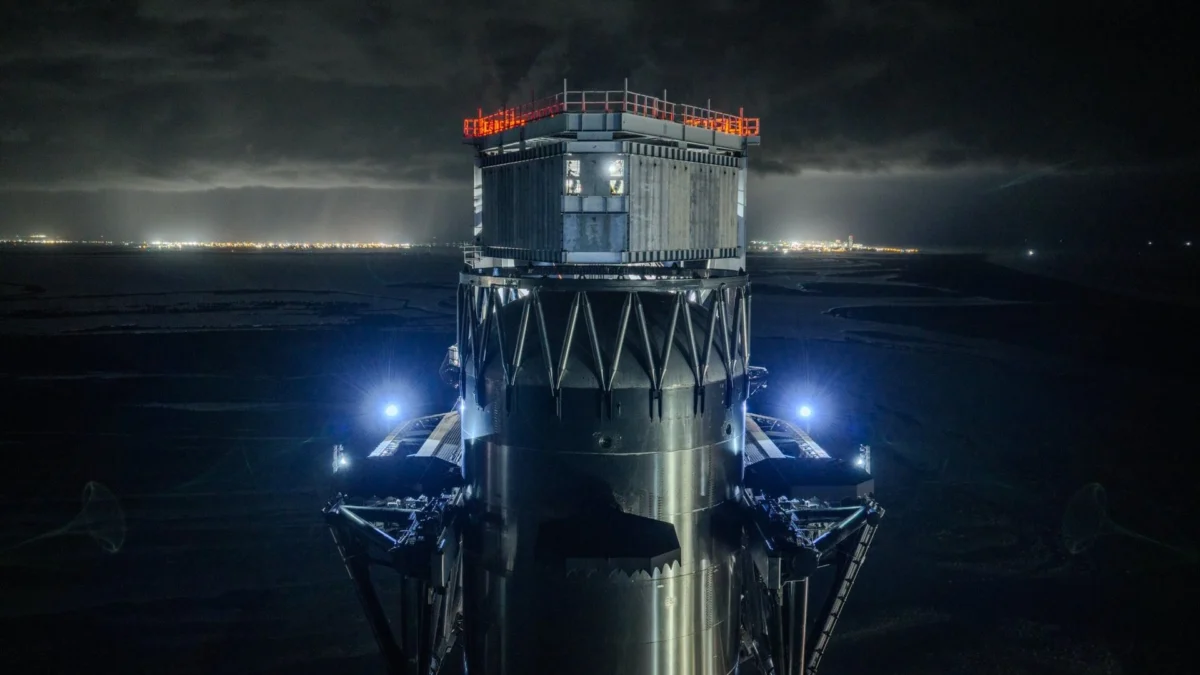
SpaceX has officially advanced its preparations for the 15th flight test of the Starship megarocket, moving the Super Heavy Booster 22 to the launch mount at the Starbase facility in South Texas. This milestone, confirmed by the company on November 10, 2026, sets the stage for a mission of unprecedented ambition scheduled for November 13. As the aerospace industry watches, SpaceX intends to execute a "double-catch"—an operation that involves recovering both the Super Heavy booster and the upper-stage Ship using the launch tower’s iconic mechanical "chopstick" arms. This maneuver, should it succeed, would mark the first time in history that a full orbital-class launch vehicle has been recovered in its entirety through a tower-based capture system.
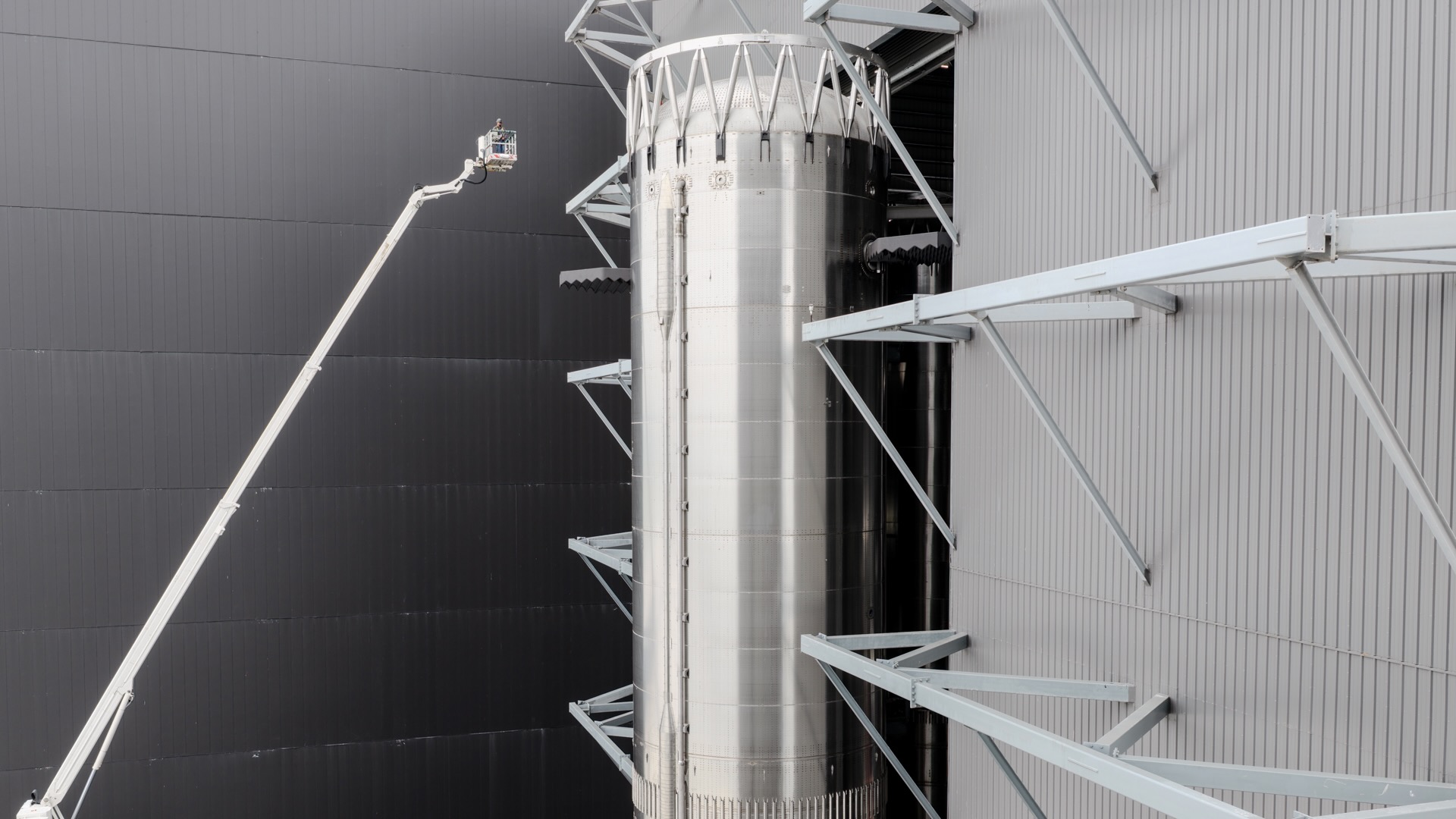
The movement of Booster 22 from the Mega Bay assembly facility to the launch site is a critical precursor to the upcoming mission. Following the transport, the booster was hoisted into position by the launch tower, where it underwent rigorous testing, including a "suspended squeeze test" to verify the structural integrity and mechanical timing of the catch mechanism. These ground tests are essential, as the precision required to catch a descending rocket at high speed is measured in milliseconds.
A Legacy of Iteration and Progress
The evolution of the Starship program has been defined by a rapid, iterative development cycle. SpaceX has successfully demonstrated its ability to return the Super Heavy booster to the launch site on three previous occasions, proving that the concept of a tower catch is not merely theoretical but a viable engineering solution for rapid reusability. However, the inclusion of the upper-stage Ship in the recovery plan represents a significant leap in complexity.
Unlike the booster, which performs a relatively short-duration flight, the Ship reaches orbital velocities and altitudes, subjecting its heat shield and flight control systems to extreme thermal and aerodynamic stresses. The successful recovery of the Ship would signal that SpaceX has mastered the reentry profile necessary to bring the vehicle back to the launch site with the pinpoint accuracy required for a mechanical capture. This accomplishment builds directly upon the success of Flight 14, which occurred on September 28, 2026, and saw Starship reach orbit for the first time in the program’s history. By transitioning from orbital insertion to full-vehicle recovery, SpaceX is shifting its focus from proving feasibility to establishing operational maturity.
Technical Specifications and Mission Profile
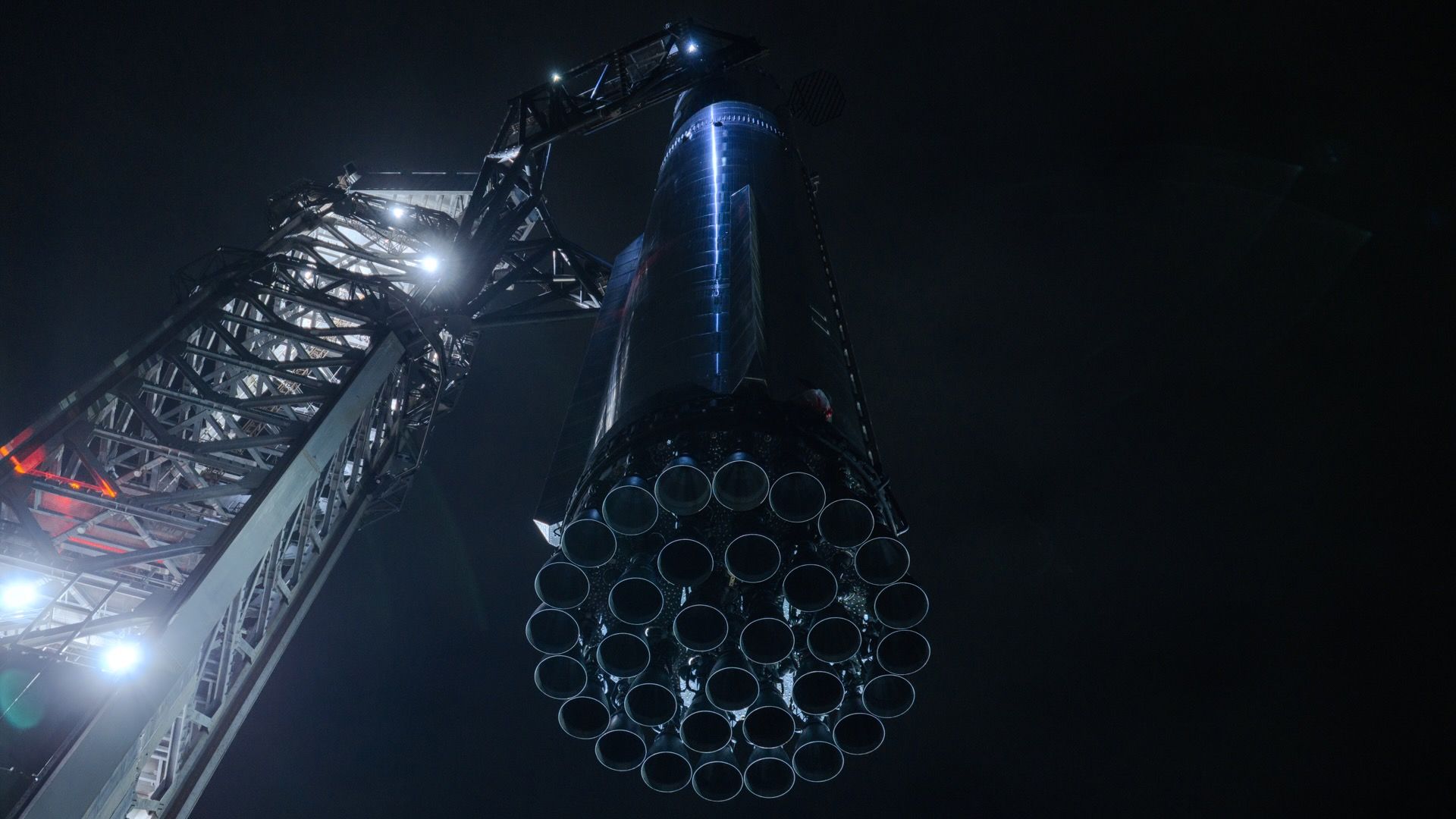
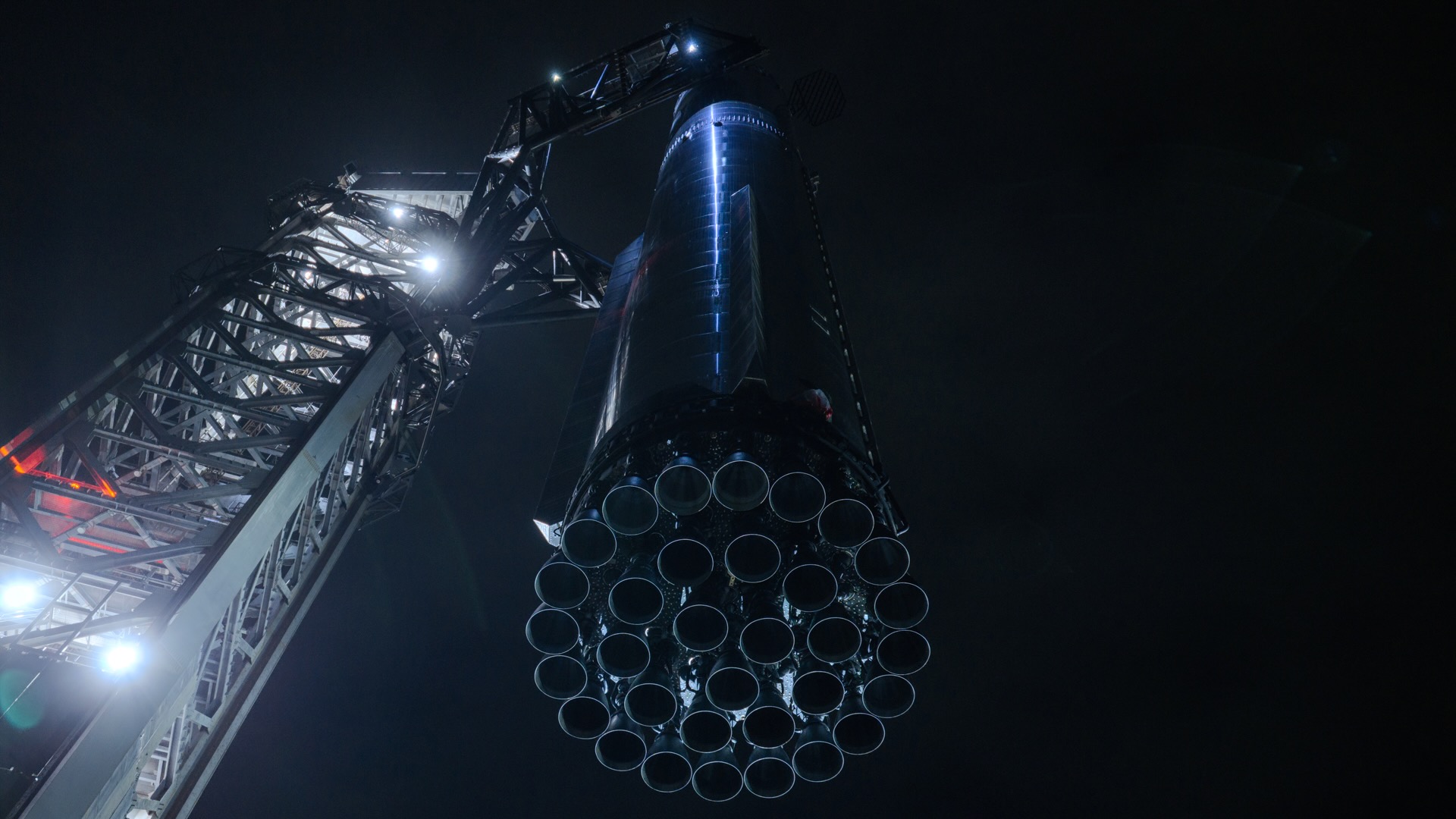
The Starship system remains the most powerful launch vehicle ever developed. Standing approximately 121 meters (397 feet) tall, the two-stage vehicle is powered by the next-generation Raptor engines. The Super Heavy booster features 33 of these engines, utilizing sub-cooled liquid methane and liquid oxygen as propellant. This combination provides the massive thrust required to lift the vehicle off the pad and through the thickest part of the Earth’s atmosphere.
The flight plan for the November 13 mission is meticulous. The launch window opens at 5:45 p.m. EST (2245 GMT). Following the primary ascent, the Super Heavy booster is expected to execute its return-to-launch-site (RTLS) burn, targeting the launch tower approximately six and a half minutes after liftoff. The Ship, however, will follow a much more extended profile. After deploying a payload of 26 Starlink V3 broadband satellites into low Earth orbit (LEO), the vehicle will remain in space, completing approximately 14 circuits of the planet. This extended duration tests the long-term endurance of the spacecraft’s life support and electrical systems before it initiates its deorbit burn and attempts its own landing back at Starbase nearly 22 hours after launch.
Broader Strategic Implications
The push for a double-catch recovery strategy is not merely a technical demonstration; it is the cornerstone of SpaceX’s long-term business model. Elon Musk has been vocal about the necessity of high-cadence, low-cost access to space. By recovering both stages of the rocket, the company intends to minimize the "refurbishment gap"—the time and labor required to prepare a vehicle for its next mission.
The ultimate objective is to scale operations to an unprecedented level. SpaceX has stated a goal of achieving 10,000 Starship flights per year by 2030. Such a cadence is necessary to support the company’s massive infrastructure projects, most notably the expansion of its Starlink V3 constellation and the development of the Starmind AI data-center network. As global demand for high-speed, low-latency internet and edge-computing capabilities grows, the ability to launch massive payloads with minimal overhead becomes a significant competitive advantage.
Analysts suggest that if the double-catch becomes a standard procedure, it could force a fundamental shift in the global aerospace industry. Current launch providers typically rely on expendable stages or ocean-based recovery, both of which incur significant logistical costs and time delays. A tower-catch system, by contrast, brings the rocket directly back to the point of origin, potentially allowing for vehicle turnarounds in a matter of days rather than months.
Industry and Regulatory Context
The progress at Starbase is being monitored closely by both the space industry and federal regulators. The Federal Aviation Administration (FAA) has maintained oversight of the Starship program, ensuring that each test flight adheres to strict safety protocols regarding public safety and environmental impact. The frequency of launches has necessitated a streamlined approach to regulatory compliance, reflecting a maturing relationship between the private sector and government oversight bodies.
While the technical hurdles remain substantial, the mood within the SpaceX team appears to be one of calculated confidence. The successful catch of the booster in previous missions has provided the data necessary to refine the software and sensor suites governing the landing. However, the catch of the Ship involves a different set of flight dynamics, including the transition from hypersonic reentry to subsonic landing. Engineers will be analyzing data from the Ship’s thermal protection system and its flap control logic to ensure the vehicle remains stable during the final approach.
Looking Toward the Future
As the clock ticks toward the November 13 launch window, the atmosphere at Starbase is one of intense focus. The infrastructure at the site has been upgraded significantly over the past year to support the weight and scale of the Starship vehicle. The launch tower itself is now a permanent fixture of the Texas coastline, serving as both a launch and a recovery platform.
If the mission succeeds, it will provide a blueprint for future deep-space exploration. The Starship system is intended to be the primary vehicle for NASA’s Artemis program, specifically designed for lunar landings and eventual crewed missions to Mars. By proving that the vehicle can be caught and potentially reused with minimal intervention, SpaceX is validating the core philosophy of "rapid reusability."
Observers, enthusiasts, and competitors alike are awaiting the results of the Flight 15 mission. While the technical risks are inherent in such a complex aerospace endeavor, the data gathered during the mission will be invaluable regardless of the outcome. Whether it results in a successful double-catch or provides critical data for future iterations, the flight will mark another significant milestone in the history of human spaceflight.
The live coverage of the event will be provided through multiple channels, allowing the public to witness the historic attempt in real-time. As SpaceX pushes the boundaries of what is possible, the upcoming test serves as a reminder of the rapid pace of innovation that currently defines the modern era of space exploration. From the assembly bays of the Mega Bay to the height of the launch tower, every component of the Starship system is a testament to the engineering ambition that seeks to make humanity a multi-planetary species. The results of the November 13 test will undoubtedly shape the trajectory of orbital logistics for the remainder of the decade and beyond.