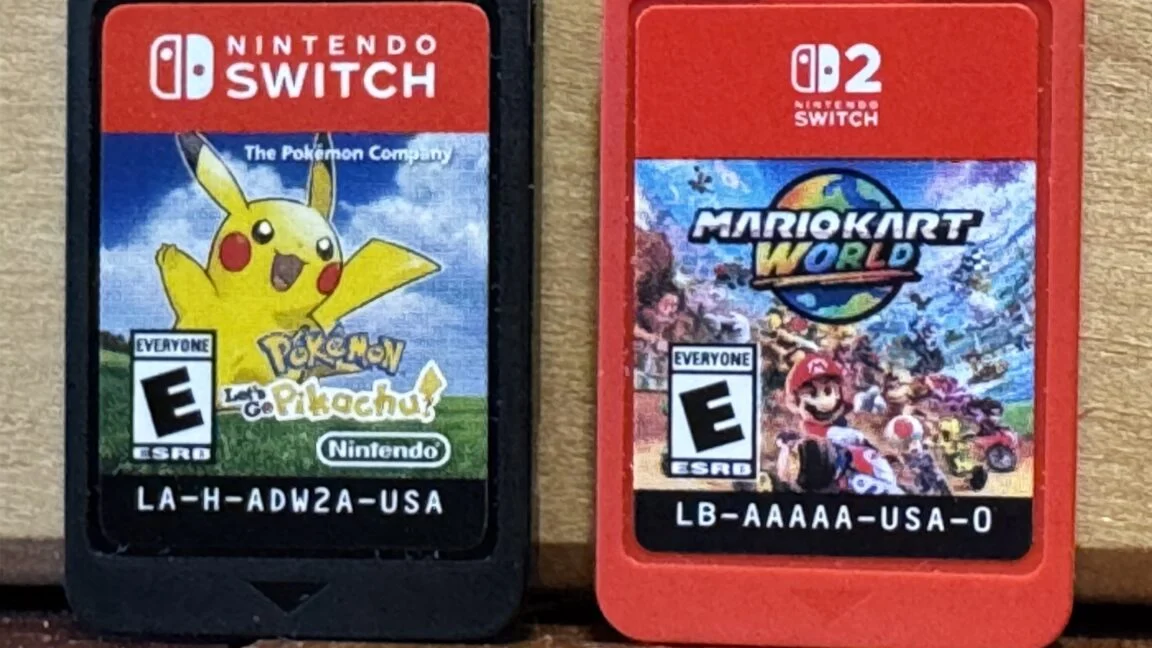
The enduring landscape of physical media in the video game industry faces a complex crossroads as market dynamics, supply chain shifts, and consumer preferences continue to evolve. While major competitors in the console hardware space gradually pivot away from physical media in favor of all-digital ecosystems, Nintendo remains committed to the production of physical game cartridges. However, this dedication is not without its operational challenges. Recent industry developments indicate that while Nintendo has no immediate intention of abandoning physical cartridges, rising production costs, reliance on specialized semiconductor suppliers, and shifting market economics are placing a subtle yet noticeable strain on the ecosystem. These pressures are increasingly influencing pricing strategies for publishers and end consumers alike, even as digital distribution continues its steady climb toward market dominance.
Background Context of the Physical Versus Digital Divide
The transition from physical media to digital distribution has been a defining narrative of the twenty-first-century entertainment industry, mirroring parallel shifts in music and film. For decades, optical discs and proprietary cartridges served as the definitive mediums through which interactive entertainment was bought, sold, and collected. Consumers valued the tangible ownership associated with physical copies, which permitted resale, lending, and physical collection on shelves. Furthermore, physical editions often served as essential collector’s items, bolstered by special packaging, art books, and physical bonuses.
However, the rapid expansion of broadband internet infrastructure, coupled with the ubiquity of digital storefronts such as the Nintendo eShop, PlayStation Store, and Xbox Games Store, fundamentally altered consumer habits. Digital purchases eliminated the need for manufacturing logistics, shipping overhead, warehousing, and retail middle-men. Consequently, platform holders frequently found digital distribution to be significantly more lucrative. Sony and Microsoft, in particular, have aggressively pursued all-digital hardware iterations, notably with recent revisions of the PlayStation 5 and Xbox Series X/S families that lack optical disc drives entirely.
Nintendo, conversely, has carved out a distinct market position. Recognizing the enduring appeal of physical cartridges—particularly among families, collectors, and regions with fluctuating internet connectivity—the Kyoto-based gaming giant has maintained a staunch commitment to physical media. Despite this commitment, the underlying manufacturing realities of producing specialized ROM cartridges present ongoing financial and logistical hurdles that contrast sharply with the infinite scalability of digital downloads.
Chronology of Recent Developments in Nintendo Cartridge Production
The trajectory of Nintendo’s physical media strategy has experienced several notable milestones over recent years, marked by shifting manufacturing partnerships, evolving pricing structures, and publisher adaptations.
In late 2025, economic pressures within the semiconductor sector began to heavily influence the production costs of physical media. Industry analysts noted that Nintendo’s reliance on specialized suppliers—such as Rohm and Lapis Semiconductor—for the fabrication of its proprietary ROM chips exposed the company to localized supply chain vulnerabilities. Unlike standard flash memory, specialized ROM chips require dedicated manufacturing allocations, making them susceptible to capacity constraints and fluctuating material costs.
By December 2025, these manufacturing cost structures directly influenced third-party publishing decisions. Japanese publisher Inin publicly disclosed that its ability to commit to a full physical cartridge release for the title R-Type Dimensions III was contingent upon the introduction of new, lower-capacity storage cartridge variants for the successor to the Nintendo Switch. These smaller-capacity cartridges effectively lowered the production overhead required to bring smaller or indie-scale titles to physical retail shelves, averting a scenario where publishers might have been forced to rely exclusively on digital-only releases or costly "game key cards"—cases containing a download code rather than the actual software data.
Early 2026 brought further adjustments to the consumer market. In March 2026, Nintendo implemented a controversial pricing policy, initiating a tiered structure that charged higher prices for physical copies of select software titles compared to their digital counterparts. This pricing discrepancy reflected the tangible expenses associated with manufacturing, packaging, and distributing physical media—costs that publishers and platform holders could no longer entirely absorb amid rising component expenses.
Despite these cost pressures, Nintendo officially reaffirmed its dedication to physical formats. In a statement issued in mid-2026, company leadership reiterated that it had no plans to abandon physical games in the near future, explicitly acknowledging the deep-seated affection that its consumer base holds for tangible game media. Nevertheless, this commitment operates alongside a backdrop of climbing component costs tied directly to the dwindling number of semiconductor foundries willing or equipped to manufacture specialized ROM chips at scale.
Supporting Data and Market Metrics
Financial reports from the second calendar quarter of 2026 illustrate the ongoing, gradual migration of Nintendo’s consumer base toward digital ecosystems. According to market data compiled by industry analyst Piers Gibson, digital software sales accounted for 61.5 percent of Nintendo’s total business revenue during the second quarter of 2026. This figure represents a measurable, albeit incremental, increase compared to the same period in the previous year.
This data highlights a critical balancing act for the platform holder. While physical cartridges continue to command a substantial portion of revenue—representing nearly 38.5 percent of software business in Q2 2026—the steady year-over-year growth of digital distribution points to a long-term structural shift. Financial analysts suggest that if digital sales continue to climb at this measured pace, the resulting reduction in overall demand for ROM-based Nintendo cartridges may naturally offset the rising unit production costs over time. Lower overall production volume, spread across a more specialized market of physical collectors and traditionalists, could stabilize manufacturing lines without necessitating drastic interventions from the hardware manufacturer.
Statements and Industry Reactions
The diverging strategies between major console manufacturers have generated robust commentary from software publishers, hardware analysts, and consumer advocacy groups.
Publishers have expressed cautious optimism regarding Nintendo’s willingness to introduce varied cartridge storage capacities. The availability of smaller, lower-cost ROM chip tiers has been welcomed by mid-sized and independent developers who previously found the economic barrier to physical publishing prohibitively high. Without these cost-mitigating measures, many specialized titles would have been relegated exclusively to digital formats or reliant on the controversial practice of distributing physical boxes containing digital download codes.
Conversely, consumer reactions to the widening price gap between physical and digital editions have been mixed. While purists and physical media collectors remain willing to pay a premium to ensure ownership of tangible game media, budget-conscious consumers have increasingly gravitated toward digital storefronts, where base prices and frequent promotional sales offer lower entry barriers. Retailers, meanwhile, continue to navigate a complex environment where physical software margins are tightening under the weight of higher wholesale manufacturing costs.
Broader Impact and Strategic Implications
The ongoing challenges surrounding Nintendo’s physical cartridge production carry significant implications for the broader video game industry, touching upon preservation, consumer rights, and economic sustainability.
The Question of Game Preservation
One of the most vocal arguments in favor of physical media centers on digital preservation. As online storefronts inevitably age, face server deprecation, or undergo licensing shifts, digital-only libraries face the risk of digital obsolescence. Physical game cartridges, by contrast, function as self-contained repositories of software that can be played independently of online infrastructure, provided the hardware remains functional. Nintendo’s continued support for physical cartridges ensures that a segment of modern gaming heritage remains preserved in tangible formats, staving off the complete transition into a cloud-dependent or purely server-reliant ecosystem.
Economic Viability for Third-Party Publishers
The reliance on specialized semiconductor suppliers like Rohm and Lapis Semiconductor places an inherent ceiling on how cheaply physical cartridges can be produced. Unlike optical discs, which benefit from standardized manufacturing processes shared across various industries, game cartridges utilize specialized high-density ROM chips designed specifically for high-performance handheld and hybrid consoles. As long as these specialized components remain costly to fabricate, third-party publishers will continue to weigh the financial risks of physical distribution against the predictable, high-margin nature of digital sales. Consequently, physical releases may increasingly become luxury items—aimed at collector editions, major first-party blockbusters, and high-demand franchises capable of absorbing the added manufacturing overhead.
Market Equilibrium and Future Outlook
Ultimately, Nintendo’s current position reflects a pragmatic compromise. By refusing to follow Sony into an entirely digital-first hardware paradigm, Nintendo honors a core tenet of its brand identity and customer loyalty. At the same time, the strategic adjustments observed through 2025 and 2026—such as diversified cartridge capacities, targeted publisher accommodations, and tiered pricing models—demonstrate that the company is actively adapting to the economic realities of modern semiconductor manufacturing. As digital sales edge past the 60 percent threshold, the interplay between physical nostalgia and digital efficiency will continue to define Nintendo’s software business model for the foreseeable future, ensuring that physical cartridges limp along not as an obsolete relic, but as a specialized, resilient pillar of the company’s hardware ecosystem.