On November 4, 2015, the United States Air Force attempted to launch an experimental, rail-launched rocket from the Pacific Missile Range Facility at Barking Sands, Kauai, Hawaii, but the mission ended in a total loss shortly after liftoff. The vehicle, known as the Super Strypi, was intended to revolutionize the way the military deployed small satellites into orbit. Instead, the flight serves as a cautionary tale in aerospace engineering, marking the beginning and end of a program that sought to bridge the gap between sounding rockets and orbital launch vehicles.
The Anatomy of the Mission
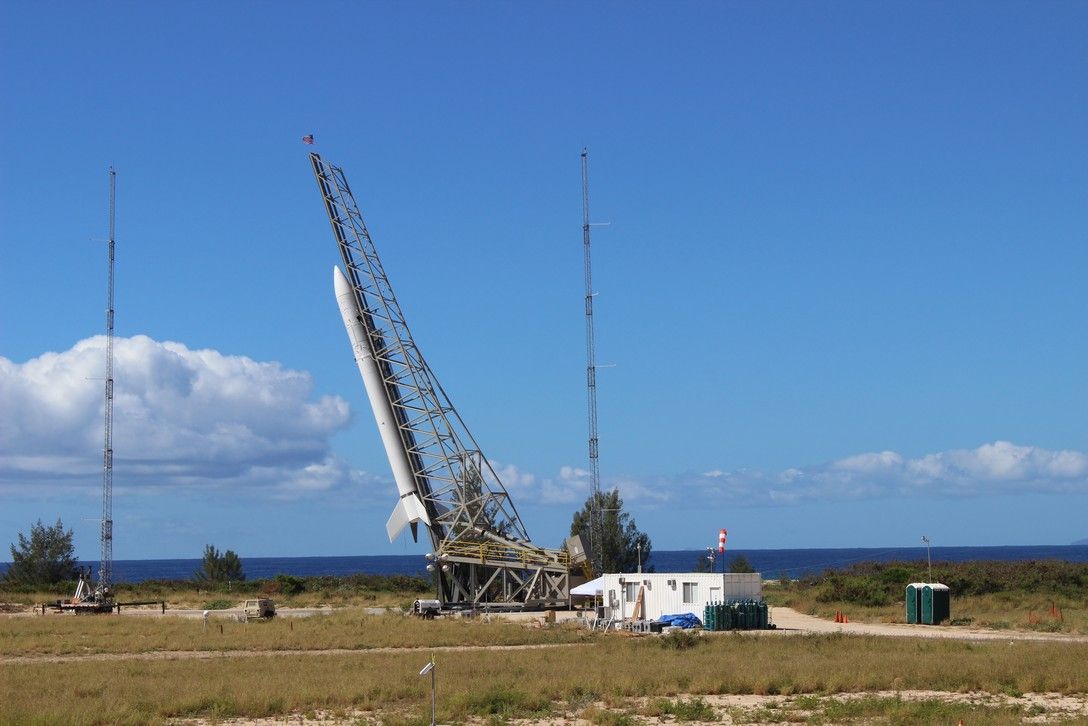
The Super Strypi was an ambitious attempt to adapt 1960s-era sounding rocket technology for modern orbital requirements. Unlike traditional rockets that launch vertically from a launch pad, the Super Strypi was designed to be launched from a 60-foot-long, inclined rail. This unconventional approach was meant to simplify the launch infrastructure, reducing costs and lead times significantly.
The rocket was a three-stage, solid-fuel vehicle powered by Aerojet Rocketdyne motors. Its primary objective was to deliver the Operationally Responsive Space 4 (ORS-4) satellite, also known as HiakaSat, into a low Earth orbit. Built by researchers at the University of Hawaii, HiakaSat was a sophisticated instrument designed to capture high-resolution imagery of the Earth and perform environmental monitoring over a one-year mission lifespan. The rocket also carried 12 secondary payloads, including eight cubesats for NASA’s Edison Demonstration of Smallsat Networks (EDSN) mission and four additional payloads from various academic institutions.
Chronology of the Failure
The launch window opened on the evening of November 3, 2015. At approximately 9:45 p.m. local time, the Super Strypi ignited. Spectators and military officials watched as the rocket cleared the rail and ascended into the dark Hawaiian sky.
However, the euphoria of the liftoff was short-lived. Less than one minute into the flight, telemetry data indicated that the rocket had lost stability. Witnesses and onboard sensors confirmed that the vehicle began to spin violently, departing from its intended trajectory. As the rocket’s first-stage motor failed to maintain the necessary thrust and control, the vehicle suffered a catastrophic structural failure, resulting in the total destruction of the rocket and its entire complement of 13 satellites.
Preliminary investigations conducted by the Air Force pointed toward a failure in the first-stage motor as the most likely culprit. The loss of the ORS-4 satellite was a significant blow to the research community, particularly for the University of Hawaii, which had invested years of development into the project.
Technical Context and Design Philosophy
To understand why the failure was so consequential, one must look at the design philosophy behind the Super Strypi. The "Strypi" lineage dates back to the 1960s, when the U.S. government utilized these vehicles for suborbital testing, often for reentry vehicles and anti-missile defense programs. The Super Strypi was effectively a "21st-century upgrade," engineered to push beyond the suborbital ceiling and reach orbital velocity.
The primary appeal of the Super Strypi was its cost-effectiveness. At a projected price tag of approximately $15 million per mission, it offered a budget-friendly alternative to larger, heavy-lift launch vehicles. The Department of Defense envisioned the program as a cornerstone for "Operationally Responsive Space"—a doctrine that emphasizes the ability to launch satellites into orbit on short notice during times of national security crises or urgent technical failure.
The Demise of the Program
Following the 2015 failure, the Air Force conducted a rigorous assessment of the program’s viability. The decision was ultimately made to discontinue the Super Strypi project. The loss of the maiden flight, combined with the emergence of more reliable and increasingly affordable private-sector launch providers, rendered the experimental rail-launch system obsolete.
The program never attempted a second flight. For many in the aerospace industry, the failure was not necessarily a failure of the concept of rapid-response, but rather a reflection of the inherent risks associated with experimental propulsion systems. The reliance on legacy solid-rocket technology, while cost-effective in theory, struggled to compete with the rapid advancements being made in liquid-propellant rockets by emerging private aerospace companies.
The Shift Toward Commercial Partnerships
The aftermath of the Super Strypi failure accelerated a strategic pivot within the U.S. military. Rather than continuing to fund internal experimental launch vehicles that carried high development and operational risks, the Air Force—and later the United States Space Force—began shifting their focus toward leveraging the commercial sector.
This transition has been highly successful. By outsourcing launch services to private firms, the military has gained access to a robust, competitive market of launch providers. This shift was underscored by the remarkable achievements of companies like Rocket Lab. In a dramatic display of progress, the U.S. Space Force collaborated with Rocket Lab in June 2024 to execute the "Victus Haze" mission, which successfully reached orbit with less than 17 hours of notice. This record-breaking turnaround proved that the goals the Air Force once sought to achieve with the Super Strypi—namely, rapid-response deployment—were finally being realized through commercial innovation.
Broader Implications for Space Exploration
The failure of the Super Strypi highlights several critical lessons in space exploration. First, it underscores the difficulty of scaling up sounding rocket technology. While the principles of aerodynamics and propulsion remain constant, the transition from suborbital to orbital flight involves exponential increases in structural stress and guidance requirements.

Second, the event serves as a testament to the importance of the cubesat ecosystem. Even though the primary mission was lost, the failure highlighted the growing reliance on these small, inexpensive satellites. The loss of the eight NASA EDSN cubesats was a setback for the "swarm" satellite concept, which aims to distribute mission capabilities across multiple smaller units rather than relying on a single, expensive, and vulnerable monolithic satellite.
Finally, the Super Strypi story reflects the broader evolution of the space industry. In 2015, the idea of a private, low-cost, and high-frequency launch cadence was still in its infancy. Today, it is the industry standard. The legacy of the Super Strypi is not one of success, but one of transition. It represented an era where the government attempted to build its own tools for the next generation of space warfare and science, only to realize that the private sector was better equipped to handle the rapid innovation required for the modern orbital environment.
Analysis of the Legacy
In retrospect, the $15 million price point was an enticing proposition that perhaps blinded decision-makers to the technical hurdles of the rail-launch method. While the mission ended in debris in the Pacific, the data gathered during that brief flight provided valuable insights into the limitations of solid-fuel stage integration.
As the Space Force continues to refine its "tactical space" capabilities, the ghost of the Super Strypi serves as a reminder of the inherent volatility of spaceflight. The program was a bold, if unsuccessful, attempt to push the boundaries of what was possible with existing technology. Today, the military’s reliance on commercial partners has largely mitigated the risk of such failures while simultaneously achieving the responsiveness that the Super Strypi was originally designed to provide.
The story of the Super Strypi concludes with a clear lesson: in the race to secure and monitor space, agility and reliability are the most critical components. While the program may have been a failure on the launch pad, its cancellation paved the way for the robust, private-public partnerships that now define the modern era of spaceflight. The transition from the government-led experiments of the early 2010s to the commercially driven successes of the 2020s remains one of the most significant shifts in the history of the United States’ space program.