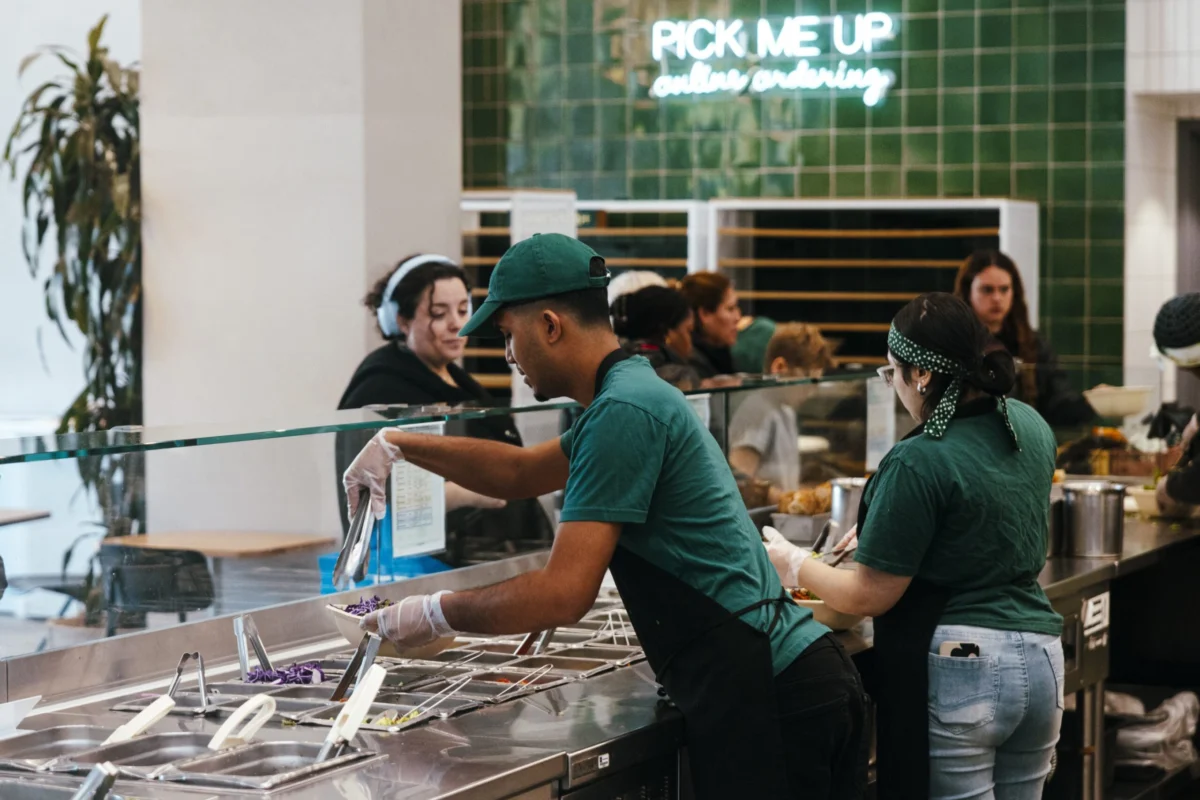
Sweetgreen, the prominent fast-casual restaurant chain widely popular among urban professionals and the office lunch demographic, is significantly restructuring its compensation framework for store-level managers. Beginning in the coming years, top-performing restaurant managers at the salad-centric chain will have the opportunity to clear the $200,000 annual compensation milestone. This strategic overhaul aims to reshape restaurant-level leadership incentives by heavily tying financial rewards to store productivity, operational excellence, and sales growth.
The initiative introduces a hybrid remuneration structure comprising substantial base salary increases and performance-based equity grants. According to leadership, the primary objective is to empower local restaurant leaders—internally designated as "head coaches"—and ensure that the financial gains achieved by individual store locations are directly distributed to the personnel responsible for driving those successes.
A Comprehensive Look at the New Incentive Model
Under the forthcoming compensation plan, the financial trajectory for Sweetgreen store managers will undergo a transformative shift. Base salaries for head coaches managing high-volume locations are slated to increase by up to 45%. While the company has maintained confidentiality regarding the specific revenue thresholds required to qualify for the maximum base pay increase, the criteria are designed to reward locations operating at superior efficiency and volume levels.
In addition to the guaranteed base pay adjustments, the program introduces a revenue-sharing mechanism. When individual store locations surpass their designated quarterly and annual sales targets, managers will receive a percentage of the financial upside. This revenue-sharing bonus scales upward in direct correlation with the manager’s tenure within the organization, creating a tangible incentive for long-term retention and institutional stability. Furthermore, qualifying managers will remain eligible to receive company equity based on ongoing performance assessments.
The timeline for implementation is structured across the near future. Base salary increases are scheduled to officially take effect in the first quarter of 2027. Concurrently, head coaches will begin receiving quarterly performance bonuses tied directly to store output starting January 1, 2027. This phased rollout gives the organization adequate time to align its internal metrics, train regional supervisors, and prepare store-level leadership for the new performance metrics.
Navigating Economic Pressures and Financial Strategy
This major compensation investment arrives at a complex juncture for Sweetgreen’s broader corporate financials. During the fiscal quarter ending in June, the company experienced compressed earnings margins, largely driven by escalating labor costs and related operational expenses. Labor expenditures accounted for approximately 29% of the company’s total revenue during that period, marking an increase from 28% during the corresponding quarter of the previous year. Additionally, same-store sales and restaurant-level operating profits registered declines compared to performance metrics from 2025.
Acknowledging these headwinds, Sweetgreen Co-founder and Chief Executive Officer Jonathan Neman has candidly described the ambitious pay raise initiative as a calculated corporate bet. In an economic climate characterized by labor market tightness and rising operational overhead, committing additional capital to restaurant-level salaries presents an undeniable upfront financial risk. However, Neman emphasized that comprehensive corporate data strongly supports the viability of the strategy.
Internal modeling and industry precedent suggest that by aggressively attracting, retaining, and incentivizing elite head coaches, the company can reliably stimulate higher sales volumes and secure better operating margins over time. Although Sweetgreen must absorb the initial capital expenditure required to elevate base salaries, the vast majority of the expanded compensation package is structured to be contingent upon stores successfully reaching predetermined performance benchmarks.
Traditionally, restaurant corporations retain the vast majority of financial upside when individual locations outperform expectations. By choosing to share a substantial portion of that upside with the frontline teams driving the results, Sweetgreen leadership believes they have engineered a mutually beneficial trade-off that will yield dividends across the enterprise.
Industry Trends: The Push Toward Six-Figure Restaurant Management
Sweetgreen’s strategic pivot does not occur in a vacuum; rather, it reflects a broader evolution within the fast-casual and quick-service restaurant sectors. Facing persistent labor shortages and high employee turnover following the COVID-19 pandemic, several major restaurant chains have reevaluated their compensation architectures to position themselves as employers of choice.
A notable pioneer in this movement was Chipotle Mexican Grill. In 2021, Chipotle announced a restructuring of its management career path, enabling workers in its highest general manager positions to achieve average annual earnings of $100,000. This structural change was accompanied by clearly defined pathways for rapid internal advancement. The strategy has proven highly sustainable for the burrito giant; Chipotle’s restaurant operating margins have consistently remained within a healthy 23% to 26% range in recent years. Furthermore, the effectiveness of Chipotle’s internal talent pipeline is underscored by its 2026 proxy statement, which revealed that more than 85% of its general managers were promoted from within the organization.
Sweetgreen leadership actively drew inspiration from other industry leaders that have pushed the envelope on executive compensation at the store level. Among them is In-N-Out Burger, which confirmed that its store managers earn upwards of $200,000 annually on average, a figure that has contributed to remarkably low turnover rates among its store leadership. Similarly, Raising Cane’s implemented a lucrative bonus structure, offering monthly sales-based bonuses that pushed total annual compensation for select managers as high as $175,000 in 2024.
By aligning with these competitive compensation standards, Sweetgreen aims to eliminate the traditional high-attrition cycle that has historically plagued the restaurant industry, replacing it with a stable, highly motivated corps of long-term professional operators.
Key Metrics for Measuring Program Success
To determine whether the substantial capital investment in the new incentive program yields the desired results, Sweetgreen plans to monitor a carefully curated set of key performance indicators (KPIs). According to Neman, the organization will evaluate the initiative’s efficacy through comprehensive data analysis rather than relying solely on top-line revenue growth.
Primary metrics will include team member turnover rates at participating locations, tracking the frequency with which hourly staff members leave the business. The company will also closely monitor "head coach stability," a metric evaluating the retention and tenure of managers at specific stores, thereby measuring the continuity of leadership. Additionally, qualitative metrics such as customer experience scores, product quality evaluations, and rates of internal mobility—the frequency with which hourly workers are promoted to management positions—will serve as vital barometers of the program’s success.
Broader Implications and Market Outlook
The rollout of Sweetgreen’s manager incentive program signals a fundamental shift in how modern fast-casual enterprises view store-level leadership. No longer treated as interchangeable operational cogs, high-performing general managers are increasingly recognized as the primary drivers of enterprise value, local brand equity, and store profitability.
As labor expenses remain a central concern for restaurant operators nationwide, the industry will be watching closely to see whether Sweetgreen’s bet pays off. If the strategy successfully bridges the gap between elevated labor costs and enhanced operational productivity, it could establish a new benchmark for talent acquisition and retention across the entire fast-casual landscape. Sweetgreen is scheduled to release its third-quarter earnings report on November 5, where investors and analysts are expected to press leadership further on the anticipated financial rollout and long-term projections of this transformative compensation model.