
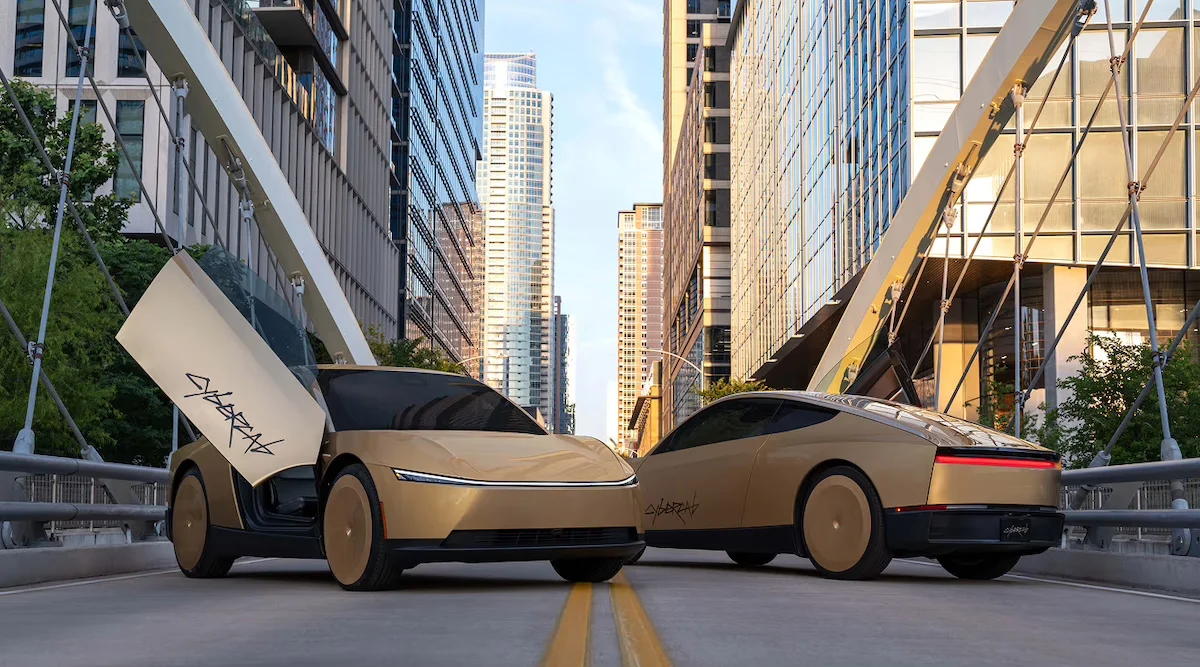
The unveiling of the Tesla Cybercab in Austin, Texas, was intended to be a watershed moment for the future of autonomous transportation. However, the event—marked by the notable absence of CEO Elon Musk—has instead become a focal point for intense regulatory oversight. The National Highway Traffic Safety Administration (NHTSA) has launched a formal audit inquiry into the vehicle’s safety certification, casting a shadow over Tesla’s ambitious timeline for a fully autonomous, steering-wheel-free robotaxi fleet. As investors weigh the technical challenges against the company’s long-term vision, the path to widespread deployment remains fraught with legal, logistical, and public perception hurdles.
A Chronology of the Cybercab Launch and Subsequent Scrutiny
The launch event on September 3, 2026, was framed by Tesla as a proof-of-concept for a vehicle designed entirely without manual controls. By removing the steering wheel and pedals, Tesla aimed to standardize a new class of "purpose-built" autonomous vehicles. Yet, the atmosphere surrounding the debut was tempered by investor hesitation and skepticism from industry observers regarding the vehicle’s readiness for real-world traffic environments.
The regulatory response was swift. Just one day after the event, the NHTSA announced an Audit Query (AQ) to investigate the basis of Tesla’s self-certification. Under U.S. federal law, manufacturers are permitted to self-certify that their vehicles meet Federal Motor Vehicle Safety Standards (FMVSS). The NHTSA’s investigation aims to determine whether Tesla’s internal testing processes and technical data support its claim that the Cybercab is compliant with these rigorous safety benchmarks, especially given the vehicle’s unconventional design.
The inquiry was further escalated by the issuance of a "Special Order" directed at Tesla’s senior legal team, including Head of Litigation Brian Jazeri and Associate General Counsel Eric Williams. The document mandates that Tesla submit detailed technical evidence under oath by September 30, 2026, effectively placing the company’s certification process under a microscope.
Technical Ambiguity and Operational Challenges
A primary point of contention, and the subject of several of the 21 specific information requests issued by the NHTSA, is the nature of the Cybercab’s control systems. While Tesla has pitched the model as a pure robotaxi, automotive industry reports, including those from Motortrend, have suggested the existence of "hidden" manual control interfaces. This discrepancy has triggered regulatory alarm, as the inclusion of temporary or virtual controls fundamentally alters the vehicle’s safety classification.
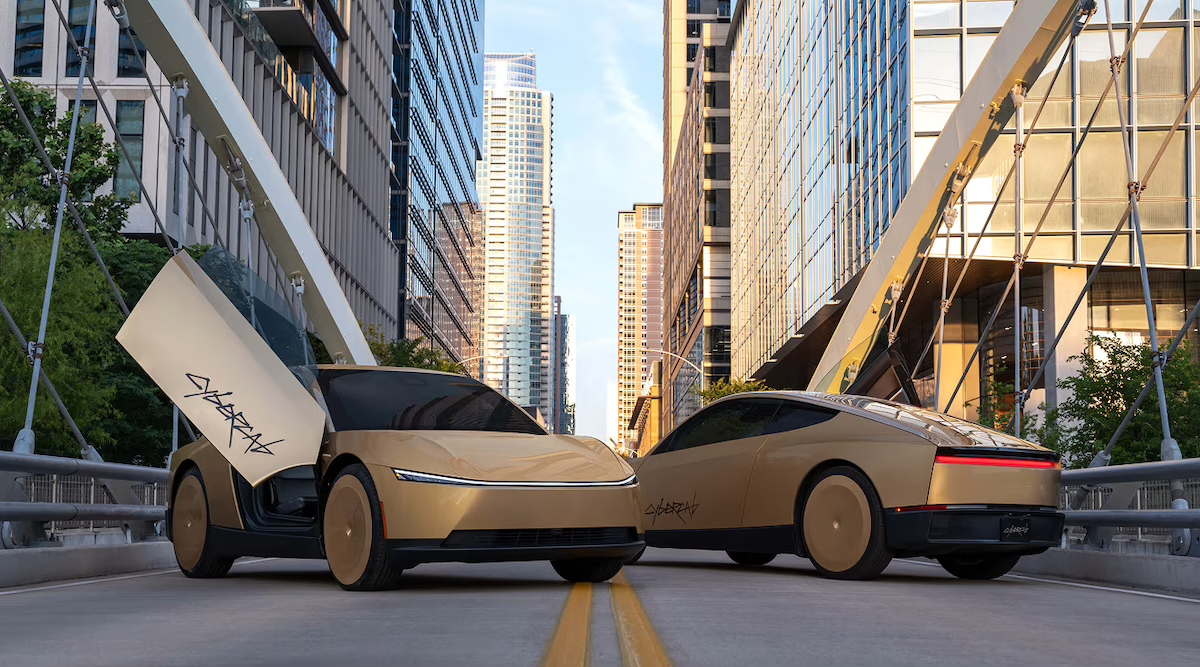
Request #5 and #6 of the NHTSA’s Special Order are particularly revealing. The agency explicitly asks whether the subject vehicles are capable of being operated by a human using temporarily attached controls and whether such equipment was part of the basis for the vehicle’s initial safety certification. If Tesla utilized auxiliary controls to pass safety testing, the company’s claims regarding the vehicle’s inherent, autonomous-only safety compliance could be undermined.
Furthermore, the vehicle’s real-world performance has encountered public friction. Recent reports from Austin residents, including a widely circulated account on the r/Austin subreddit, describe instances where the Cybercab failed to optimize routing, opting for hour-long detours instead of efficient transit. Such anecdotal evidence, while not a substitute for rigorous data, highlights the software’s current inability to handle complex urban navigation, reinforcing concerns about the "unsupervised" nature of the Full Self-Driving (FSD) system.
Market Context and EV Sector Trends
While the Cybercab remains in a testing and certification limbo, Tesla’s core business continues to navigate a turbulent domestic electric vehicle (EV) market. Data from Kelley Blue Book indicates that while Tesla remains the market leader in the United States, its dominance is being tested by shifting federal energy policies and the resurgence of legacy competitors.
In August 2026, Tesla’s domestic sales saw a slight contraction, dipping 3.8% compared to the previous month. Conversely, other manufacturers—most notably Toyota—reported significant growth, with the Japanese automaker seeing a 34.9% increase in EV sales during the same window. This shift reflects a broader, albeit sluggish, recovery in the sector following the expiration of certain federal tax credits that had previously fueled rapid adoption.
The current landscape is characterized by a 2.5% increase in total new EV sales from July to August, yet this figure remains 46.9% lower than the highs recorded in 2025. This stagnation is frequently attributed to the volatility in energy policy and broader geopolitical tensions, including the ongoing conflicts in Eastern Europe and the Middle East, which have impacted global oil prices and supply chains. As manufacturers like Ford and Rivian continue to invest in domestic production—Rivian’s recent $4.5 billion Department of Energy loan for a Georgia factory being a primary example—the competition for market share in the autonomous and electric space is intensifying.
Implications of the NHTSA Audit
The NHTSA’s 21-point demand represents a significant administrative challenge for Tesla. The scope of the inquiry suggests that the agency is looking beyond simple crash-test compliance to the very software architecture that governs the vehicle. For instance, Request #13, which focuses on the turn signal operating units, underscores a granular focus on FMVSS No. 108. The agency is attempting to clarify how the vehicle meets requirements for human-machine interface (HMI) standards in the absence of a traditional steering column.

If Tesla is found to have overstated its capabilities or bypassed standard certification protocols, the company could face significant fines, mandatory recalls, or a forced delay in the production timeline of the Cybercab. For investors, the risk is not merely the potential for a regulatory fine, but the impact on the "autonomous thesis" that has underpinned much of Tesla’s valuation in recent years.
Future Outlook and Industry Trajectory
The next few months will be critical for both Tesla and the regulatory bodies governing autonomous vehicle safety. As the September 30 deadline for the NHTSA’s Special Order approaches, the industry awaits a detailed look at the internal data Tesla uses to validate its self-driving technology.
Beyond the regulatory arena, the long-term viability of the Cybercab will depend on its ability to demonstrate reliability in diverse conditions. The current pattern of "pranksters" interfering with test vehicles and the sporadic navigation failures suggest that the technology is still in a formative stage. Tesla’s ability to transition from a manufacturer of consumer-owned vehicles to a provider of autonomous fleet services rests on its ability to satisfy federal regulators that its "unsupervised" systems are as safe, if not safer, than human drivers.
As the US market continues to recalibrate toward electric and autonomous solutions, the challenges faced by Tesla are emblematic of the broader hurdles inherent in the transition to autonomy. The outcome of the ongoing audit will likely serve as a precedent for how future autonomous platforms are certified, monitored, and integrated into public infrastructure. With competition heating up from established automotive giants and specialized EV manufacturers alike, the margin for error for Tesla has never been smaller. The company must now reconcile its aggressive innovation roadmap with the slow, deliberate pace of federal safety oversight.








Leave a Reply