
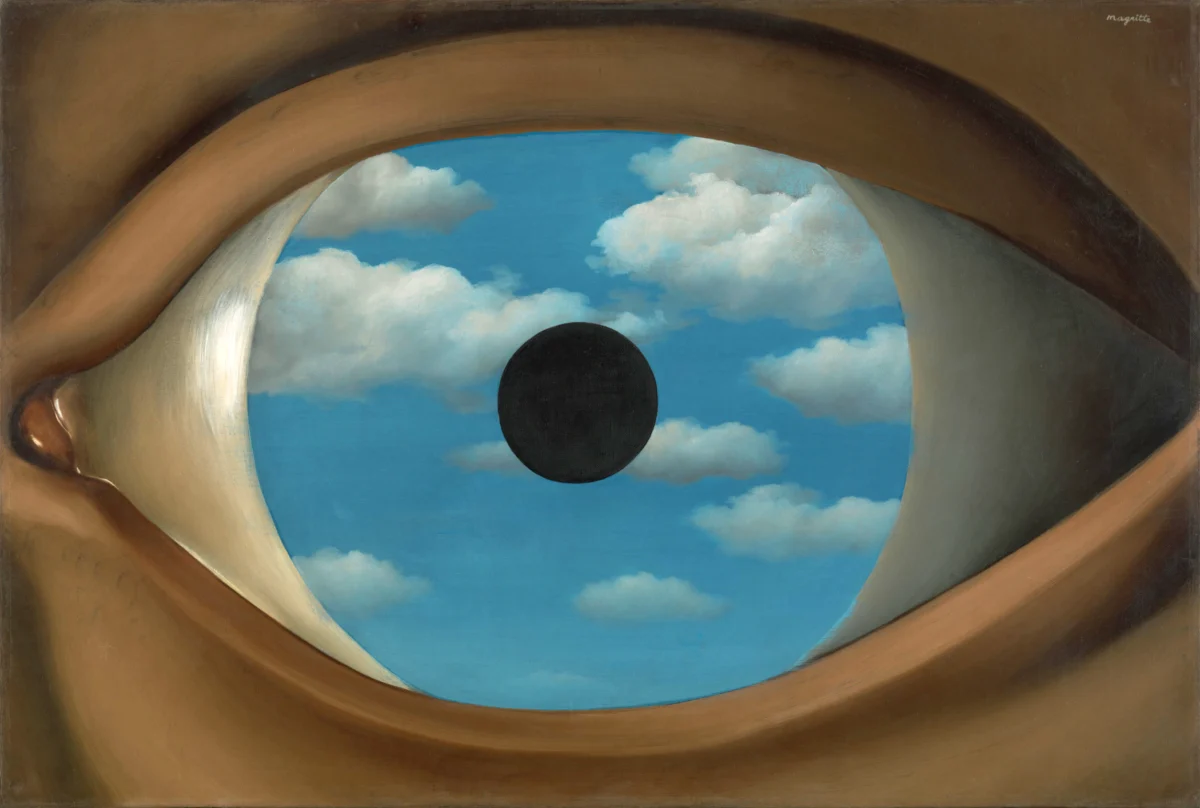
The publication of The Tree of Knowledge: The Biological Roots of Human Understanding by Chilean philosophers and biologists Humberto Maturana and Francisco Varela marked a pivotal shift in how the scientific community views the intersection of biology, cognition, and social behavior. First released in 1984, the work challenges the traditional Western view of an objective reality that exists independently of the observer. Instead, Maturana and Varela propose that "knowing" is a biological action, and that the worlds humans inhabit are "brought forth" through their own biological structures and social interactions. This framework, rooted in the concept of autopoiesis, suggests that the very act of living is an act of cognition, and that the ultimate foundation of social coherence is not logic or law, but the biological dynamic of love.
The Subjectivity of Perception and the Problem of Qualia
A central theme in the exploration of human understanding is the gap between theoretical knowledge and lived experience. This is often illustrated through the "Mary’s Room" thought experiment, proposed by philosopher Frank Jackson in 1982. The experiment describes Mary, a scientist who knows every physical fact about the color blue—the electromagnetic wavelengths, the neurological response of the retina, and the linguistic descriptors—but has lived her entire life in a black-and-white room. The philosophical question remains: when she finally sees blue, does she learn something new?
Maturana and Varela argue that she does, because "knowing" is not the accumulation of data but a state of activity within the nervous system determined by its structure. They posit that while one can provide a conceptual portrait of an experience—such as the definition of healthy love or the frequency of a color—the actual "knowing" is an embodied event. This perspective aligns with historical observations of color that predated modern neuroscience. In 1672, German polymath Otto von Guericke noted the appearance of "azure blue" in shadows, an optical effect created by the contrast of light sources. Later, Johann Wolfgang von Goethe explored "negative after-images," where the eye perceives a color that is not physically present after staring at its opposite. These phenomena demonstrate that color is not merely a property of light, but a collaborative creation of the mind and the external world.
A Chronology of the Biological Theory of Cognition
The development of the theories presented in The Tree of Knowledge followed a specific trajectory of scientific and philosophical evolution:
- 1672: Otto von Guericke discovers that shadows can possess hue, suggesting that color perception is contingent upon environmental contrast rather than just light particles.
- 1810: Goethe publishes Theory of Colours, arguing against Isaac Newton’s purely physicalist view of light and emphasizing the role of the human eye and brain in creating color.
- 1970s: Humberto Maturana and Francisco Varela develop the concept of "Autopoiesis" at the University of Chile. This theory describes living systems as self-producing networks that maintain their own organization.
- 1982: Frank Jackson introduces the "Knowledge Argument" (Mary’s Room), highlighting the distinction between physical information and subjective experience (qualia).
- 1984: Maturana and Varela publish The Tree of Knowledge, synthesizing their biological research into a comprehensive theory of human understanding and social ethics.
- 2001-2021: The passing of Varela (2001) and Maturana (2021) leads to a renewed global interest in their work, particularly in the fields of systems thinking, artificial intelligence, and neurobiology.
The Biological Mechanism of "Bringing Forth a World"
Maturana and Varela’s central premise is that "every act of knowing brings forth a world." This is not a suggestion that the world is an illusion, but rather that our experience of it is "moored to our structure." The authors explain that humans do not see the "space" of the world as a neutral container; rather, they live their field of vision. This biological determinism means that our history—both evolutionary and personal—dictates how the world appears to us.
The nervous system, according to the authors, does not "pick up" information from the environment like a receiver. Instead, it functions as a closed system of correlations. When an external stimulus interacts with the organism, it triggers internal structural changes. Therefore, the "world" we perceive is a reflection of our own internal biological coherence. This leads to a profound philosophical implication: if our knowledge is rooted in our individual biological structures, then "certainty" is a solitary phenomenon. To transcend this solitude, humans must create a shared world through social interaction.
Love as a Biological Necessity for Social Life
One of the most controversial yet enduring aspects of Maturana and Varela’s work is the elevation of "love" from a sentimental emotion to a biological imperative. They define love as the "biological interpersonal congruence" that allows one person to accept the existence of another.

In The Tree of Knowledge, the authors argue that dismissing love as the basis of social life is a rejection of 3.5 billion years of biological history. They posit that:
- Social Phenomena are Biological: For a group of individuals to form a social unit, there must be a recursive interaction that allows for "operational coherence."
- Acceptance of the Other: This coherence is only possible if the individuals "open up room for the existence" of others beside them. This act of acceptance is what they term "love."
- The Failure of Negation: Anything that undermines this acceptance—such as the obsession with "objective truth," ideological certainty, or aggressive competition—destroys the biological foundation of the social process.
The authors conclude that without love, there is no social phenomenon, only "indifference and negation under a pretense of love." This biological requirement for sociality suggests that human evolution has been driven as much by cooperation and mutual acceptance as by survival of the fittest.
Supporting Data and Scientific Context
Modern neuroscience has provided significant data that supports the foundational claims of Maturana and Varela. Research into "neuroplasticity" confirms that the brain’s structure is constantly being reshaped by its history of actions and interactions, a concept the authors referred to as "structural coupling." Furthermore, the study of "mirror neurons" in the 1990s provided a biological basis for empathy and the "acceptance of the other," showing that the brain internally simulates the actions and emotions of others.
Data from the field of social psychology also reinforces the "biological basis of social life." Studies on the effects of social isolation—such as those conducted by Cacioppo and Hawkley (2009)—demonstrate that a lack of "social congruence" or love leads to significant biological degradation, including increased cortisol levels, weakened immune systems, and cognitive decline. These findings validate the authors’ claim that sociality is a biological requirement for the health of the human organism.

Broader Impact and Ethical Implications
The implications of Maturana and Varela’s work extend far beyond biology and into the realms of ethics, politics, and technology. By arguing that no one has a monopoly on "truth" (since all truth is relative to the observer’s biological structure), their work promotes a radical form of pluralism and humility.
In the context of modern global conflicts and ideological polarization, the "Tree of Knowledge" framework suggests that the solution is not more "information" or "facts," but a return to the biological acceptance of the other. If humans realize that their "certainty" is a function of their own structure rather than an objective window into reality, they may be more inclined to listen to the "worlds" brought forth by others.
In the field of Artificial Intelligence, the authors’ theories have sparked debates about the nature of consciousness. If cognition is a biological process inherent to living systems (autopoiesis), then "true" intelligence may be impossible to achieve in non-biological, silicon-based systems that do not "live" or "bring forth a world" through a history of social coupling and biological need.
Ultimately, Maturana and Varela’s legacy is a call to recognize the interconnectedness of all living things. As they state in their conclusion, "We have only the world that we bring forth with others and only love helps us bring it forth." This perspective shifts the focus of human progress from the mastery of the external world to the cultivation of the internal and social conditions that allow for a shared, compassionate reality.









Leave a Reply