
The dream of carbon-free passenger aviation powered by hydrogen has moved from the realm of speculative science fiction to a tangible, albeit highly complex, engineering challenge. As the United Kingdom’s Civil Aviation Authority (CAA) advances its latest "Hydrogen Challenge"—a regulatory framework designed to address everything from cryogenic fuel storage to airside supply logistics—industry analysts are forced to reconcile rapid technological strides with the sobering reality of commercial implementation. Despite genuine progress in hydrogen fuel-cell propulsion and airframe design, the path to widespread commercial adoption remains fraught with systemic barriers that suggest a transition to hydrogen-powered mid-range flight is far more difficult than once anticipated.
The Three Gates of Hydrogen Aviation
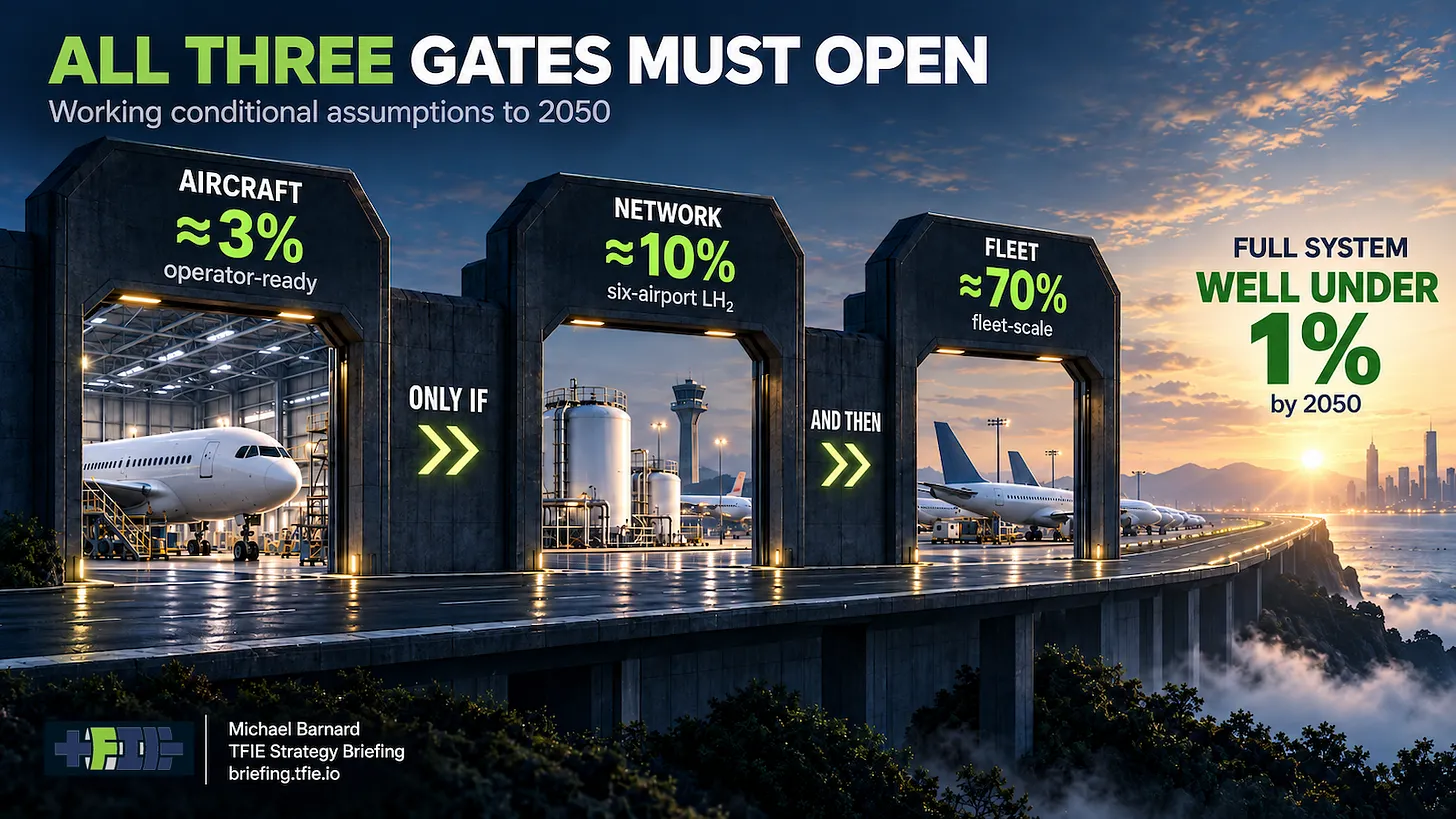
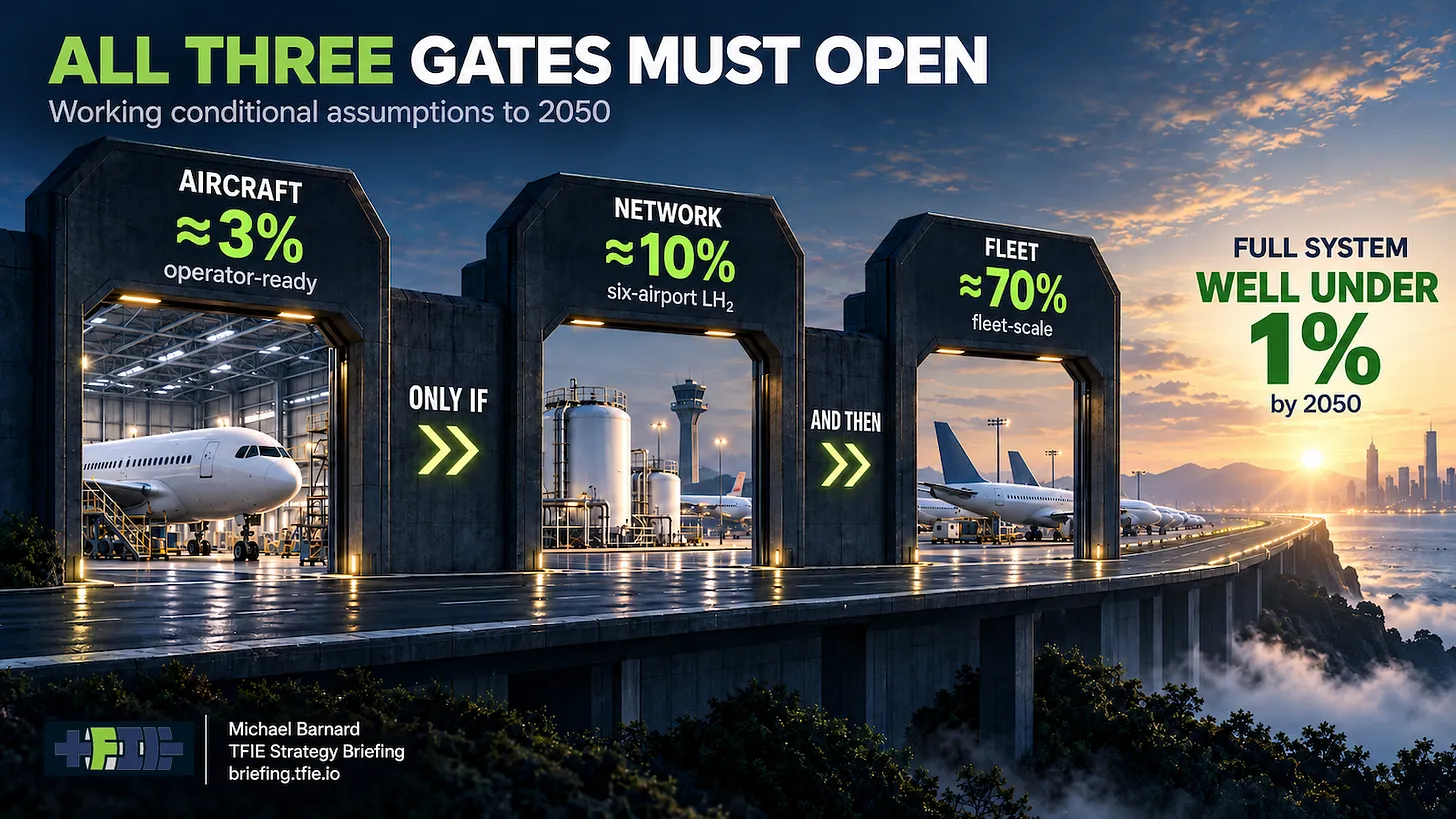
For hydrogen to achieve a meaningful presence in the commercial aviation market, it must successfully navigate three distinct, sequential "gates." First, manufacturers must deliver an operator-ready aircraft that is not only certifiable by aviation authorities but also capable of performing standard commercial missions. Second, the global airport network must undergo a radical transformation to support the throughput, storage, and safety infrastructure required for cryogenic fuel. Finally, airlines must be able to scale their fleets sufficiently to provide reliable, scheduled service.
Recent analysis suggests that while individual progress is being made on these fronts, the synchronicity required to bridge all three gates remains elusive. Even with optimistic assumptions—where each technological and regulatory hurdle is given a 60% to 85% probability of success—the likelihood of a clean-sheet, hydrogen-powered medium-haul passenger aircraft reaching full-scale commercial operation by 2050 is estimated to be below 3%. When the added complexities of airport infrastructure and fleet-wide scaling are integrated into this model, the probability of a viable, complete system drops to less than 1%.
A Chronology of Recent Regulatory and Technical Progress
The landscape of hydrogen aviation has evolved significantly since 2023. At that time, many critics dismissed hydrogen-powered passenger aircraft as fundamentally uncertifiable. Today, that narrative has shifted due to substantive work from regulators and private industry alike.
- 2023: Initial assessments often viewed liquid hydrogen as a non-starter due to the extreme design constraints of cryogenic tanks.
- 2024: The UK CAA launched its hydrogen aviation roadmap, providing a structured approach to certifying hydrogen-powered flight for small aircraft by 2035.
- 2025–2026: Significant engineering milestones have been met. Companies like ZeroAvia have made measurable progress toward FAA certification for their 600 kW electric engines. Simultaneously, Airbus and MTU have intensified collaboration on certifiable hydrogen fuel-cell propulsion systems.
- Present Day: The CAA’s current focus on London City Airport turnarounds and airside supply chain technology reflects a shift from theoretical design to operational integration. These "sandbox" initiatives are critical because they test how hydrogen fits into the frantic pace of airport ground operations.
These developments prove that hydrogen is not "impossible" from a physics or engineering perspective. However, the maturation of these technologies has not simplified the commercial pathway; rather, it has clarified the sheer scale of the investment required to move from prototype to global infrastructure.
Engineering Constraints and the Mission Profile
A primary challenge remains the definition of a standard commercial mission. To be commercially viable, a hydrogen aircraft must carry approximately 150 passengers over a distance of 2,500 kilometers while maintaining standard baggage capacities and fuel reserves.
This requirement forces a series of design compromises. Unlike conventional kerosene-based jets, hydrogen aircraft require massive, highly insulated cryogenic tanks that consume significant cabin or cargo volume. Furthermore, the integration of thermal management, advanced crash protection systems, and complex plumbing for liquid hydrogen adds substantial weight and structural complexity. When researchers quantify these "design penalties," the result is an aircraft that struggles to match the payload-range efficiency of existing turbine aircraft.
The argument that cheaper hydrogen will solve these problems is increasingly viewed as secondary. While lower fuel prices would certainly improve operating economics, they do not resolve the physical volume constraints of liquid hydrogen or the prohibitive costs of retooling the world’s fleet of commercial aircraft. Even if hydrogen were free, the lack of an airport fueling network capable of handling high-frequency, large-scale traffic would keep the technology tethered to the ground.
The Infrastructure Gap
Perhaps the most overlooked hurdle is the airport itself. Transitioning to hydrogen is not merely a matter of swapping fuel tanks; it requires a wholesale reconfiguration of airport fuel logistics. This includes the implementation of large-scale, on-site liquefaction plants, specialized cryogenic pipelines, and massive outage buffers to ensure that flights are not grounded during supply chain disruptions.
The CAA’s ongoing work at London City Airport is a vital step toward understanding these interfaces, but it highlights the dependency trap: airports are reluctant to invest in massive hydrogen infrastructure without a fleet of aircraft to serve, yet manufacturers are unlikely to build those aircraft until the refueling infrastructure is standardized and readily available at scale. This "chicken-and-egg" dilemma remains one of the primary reasons the pathway to 2050 remains so narrow.
Competitive Realities: The Role of Sustainable Aviation Fuels (SAF)
Hydrogen does not exist in a vacuum; it competes against existing liquid fuels and the emerging sector of Sustainable Aviation Fuels (SAF). SAF has its own set of challenges, particularly regarding feedstock availability, life-cycle emissions, and high production costs. However, SAF possesses one insurmountable advantage: it is a "drop-in" fuel. It can utilize existing turbine architectures, current refueling networks, and the vast majority of the world’s existing airport infrastructure.

Because hydrogen requires a total system overhaul—new engines, new fuel systems, new airport infrastructure, and a new regulatory framework—it must offer a performance or cost advantage that is currently not apparent. For the aviation industry, the cost of replacing the entire global ecosystem is orders of magnitude higher than the cost of transitioning to SAF, even if the latter remains expensive in the short term.
Implications and Future Outlook
The current regulatory and engineering efforts, while necessary, are essentially "right-sizing" the problem. By acknowledging that hydrogen storage doesn’t force a single, impractical design, and by developing specific certification frameworks, regulators are creating the foundation for a potential future. However, there is a fundamental difference between demonstrating that a technology can work and proving that it can scale within the strict parameters of commercial aviation.
For hydrogen to move toward a higher probability of success, the industry would need to see a radical shift in three areas:
- Standardization: A global consensus on cryogenic refueling hardware and safety protocols to ensure that a hydrogen aircraft can fly between different countries without specialized, non-compatible infrastructure.
- Economic Parity: A reduction in the "design penalty" through advancements in material science, allowing hydrogen aircraft to achieve parity with kerosene-fueled jets in range and passenger capacity.
- Policy Alignment: Massive, coordinated government investment that treats the transition to hydrogen not as a private-sector initiative, but as a public utility project akin to the development of the interstate highway system.
Until such systemic shifts occur, hydrogen will likely remain a niche solution for short-haul or regional flight paths rather than the backbone of medium-haul passenger travel. The regulatory and engineering progress of the last two years has refined our understanding of the path ahead, but it has ultimately reinforced the conclusion that the transition to hydrogen is a generational, rather than decade-long, endeavor. The commercial pathway remains closed, not by a lack of innovation, but by the overwhelming, interlocking requirements of an entire global industry that is currently built on a different chemical foundation.










Leave a Reply