At East Central University in Ada, Oklahoma, the practical consequences of a shifting political climate are manifesting in empty faculty offices and stalled recruitment efforts. Two of four critical professor positions—specifically in the fields of history and criminal justice—remain vacant as the institution grapples with a shrinking pool of applicants and a string of candidate withdrawals. In the computer science department, the hiring process proved equally difficult; after the primary candidate declined the offer, the university was forced to pivot to a second-choice hire. These staffing challenges are not isolated incidents but rather symptoms of a broader, systemic struggle facing Oklahoma’s regional public universities in the wake of Governor Kevin Stitt’s aggressive executive actions against faculty job protections.
The Legislative and Executive Pivot
The turmoil at East Central University (ECU) and other regional institutions is rooted in a February 2026 executive order issued by Governor Stitt. This directive prohibited regional universities and community colleges from granting tenure to new hires. Notably, the order excluded the state’s flagship research institutions, the University of Oklahoma (OU) and Oklahoma State University (OSU), creating a bifurcated system where protections remain intact for faculty at major research hubs but are stripped from those serving rural, regional communities.
The governor’s initiative is part of a growing national trend, echoing efforts by Republican lawmakers in states such as Arkansas, Kentucky, Texas, Kansas, Nebraska, and North Dakota to curtail tenure. Proponents of these measures argue that tenure, a long-standing academic tradition that provides job security after a rigorous multi-year peer-review process, inhibits accountability and limits the ability of universities to adapt to modern workforce needs.
However, the political timing suggests a deeper ideological motivation. Governor Stitt has frequently expressed skepticism toward the concept of academic freedom, framing it as a shield for ineffective faculty. "The governor, in messages he has delivered to us, says he disagrees with academic freedom and thinks professors at the end of their careers aren’t doing much," said ECU President Wendell Godwin. "But we have a process for getting rid of professors who are not effective, whether they are tenured or not."
A Timeline of Regulatory Pressure
The escalation of tensions between the state government and regional university boards began in earnest in early 2026.

- February 2026: Governor Stitt issues an executive order banning tenure for new hires at regional and community colleges, citing a need for "better return-on-investment analysis" and accountability to taxpayers.
- March 2026: The Oklahoma State Senate Education Committee reviews Senate Bill 1782, a legislative attempt to codify the tenure ban across all public universities. While it passes committee, the bill eventually loses momentum.
- July 2026: The Regional University System of Oklahoma (RUSO) reports that 44 faculty members have been hired under the new, non-tenure-track terms that would have previously been tenure-eligible.
- August 2026: The RUSO Board of Regents meets to address the implementation of the executive order, attempting to balance state mandates with the need to maintain faculty quality.
Data and Institutional Disparities
The disparity between the state’s regional universities and its flagship institutions is stark, particularly regarding financial resources and the student demographic. RUSO institutions, which act as the economic anchors for many of Oklahoma’s rural communities, operate under strict affordability mandates. In the 2025-26 academic year, the average cost for an in-state student at a RUSO school was approximately $17,557, compared to $27,293 at the state’s two flagship research universities.
The removal of tenure creates an uneven playing field. With 51 percent of the 1,287 full-time faculty across the RUSO system currently holding tenure, and another 269 on the tenure track, the transition to a purely contingent workforce represents a significant cultural and operational shift. Experts argue that this creates a "second-class citizen" status for regional schools.
"It is a continuation, in my view, of the disregard or the permanent, second-class citizen status that regional universities have in their states," said Cecilia Orphan, associate professor of higher education at the University of Denver and founding co-director of the Alliance for Research on Regional Colleges. "This is a new way of saying these institutions are not real universities and their students are not worthy of a real university education."
The Recruitment Crisis
The primary concern among university administrators is the ability to attract high-caliber talent in a competitive academic market. Potential recruits are increasingly wary of states where political interference in the classroom is perceived as high. Deepa Das Acevedo, an assistant professor of law at Emory University and author of the 2025 book "The War on Tenure," highlights that these bans send a clear message: "Your state’s leaders want to keep you insecure and don’t value your institutions enough."
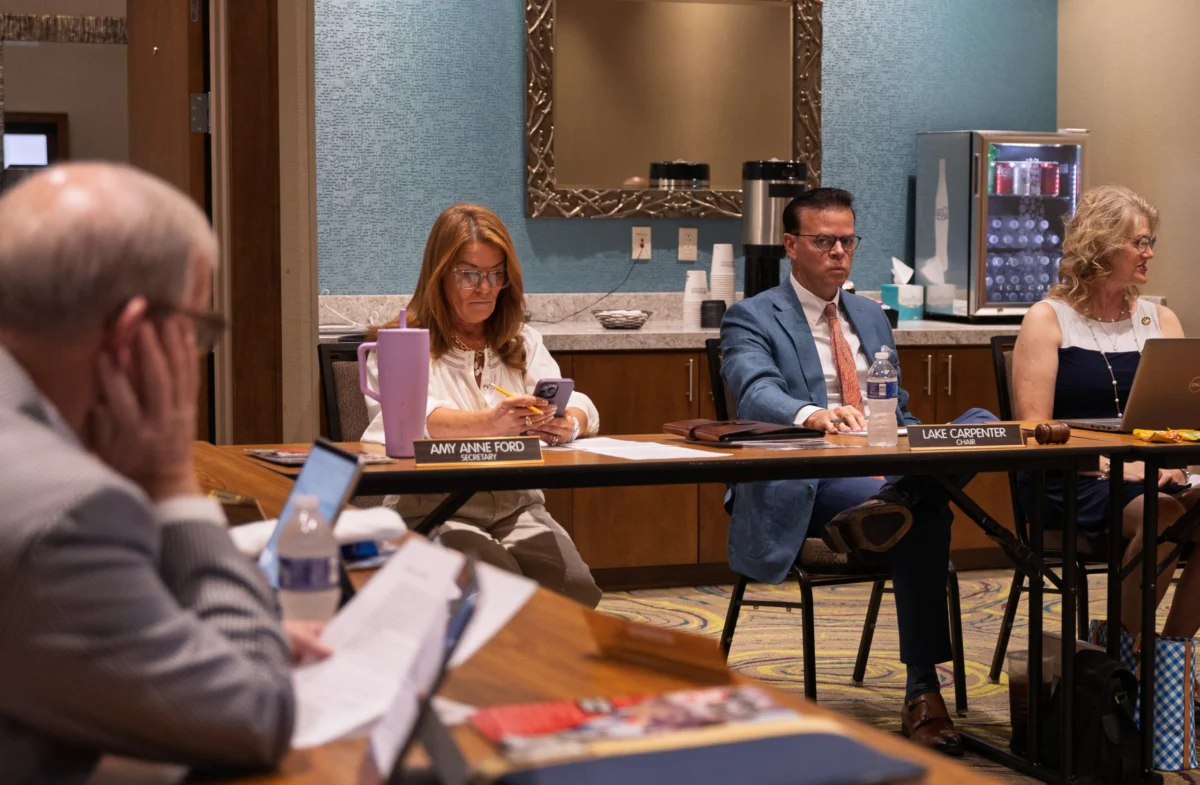
Regent Amy Anne Ford, who has served as the board’s point person on compliance with the governor’s mandate, acknowledges the difficulty of recruiting to remote areas. "When you’re looking at some of these smaller communities, like Alva or Ada, that already have a difficult time recruiting because they’re not major metropolitan areas, then you add this barrier, it makes it that much more difficult," Ford noted.
Implications of the "Woke" Narrative
The political discourse surrounding these changes is heavily influenced by national "culture war" narratives. Despite the political rhetoric surrounding "woke agendas" and "indoctrination," administrators at schools like ECU argue that these labels are disconnected from the reality of rural higher education. President Godwin noted that when parents express concern about potential indoctrination, it often reflects anxieties fueled by national media coverage rather than local classroom experiences. "On a woke meter from 1 to 10, we’re probably not even a 1," Godwin said.

The legislative focus on "workforce alignment" and "return on investment" also ignores the traditional role of regional universities in fostering civic engagement and regional development. By tying faculty contracts to short-term economic metrics, the state risks undermining the foundational research and humanities programs that provide students with critical thinking skills.
Future Outlook and Policy Reversal
As Governor Stitt approaches the end of his second term, there is a glimmer of hope among faculty and university leaders that the policy may be temporary. Some state lawmakers, recognizing the vital role these institutions play in retaining local talent, are organizing to ensure the executive order does not persist.
State Representative Ronny Johns, representing Ada, emphasized the importance of these schools to the local economy, noting that nearly 90 percent of RUSO graduates remain in Oklahoma. "You hear all of us say we want our kids and grandkids to be able to stay in the state and work here," Johns said. "That should motivate all of us—the governor, Senate, House—to do all we can to promote those schools and support those schools."
For now, the universities remain in a state of adjustment. While the RUSO Board of Regents has committed to honoring tenure for those already on the track to avoid potential litigation, the long-term impact on the quality of education remains an open question. Whether these schools can continue to compete for "A-level" players—as President Godwin terms them—without the promise of professional stability is a challenge that will define the future of the regional higher education system in Oklahoma for years to come.
The situation serves as a critical case study for the rest of the nation, illustrating the precarious balance between state-level political control and the institutional autonomy required for high-quality academic instruction. As the legislative session approaches and the governor’s term nears its conclusion, the academic community in Oklahoma waits to see if the state will prioritize the long-term health of its rural colleges or continue down a path of increasing administrative oversight and diminished faculty security.