The rapid integration of artificial intelligence into the global labor market has fundamentally altered the trajectory of professional development, shifting the educational mandate from rote knowledge acquisition to the cultivation of uniquely human competencies. For decades, the dialogue surrounding automation focused primarily on the displacement of workers, characterized by fears of obsolescence and the search for corporate efficiency. However, as AI-supported tasks and automated outputs permeate virtually every sector of the economy, the conversation has matured. Current labor market analysis suggests that the most effective way for K-12 students to "AI-proof" their futures is not by competing with algorithms on technical output, but by mastering the human skills—empathy, complex judgment, and nuanced creativity—that technology cannot replicate.
The Evolving Landscape of Employment
The economic transition currently underway is characterized by a "human premium." A recent analysis of labor trends by PwC highlights a significant paradox: as employers expose certain job roles to higher levels of AI integration, the accompanying responsibilities assigned to those roles increasingly demand human-centric strengths. Data indicates that when new duties are added to roles with high AI exposure, they are more than twice as likely to require interpersonal skills such as empathy and strategic judgment compared to roles with minimal AI integration.
This trend is even more pronounced at the entry level. Junior positions, which have traditionally served as training grounds for fundamental technical tasks, are seeing a radical shift in requirements. Research shows that entry-level roles with high AI exposure are seven times more likely to require leadership, strategic thinking, and complex problem-solving than their less-exposed counterparts. Employers are effectively "fast-tracking" the need for soft skills, expecting junior employees to demonstrate a level of professional maturity previously reserved for mid-career management.
The "Durable Skills" Imperative
The term "soft skills" has increasingly come under fire from workforce development experts for being a misnomer that diminishes the criticality of these abilities. Analysts now prefer the term "durable skills"—capabilities that remain relevant regardless of technological shifts or changes in job titles.
An extensive analysis conducted by America Succeeds and Lightcast, which examined over 76 million job postings, found that 76 percent of all job listings require at least one durable skill. Furthermore, eight of the ten most-requested skills by employers globally fall into this category. These include communication, collaboration, critical thinking, and adaptability. Despite their necessity, these skills are rarely integrated into the formal, standardized curricula of K-12 education, creating a widening gap between classroom learning and workplace demands.
Chronology of the AI-Education Pivot
The realization that academic instruction must adapt to the AI era has occurred in distinct phases over the past five years:
- 2019–2020: The initial focus of education technology centered on "coding for everyone," under the assumption that computational literacy would be the primary defense against job loss.
- 2021–2022: As generative AI began to demonstrate capabilities in basic coding and data entry, the focus shifted toward "AI fluency"—the ability to use tools effectively.
- 2023–2024: The widespread deployment of Large Language Models (LLMs) revealed the "AI tax on productivity." Research from entities like Workday indicates that workers are losing nearly 40 percent of the time saved by AI to the processes of correcting, verifying, and refining low-quality, automated output.
- 2025–Present: A consensus has emerged among policymakers and educators that the core competency of the future is not just using the tool, but possessing the critical thinking to manage the "human-in-the-loop" verification process.
The Cost of Neglect: The AI Productivity Tax
The promise of AI is often tethered to the efficiency gains it offers; however, these gains are frequently illusory without a foundation of critical thinking. In a global study, researchers identified an "AI tax on productivity," where the time saved by automation is offset by the downstream necessity of human intervention. The technology does not eliminate the requirement for deep thought; rather, it shifts the cognitive burden to a human operator who must identify hallucinations, bias, or logical fallacies within the AI’s output.
Critical thinking, therefore, has become a high-stakes professional requirement. Students who learn to evaluate competing evidence and interpret complex experimental data are better positioned to act as the "quality control" layer in an AI-driven environment. Without these durable skills, the workforce risks becoming overly reliant on automated systems that may provide fast, yet fundamentally incorrect, results.

Institutional Responses and "Portraits of a Graduate"
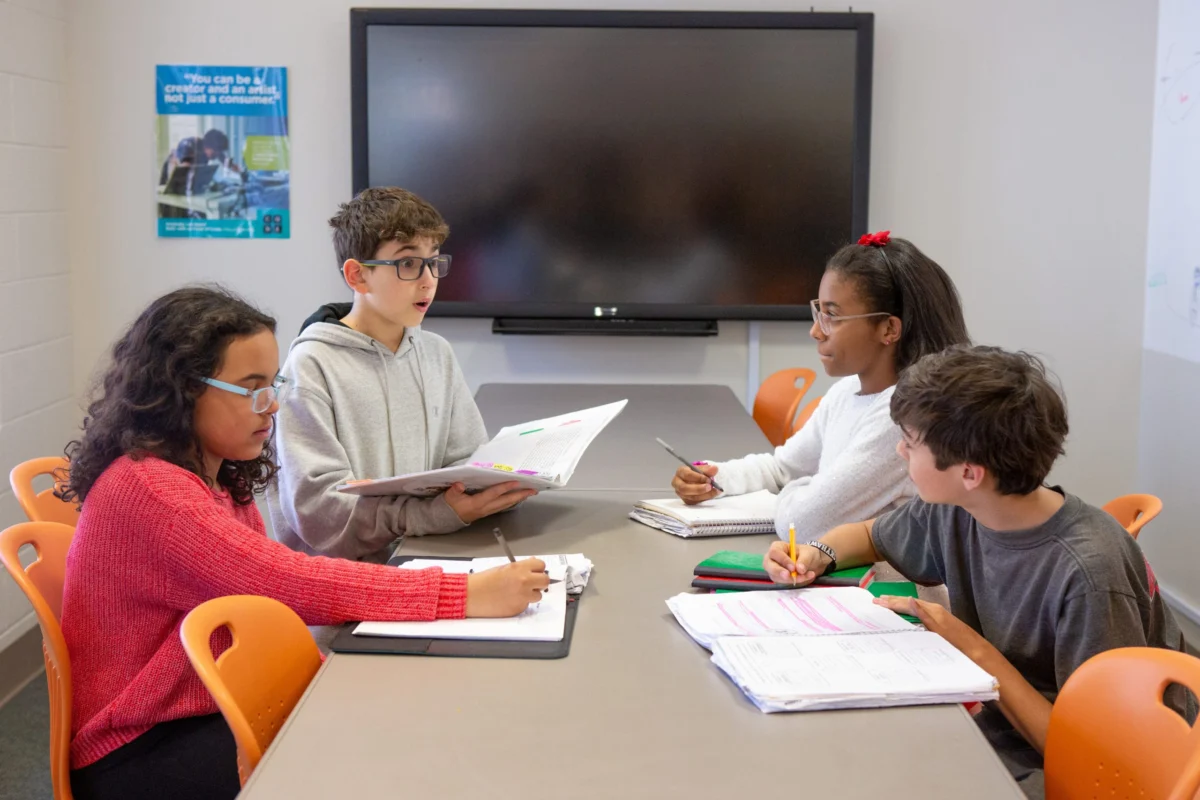
Recognizing the urgency of this transition, more than 20 states have moved to adopt "Portrait of a Graduate" frameworks. These initiatives aim to define the specific competencies students should possess upon graduation, moving beyond test scores to emphasize communication, resilience, and collaborative problem-solving.
However, the implementation of these frameworks faces systemic hurdles. Educators report that while strategic plans may change, the underlying classroom structure—often dominated by high-stakes testing—remains rigid. Many districts have adopted the language of "durable skills" without altering the pedagogical methods required to teach them.
The challenge for modern school districts is to transition from strategic rhetoric to daily classroom experience. This involves several critical shifts:
- Explicit Integration: Durable skills should not be treated as an elective or a supplementary program; they must be embedded into the core curriculum of math, science, and the humanities.
- Visible Assessment: Teachers must move toward evaluating student work based on clear criteria that measure reasoning and communication, rather than relying solely on multiple-choice assessments.
- Collaborative Calibration: Professional development for teachers must include time to compare and calibrate evidence of student learning, ensuring that terms like "critical thinking" are applied consistently across disciplines and grade levels.
The Role of Business-Education Partnerships
The disconnect between the classroom and the boardroom is a primary driver of the current skills gap. To bridge this divide, employers must take a more proactive role in the educational ecosystem. By partnering with local schools, businesses can provide mentors, hands-on learning opportunities, and real-world examples that illustrate the necessity of durable skills.
When students understand how an algebra concept or a history project translates into the ability to argue a point or analyze a market trend, their engagement increases. By providing clarity on what skills are valued in the modern workplace, employers can help demystify the professional landscape for students who are often overwhelmed by the prospect of future employment.
Implications for the Future Workforce
The long-term success of the next generation depends on a fundamental reevaluation of what it means to be "prepared" for the workforce. The most robust preparation for an AI-empowered economy is a "triad" of competencies: domain-specific academic knowledge, AI fluency, and the durable human skills required to apply both appropriately.
The unpredictability of the labor market in 2035 or 2040 makes it impossible to know exactly which software or hardware tools will be in use. However, the requirement for individuals who can think clearly, speak with confidence, and navigate interpersonal complexities remains constant. AI did not create the necessity for these human traits; it simply elevated them from "nice-to-have" attributes to essential requirements for economic survival.
As educational institutions navigate this shift, the focus must remain on equity. These opportunities for developing critical thinking and collaborative expertise must reach every student, regardless of their socioeconomic status or the resources available in their local school district. Ensuring that these skills are treated as an integral component of a well-rounded education is not merely a pedagogical goal; it is a prerequisite for maintaining a competitive, adaptable, and resilient workforce in an era of unprecedented technological disruption.
The task ahead for educators, policymakers, and industry leaders is to ensure that the systems shaping classroom learning are as dynamic as the world for which they are preparing students. By treating communication, collaboration, and critical thinking as the foundational medium of instruction rather than optional extras, schools can ensure that the next generation is equipped not only to use AI but to lead in the age of its dominance.