
Methane, a colorless and odorless hydrocarbon, has emerged as the most critical "fast-action" lever in the global effort to mitigate the climate crisis. While carbon dioxide remains the primary driver of long-term global warming due to its multi-century atmospheric residence, methane (CH4) is significantly more potent in the short term. As the primary component of natural gas and a byproduct of both biological and industrial processes, methane is responsible for approximately one-third of the global temperature rise observed since the pre-industrial era. Current scientific consensus suggests that because methane persists in the atmosphere for only about 12 years—compared to the hundreds of years for CO2—reducing its emissions offers the most immediate opportunity to slow the rate of planetary warming and avoid catastrophic climate tipping points.
The Chemistry and Measurement of a Potent Pollutant
At the molecular level, methane consists of one carbon atom bonded to four hydrogen atoms. It is formed through two primary pathways: geological and biological. Geologically, methane is created over millions of years as heat and pressure act on organic matter trapped deep underground, forming the fossil fuel deposits exploited by the oil and gas industry. Biologically, methane is produced via methanogenesis, a form of anaerobic respiration conducted by microorganisms known as archaea. These microbes thrive in oxygen-poor environments, such as the digestive tracts of ruminant animals, waterlogged rice paddies, and the deep layers of landfills.

Measuring this elusive gas has historically been a challenge for climate scientists. Traditionally, "bottom-up" inventories were used, which relied on calculating emissions based on activity levels—such as multiplying the number of cattle by an average emission factor per head. However, this method frequently underestimates actual levels. A more recent shift toward "top-down" measurement involves the use of aircraft, high-altitude sensors, and sophisticated satellite arrays. Technologies like the recently launched MethaneSAT and GHGSat are now capable of identifying "super-emitters"—specific industrial sites or landfills responsible for disproportionately large leaks. Research indicates that just 5% of leaks in the oil and gas sector are responsible for more than half of the industry’s total methane leakage. In the United States, direct measurements have revealed that methane emissions from oil and gas operations are often 60% higher than figures reported by the Environmental Protection Agency (EPA).
A Chronology of Rising Atmospheric Concentrations
The trajectory of methane in the atmosphere reflects the intensification of human industrial and agricultural activity. Before the Industrial Revolution, atmospheric methane levels were relatively stable. However, since the mid-18th century, concentrations have surged. By 2023, methane levels reached a record high of 1,934 parts per billion (ppb), representing a 265% increase over pre-industrial levels.
The timeline of this increase shows a particularly concerning acceleration in the 21st century. While methane concentrations appeared to plateau briefly in the early 2000s, they began a sharp upward climb after 2007. Scientists attribute this recent surge to a combination of expanded hydraulic fracturing (fracking) for natural gas, a global increase in meat consumption, and the emergence of climate feedback loops in tropical wetlands. The World Meteorological Organization (WMO) has noted that the increase in methane levels over the last decade has been faster than at any other time in the systematic record, complicating international efforts to meet the Paris Agreement’s 1.5 degrees Celsius target.

The Three Pillars of Human-Caused Emissions
Approximately 60% of global methane emissions are the result of human activity, categorized into three primary sectors: agriculture, fossil fuels, and waste management.
Agriculture: The Leading Contributor
The agricultural sector accounts for roughly 40% of anthropogenic methane. The largest share comes from enteric fermentation, the digestive process of ruminants like cows and sheep. As global demand for beef and dairy has risen, so too has the methane "burped" by livestock. Manure management, particularly in large-scale industrial lagoons, also contributes significantly. Furthermore, rice cultivation—essential for feeding billions—is responsible for 8% of human-caused methane due to the anaerobic conditions created in flooded paddies.
Fossil Fuels: Leaks and Venting
The energy sector is responsible for about 35% of human-caused methane. During the extraction and transport of oil and natural gas, methane is often intentionally vented or accidentally leaked. In coal mining, methane trapped within coal seams is released during the excavation process. Despite the industry’s ability to capture this gas for use as fuel, much of it is currently wasted into the atmosphere.

Waste Management: Landfills and Wastewater
The decomposition of organic matter in landfills and wastewater treatment plants generates about 20% of global methane emissions. As populations grow and urbanize, the volume of municipal solid waste is projected to increase by 73% by 2050, threatening to drive methane levels even higher unless circular economy practices are adopted.
The "Bridge Fuel" Controversy and the LNG Expansion
For over a decade, natural gas was promoted as a "bridge fuel" that would facilitate the transition from coal to renewable energy. Proponents argued that because natural gas emits about half as much CO2 as coal when burned for electricity, it was a cleaner alternative. However, recent life-cycle analyses have debunked this narrative.
The expansion of Liquefied Natural Gas (LNG) infrastructure has come under intense scrutiny. A 2023 study found that when methane leaks during extraction, processing, and trans-oceanic shipping are accounted for, LNG can have a 33% greater global warming potential than coal over a 20-year horizon. Environmental advocates and scientists warn that the current global build-out of LNG terminals could "lock in" decades of high methane emissions, effectively neutralizing the gains made by the deployment of solar and wind energy. Bill McKibben, a prominent climate campaigner, has described the proposed LNG expansion as a "methane bomb" that threatens to overwhelm international climate goals.

Climate Feedback Loops: A Self-Reinforcing Crisis
One of the most alarming aspects of methane is its role in positive climate feedback loops. As the planet warms due to human-caused emissions, natural systems begin to release their own stored methane, further accelerating the warming.
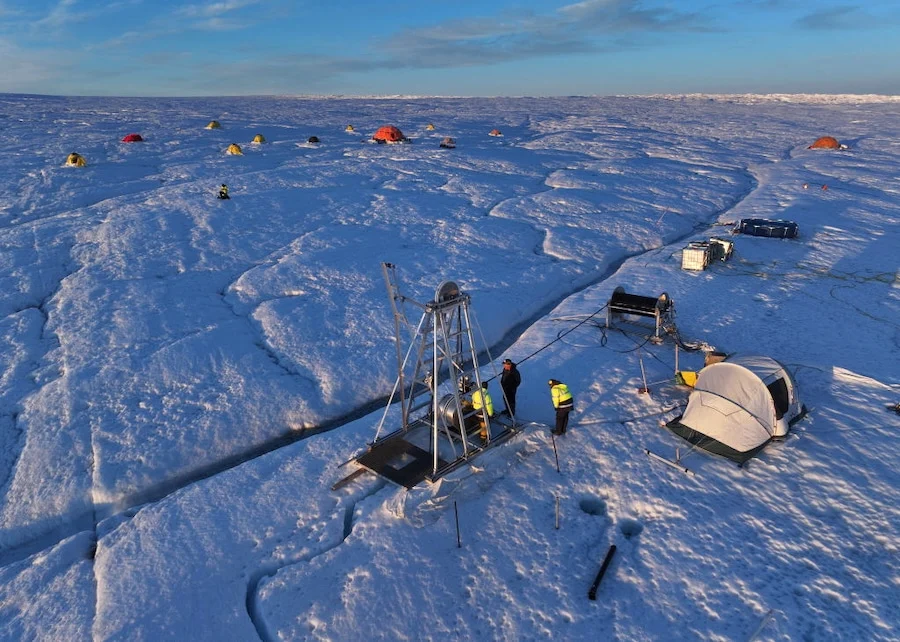
Wetlands are the primary site of this phenomenon. Rising temperatures and altered rainfall patterns have expanded tropical wetlands and thawed Arctic permafrost. When permafrost melts, it unfreezes ancient organic matter and the microbes that consume it, leading to a massive release of methane. Arctic and boreal methane emissions have increased by an estimated 9% since 2002. Similarly, the increasing frequency and intensity of wildfires release significant amounts of methane. In 2020, California’s wildfires contributed nearly 14% of the state’s total methane emissions for that year, creating a vicious cycle where fire-induced warming leads to more fires.
Public Health and the Ozone Connection
Beyond its role as a greenhouse gas, methane has a direct and detrimental impact on human health. Methane is a key precursor to the formation of ground-level ozone (smog). Unlike the protective ozone layer in the upper atmosphere, ground-level ozone is a toxic air pollutant. It causes respiratory illnesses, triggers asthma attacks, and is linked to approximately 500,000 premature deaths annually worldwide.

The environmental impact of methane-generated ozone extends to food security. Ozone enters the leaves of plants and interferes with photosynthesis, reducing crop yields. Experts estimate that every million metric tons of methane reduced would prevent the loss of 145,000 metric tons of essential crops like wheat, soybeans, and rice. Thus, methane mitigation is as much a public health and agricultural necessity as it is a climate imperative.
Strategies for Mitigation and the Implementation Gap
The Intergovernmental Panel on Climate Change (IPCC) states that methane emissions must be reduced by at least 34% by 2030 to keep the 1.5°C goal within reach. Fortunately, many solutions are already available and cost-effective.
In the energy sector, the International Energy Agency (IEA) reports that 70% of methane emissions from oil and gas operations can be eliminated using existing technology, such as leak detection and repair (LDAR) programs and the replacement of pneumatic controllers. In agriculture, innovations like seaweed-based feed supplements (such as Asparagopsis taxiformis) have shown the potential to reduce enteric methane by over 80%. In the waste sector, diverting organic waste from landfills to composting or anaerobic digesters can significantly curtail emissions.

Politically, the Global Methane Pledge, launched at COP26, represents the most significant international commitment to date. With over 150 nations promising to reduce methane emissions by 30% by 2030, the framework for action exists. However, there remains a massive "implementation gap." As of 2024, global methane emissions continue to rise, and only a small fraction of the sector is covered by mandatory, enforceable regulations.
Conclusion and Future Outlook
The challenge of methane is a race against time. Because of its high potency and short lifespan, methane represents the best opportunity to achieve a "cooling" effect in the near term, providing the world with the necessary breathing room to complete the more difficult, long-term transition away from a carbon-based economy.
Addressing methane requires a multi-pronged approach: aggressive regulation of the fossil fuel industry, a transformation of global food systems toward lower-meat diets, and the rapid deployment of waste-to-energy technologies. While the data shows a concerning trend of rising concentrations, the technological capacity to reverse this trend is already in hand. The success of the global climate effort may ultimately depend on whether political will can move as fast as the methane molecules currently heating the atmosphere.










Leave a Reply