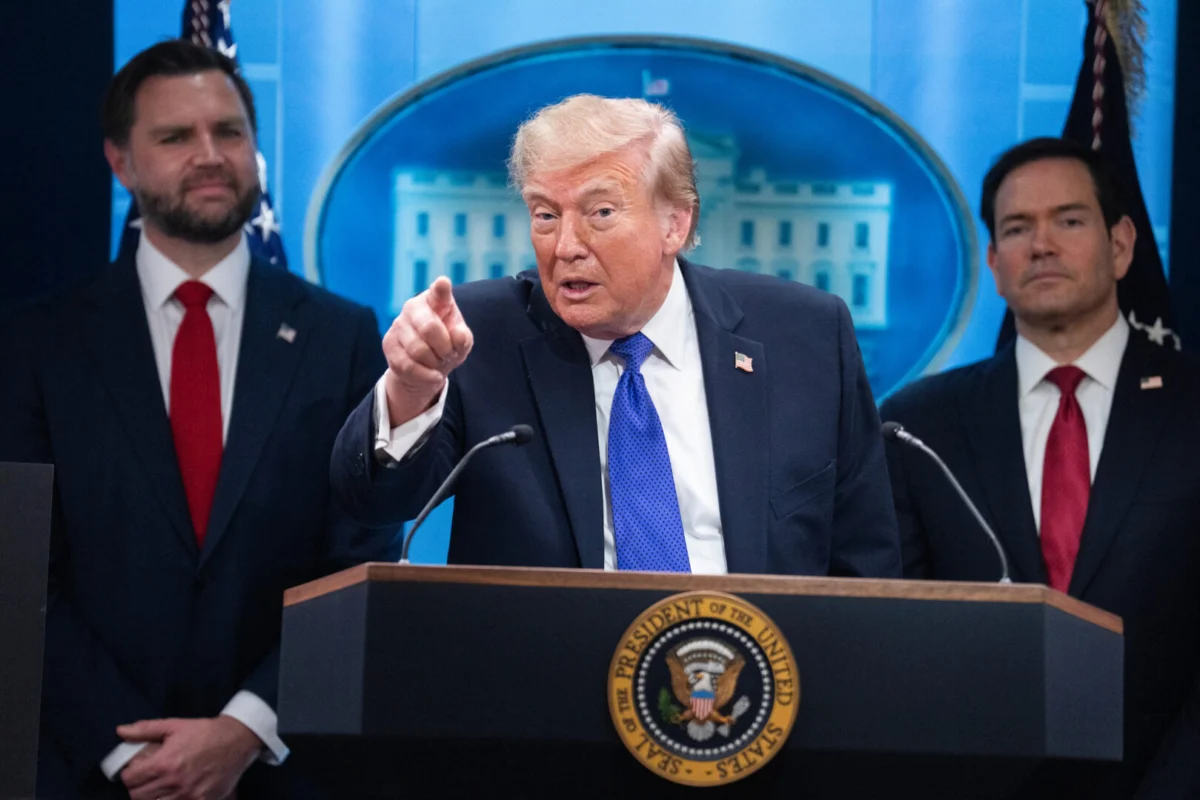
The era of the one-cent coin in the United States has officially come to a close. On Friday, November 20, 2026, President Donald Trump signed the Common Cents Act into law, formally codifying the permanent cessation of penny production. This legislative milestone concludes a decades-long debate regarding the economic viability of the lowest-denomination coin in American currency, effectively transitioning the nation toward a system that relies on nickel-based rounding for cash transactions.
While the U.S. Mint had effectively ceased the production of pennies roughly one year ago via executive action, the new law provides the necessary statutory framework to resolve lingering legal ambiguities and establish clear guidelines for the future of the nation’s coinage. The legislation marks the end of a copper-plated relic that has long been criticized as an inefficient drain on federal resources, with production costs consistently outpacing the face value of the coin itself.
The Economic Case for Retirement
For fiscal hawks and monetary reformers, the move to eliminate the penny is a matter of basic arithmetic. For years, the U.S. Mint has reported that the cost to produce and distribute a single penny significantly exceeds one cent. In recent fiscal cycles, production costs hovered near four cents per coin, a disparity driven by the rising prices of zinc and copper, as well as the overhead costs associated with labor, transportation, and administrative oversight.
Rep. Lisa McClain (R-Mich.), the primary sponsor of the House legislation, framed the bill as a necessary correction to government inefficiency. "Washington has a spending problem, and it shows up in places big and small," McClain stated following the signing. "If the federal government is spending nearly four cents to make a penny worth one cent, something is broken. This legislation stops that waste once and for all."
Beyond the production costs, the penny has been a source of logistical friction for businesses. The time and labor required for retailers to count, roll, and deposit pennies—often valued at less than the time it takes to process them—have long been considered a "hidden tax" on commerce. By mandating a rounding system, the Common Cents Act seeks to streamline cash transactions, aligning the U.S. with other nations, such as Canada, which successfully eliminated its own one-cent coin in 2013 without significant disruption to its economy.
Legislative Chronology: A Winding Road to Law
The journey of the Common Cents Act through Congress was marked by procedural complexity, reflecting the sensitivity of altering a piece of American cultural heritage.
The initial push gained momentum in mid-2026, as House Republicans sought to make the cessation of the penny a centerpiece of their cost-saving agenda. The House passed an early version of the bill in July, focusing primarily on the immediate halt of production. When the bill reached the Senate, members unanimously passed their version on August 7, but with a critical amendment: a provision requiring the Treasury Secretary to provide formal notification to Congress before any future changes could be made to other denominations of currency.
This Senate amendment necessitated a procedural "ping-pong" between the chambers. Because Rep. McClain insisted on maintaining the House’s original bill number to preserve its identity as a lower-chamber initiative, the legislation was reintroduced and refined. The House voted on the reconciled version on September 14, followed by a final unanimous Senate vote on September 28. The president’s signature on November 20 marks the final step in a process that required careful negotiation to balance fiscal austerity with the regulatory oversight requested by the Senate.
Mechanics of the New Currency System
The Common Cents Act is not merely a cancellation of a coin; it is a comprehensive update to the national coinage system. Under the new law, cash transactions will be rounded to the nearest nickel (five cents). For example, a total of $1.02 or $1.03 will be rounded down to $1.00, while a total of $1.04 or $1.06 will be rounded up to $1.05. This practice, known as "symmetric rounding," is designed to be revenue-neutral over time, preventing consumers or businesses from gaining an unfair advantage.
Crucially, the law does not render the millions of pennies currently in circulation worthless. Pennies remain legal tender, though their utility in commerce will diminish rapidly as they are filtered out of circulation by financial institutions and the Federal Reserve. Furthermore, the Mint retains the authority to produce special-edition collector’s pennies, ensuring that the historical legacy of the coin—and its significance to numismatists—is preserved.
Additionally, the bill mandates updated composition specifications for the five-cent piece (the nickel). As the metal markets fluctuate, the law provides the Treasury with the flexibility to adjust the alloy content of the nickel to ensure that its production costs remain manageable, preventing the kind of "cost-exceeds-value" scenario that led to the demise of the penny.
Official Perspectives and Political Impact
Senate Banking Chairman Tim Scott (R-S.C.) championed the legislation as a modernization effort. "This bill modernizes our currency system and most importantly gives families and businesses clear rules for everyday cash transactions," Scott noted. The support from Senate leadership suggests that the move is seen as a pragmatic adjustment to a digital-first economy where physical cash is used less frequently than in decades past.
House Financial Services Chairman French Hill (R-Ark.) echoed this sentiment, emphasizing the clarity the law provides to the private sector. "The legislation provides clear legislative guidance for retailers, financial institutions, and consumers," Hill said. By codifying the rounding rules, the federal government has preempted potential litigation or consumer confusion that might have arisen had the penny simply been phased out without a clear national standard.
However, the transition has not been without its critics. Historical societies and advocates for the preservation of currency traditions have occasionally voiced concerns over the loss of the penny, citing its role in charitable fundraising and its symbolic connection to Abraham Lincoln. Nevertheless, these concerns were outweighed by the overwhelming evidence of the penny’s economic inefficiency.
Broader Implications and Future Outlook
The elimination of the penny is part of a broader trend in global monetary policy, where the move toward "cashless" or "low-cash" societies makes the maintenance of low-denomination coins increasingly redundant. With the rapid adoption of digital payment methods, contactless transactions, and mobile banking, the physical demand for pennies has plummeted.
The implications of this law are likely to extend beyond the simple removal of a coin. Economists suggest that this transition could lead to increased efficiency in retail checkout lanes and a reduction in the volume of metal processing required by the U.S. Mint. It also signals a potential willingness in Congress to address other "legacy" elements of the financial system that may no longer serve a practical purpose.
Looking ahead, the Treasury Department is expected to issue detailed guidance to retailers regarding the implementation of the rounding rules during the transition period. Financial institutions will also begin the process of pulling remaining pennies from circulation as they are deposited, essentially allowing the coin to "retire" gracefully.
As of November 20, 2026, the penny has transitioned from a daily necessity to a piece of American history. For many, the coin will be remembered as a symbol of thrift and tradition, but for the federal government, its removal is a definitive step toward a more efficient, modern, and fiscally responsible currency infrastructure. The Common Cents Act stands as a testament to the idea that even the smallest units of government, when examined through the lens of modern economic reality, are subject to the necessity of change.