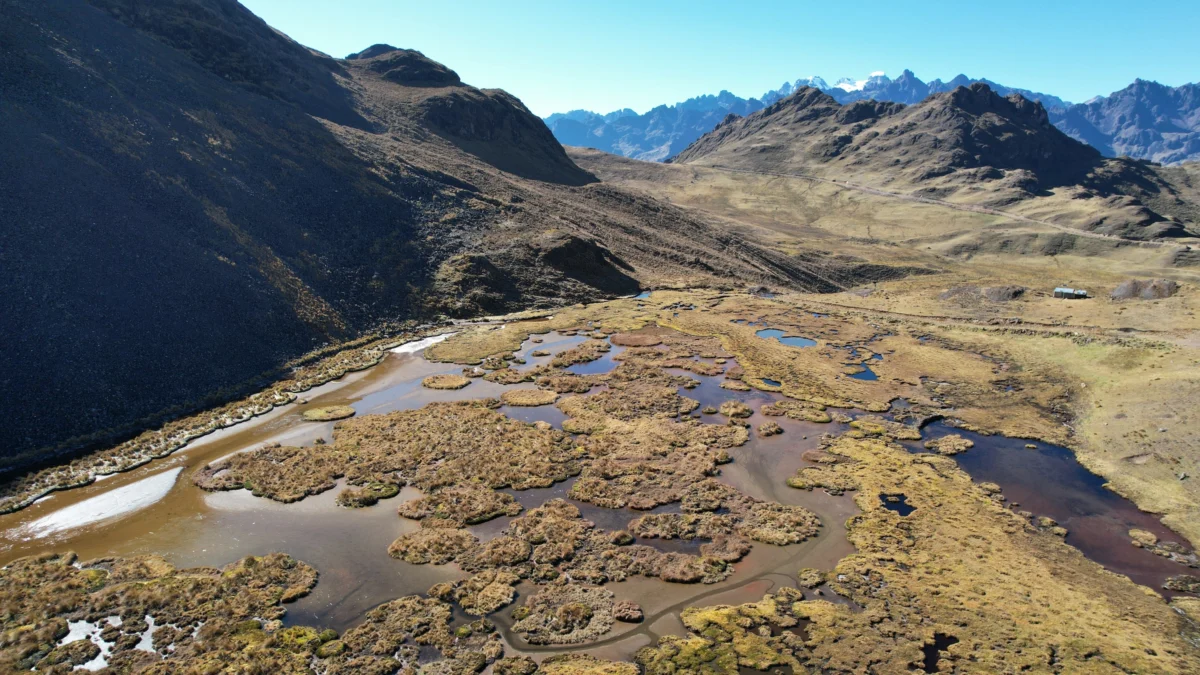
High in the rugged expanse of southeastern Peru, beneath the blinding white crown of the Quelccaya glacier, Donato Bermúdez tends to a flock of 500 alpacas, continuing a way of life that has sustained his community for generations. Reaching an elevation of 5,600 meters (18,400 feet), the Quelccaya ice cap is not merely a geographic landmark; it is the second-largest tropical ice sheet on Earth and a sacred anchor for indigenous tradition. For Bermúdez and the residents of Phinaya, the glacier is a living entity, the primal source of the freshwater that feeds local bofedales (wetlands) and sustains the delicate high-altitude ecosystem.
However, a looming shadow now threatens this ancient landscape. From the eastern flanks of the mountain to the windswept plains of Puno, long-delayed mining projects targeting critical transition minerals are gaining aggressive new momentum. Spearheaded by the federal administration of President Keiko Fujimori, who has made the promotion of eco-conscious mining a cornerstone of her economic recovery agenda, Peru is positioning itself as a global powerhouse for lithium and uranium extraction. While proponents argue these minerals are indispensable for the global clean energy transition and desperately needed to alleviate poverty in Peru’s third-poorest region, environmental scientists, indigenous leaders, and conservationists warn of an impending ecological catastrophe.
The Convergence of Climate Change and Industrial Extraction
The scientific community has tracked the alarming retreat of the Quelccaya glacier for decades. Lonnie Thompson, a distinguished paleoclimatologist at the Byrd Polar Research Center at Ohio State University, has studied the ice cap since 1974, when he utilized a solar-powered drill of his own design to extract the first ice cores from the glacier. According to data from Peru’s National Research Institute for Glaciers and Mountain Ecosystems (INAIGEM), Quelccaya holds roughly 2.43 billion cubic meters of water—enough to supply a city like Cusco for a century. Yet, over the last 40 years, the ice cap has lost an astonishing 58% of its mass due to global climate change.

Now, scientists and local activists fear that the industrial scale of upcoming mining operations will drastically accelerate this regression. Canadian mining firm American Lithium, operating through its Peruvian subsidiary Macusani Yellowcake, controls at least 174 mineral concessions spanning more than 1,090 square kilometers (421 square miles) in the department of Puno. These concessions are divided among three primary initiatives: the Macusani uranium project, which ranks among the largest uranium deposits globally; the Falchani lithium project, identified as the sixth-largest hard rock lithium deposit in the world; and the Quelcaya lithium exploration project.
The Falchani project, an open-pit mine spanning more than 2,800 hectares (6,900 acres) just a few kilometers east of the glacier, is scheduled to begin construction in 2028. Economic assessments published by American Lithium project an output of 25,000 tonnes of lithium carbonate annually, generating upwards of $6 billion over the mine’s operational lifetime. Despite these lucrative financial projections, environmental engineers and civil society watchdogs have raised serious red flags regarding the mechanical processes required for open-pit extraction in such a fragile alpine environment.
Environmental and Radiological Concerns
Bladimir Martínez, an environmental engineer working with Red Muqui—a Peruvian network monitoring extractive industries—emphasizes that the primary operational hazard stems from particulate matter. Open-pit mining requires extensive blasting, excavation, and crushing of hard rock, which inevitably generates massive quantities of metal-rich dust.
"We’re convinced that the dust generated here is going to fall on the glacier," Martínez explained during a video interview. "That means a darker surface albedo, a rapid rise in local surface temperatures, and drastically accelerated deglaciation."

Beyond the thermal implications of dust deposition, researchers are increasingly concerned about the geological composition of the deposits. While initial corporate filings sought to delineate the lithium and uranium sites as distinct entities, independent research paints a more complex picture. A 2024 study conducted by the Pontifical Catholic University of Peru detected trace uranium deposits embedded within the lithium-rich rock at Falchani, challenging earlier assertions by corporate leadership that the lithium extraction site was entirely free of radioactive material.
Martínez and other watchdogs warn that disturbing these geological formations could expose local wildlife, tourist populations, and indigenous pastoralists to radioactive particulate matter. The surrounding high-altitude ecosystem is extraordinarily biodiverse, home to 56 plant species, 76 bird species—including the glacier finch (Idiopsar speculifer), one of only two bird species known to nest directly on glacial ice—and critically endangered fauna such as the Andean mountain cat (Leopardus jacobita).
Chronology of a Legal and Political Battleground
The path to commercializing Puno’s mineral wealth has been fraught with legal friction, regulatory hurdles, and shifting political landscapes. A chronological overview highlights the escalating tension between industrial development and conservation:
- 2017: Exploration uncovers vast lithium reserves alongside known uranium deposits in the Macusani district, transforming the economic potential of the region.
- 2019: The Peruvian government invalidates 32 of Macusani Yellowcake’s 149 concessions due to missed administrative payments, triggering a protracted legal dispute.
- 2020: Macusani Yellowcake is formally sanctioned by Peru’s environmental assessment agency (OEFA) for conducting unapproved preliminary exploration activities.
- 2021: American Lithium acquires the concessions, inheriting the legal battles and local controversies surrounding the properties.
- August 2025: Peru’s Supreme Court officially dismisses the remaining legal challenges, confirming American Lithium’s absolute ownership of the 32 disputed claims and clearing the path for commercial development.
- June 2026: The Peruvian government formally declares lithium and uranium extraction to be of "national importance," prioritizing fast-tracked regulatory approvals.
- July 2026: More than 1,100 attendees gather for Peru’s First International Forum on Lithium and Uranium, where high-ranking officials champion the nation’s emergence as a key clean-energy player.
- August 2026: President Keiko Fujimori solidifies her administration’s commitment to the sector by signing a strategic regional minerals pact with Argentina, Chile, and Bolivia, reinforcing South America’s "lithium triangle" framework.
A Divided Community Facing an Uncertain Future

While environmental advocates and high-altitude rangers like Yolanda Quispe view the influx of heavy industry as an existential threat, the socio-economic realities on the ground present a deeply polarized picture. Quispe, a 44-year-old park ranger who has spent her life patrolling the shadows of Quelccaya, laments the erosion of local resistance.
"I’ve already talked with people from Puno," Quispe said. "I told them: You can’t just sell yourselves so easily, right? With climate change alone, the glacier is already retreating rapidly. Mining on top of that would be catastrophic."
Conversely, many residents living in close proximity to the concessions—particularly in the province of Carabaya—hold a starkly different perspective. Puno remains Peru’s third-poorest region, where traditional alpaca herding and subsistence agriculture often fail to provide a stable livelihood. Independent field studies conducted in the district of Corani indicate that a significant majority of local community members favor mining development. Deprived of consistent state support, infrastructure, or economic diversification, many residents view industrial mining as their sole viable pathway out of generational poverty, with prospective projects promising upwards of 5,000 direct and indirect jobs.
Regulatory Deficits and Governance Risks
Legal scholars and policy experts have voiced profound anxiety regarding the speed at which the federal government is attempting to greenlight these mega-projects. Roger Merino, an expert in environmental governance and professor at the Universidad del Pacífico, argues that the administration’s aggressive promotion of transition minerals risks overriding necessary safety protocols.

"The approach is clearly one of lowering social and environmental standards," Merino noted. "I’m worried that this kind of push will happen and projects will get approved without necessarily having clear standards, particularly given that Peru still lacks a comprehensive, robust legal framework specifically tailored to regulate the commercial mining of radioactive elements like uranium."
While corporate statements from American Lithium maintain that the company strictly adheres to international environmental, social, and governance (ESG) standards—and asserts that no endangered habitats overlap directly with its primary project footprints—civil society groups remain deeply skeptical. The absence of a unified, transparent regulatory framework for handling radioactive tailings leaves municipal authorities and downstream water users vulnerable to long-term contamination risks.
Preserving What Remains
As Peru navigates its dual role as a biodiversity hotspot and an emerging titan in the global energy transition, the fate of the Quelccaya glacier hangs in the balance. For scientists like Lonnie Thompson, industrial development near the ice cap represents an irreversible tipping point.
"When I look at Quelccaya, it’s like going to see a terminal cancer patient," Thompson reflected. "I document the change taking place, but I can’t stop the change."

Advocating for drastic legislative intervention, Thompson and other conservationists argue that designating the entire glacial expanse as a national park is the only viable mechanism to legally shield the ice cap from industrial encroachment. Doing so, experts suggest, would buy vulnerable downstream communities precious time to adapt to an inevitable future of diminished water resources—even if it cannot ultimately halt the glacial retreat dictated by a warming planet.
With commercial construction slated for 2028, the mineral-rich soils beneath Quelccaya have transformed into a high-stakes battleground. The outcome will test not only Peru’s regulatory capacity and commitment to environmental stewardship, but also its ability to balance the global demand for green energy against the local imperative of ecological and cultural survival.