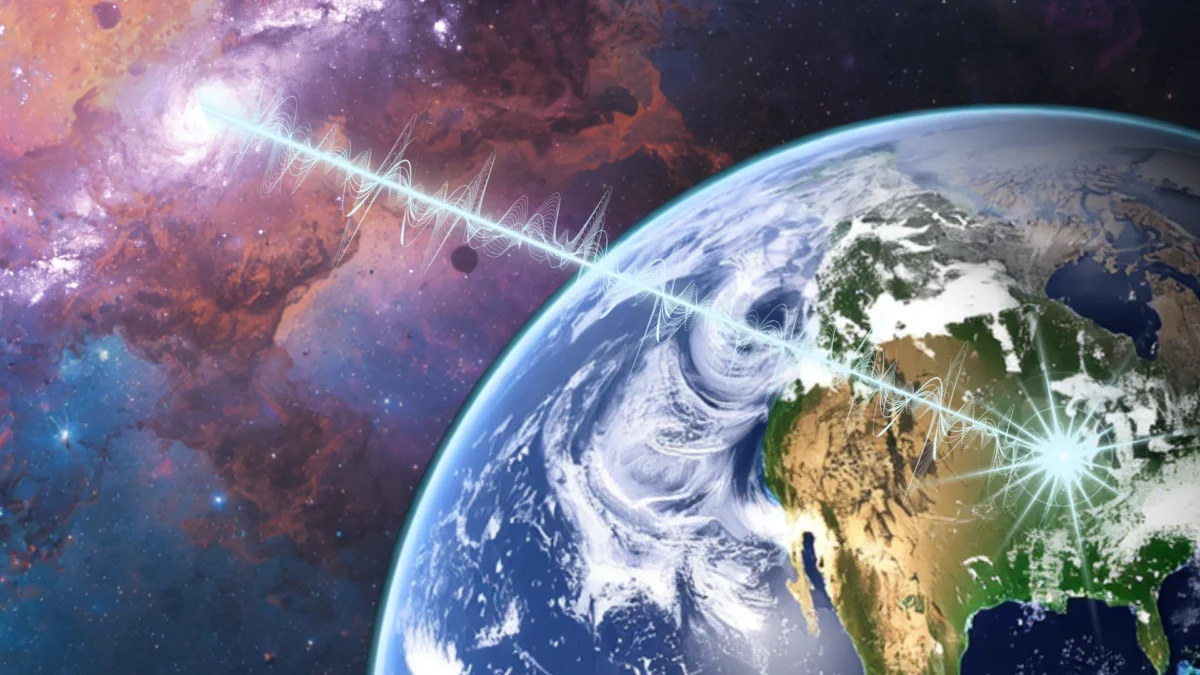
Fast radio bursts, or FRBs, represent some of the most enigmatic and energetic phenomena in the known universe, and now researchers are transforming these millisecond-long cosmic screams into an immersive musical experience. For decades, these bursts of radio energy have remained locked within the domain of radio telescopes and complex data arrays, existing as invisible data points rather than sensory experiences. However, a groundbreaking collaboration between composer Andrew Melchior and MIT physicist Kiyoshi Masui has bridged this gap, sonifying years of data captured by the Canadian Hydrogen Intensity Mapping Experiment (CHIME) to create a sonic installation titled "The Logos," currently hosted at Oulu Cathedral in Finland.
The Anatomy of a Cosmic Enigma
To understand the magnitude of this artistic endeavor, one must first grasp the sheer intensity of the source material. An FRB is a transient radio pulse that lasts for only a few thousandths of a second. Despite their fleeting nature, these bursts pack an incredible punch, releasing as much energy in a single millisecond as the Sun radiates over the course of three full days. When these signals arrive at Earth, they appear as a sharp, intense spike in radio frequency data, yet they remain entirely imperceptible to human senses without the intervention of high-end radio astronomy hardware.
Since the inaugural discovery of an FRB in 2007—often referred to as the "Lorimer Burst"—the astronomical community has been engaged in a global hunt to determine their origins. Initially, the rarity of these events made systematic study difficult. That shifted dramatically with the deployment of CHIME. Located in British Columbia, Canada, CHIME is not a traditional dish telescope; instead, it is a massive radio interferometer consisting of four 100-meter-long cylindrical reflectors. By utilizing a supercomputer to correlate signals across its wide field of view, CHIME has revolutionized the field. Between 2018 and 2023, the observatory documented 4,539 distinct bursts originating from 3,641 unique cosmic sources, effectively moving the study of FRBs from the realm of "accidental discovery" to "statistical science."
From Raw Data to Auditory Experience
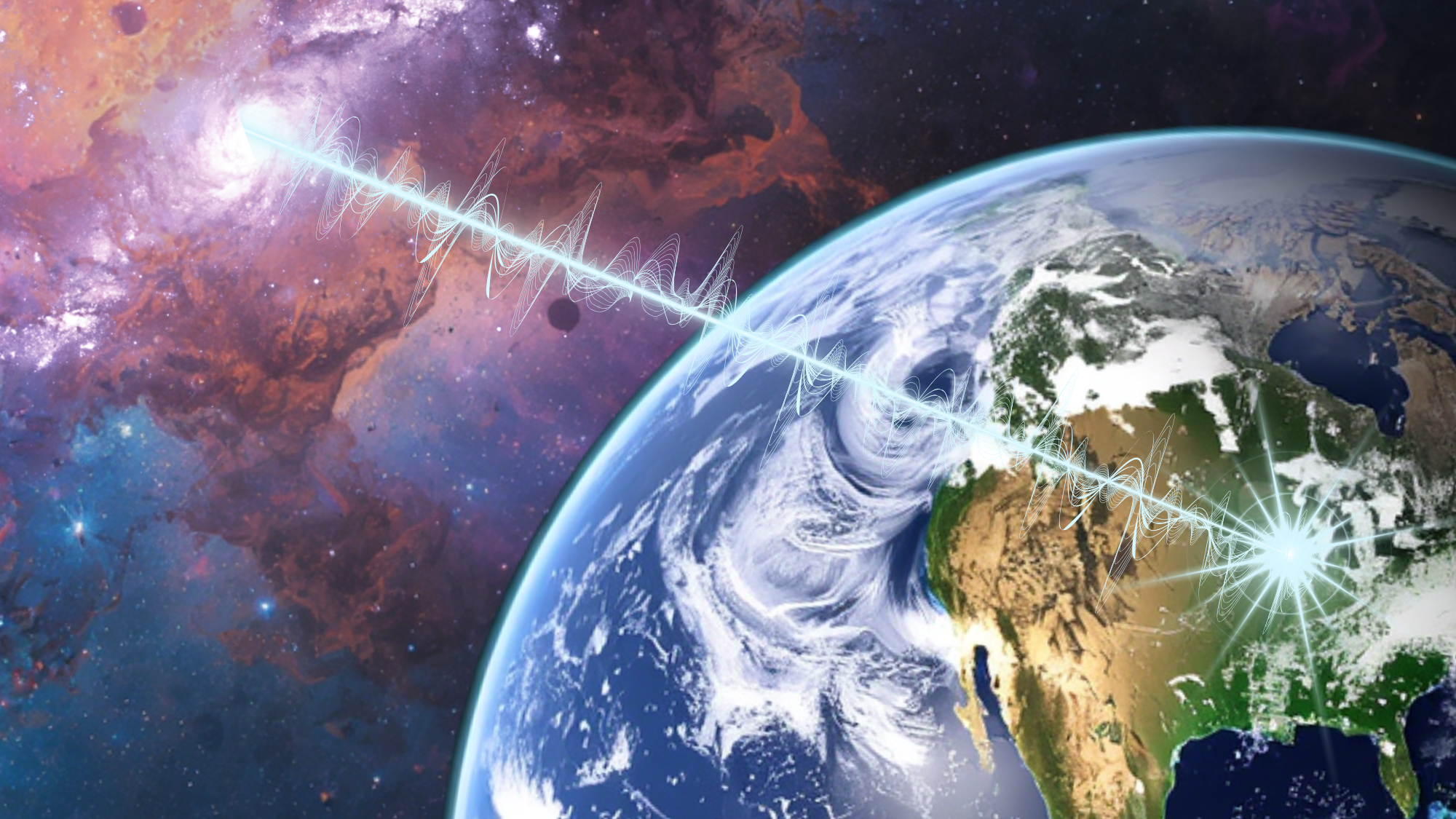
The translation of these signals into sound—a process known as sonification—requires more than simple data conversion. Andrew Melchior and Professor Kiyoshi Masui spent months mapping the structural characteristics of the FRBs to acoustic properties. The raw data includes a phenomenon known as dispersion: as a burst travels through the diffuse, ionized gas between galaxies, the lower frequencies of the radio signal are delayed compared to the higher frequencies.
When translated, this creates a distinct, downward "chirp" or "whoosh" sound. By mapping these physical characteristics to musical pitches, Melchior has created a soundscape where 12 loudspeakers positioned throughout the Oulu Cathedral recreate the acoustic profile of the universe. The installation is not merely a collection of random noises; it is a chronologically mapped representation of the cosmos. The signals being played range from relatively "local" bursts, dating back roughly 50 million years, to ancient pulses that originated 8 to 9 billion years ago, long before the Earth was formed.
A Chronology of Discovery
The journey toward understanding FRBs has been marked by several key milestones that have gradually refined our view of the high-energy universe:
- 2007: The first FRB is discovered in archived data from the Parkes Observatory in Australia.
- 2012: Astronomers discover the first "repeater," an FRB that fires multiple times from the same location, suggesting that at least some of these events are not cataclysmic one-time destructions of a stellar body.
- 2018–2019: The CHIME telescope begins full-scale operations, leading to a massive influx of new detections and the identification of periodic behaviors in some repeating sources.
- 2020: Astronomers confirm the first detection of an FRB within our own galaxy, tracing it to a magnetar—a highly magnetized, rotating neutron star—strengthening the case for neutron stars as the primary culprits.
- 2024: The James Webb Space Telescope (JWST) identifies the host galaxy of the most distant FRB detected to date, revealing it to be a small, young, star-forming dwarf galaxy.
Implications for Modern Astrophysics
The recent discovery by the JWST regarding the host galaxy of the most distant FRB has introduced a significant complication to prevailing theories. Previously, many scientists hypothesized that FRBs were the result of binary neutron star mergers—events that typically occur in older, more stable galactic environments after billions of years of orbital decay. However, finding a powerful FRB in a young, star-forming dwarf galaxy suggests that the source must be much younger.
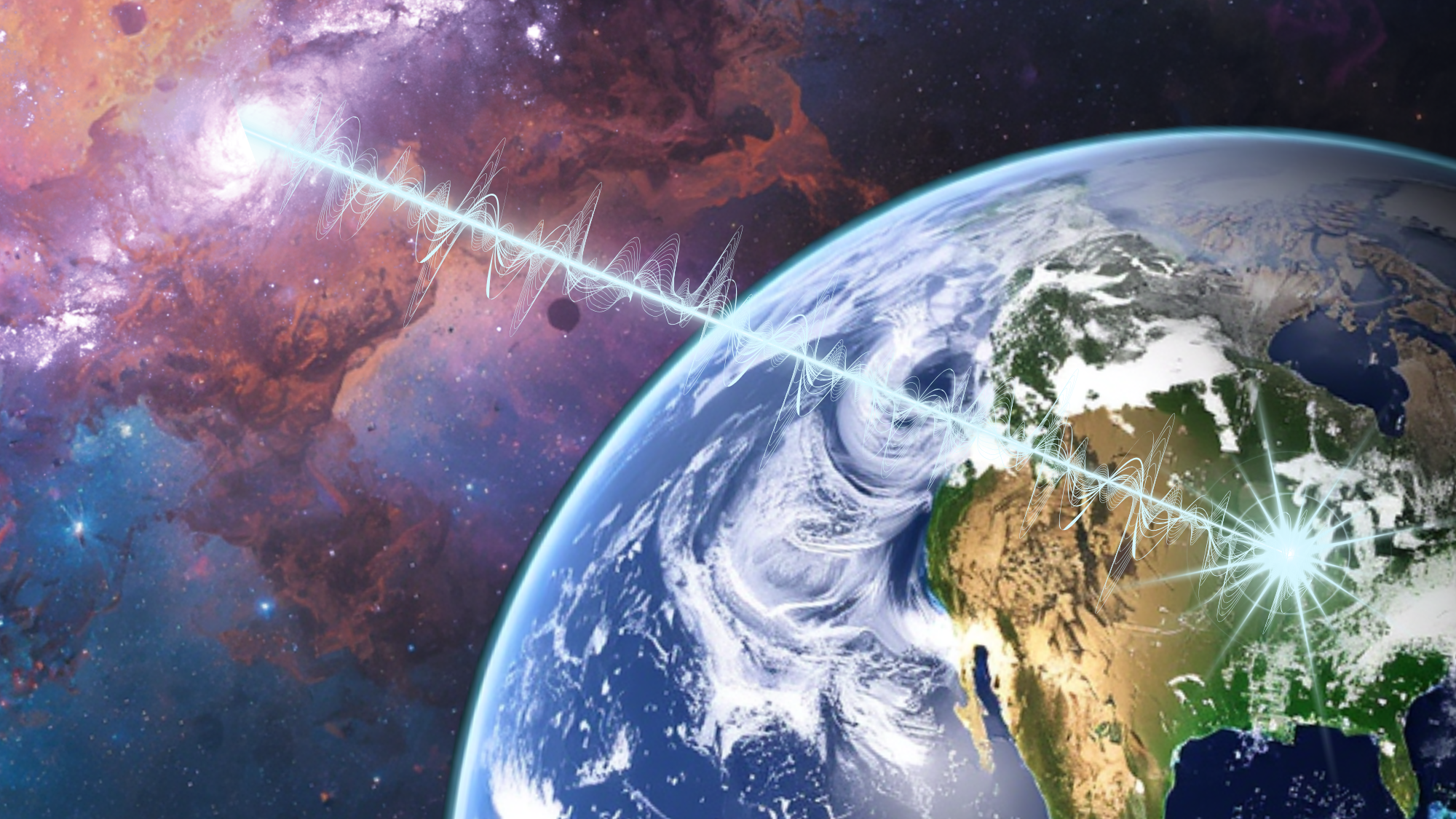
This observation strongly supports the "magnetar birth" hypothesis. In this model, a massive star undergoes a supernova explosion, leaving behind a young, hyper-magnetic neutron star. This object, during its infancy, is capable of emitting the intense, short-lived radio bursts observed by CHIME. As the magnetar ages and its magnetic field stabilizes, the frequency and intensity of these bursts likely subside. This shift in understanding underscores the necessity of observing FRBs across different cosmic time scales to piece together the life cycle of the most extreme objects in the universe.
Public Engagement and Scientific Outreach
The installation at Oulu Cathedral serves as a unique bridge between hard science and public engagement. On November 21, the project will reach a crescendo with a live performance featuring 30 singers who will interact with the sonified bursts. By having human voices "sing back" to the signals, the project creates a dialogue between our terrestrial existence and the ancient, high-energy events occurring in distant reaches of the cosmos.
Professor Kiyoshi Masui noted in a statement that the installation aims to reveal the physical reality of these signals. "It should feel rich and layered, while also revealing something real about how these signals travel across billions of years of cosmic space before reaching Earth," Masui explained. The snare-like pops and rhythmic thrums heard in the cathedral are not just artistic choices; they are accurate representations of the dispersion and intensity of the bursts themselves.
The Future of Radio Astronomy
The success of the CHIME project and the subsequent sonification efforts highlight a growing trend in modern astrophysics: the integration of complex data processing with human-centric interpretation. As telescopes like the Square Kilometre Array (SKA) come online in the coming years, the volume of data regarding transient radio events is expected to increase by several orders of magnitude.
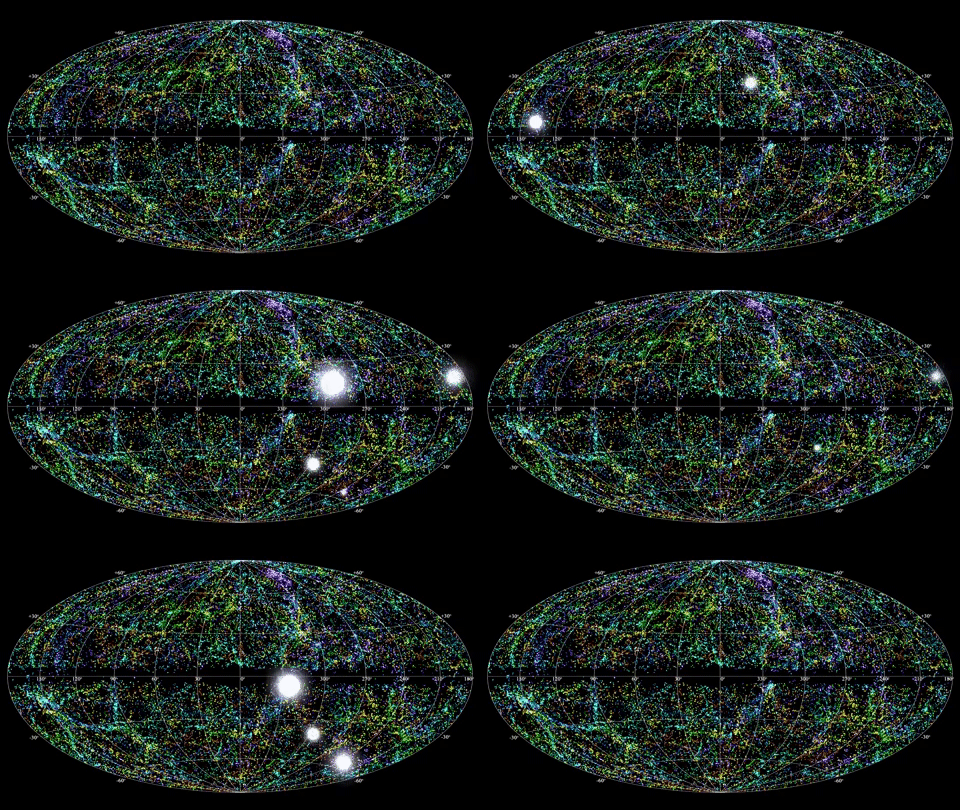
The ability to process this information through sonification could provide researchers with an additional tool for pattern recognition. Just as human ears are finely tuned to detect rhythm, cadence, and subtle shifts in frequency, audio-based data analysis may eventually assist astronomers in identifying nuances in repeating bursts that might otherwise be overlooked by traditional algorithmic filters.
The "Logos" installation stands as a testament to the fact that the universe is not just a place to be seen through a telescope, but a vast, ongoing process that can be heard. By turning the most extreme events in the cosmos into a symphony, researchers are ensuring that the mystery of fast radio bursts is not just confined to academic journals, but is accessible to the public, fostering a deeper appreciation for the volatile and ever-changing nature of the universe we inhabit. As we continue to refine our instruments and our theories, the sounds of these distant cataclysms will likely continue to guide our search for answers, one rhythmic pulse at a time.