
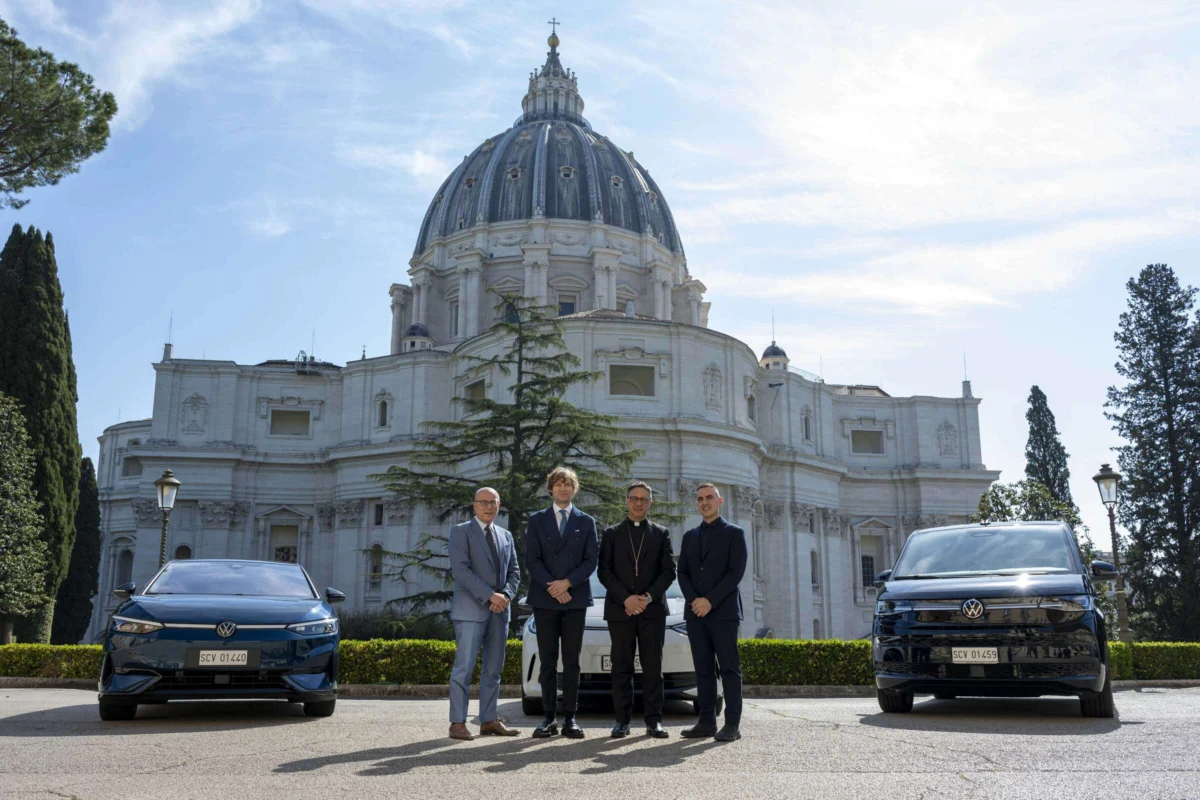
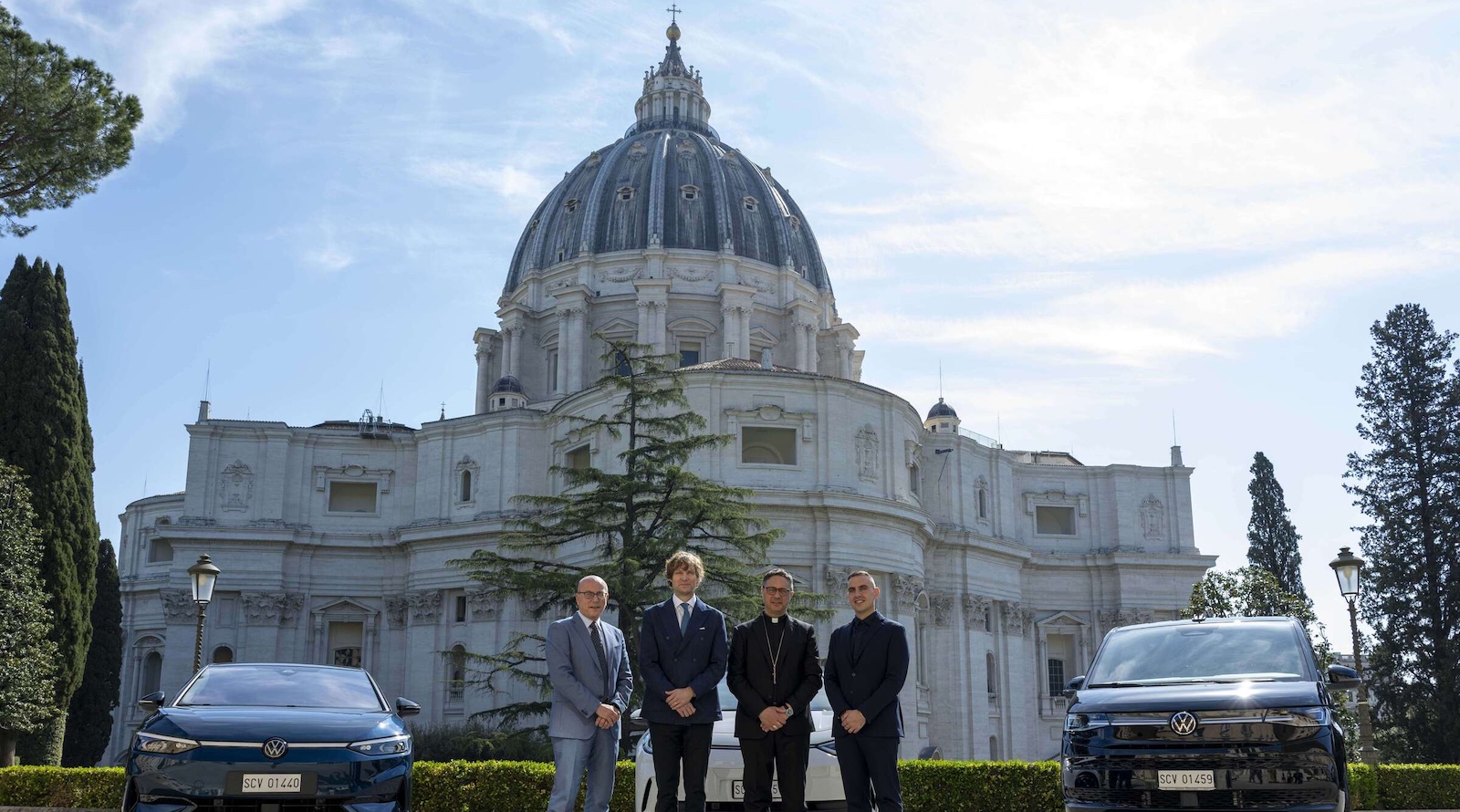
The Vatican City State has officially designated Elli, the energy and charging subsidiary of the Volkswagen Group, as its primary mobility service partner to facilitate the comprehensive electrification of its vehicle fleet. This strategic collaboration marks a significant milestone in the Holy See’s "Ecological Conversion 2030" program, an ambitious initiative aimed at replacing the city-state’s internal combustion engine vehicles with a carbon-neutral fleet. Under the new agreement, the Vatican will utilize Elli’s sophisticated digital fleet management platform and universal charging cards to streamline the operation, monitoring, and energy consumption of its growing electric vehicle (EV) inventory.
This partnership is not merely a logistical arrangement but a core component of the Vatican’s broader environmental strategy. By integrating Elli’s technology, the Governorate of the Vatican City State gains access to a robust ecosystem that includes a digital management interface, "Elli Fleet Charging," and a physical charging network that spans the European continent. The move ensures that the Vatican’s diplomatic and service missions can maintain operational efficiency while adhering to the strict sustainability mandates set forth by the pontificate.
A Vision for Carbon Neutrality by 2030
The transition to electric mobility within the world’s smallest sovereign state is part of a decade-long commitment to environmental stewardship. In 2023, the Vatican announced its intention to achieve net-zero emissions, a goal rooted in the teachings of Pope Francis’s 2015 encyclical, Laudato si’ (On Care for Our Common Home), and his subsequent 2023 apostolic exhortation, Laudate Deum. These documents call for urgent global action to combat climate change and transition away from fossil fuels.
The roadmap to 2030 involves a phased replacement of all state-owned service vehicles. The partnership with the Volkswagen Group began in earnest in 2024, when the Vatican took delivery of nearly 40 fully electric vehicles from the Volkswagen ID. family, including the ID.3, ID.4, and ID.5 models. These vehicles are currently being used for various administrative and security functions within and around the city-state. Looking ahead to 2025, the fleet expansion will continue with the introduction of specialized electric utility vehicles designed for maintenance, transport, and logistics, ensuring that every facet of the Vatican’s mobility is addressed through sustainable technology.
The Role of Elli in Modernizing Fleet Operations
As the mobility service provider, Elli (Volkswagen Group Charging GmbH) provides the technical infrastructure necessary to manage an electric fleet at scale. The "Elli Fleet Charging" platform serves as a centralized hub for administrators, allowing them to oversee every aspect of the charging process. This includes the digital assignment of charging cards to specific drivers or departments, the real-time tracking of charging sessions, and the automated collation of billing data.
For an organization like the Vatican, which operates both within its 44-hectare territory and across international borders for diplomatic purposes, the ability to manage costs and energy consumption centrally is vital. The Elli charging card provides Vatican employees and officials with access to one of the largest charging networks in Europe, encompassing more than one million public charging points. This network includes high-speed IONITY chargers, as well as various AC and DC stations, providing the flexibility needed for long-distance travel beyond the borders of Rome.
The financial transparency offered by the Elli platform is a key benefit for the Vatican administration. The system provides clear, predictable tariffs, allowing the Governorate to forecast energy expenditures accurately and reduce the administrative burden of manual expense reporting. By digitizing these processes, the Vatican is moving away from antiquated management styles and adopting a model of operational efficiency that reflects its commitment to modern, responsible governance.
Bridging the Digital Gap in Fleet Management
The partnership highlights a critical challenge facing many organizations today: the "digital gap" in fleet management. While the delivery of electric vehicles is a visible sign of progress, the underlying infrastructure required to manage those vehicles often lags behind. According to an Elli Mobility survey conducted in Germany in August 2025, a significant portion of the corporate sector is still struggling to modernize its management tools.
The survey revealed that 26 percent of companies still rely on basic office tools, such as manual spreadsheets, to manage their vehicle fleets. Furthermore, another 25 percent of organizations reported using no dedicated digital tools at all. This lack of digitization leads to missed opportunities for cost savings, inefficient energy use, and a general lack of transparency in operational CO2 emissions.
Giovanni Palazzo, CEO of Elli, emphasized that the Vatican’s approach serves as a blueprint for other institutions. "Fleet electrification is accelerating across Europe, and institutions are looking for reliable partners to manage this transition," Palazzo stated. "The Vatican illustrates that the real work of electrification begins after the vehicles are delivered. Our role is to translate the ambition of sustainable mobility into reliable day-to-day operations. This enables organizations to operate electric fleets efficiently across borders and to fully realize the economic benefits of electrification."
Corporate Fleets as a Driver of Change
The Vatican’s shift toward electric mobility reflects a broader trend in the European automotive market. Corporate and institutional fleets currently account for approximately two-thirds of all new vehicle registrations in Europe. Because fleet vehicles typically cover higher annual mileages than private cars, their electrification represents one of the most effective levers for reducing overall transport emissions.
However, the transition for large-scale fleets is complex. It requires more than just swapping an internal combustion engine for a battery; it necessitates a complete overhaul of how energy is sourced, consumed, and accounted for. Elli Mobility, a subsidiary dedicated to fleet and mobility services, has positioned itself as a specialist in managing this complexity. With over 20,000 companies across Europe already utilizing its solutions, Elli is at the forefront of the "mobility transition," helping organizations integrate electric vehicles into existing structures while managing the nuances of mixed fleets during the transitional period.
Technical Specifications and Infrastructure Integration
The integration of Elli’s services into the Vatican’s operations involves several layers of technical support:
- Public Charging Access: The Vatican’s fleet drivers can utilize the Elli charging card at over 1,000,000 points. This includes ultra-fast charging stations that can replenish an ID.4’s battery from 10% to 80% in approximately 30 minutes, which is essential for maintaining the readiness of security and diplomatic vehicles.
- Software Integration: The Elli Fleet Charging software allows the Vatican’s fleet managers to export data directly into accounting systems. This ensures that every kilowatt-hour of electricity consumed is tracked back to the specific vehicle and purpose, providing a level of data granularity that was previously impossible with fossil-fuel-powered vehicles.
- Sustainability Reporting: The platform provides automated reports on CO2 savings, which will assist the Vatican in documenting its progress toward the 2030 climate-neutral goal. This data is crucial for the Holy See’s participation in international climate frameworks and its role as a moral leader in environmental issues.
Implications for Global Governance and Urban Mobility
The Vatican’s decision to partner with a major automotive group like Volkswagen and its subsidiary Elli carries significant symbolic weight. As a sovereign entity that commands global attention, the Vatican’s successful transition to a digitally managed electric fleet provides a powerful case study for other small states, municipalities, and large organizations.
The move also underscores the feasibility of urban electrification. Given the Vatican’s unique geography—a densely populated urban enclave—the transition to EVs helps reduce local air pollution and noise, directly improving the quality of life for residents and the millions of pilgrims who visit annually. The deployment of Volkswagen’s ID. family vehicles, known for their zero-tailpipe emissions and quiet operation, aligns perfectly with the Vatican’s desire to preserve its historical and spiritual environment.
Conclusion: A Model for the Future
The collaboration between the Vatican and Elli represents a synergy between environmental ambition and technological capability. By choosing a partner that offers both the hardware (the vehicles through Volkswagen) and the software (the management platform through Elli), the Vatican is ensuring that its journey toward 2030 is grounded in operational reality.
As the 2030 deadline approaches, the Vatican is expected to continue its aggressive pursuit of renewable energy solutions. Beyond the fleet, the city-state has already installed extensive solar arrays and is exploring further ways to decarbonize its infrastructure. The partnership with Elli is a cornerstone of this vision, proving that even the most tradition-bound institutions can lead the charge into a digital, sustainable future. By the time the final internal combustion engine is retired from the Vatican’s service in 2030, the state will have established a comprehensive, data-driven mobility system that serves as a beacon for the global community.









Leave a Reply