
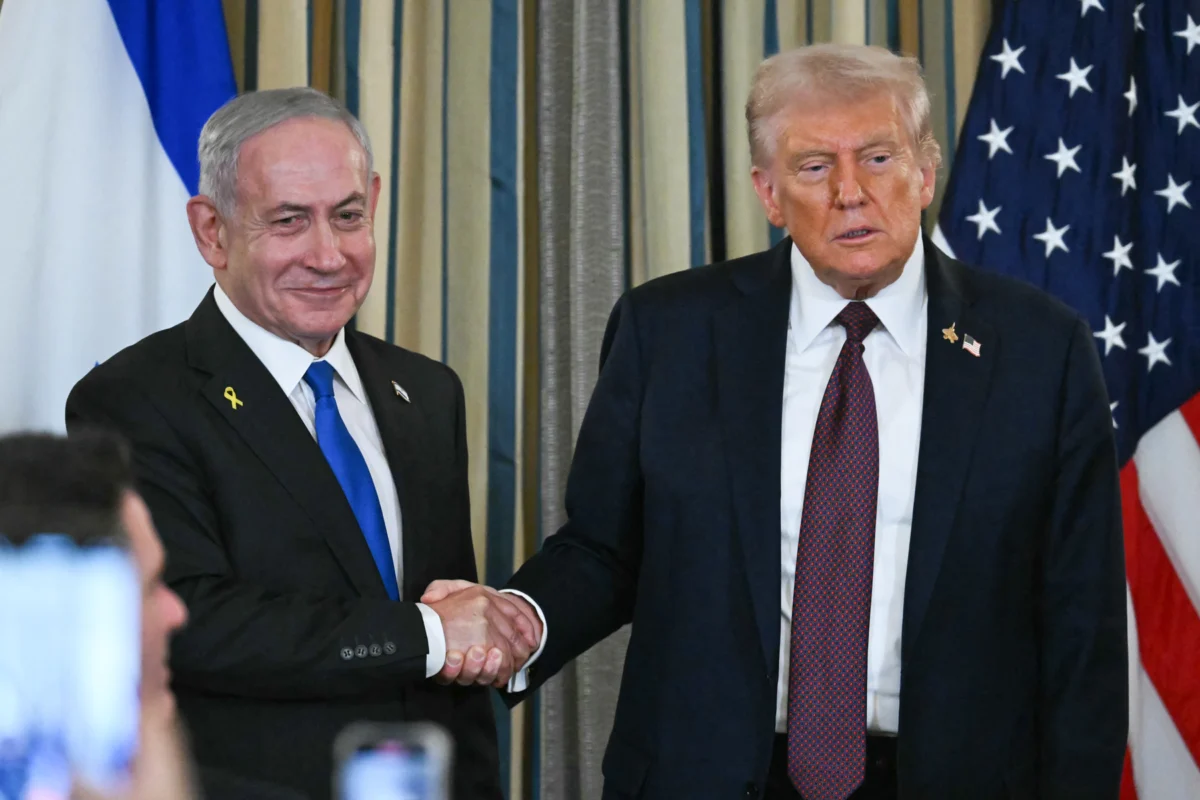
The United States government is preparing a massive $2.8 billion arms transfer to Israel, structured technically as a sale but funded entirely through American taxpayer dollars. According to reports from national security journalists, the Trump administration has notified congressional committees regarding the impending transaction, which will dispatch more than 40,000 heavy-payload munitions to the Middle Eastern ally.
Rather than a conventional commercial arms agreement where a foreign buyer utilizes its own financial resources to purchase equipment from American defense contractors, this transaction relies on the Foreign Military Financing (FMF) program. Through this mechanism, the U.S. Treasury essentially provides Israel with the financial grants necessary to acquire the weapons directly from American stockpiles and manufacturers. This development occurs while regional conflicts involving Iran, proxy groups, and ongoing military campaigns in Gaza and Lebanon continue to strain international diplomacy and heighten humanitarian concerns regarding civilian casualties.
The Scope and Mechanics of Foreign Military Financing
The reliance on Foreign Military Financing shifts the economic and political dynamics of traditional international arms deals. In a standard Foreign Military Sales (FMS) framework, a foreign government allocates its own sovereign capital to purchase military hardware, generating revenue that loops back into the domestic U.S. economy, supporting manufacturing jobs and defense sector profitability.
Under the FMF program utilized for this $2.8 billion package, however, the financial burden rests squarely on the U.S. taxpayer. Washington allocates financial assistance to foreign partners, who then use those exact funds to procure hardware manufactured by American defense contractors. While defense manufacturing corporations reap the financial benefits of the production contracts, the initial outlay is subsidized by the federal budget.
This financial arrangement has increasingly become a focal point of domestic political debate. The decision to bankroll tens of thousands of munitions for a foreign military partner occurs against a backdrop of shifting public opinion regarding U.S. foreign intervention and military assistance abroad.
Public Opinion and Domestic Political Landscape
Polling data gathered over recent years demonstrates a growing divergence between official U.S. foreign policy and the sentiments of the American electorate. Multiple independent and academic surveys indicate that a significant portion of the U.S. population favors a reevaluation or outright halt of unconditional military aid to Israel.
Data from the Center for Economic and Policy Research (CEPR) published in 2024 revealed that a majority—approximately 52 percent—of surveyed Americans believed the federal government should suspend or halt weapons shipments to Israel. Subsequent polling conducted by major media organizations, including a late-year New York Times/Siena College poll, reaffirmed that a majority of respondents opposed extending additional economic or military aid packages to the Israeli government amid ongoing regional hostilities. Furthermore, a Quinnipiac University poll indicated that nearly half of all registered U.S. voters felt that American foreign policy had become overly supportive of Israel’s military objectives as a whole.
Despite these domestic polling trends, the legislative framework governing foreign arms sales often limits the ability of elected officials to successfully block such transfers. Historically, executive branch administrations have utilized emergency authorities or streamlined notification processes to expedite arms deliveries, reducing the window for congressional oversight and legislative pushback. When questioned regarding the oversight process for the $2.8 billion package, a senior administration official maintained that all foreign arms sales adhere to established legal procedures, while declining to comment specifically on pending transactions.
The Arsenal: Profile of the MK-84 and Bunker Buster Munitions
The technical specifications of the ordnance included in the $2.8 billion package highlight the immense destructive capacity of the shipment. According to defense analysts and national security reports, the acquisition centers on more than 40,000 bombs weighing 2,000 pounds or more.
A substantial portion of this inventory consists of MK-84 general-purpose bombs and BLU-117 variants. The MK-84 is among the largest unguided, conventional "dumb" bombs in the active inventory of the United States military. Weighing roughly 2,000 pounds—with approximately half of that weight consisting of high explosives—the MK-84 possesses the capability to form massive craters, destroy reinforced structures, and project lethal fragment shrapnel across hundreds of yards.
Although traditionally classified as unguided munitions, these weapons can be integrated with guidance kits, such as Joint Direct Attack Munitions (JDAMs), converting them into precision-targeted weapons. In addition to standard general-purpose variations, the inventory reportedly includes specialized bunker-buster munitions equipped with heavy "penetrator" warheads designed to burrow deep into reinforced concrete and subterranean installations before detonating.
The deployment of 2,000-pound munitions in densely populated urban environments has been a subject of intense international scrutiny and humanitarian concern. Human rights organizations and military analysts have repeatedly criticized the utilization of such heavy ordnance in crowded civilian areas throughout campaigns in Gaza and Lebanon, citing the disproportionate risk of collateral damage and high civilian casualty rates.
Historical Context and Precedents in U.S.-Israel Military Relations
The inclusion of MK-84 bombs in this major military package highlights a contentious chapter in recent bilateral relations between Washington and Jerusalem. During the height of the intensive military operations in Gaza, the administration of former President Joe Biden briefly instituted a policy restriction concerning heavy-payload munitions.
Prompted by mounting international pressure and humanitarian concerns over the destruction in densely populated urban centers, the Biden administration temporarily paused the shipment of a specific batch of 2,000-pound MK-84 bombs to Israel. That temporary prohibition marked a rare instance of Washington leveraging its military supply chain to influence tactical considerations on the ground.
However, following political transitions and the return of the Trump administration to the White House, that restriction was swiftly reversed. The current $2.8 billion package not only restores the flow of these heavy munitions but scales up the volume significantly, ensuring a continuous and heavily reinforced supply line for the Israeli military.
Strategic Implications and Strain on U.S. Military Stockpiles
The timing of this multi-billion-dollar munitions transfer also raises questions regarding the sustainability of American military stockpiles. In recent years, the United States has engaged in direct and indirect military operations across the Middle East, including active engagements against Iranian-backed entities and regional conflict zones.
These operations have necessitated the continuous expenditure of high-value strategic resources, ranging from advanced interceptor rockets and missile defense systems to long-range precision missiles. While unguided general-purpose bombs like the MK-84 differ fundamentally from specialized, high-cost interceptors utilized in aerial defense, the sheer volume of equipment leaving U.S. military inventories contributes to a broader strategic challenge: maintaining domestic readiness while simultaneously supplying allied nations engaged in simultaneous multi-front conflicts.
Furthermore, the protracted nature of military campaigns involving Israel, coupled with ongoing regional tensions involving Iran, suggests that consumption rates for both basic ordnance and advanced precision-guided munitions will remain elevated. By bankrolling the acquisition of over 40,000 heavy bombs through Foreign Military Financing, the U.S. government has effectively insulated its regional ally from near-term logistical shortages.
Broader geopolitical analysis indicates that this transfer solidifies Washington’s commitment to maintaining Israel’s qualitative military edge in the region, regardless of domestic political friction or international criticism. As congressional committees review the notification parameters of the $2.8 billion agreement, the debate over the ethical, financial, and strategic wisdom of taxpayer-funded arms transfers continues to occupy a central space in American foreign policy discourse. With the transaction moving forward through executive channels, the incoming shipments ensure that the Israeli armed forces will maintain an uninterrupted supply of heavy conventional firepower for the foreseeable future.









Leave a Reply