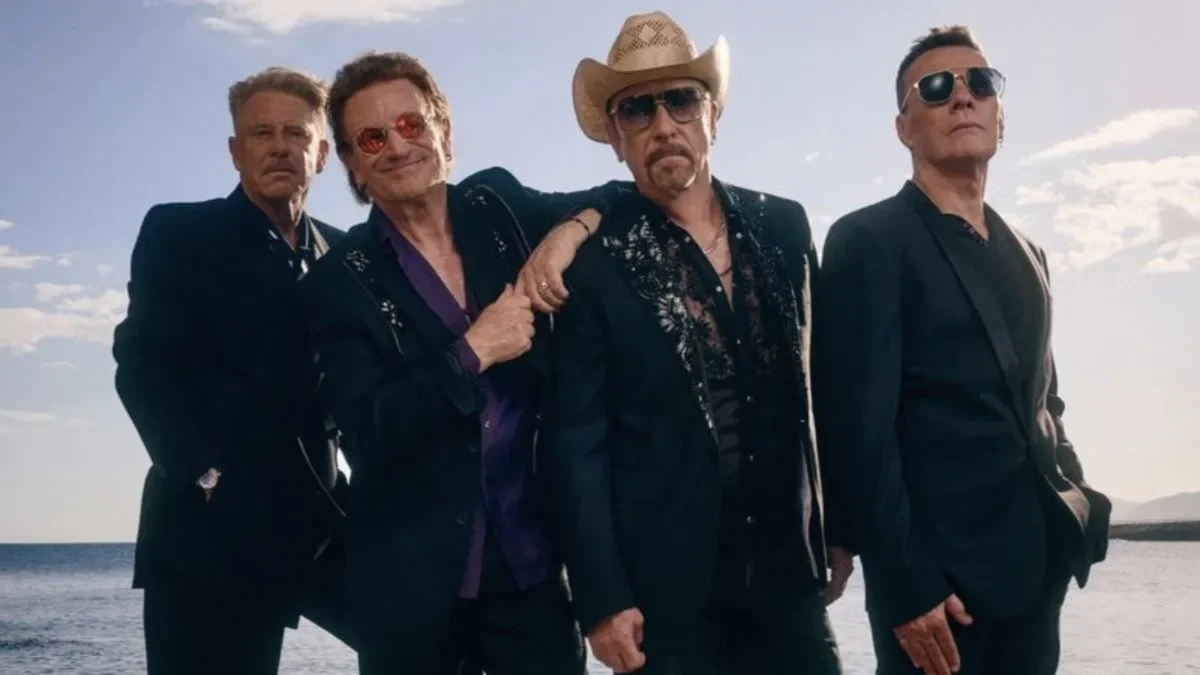
The intersection of high-stakes live entertainment, corporate ownership, and geopolitical discourse reached a boiling point in late 2026, leading to a public intervention by legendary rock band U2. The controversy, which saw rapper Macklemore removed from Ed Sheeran’s global stadium tour, has prompted a broader debate regarding the boundaries of free speech within privately owned sports venues. In a recent interview with the BBC, members of U2, including guitarist The Edge and drummer Larry Mullen Jr., provided a nuanced perspective on the incident, advocating for artistic autonomy while addressing the delicate position of their peer, Ed Sheeran.
The Chronology of the Controversy
The friction began in September 2026, when Macklemore, serving as a support act for Sheeran’s tour, utilized his platform during a live performance to express support for Palestine, specifically uttering the phrase "Free Palestine." The reaction from the commercial side of the music industry was swift and punitive.
Several prominent stadium operators, most notably a coalition led by New England Patriots owner Robert Kraft, took immediate objection to the rhetoric. Reports indicated that these venue owners threatened to block Macklemore from performing at future dates on the tour if his political statements continued. Faced with the ultimatum of either canceling performances or dropping his opening act, the promoter made the decision to remove Macklemore from the bill.
The fallout was immediate. Not only did the decision spark a wave of criticism from civil liberties advocates, but it also triggered a internal crisis within the tour’s production. Multiple supporting acts and several members of Sheeran’s own backing band resigned from the tour in a show of solidarity with the Seattle-based rapper. Sheeran, for his part, later clarified that the removal was a directive from the promoters rather than a personal choice, placing him in the center of a complex professional dilemma.
U2’s Position: A Defense of Artistic Expression
In their recent commentary, U2 members sought to clarify the distinction between the actions of the venue owners and the intentions of the artists involved. The Edge emphasized that the band maintains full support for Macklemore’s right to utilize his platform, regardless of the controversy it invites.
"We totally support Macklemore’s right as an artist to say what he wanted to say," The Edge told the BBC. However, he was quick to deflect criticism away from Sheeran, noting, "I don’t think Ed should be vilified. He was in a difficult situation."
The band’s support extended to those who left the tour, with The Edge commending the young artists who prioritized their convictions over their employment contracts. "They were sticking up for an artist’s right to free speech, and I think that’s the issue above anything else," he noted.
Larry Mullen Jr. offered a more biting critique of the power dynamics at play, targeting the influence exerted by billionaire stadium owners and promoters. As U2 prepares for their own upcoming world tour—which includes a high-profile performance at SoFi Stadium in Los Angeles—Mullen Jr. asserted that the band would not accept such constraints.
"Artists have a right to choose whether they want to be politically active or not. It’s a human right," Mullen Jr. stated. "But we, as a band, will fight for the right to speak your mind, as long as it doesn’t incite violence. Even if we disagree with it or don’t like it, nobody—no billionaire, no promoter, no owner—has the right to censor anybody. And they will definitely not be censoring us, ever."
Contextualizing the Geopolitical Stance
The Edge further clarified U2’s own position regarding the ongoing humanitarian crisis in Gaza, noting that while the band may not align with every faction of the pro-Palestine movement, they stand by the humanitarian core of the message. "We absolutely agree that what’s going on is unconscionable and that a child’s life is equally valuable, no matter what their background," he stated.
This nuance is critical, as U2 has a long history of blending activism with their music. However, their collaboration with Ed Sheeran on the track "Yours Eternally"—featured on their February 2026 EP Days of Ash—highlights the internal tension between artistic expression and political optics. Reports suggest that during the recording process, Sheeran expressed hesitation about participating in a song that could be perceived as overtly political, highlighting the pressure artists feel to remain "neutral" in the current climate to maintain corporate and sponsor relations.
Industry Implications: The Corporate Control of Public Spaces
The incident involving Macklemore and the subsequent response from stadium owners represents a growing trend in the music industry: the "corporatization of the stage." As stadium tours become increasingly expensive to mount, they rely heavily on partnerships with private entities, sports franchises, and massive venue conglomerates. These entities often carry "morality clauses" or operational guidelines that allow them to exert significant control over what is said or displayed on their premises.
Legal experts note that while the First Amendment protects citizens from government censorship, it does not apply to private entities or property owners. Therefore, when a stadium is owned by a private corporation or an individual, the owner has the legal right to dictate the terms of use. This creates a challenging landscape for touring musicians who must balance their artistic integrity against the logistical reality of needing access to high-capacity, privately owned venues.
The backlash against the removal of Macklemore suggests that the public, and indeed other major artists, are becoming increasingly uncomfortable with this level of corporate oversight. If industry giants like U2 continue to take a firm stand against venue-imposed censorship, it may force a renegotiation of how these contracts are structured.
Future Outlook for U2 and the Industry
As U2 prepares to release their 16th studio album, Carnaval De Luz, on November 16, 2026, the band is positioning itself as a bastion of creative freedom. Their upcoming "The Greatest Show on Earth" world tour, which kicks off in February 2027, will be a bellwether for how legacy acts navigate an increasingly polarized political environment.
The band’s outspoken nature has not diminished their stature or their ability to command massive venues, but it does signal a potential shift in the relationship between heritage acts and the corporate structures that house them. By explicitly stating that they will not be censored, U2 is setting a standard for their peers and challenging the status quo established by the recent Sheeran tour fallout.
The debate remains far from settled. As of late 2026, the music industry is grappling with how to reconcile the expectations of fans, who increasingly demand social awareness from their idols, with the expectations of investors and venue owners, who often prioritize brand safety and risk mitigation. The intervention of U2 serves as a reminder that the music industry is not merely a commercial enterprise, but a cultural one, and that the tension between these two forces will likely define the touring landscape for the remainder of the decade.
The public, the press, and the industry at large will be watching closely as U2 begins their tour. Should they encounter similar friction from venue operators, their stated resolve will be put to the ultimate test. For now, the band has made their stance clear: in the hierarchy of their professional life, the freedom of the artist to speak remains non-negotiable, regardless of the financial cost or the identity of the person holding the contract.