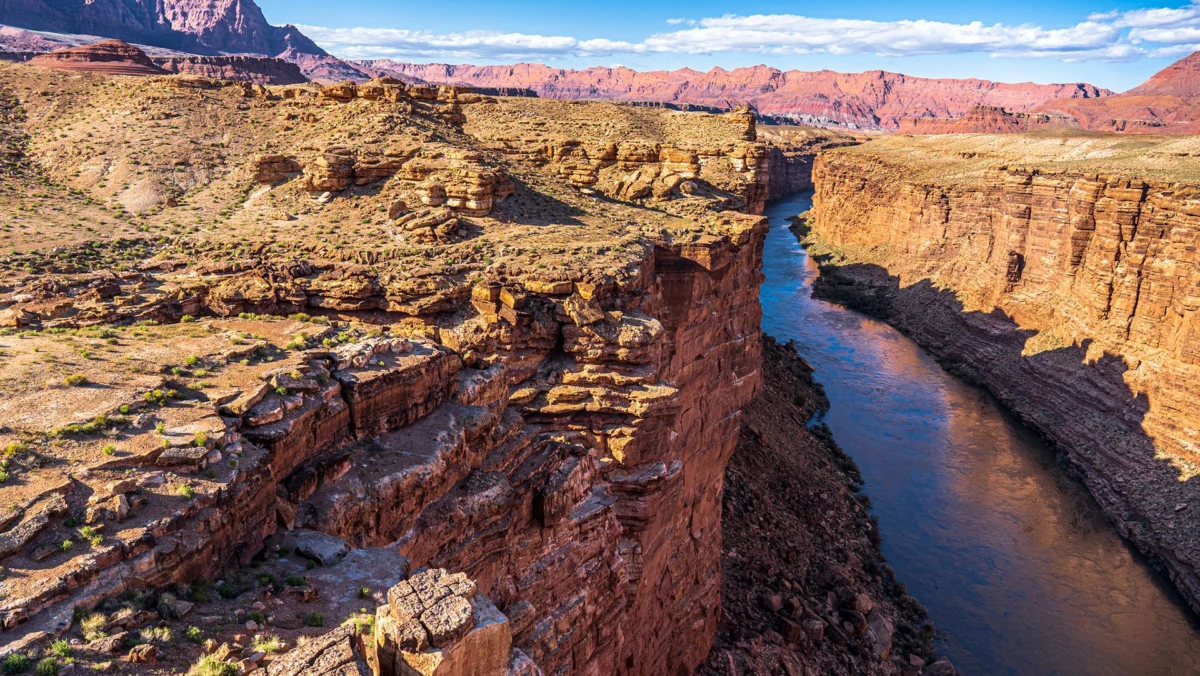
The American Southwest is home to some of the most visually stunning and geologically diverse landscapes on the planet, none more famous than the Grand Canyon. Carved over millions of years by the relentless flow of the Colorado River, this colossal chasm exposes layers of rock that tell a chronological story of Earth’s history stretching back nearly two billion years. Yet, nestled within these colorful strata lies one of the greatest enduring puzzles in all of geosciences: the Great Unconformity. First documented by pioneering geologists in the 19th century, this geological feature represents a staggering missing chapter in the planetary record—a span of up to 1.2 billion years where rock layers are simply absent. Far from being an isolated local anomaly confined exclusively to the Grand Canyon walls, modern research has revealed that this profound gap in time is a global phenomenon, appearing on continents across the world and continuing to challenge scientists attempting to reconstruct the deep history of our world.
Understanding the magnitude of the Great Unconformity requires looking closely at the stratigraphy of the canyon itself. In geology, an unconformity is a contact between two rock strata of significantly different ages, representing a period during which deposition ceased, erosion removed previously formed rock, and younger layers were eventually deposited on top. The Grand Canyon’s version of this phenomenon is particularly striking because of the sheer contrast in age and type of the rock layers meeting at the interface.
At the bottom of the sequence lie the Vishnu Basement Rocks—metamorphic schists and intrusive granites that formed deep within the Earth’s crust approximately 1.7 to 2.0 billion years ago during intense mountain-building events. Resting directly above these ancient crystalline rocks are sedimentary layers such as the Tapeats Sandstone, which formed from marine sands roughly 500 to 525 million years ago. Between the basement rocks and the Tapeats Sandstone lies a missing interval of geological time that can span anywhere from a few hundred million to over a billion years, depending on the specific location within the canyon. In some places, even intermediate rock layers known as the Grand Canyon Supergroup survived the erosive forces, yet an immense temporal void remains fundamentally intact across the region.
Historical Discovery and Early Geological Interpretations
The realization that vast spans of geological time were missing from Earth’s rock record began to take shape during the mid-to-late 19th century, an era defined by bold scientific expeditions into the uncharted American West. Geologist John Wesley Powell, famed for his perilous 1869 boat expedition down the Colorado River, played a pivotal role in bringing these geological discrepancies to the attention of the wider scientific community. As Powell and subsequent surveys mapped the strata of the Colorado Plateau, they recognized that standard models of continuous sediment deposition failed to explain the radical discontinuities observed in the canyon walls.
During the late 19th and early 20th centuries, geologists such as Grove Karl Gilbert and Clarence Dutton expanded upon Powell’s observations, formalizing the terminology of stratigraphic unconformities. They understood that the Earth’s crust was dynamic—subject to cycles of uplift, weathering, erosion, and subsidence. However, quantifying the precise duration and global extent of the missing time at the Grand Canyon remained a formidable challenge. Early researchers hypothesized that vast mountain ranges had been worn completely flat by subaerial erosion before ancient shallow seas advanced across the continent to lay down the younger sedimentary blankets. Yet, the exact physical mechanisms responsible for stripping away kilometers of rock over such immense geographic scales remained fiercely debated for generations.
The Global Footprint of a Billion-Year Void
For many years, the Grand Canyon served as the archetypal textbook example of the Great Unconformity. However, as geological mapping advanced globally throughout the 20th century, researchers made a startling discovery: the same mysterious temporal gap appears on virtually every continent on Earth.
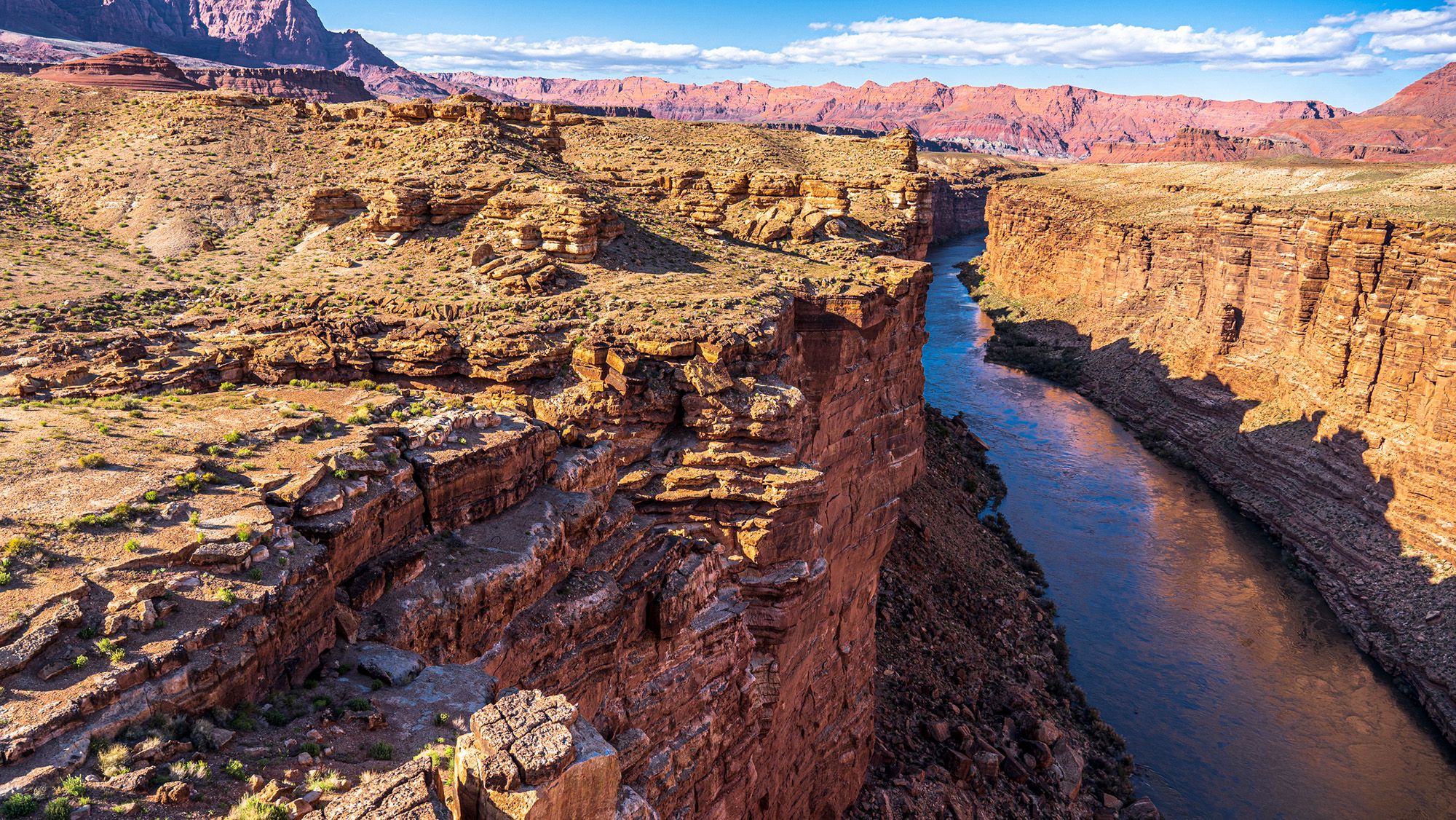
In North America, the feature is prominently exposed not only in Arizona but also across the Canadian Shield, the Midcontinent, and the Appalachian region. Similar ancient unconformities have been identified in the cratons of Australia, Africa, Baltica, and Antarctica. This worldwide distribution implies that the forces driving the creation of the Great Unconformity were not localized tectonic accidents, but rather large-scale planetary processes operating on a continental or global scale.
Geologists categorize unconformities into several types—disconformities, nonconformities, and angular unconformities—based on the geometric relationships and rock types involved. The Great Unconformity often manifests as a combination of these types, where tilted or vertical metamorphic and igneous basement rocks are abruptly capped by flat-lying sedimentary strata. The sheer ubiquity of this geological boundary suggests that a fundamental shift in Earth’s tectonic, climatic, or biological systems occurred around the boundary between the Proterozoic and Cambrian periods.
Competing Scientific Hypotheses: What Caused the Great Unconformity?
In recent decades, advances in analytical techniques—such as zircon geochronology, thermochronology, and geochemical isotope analysis—have allowed geoscientists to test various hypotheses regarding the origin of the Great Unconformity. Two primary schools of thought have emerged to explain how billions of years of rock could vanish so thoroughly: the "Snowball Earth" hypothesis and the "Supercontinent Tectonics" model.
The Snowball Earth hypothesis suggests that during the Cryogenian period—roughly 720 to 635 million years ago—global ice sheets advanced to cover the equator, plunging the planet into extreme glacial conditions. Proponents of this theory argue that massive continental ice sheets, miles thick, scraped across the interiors of ancient supercontinents like Rodinia, eroding colossal volumes of rock and dumping the debris into the global ocean. This glacial planation could account for the removal of immense thicknesses of crust, leaving behind a remarkably flat, polished surface upon which later seas transgressed.
Conversely, the Supercontinent Tectonics model focuses on the breakup and assembly of ancient supercontinents. Throughout Earth’s history, landmasses have periodically collided to form supercontinents before rifting apart again in cycles lasting several hundred million years. During the assembly of supercontinents such as Rodinia or Columbia, massive mountain ranges were pushed up through tectonic compression. As these supercontinents subsequently rifted and subsided, thermal doming and prolonged subaerial erosion stripped away the topography. Furthermore, as sea levels rose and fell in response to changing mantle dynamics and continental configurations, shallow marine waters swept across the eroded lowlands, reworking the landscape and establishing the foundational unconformity surface.
Some recent studies have also proposed that a combination of these factors—intense glacial erosion followed by rapid marine inundation during periods of accelerated sea-level rise—created the perfect storm for extensive stratigraphic removal. Despite these advances, researchers continue to debate the relative contributions of tectonics, glaciation, and sea-level change, as the physical evidence for events occurring hundreds of millions of years ago is inherently fragmentary.
Implications for the History of Life: The Cambrian Explosion
Beyond its significance for structural geology and plate tectonics, the Great Unconformity holds a profound connection to the history of life on Earth. The appearance of the younger sedimentary layers resting directly on top of the ancient basement rocks coincides remarkably with one of the most pivotal events in biological history: the Cambrian Explosion.
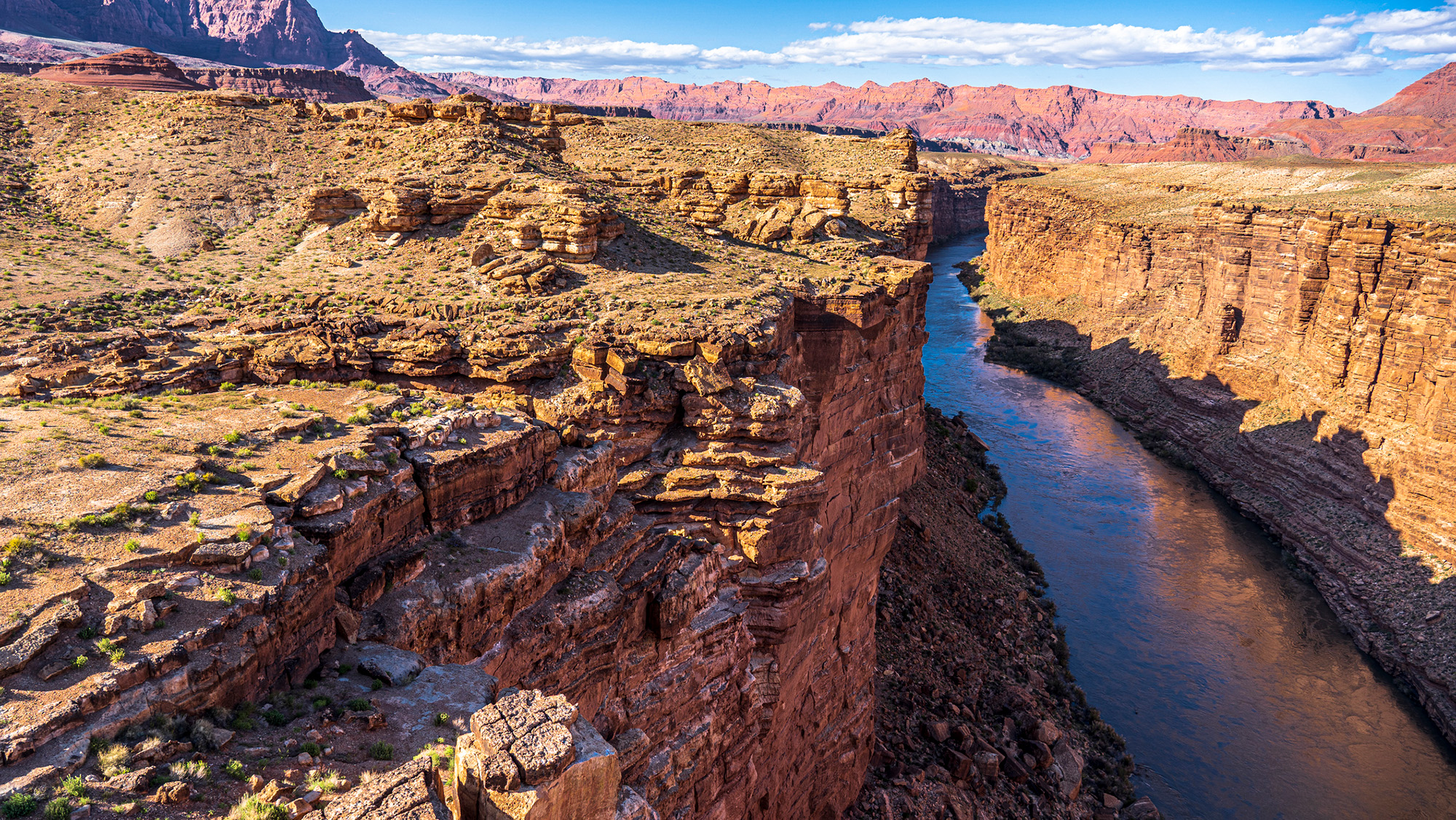
For the vast majority of the missing 1.2-billion-year period, life on Earth was primarily microbial, consisting of single-celled organisms, stromatolites, and eventually simple multicellular soft-bodied organisms known as the Ediacaran biota. However, right around the time the sedimentary strata above the Great Unconformity began accumulating—roughly 541 million years ago—the fossil record undergoes a radical transformation. Complex animals with hard shells, skeletons, and advanced anatomical designs suddenly appear in abundance.
Geochemists have suggested a fascinating causal link between the processes that created the Great Unconformity and the biological innovation of the Cambrian Explosion. As immense volumes of ancient continental rock were weathered and eroded during the formation of the unconformity, vast quantities of minerals and chemical elements—such as calcium, potassium, phosphorus, and iron—were flushed into the global oceans.
This massive influx of dissolved nutrients and ions would have dramatically altered the chemistry of ancient seas. The introduction of calcium, for instance, provided the chemical building blocks necessary for organisms to begin constructing mineralized shells and skeletons for protection and structural support. Furthermore, the weathering of silicate rocks would have consumed atmospheric carbon dioxide, influencing global climate and oxygen levels. In this view, the very erosive processes that wiped away a billion years of geological history may have simultaneously primed the marine environment, providing the chemical catalyst that sparked the diversification of complex animal life.
Ongoing Research and Future Outlook
Today, the study of the Great Unconformity remains a vibrant and multidisciplinary field of research. Geologists, geochemists, and paleobiologists continue to drill core samples, analyze isotopic signatures in ancient minerals, and utilize computer models to simulate continental drift and erosion over deep time.
Field expeditions to remote locations in the Grand Canyon, as well as analogous sites in Australia, northern Canada, and Scandinavia, allow scientists to gather high-resolution data on the thermal history of basement rocks using techniques like fission-track analysis and uranium-lead dating. These methods help pinpoint the exact timing of when specific rock masses were heated, uplifted, and cooled near the Earth’s surface, refining our understanding of regional tectonic histories.
As analytical precision improves, researchers are moving closer to answering long-standing questions about whether the Great Unconformity was a single synchronous global event or a series of diachronous regional episodes that overlapped across geological time. While the missing 1.2 billion years will never be fully recovered in terms of a physical rock record, the indirect clues left behind in mineral chemistry and global stratigraphy are slowly illuminating the hidden chapters of Earth’s deep past.
The Grand Canyon stands not merely as a breathtaking monument to the power of water and time, but as an open-air laboratory where scientists can touch the raw boundaries of planetary history. The Great Unconformity reminds observers of the immense scale of geological time and the dynamic, ever-changing nature of the Earth beneath our feet—a silent witness to a billion-year gap that shaped both the surface of our world and the very evolution of life upon it.