
The lunar south pole is poised to become the most contested and scientifically intriguing destination in deep space this year, with two ambitious robotic missions from the United States and China scheduled to launch towards the rim of Shackleton Crater. This potential convergence of spacecraft represents a significant milestone in lunar exploration, highlighting both the intense scientific interest in the Moon’s water ice reserves and the escalating geopolitical competition between the two spacefaring powers.
The Lunar South Pole: A Strategic Frontier
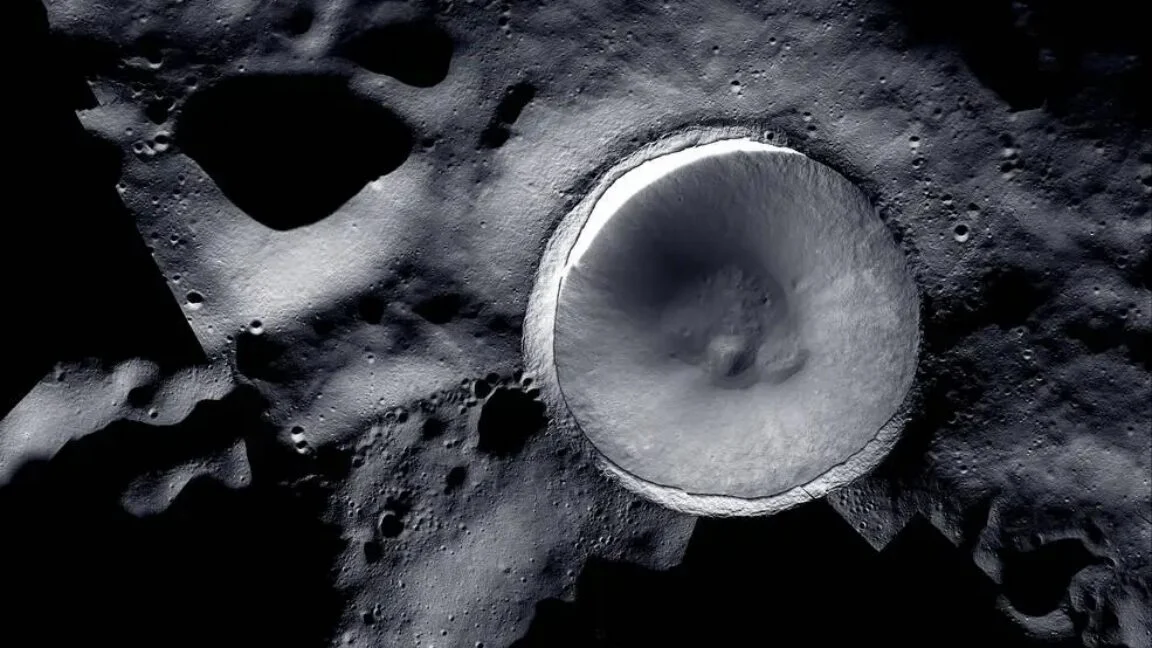
Shackleton Crater, an ancient impact basin located near the Moon’s south pole, has emerged as a prime target for international space agencies due to its unique environmental characteristics. Measuring approximately 13 miles (21 kilometers) in diameter and an impressive 14,000 feet (4.2 kilometers) deep, the crater offers distinct advantages for future lunar missions and potential human habitation. Its highest rims are exposed to near-continuous sunlight, providing a stable and abundant source of solar power. Conversely, its perpetually shadowed interior—known as a "cold trap"—harbors immense reservoirs of water ice, a resource critical for sustaining long-duration missions.
The presence of water ice on the Moon has been a game-changer for lunar exploration strategies. First conclusively detected by NASA’s Lunar Crater Observation and Sensing Satellite (LCROSS) mission in 2009, and further mapped by instruments like the Lunar Reconnaissance Orbiter (LRO) and India’s Chandrayaan-1, this ice is not merely a scientific curiosity. It represents a potential source of potable water for astronauts, breathable oxygen, and most importantly, hydrogen and oxygen propellants for rockets, enabling in-situ resource utilization (ISRU) that could drastically reduce the cost and complexity of future space endeavors. The ability to "live off the land" on the Moon is central to both the American Artemis program and China’s International Lunar Research Station (ILRS initiative.
The extreme temperatures within Shackleton’s shadowed regions, plummeting to below -200 degrees Celsius (-328 degrees Fahrenheit), are cold enough to preserve volatile compounds, including water ice, for billions of years. This makes the crater not only a resource hub but also a cosmic time capsule, potentially holding clues about the early solar system and the delivery of water to Earth. Scientists created a remarkable mosaic of Shackleton Crater using images from NASA’s Lunar Reconnaissance Orbiter and the ShadowCam instrument on South Korea’s Danuri orbiter, revealing unprecedented detail of its dark interior and underscoring the scientific community’s keen interest in this region.
The Contenders: Blue Origin’s Endurance
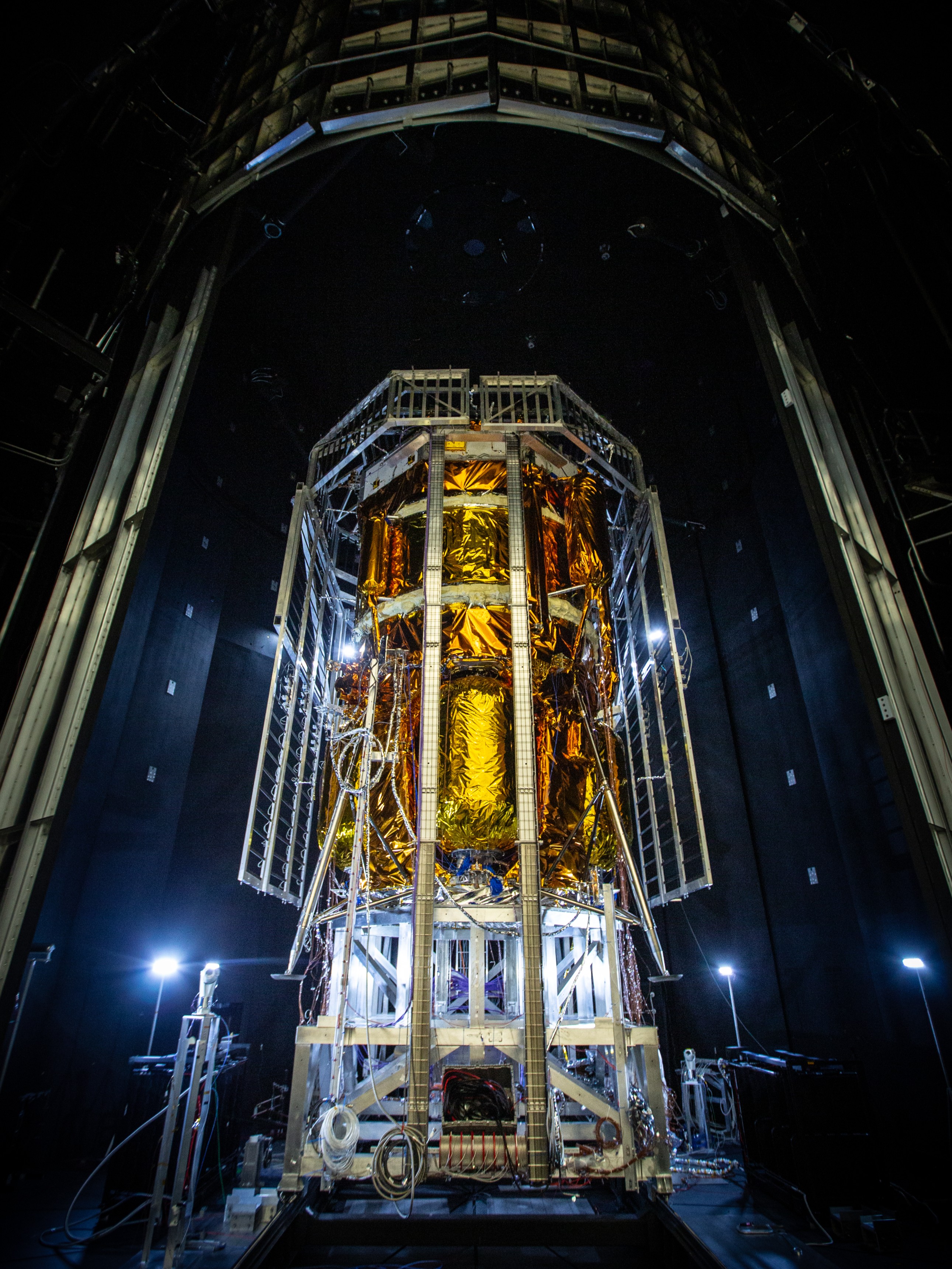
Leading the American charge to Shackleton Crater is Blue Origin’s Endurance spacecraft, the inaugural test flight of the company’s Blue Moon Mark 1 lunar lander design. Built by Jeff Bezos’s space company, Endurance is set to become the largest lunar lander in history, surpassing even NASA’s iconic Apollo Lunar Module that ferried astronauts to and from the lunar surface more than five decades ago. Standing 26 feet (8 meters) tall, the vehicle is designed to deliver significant cargo and scientific experiments to the lunar surface, marking a crucial step in Blue Origin’s broader lunar ambitions.
Endurance recently completed a comprehensive test regimen at NASA’s Johnson Space Center in Houston, where it was subjected to conditions simulating the extreme thermal environment of the airless lunar surface. These rigorous tests ensure the lander’s systems can withstand the dramatic temperature fluctuations—from scorching sunlight to frigid shadow—that characterize the Moon’s poles. Following these successful evaluations, the lander departed Houston by barge on Saturday, embarking on a journey back to Cape Canaveral, Florida, for its final integration and preparations ahead of its launch atop Blue Origin’s heavy-lift New Glenn rocket.
While Blue Origin has not publicly disclosed the exact landing site for Endurance beyond "the Moon’s south pole region," Jeff Bezos indicated in a social media post last year that it would land "near Shackleton Crater." The primary objective for this maiden flight is a successful, intact, and upright landing. Upon reaching the surface, Endurance will deploy a suite of NASA-funded instruments, including stereo cameras to observe the intricate interactions between its engine plume and the lunar soil during descent, and a laser ranging reflector to precisely pinpoint its location for future navigation and mapping efforts. This mission is a critical precursor to Blue Origin’s human-rated lunar lander, which is being developed to support NASA’s Artemis program, aiming to return astronauts to the Moon.
China’s Ambition: Chang’e 7 Mission
In parallel, China is preparing its highly anticipated Chang’e 7 mission, a complex multi-component endeavor designed to explore the lunar south pole with unprecedented detail. While the Chang’e 7 lander itself will be smaller than Endurance, the overall mission architecture is significantly more expansive, comprising an orbiter, a lander, a rover, and a unique "hopper drone" or "mini-flying probe." This comprehensive suite of assets underscores China’s long-term commitment to lunar exploration and resource prospecting.
The Chang’e 7 mission recently arrived at a dedicated spaceport on Hainan Island in the South China Sea, where it is undergoing final integration with China’s own heavy-lift launch vehicle, the Long March 5 rocket. This powerful rocket is a cornerstone of China’s deep-space ambitions, having successfully launched previous lunar missions and the core module of the Tiangong space station.
Chinese officials have, like their American counterparts, maintained discretion regarding the precise landing site for Chang’e 7, confirming only a target "on Shackleton’s rim." However, more details have been released about the mission’s post-landing scientific pursuits. After deployment from the lander, the rover and the innovative hopper drone will carry a suite of advanced instruments. Their primary objective, as outlined in a research paper on the mission, is to "directly confirm the existence and source of water ice" in and around Shackleton Crater, as well as to measure its abundance and distribution within the lunar soil. This direct in-situ analysis is crucial for understanding the potential viability of lunar ice as a resource. Chang’e 7 will also conduct comprehensive surveys of the lunar environment, topography, and composition of the south pole region.
Preparation and Launch Windows
Both the Endurance and Chang’e 7 missions are slated for launch later this year, with a tentative window speculated for late summer. However, the exact timing of these complex interplanetary missions is subject to numerous factors, including launch vehicle availability, optimal orbital mechanics for lunar transfer, and weather conditions. As such, it remains uncertain which nation’s lander will achieve the distinction of reaching Shackleton Crater first.
The preparations for both missions are extensive and reflect the challenges of lunar exploration. Blue Origin’s Endurance has undergone rigorous testing to ensure its survivability in the harsh lunar environment, while Chang’e 7’s components have been meticulously integrated and tested at its launch facility. These parallel preparations highlight the immense engineering efforts required to achieve successful lunar landings and underscore the technical prowess of both nations.
A New Era of Proximity on the Moon
What makes these impending missions particularly compelling is the distinct possibility of both vehicles operating in relatively close proximity on a piece of highly coveted lunar real estate. Should Endurance and Chang’e 7 land on or near the rim of Shackleton Crater as expected, it would mark an unprecedented event: the first time landers from different sovereign nations have operated simultaneously so close to one another on another planetary body.
This close proximity could usher in a new era of space diplomacy and operational coordination, or potentially, a heightened sense of territoriality. While direct physical contact or interference is highly unlikely given the vastness of the Moon, even a 13-mile-wide crater offers limited "prime" spots with both continuous sunlight and access to shadowed ice. The success of both missions would demonstrate a new level of robotic capability and open the door for future, more complex collaborations or competitions.
The Geopolitical Undercurrents
The race to Shackleton Crater is not merely a scientific endeavor; it is deeply emblematic of the brewing geopolitical competition between the United States and China for preeminence in space. Both nations have articulated ambitious plans to establish a sustained human presence on the Moon before the end of this decade, with lunar bases near the south pole envisioned for the 2030s.
The United States, through its Artemis program, aims to return American astronauts to the Moon, including the first woman and person of color, and establish a long-term lunar presence. A key component of this strategy is the Artemis Accords, an international agreement drafted by the U.S. government outlining principles for responsible space exploration, including transparency, interoperability, and the establishment of "safety zones" to prevent harmful interference. To date, 61 nations have signed the accords, but notably, China and Russia are not among them.
In response, China has spearheaded the International Lunar Research Station (ILRS) initiative, a collaborative project with Russia and other partners, aiming to establish its own permanent lunar outpost. The ILRS concept shares many goals with Artemis, including resource utilization and scientific research, but operates under a separate framework. The simultaneous targeting of Shackleton Crater by both nations underscores this dual-track approach to lunar exploration, setting the stage for potential parallel developments on the lunar surface.
Defining "Due Regard" in Space Law
The potential proximity of U.S. and Chinese landers raises pertinent questions about international space law and the principles governing activities on celestial bodies. Both the United States and China are signatories to the 1967 Outer Space Treaty, which serves as the foundational legal framework for space activities. The treaty explicitly prohibits national appropriation of the Moon or other celestial bodies by claim of sovereignty, by means of use or occupation, or by any other means. However, it does allow for the establishment of bases and requires parties to act with "due regard" to the interests of other nations in their space activities.
The concept of "due regard" is deliberately broad and open to interpretation, particularly in scenarios involving potential resource extraction or the establishment of permanent infrastructure. As Michelle Hanlon, a professor of air and space law at the University of Mississippi, noted in an article last year, the first country to succeed in placing key infrastructure, such as a nuclear reactor on the Moon (a prospect NASA is actively exploring), could "shape the norms for expectations, behaviors, and legal interpretations."

This "first-mover advantage" could extend to the development of lunar bases, mining operations, and other resource extraction activities. NASA’s proposal for "safety zones" under the Artemis Accords is an attempt to preemptively address potential conflicts by establishing areas around operational sites where other nations would agree to avoid interference. However, without China’s adherence to the Accords, the operational guidelines for simultaneous activities in the same critical region remain largely undefined beyond the general tenets of the Outer Space Treaty.
The implications of two rival powers operating in close quarters on the Moon could serve as an early test of these legal definitions. If a "eureka-like" discovery of particularly rich water ice deposits or other valuable resources were to occur, it could further concentrate future missions and lunar bases into an even smaller area. Such a scenario would inevitably test the boundaries of "due regard" and necessitate careful diplomatic and operational coordination to avoid misunderstandings or conflicts. Hanlon emphasized this point, stating that "these sought-after regions are scientifically vital and geopolitically sensitive, as multiple countries want to build bases or conduct research there. Building infrastructure in these areas would cement a country’s ability to access the resources there and potentially exclude others from doing the same."
Future Implications for Lunar Exploration
The impending missions of Endurance and Chang’e 7 are merely the vanguard of a much larger wave of robotic and eventually human missions planned for the lunar south pole. Following these initial landings, NASA’s VIPER rover is slated to land near the south pole aboard Blue Origin’s second Blue Moon Mark 1 lander in 2027, with similar objectives of scouting for water ice. These robotic pathfinders are crucial for gathering the data necessary to inform the design and location of future human settlements.
NASA aims to land astronauts on the Moon again as soon as 2028, with China targeting a crewed lunar landing by 2030. Much of this intense traffic, both robotic and human, is projected to be concentrated within a relatively small area—perhaps within 100 miles of the south pole. This concentration underscores the strategic importance of the region and the limited availability of truly optimal sites that offer both sustained sunlight and access to critical resources.
The outcomes of the Endurance and Chang’e 7 missions will not only advance scientific understanding of the Moon but will also provide invaluable lessons for international cooperation and competition in deep space. Their potential close proximity will serve as a powerful symbol of humanity’s renewed drive to explore and utilize the Moon, while simultaneously highlighting the complex geopolitical dynamics that underpin this new era of lunar ambition. The race to Shackleton Crater is on, and its unfolding story will undoubtedly shape the future of space exploration for decades to come.










Leave a Reply