
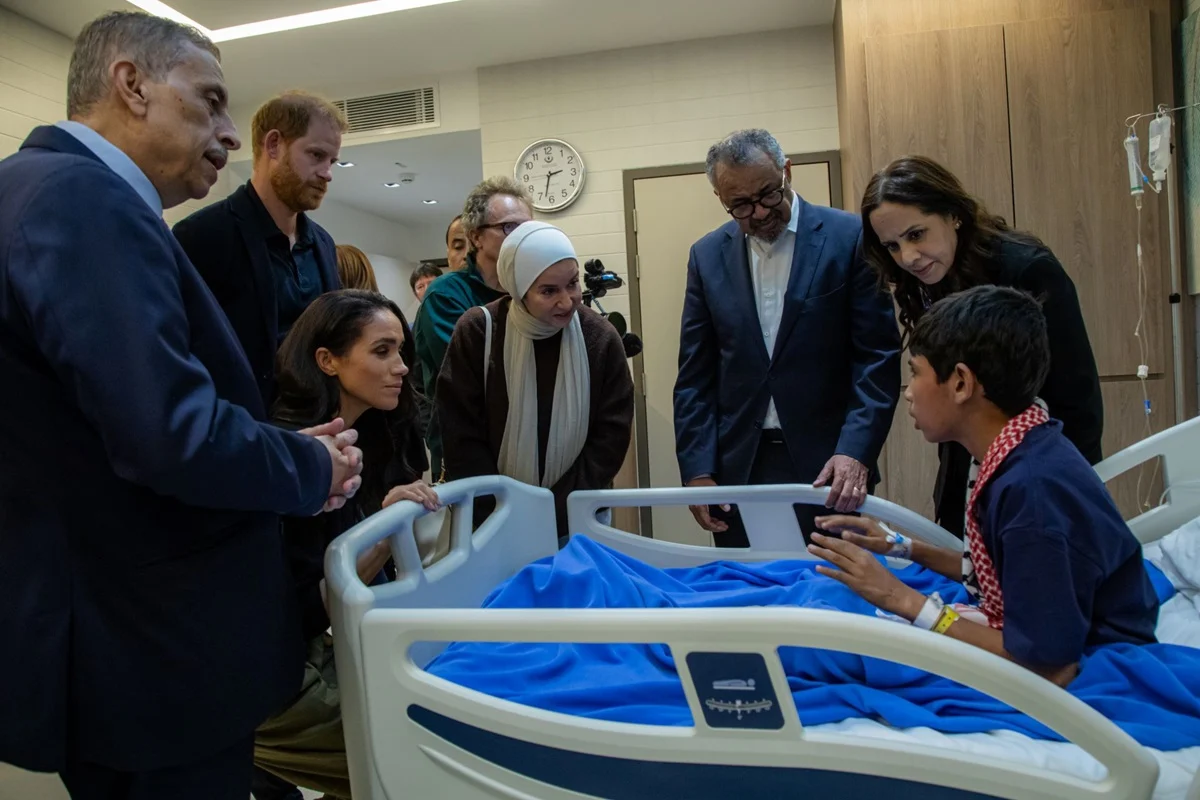
The landscape of international humanitarian aid and public health governance faced a significant moment this week as Dr. Tedros Adhanom Ghebreyesus, Director-General of the World Health Organization (WHO), completed the first leg of a landmark two-day state visit to the Hashemite Kingdom of Jordan. The mission served to underscore the resilient and enduring partnership between the global health agency and the Jordanian government, shining a spotlight on critical issues including universal health coverage (UHC), the integration of mental health services into routine medical care, and robust humanitarian responses across a volatile Middle Eastern landscape.
Against a backdrop of overlapping regional crises, Jordan has consistently positioned itself as a pillar of stability, healthcare innovation, and compassion. The state visit brought these achievements to the forefront of international diplomacy, drawing attention not only to the structural reforms enacted by the Jordanian Ministry of Health but also to the immense logistical burdens shouldered by the kingdom in hosting millions of displaced persons from neighboring nations.
High-Level Engagements at the Highest Levels of State
The cornerstone of the first day’s itinerary was an official audience with His Majesty King Abdullah II. This high-level dialogue placed heavy emphasis on the strategic imperatives of strengthening national health systems, expanding equitable access to clinical care, and securing sustainable financial and logistical support for emergency medical responses throughout the region.
Discussions specifically addressed the pressing humanitarian needs of the Palestinian population, highlighting the critical influx of medical patients evacuated directly from Gaza to receive specialized treatment in Jordanian facilities. Furthermore, the leaders reviewed the ongoing challenges and requirements associated with sustaining comprehensive health services for the vast demographic of refugees who have found sanctuary within Jordan’s borders over successive decades.
Dr. Tedros took the opportunity to formally commend the Jordanian monarch for his steadfast personal commitment to the principles of universal health coverage. In public remarks following the audience, the WHO chief expressed profound gratitude to both the King and the broader Jordanian populace for their extraordinary solidarity and generosity. He noted that the nation currently provides essential health services to more than three million registered refugees, the vast majority of whom originate from Syria and Gaza.
Special recognition was also directed toward Jordan’s broader humanitarian leadership, most notably the visionary Medical Corridor initiative championed by King Abdullah II. This vital operational pipeline has successfully facilitated the transfer and treatment of critically ill and injured children from the besieged Gaza Strip, offering a lifeline of advanced medical care where local infrastructure has collapsed. Through these initiatives, Jordan continues to demonstrate to the global community what it means to place humanitarian imperatives and human dignity above geopolitical divides.
First-Hand Observations on the Ground
Moving beyond diplomatic halls, Dr. Tedros transitioned from policy discussions to direct observation by visiting a specialized, WHO-supported hospital facility dedicated to treating children evacuated from Gaza. During the hospital tour, the Director-General engaged directly with young patients, their families, and the multidisciplinary teams of frontline health workers. These medical professionals deliver intensive, life-saving interventions for severe traumatic injuries, oncological conditions, and other complex medical emergencies that exceed the capacity of degraded local health systems in conflict zones.
This field visit served to underscore the indispensable role played by the medical evacuation corridor through Jordan. It simultaneously served as a stark reminder to the international community regarding the urgent requirement for sustained, predictable donor funding to ensure that vulnerable children and other high-risk patients retain unimpeded access to specialized tertiary care.
In parallel with clinical visits, Dr. Tedros convened a strategic, high-level roundtable consultation. The assembly brought together key health sector partners, donor-nation representatives, United Nations agencies, and major philanthropic organizations. The core agenda centered on harmonizing financing priorities for long-term health system fortification within Jordan, while simultaneously shoring up funding streams for ongoing humanitarian health operations. Key discussion tracks included the systemic scaling-up of mental health and psychosocial support services, as well as the equitable sharing of financial and administrative responsibilities for countries bearing disproportionate refugee populations.
Bilateral Talks and Primary Health Care Integration
In addition to multilateral forums, Dr. Tedros held focused bilateral discussions with the Jordanian Minister of Health. These talks homed in on the technical pathways required to cement Jordan’s primary health care architecture as the foundational bedrock for achieving comprehensive universal health coverage.
Jordan has steadily earned global acclaim for its progressive approach to primary health care, particularly its institutional commitment to mainstreaming mental health services. Rather than operating as an isolated or stigmatized specialty, mental health care in Jordan is increasingly woven into the fabric of routine, community-level clinical consultations. This integration is actively supported by the WHO Director-General’s Special Initiative for Mental Health, which provides technical guidance and capacity-building frameworks to ensure that psychological support remains accessible, destigmatized, and affordable for all segments of society.
The Role of Philanthropic Allies: Prince Harry and Meghan, Duchess of Sussex
A notable dimension of the delegation was the accompaniment of Prince Harry, Duke of Sussex, and Meghan, Duchess of Sussex, who participated in several key engagements in their capacities as founders of Archewell Philanthropies. The Duke and Duchess are long-standing, active supporters of the World Health Organization’s global health missions.
Archewell Philanthropies has previously lent substantial support to a diverse array of WHO-led initiatives, ranging from advocacy and logistical backing for equitable COVID-19 vaccine distribution to emergency medical evacuation pipelines and community-based mental health programs. Prince Harry, acting as a prominent global ally for WHO’s mental health portfolio, used the platform of the Jordan visit to emphasize the critical necessity of embedding psychological support systems into all community infrastructure and emergency response frameworks. He drew specific attention to the acute mental health vulnerabilities experienced by men, adolescents, and children navigating protracted conflict and displacement.
Reflecting on the collaboration, Dr. Tedros remarked that the involvement of partners like the Duke and Duchess of Sussex brings vital visibility, technical resources, and renewed hope to some of the world’s most marginalized and vulnerable populations.
In a joint statement, Prince Harry articulated the philosophical foundation of their participation: “It is an honour to join the Director-General of the World Health Organization in Jordan, a country that is leading by example in compassion, resilience and innovation. Through our work with Archewell Philanthropies, my wife and I have seen first-hand the impact of WHO’s efforts to support mental health and deliver life-saving care in emergencies. We remain deeply committed to advancing awareness, reducing stigma and expanding access to mental health support for all those affected by conflict and crisis. Mental health is fundamental to recovery, dignity and long-term peace, and we are proud to stand with WHO and partners around the world to make it a global priority.”
Looking Ahead: The Second Day Itinerary
The high-level state visit continues into its second day with a packed schedule designed to inspect specialized institutional capacities across Jordan’s health sector. Dr. Tedros is slated to tour the National Center for Rehabilitation of Addicts, an advanced facility supported by the WHO that delivers integrated medical, psychological, and social rehabilitation services.
Further engagements include scheduled consultations with grassroots community leaders and women’s empowerment networks, including the prominent Jordanian Hashemite Fund for Human Development (JOHUD). The Director-General will also visit the internationally renowned King Hussein Cancer Center to examine cutting-edge advancements in oncology care, research, and regional medical collaboration.
The state visit is scheduled to draw to a close following additional strategic dialogues with humanitarian operations partners. These final meetings will cement Jordan’s standing as an indispensable regional nexus for medical evacuations, rapid emergency response coordination, and the long-term resilience of public health systems throughout the Eastern Mediterranean.
Background Context: The Geopolitical and Public Health Pressures on Jordan
To fully appreciate the significance of Dr. Tedros’s visit, it is essential to contextualize the unique structural pressures facing Jordan’s healthcare ecosystem. As a nation situated in one of the world’s most geopolitically unstable regions, Jordan has historically maintained an open-door policy for populations fleeing conflict. According to official figures and United Nations estimates, the kingdom hosts approximately 1.3 million Syrian refugees, alongside hundreds of thousands of refugees of other nationalities, including Iraqis, Yemenis, and Sudanese, in addition to longstanding Palestinian refugee populations.
The influx of millions of refugees places an immense strain on public infrastructure, particularly water resources, education, and health care. Despite these systemic pressures, Jordan has integrated registered refugees into its national public health infrastructure, allowing them access to subsidized primary and secondary health care services on par with Jordanian citizens. However, this open-door humanitarian policy has continually stretched government budgets and external aid allocations to their absolute limits.
The recent escalation of conflict in Gaza has further compounded these challenges. By positioning itself as a primary logistical and clinical hub for medical evacuations, Jordan has absorbed patients suffering from complex polytrauma, severe burns, pediatric oncology needs, and chronic illnesses that cannot be treated locally due to the collapse of the Gazan health sector. The operational complexities of managing these high-acuity medical transfers require intense coordination between the Jordanian Royal Medical Services, the Ministry of Health, the WHO, and international donor communities.
Analysis of Implications: Financing, Resilience, and Mental Health as a Pillar of Security
The visit of the WHO Director-General is not merely symbolic; it carries profound structural implications for regional health security and international burden-sharing. Public health analysts point to three primary takeaways from the high-level dialogues:
-
The Imperative of Sustainable International Financing: Host countries like Jordan cannot indefinitely subsidize regional health security without robust, predictable, and multi-year international financing mechanisms. The roundtable discussions organized during the visit represent a critical step toward shifting from short-term emergency appeals to structured, predictable development financing for host-nation health systems.
-
Mainstreaming Mental Health in Crises: Traditional humanitarian relief has historically prioritized physical survival—food, water, shelter, and acute trauma surgery. However, the WHO’s concerted push, amplified by figures like Prince Harry, underscores a paradigm shift: psychological trauma and mental health disintegration are recognized as acute public health emergencies that threaten community stability and long-term recovery just as severely as physical injuries. Jordan’s success in integrating mental health into primary health care serves as a scalable model for other resource-constrained and conflict-affected settings.
-
The Strategic Value of Medical Diplomacy: Jordan’s facilitation of medical corridors and emergency evacuations highlights the concept of health as a bridge for peace and diplomacy. By keeping clinical pathways open for the most vulnerable—particularly injured children from Gaza—Jordan preserves the foundational tenets of international humanitarian law even amidst intense geopolitical conflict.
As the state visit concludes, the international community faces a clear imperative: translate the diplomatic solidarity witnessed in Amman into concrete financial commitments and operational partnerships. For the millions of refugees and displaced persons relying on Jordan’s overburdened hospitals and clinics, sustained global backing is not just a matter of health policy—it is a matter of survival and human dignity.






Leave a Reply