
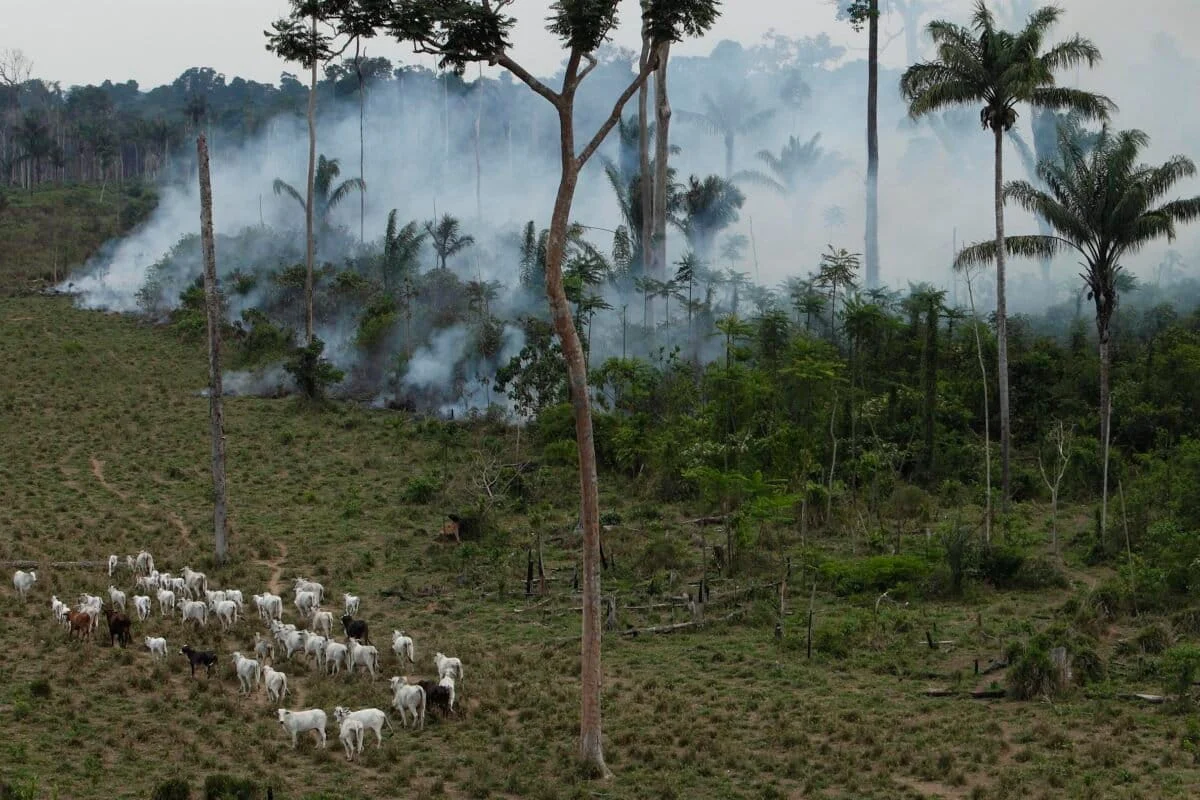
More than 500 individuals have aggressively invaded Brazil’s Ituna/Itatá Indigenous Land in recent weeks, establishing illegal infrastructure, cutting clandestine roads, setting deliberate fires, and openly threatening federal field agents. This protected expanse in the northern state of Pará serves as the sovereign sanctuary for the Igarapé Ipiaçava Indigenous people, a vulnerable group living in voluntary isolation who maintain zero contact with the outside world. The ongoing incursion has ignited an urgent legal, environmental, and humanitarian crisis, drawing sharp reprimands from federal prosecutors who accuse both state and national authorities of hazardous bureaucratic foot-dragging while an irreplaceable ecosystem and its inhabitants face imminent peril.
The Chronology of an Escalating Crisis
The roots of the current crisis trace back to legislative changes and overlapping land designations that have plagued the region with legal ambiguities. Recently, the state of Pará enacted a new law establishing the Bacajá Environmental Protection Area (APA Bacajá). Under this state statute, private landowners are legally permitted to construct permanent residences and raise livestock. However, the newly mapped boundaries of APA Bacajá entirely overlap with the federally protected Ituna/Itatá Indigenous Land. Land-grabbers and speculative developers have aggressively weaponized this administrative contradiction, citing the state-level environmental protection area as a pretext to justify illegal land claims, cattle ranching, and agricultural conversion within federally recognized indigenous boundaries.
As word of the legal overlap spread, illegal operators moved swiftly. Over the past several weeks, the invasion swelled to more than 500 people. Aerial surveillance conducted via overflights by the Indigenous Affairs Agency (Funai) and the Federal Police revealed the extensive deployment of heavy machinery, tractors, and chainsaws. Invaders have already carved out more than 30 kilometers (18.6 miles) of forest trails and unauthorized roads to demarcate illegal plots.
The situation deteriorated further into outright hostility during inspection operations conducted by the Brazilian Institute of Environment and Renewable Natural Resources (IBAMA) during the week of August 31. Environmental agents successfully seized and destroyed several trucks and pieces of heavy machinery used by the land-grabbers. In swift retaliation, the encroachers set deliberate fires to the surrounding forest. Audio recordings later recovered and attached to federal case files capture an organizer rallying a mob of 100 to 200 individuals to surround a Funai inspection team, burn their government vehicles, and force the officials to flee the territory on foot. Astonishingly, investigators also discovered a state government cargo vehicle actively being used to support the infrastructure of the illegal settlement during the inspections.
Judicial Intervention and the Battle Over Enforcement
Faced with a rapidly deteriorating security landscape on the ground, the Federal Court system stepped in on August 26, issuing a formal injunction ordering the federal government to deploy the elite National Public Security Force to the region within a strict 48-hour window. The primary objective of the deployment was to secure the perimeter, evict the illegal occupants, and protect the isolated Igarapé Ipiaçava population, who are currently safeguarded by a temporary land-use restriction order.
Yet, despite the court-mandated deadline, the security forces had failed to arrive by September 11, prompting outrage from legal watchdogs. The Federal Public Prosecutor’s Office (MPF) escalated the matter by filing a formal motion asking a federal court to penalize the federal government with a daily fine of 50,000 Brazilian reais (approximately $9,000 USD) for its blatant failure to comply with the judicial directive.
In its defense, the federal administration argued that executing the deployment requires formal authorization and logistical cooperation from the government of Pará state—cooperation that officials claim has not been forthcoming. Legal experts within the MPF have forcefully rejected this justification, pointing out that under Brazilian constitutional law, federal security forces possess the full legal authority to operate on federal lands, including demarcated Indigenous territories, without requiring permission from local or state governments.
As of the publication of this report, neither the federal administration in Brasília nor the state government of Pará had formally responded to repeated requests for comment from media outlets regarding the security delays and the logistical roadblocks surrounding the enforcement operation.

Environmental Threats and the Looming Specter of El Niño
While bureaucrats argue over jurisdictional boundaries and legal mandates, environmental experts warn that the human-made destruction inside Ituna/Itatá could soon culminate in an ecological catastrophe of unprecedented proportions.
Helena Palmquist, deputy coordinator of the Observatory of Isolated and Recently Contacted Indigenous Peoples (OPI), has been closely tracking the crisis through high-resolution satellite imagery and ground-level intelligence reports. In recent statements, Palmquist emphasized that the deliberate setting of forest fires by land-grabbers as an act of intimidation against inspectors represents the single greatest immediate threat to the region.
“What worries us most right now is the fire situation,” Palmquist explained via messaging communications. “We are experiencing an Amazonian dry season with the prospect of an El Niño event far more severe than previous ones; this makes the forest more volatile and prone to catching fire.”
The Amazon basin is increasingly vulnerable to extended droughts, driven by shifting global climate patterns and compounded by regional deforestation. When illegal actors clear underbrush with chainsaws and subsequently ignite the debris to intimidate enforcement agencies, they unlock the potential for runaway mega-fires. In a dry season amplified by El Niño conditions, these deliberate blazes can easily leapfrog natural firebreaks, consuming vast swaths of primary rainforest and generating thick palls of smoke that threaten the health and survival of communities across the region.
Broader Implications for Indigenous Rights and Sovereignty
The crisis unfolding in Ituna/Itatá is not an isolated incident, but rather a dangerous stress test for Brazil’s broader legal framework regarding Indigenous land rights, environmental enforcement, and the rule of law. The overlapping of state-decreed environmental protection areas with federally demarcated Indigenous territories exposes a systemic vulnerability in Brazil’s land governance system, where regional political pressures can easily be leveraged to undermine constitutional protections for native populations.
For groups like the Igarapé Ipiaçava, who practice voluntary isolation as a deliberate choice to preserve their culture and protect themselves from lethal pathogens to which they lack immunity, the presence of hundreds of hostile outsiders represents an existential threat. Contact with outsiders has historically decimated isolated Indigenous communities through disease transmission and violent conflict. The introduction of armed land-grabbers, heavy machinery, and sprawling cattle ranches into their ancestral territory strips away their physical buffer against the outside world.
Furthermore, the standoff between federal prosecutors, the judiciary, and executive enforcement agencies highlights deep systemic friction in executing environmental mandates. When court orders can be ignored for weeks under the pretext of jurisdictional disputes, it emboldens criminal syndicates operating within the Amazon. Land-grabbers and illegal loggers interpret administrative delays as tacit approval or institutional weakness, encouraging further invasions across other protected territories in Pará and neighboring states.
As the daily fines proposed by the MPF hang in the balance and legal teams await definitive action from the executive branch, the clock is ticking for Ituna/Itatá. The convergence of illegal road-building, cattle ranching expansion, retaliatory arson, and a severe regional dry season creates a volatile formula for disaster. Observers and human rights advocates worldwide are closely watching how federal and state authorities navigate this crisis, noting that the outcome will set a critical precedent for the future enforcement of Indigenous rights and environmental protection in the Brazilian Amazon.








Leave a Reply